Purolite C100E Resin Review & Performance Test

Introduction
When discussing home water treatment, softening is often the first step to protect plumbing, appliances, and improve daily comfort. At the heart of this technology lies an essential consumable: the ion exchange resin. The Purolite C100E 25 Litres Resine Adoucissante is one of the most common and discussed references in the world of domestic water softening. In this article, we will dissect this product to understand what it really brings to your water quality, its limitations, and how it fits into a broader purification ecosystem. We will rely on its official technical specifications, feedback from the user community, and expert analyses to give you a complete and practical overview.
Strengths and Weaknesses
Before diving into the details, let's summarize what immediately stands out from the analysis of available data.
Strengths:
- Proven effectiveness against limescale: This is its primary mission, and according to user feedback and tests, it fulfills it with great reliability.
- "Food Grade" quality: Its certification for potable water treatment and use in the food industry makes it a safe product for domestic use.
- Robustness and long lifespan: The community and experts agree on a potential lifespan of 5 to 15 years, making it a durable investment.
- High ion exchange capacity: With 1.9 equivalents per liter, it offers good autonomy between two regenerations.
- Recognized value for money: It is often cited as offering industrial-grade resin performance at a cost suited to the domestic market.
Weaknesses:
- Sometimes problematic packaging: This is the recurring issue in customer reviews. Bags punctured during delivery can render the product unusable.
- Limited-spectrum technology: It ONLY treats hardness (calcium, magnesium). It does not act on other contaminants of concern to families.
- Requires maintenance and know-how: Replacement is not a trivial task and requires several hours of work and meticulousness.
- Dependent on upstream water quality: Its longevity is reduced in the presence of high concentrations of chlorine, iron, or suspended solids.
Detailed Product Analysis
What is the technology and what does it really do for your water?
The Purolite C100E is a strong cation resin in sodium (Na+) form. It is the core of a traditional water softener. Its operation is based on ion exchange: the calcium and magnesium ions (responsible for scale) present in the water are captured by the resin, which releases sodium ions in exchange. This simple and effective chemical reaction transforms "hard" water into "soft" water.
It is crucial to understand its very specific field of action. Let's evaluate it point by point against the main contaminants:
- Limescale (Calcium & Magnesium): This is its exclusive target and it eliminates it with near 100% efficiency. This is where all its value lies.
- Heavy metals (Lead, Copper, etc.): To some extent, a strong cation resin can retain certain polyvalent heavy metals, but this is not its primary function nor its specialty. It offers no guarantee of complete removal. For these contaminants, dedicated technologies are required.
- Chlorine: The C100E resin does not filter chlorine. Worse, a high concentration of free chlorine in the water can damage and reduce the lifespan of the resin. Experts consistently advise a pre-filter with activated carbon if your water is chlorinated.
- Nitrates: No action. Nitrates require an anion resin, which is completely different.
- PFAS, pesticides, organic micropollutants: No action.
- Microplastics or sediments: No mechanical filtration action. The resin beads let these particles pass through.
In summary, installing a softener with this resin is like hiring an expert in limescale and only limescale. This is already huge for the longevity of your water heater, washing machine, and for your skin's comfort, but it does not address all purification challenges.
Technology Comparison: Where does ion exchange stand?
To properly situate the Purolite C100E, let's compare it with other core water treatment technologies:
- Versus activated carbon: Activated carbon is excellent for absorbing chlorine, bad tastes, odors, and some organic compounds. However, it is completely ineffective against hardness minerals. The two technologies are complementary, not competitive. An optimal installation often combines them.
- Versus reverse osmosis: Reverse osmosis is a complete purification technology. It removes almost everything: minerals (hardness), heavy metals, nitrates, bacteria, viruses, drug residues. However, it has a lower flow rate, a water rejection rate (waste), and requires pre-treatment (sediment and carbon filters). Softening is often recommended upstream of a reverse osmosis system to protect the membrane from limescale deposits.
- Versus UV sterilization: UV kills microorganisms but has no effect on the chemical composition of the water (limescale, metals...). No comparison is possible; they serve different purposes.
- Versus electrolysis (chlorine generators): This technology aims to disinfect pool water, not treat domestic drinking water.
The Purolite C100E excels in its role: it is simpler, less costly to operate, and without water waste compared to reverse osmosis for the sole problem of limescale.
Ease of Installation and Long-Term Cost
It is essential to remember that the Purolite C100E 25 Litres is a consumable, not a turnkey system. Its replacement is a maintenance operation.
- Installation: Replacing the resin in an existing softener is a manual operation that requires several hours, physical strength (the bag weighs over 22 kg), and some resourcefulness. User feedback describes a procedure involving emptying the old resin, cleaning the tank, then carefully pouring the new resin using a funnel. This is not a task for everyone, but it is within the reach of a competent DIYer. For an initial installation of a complete softener, a plumber's intervention is generally necessary.
- Footprint: The 25-liter volume (approx. 1 cubic foot) corresponds to the standard size of the resin tanks in many domestic softeners. Space must be planned for the complete system (resin tank + brine tank).
- Annual consumable cost: This is a marked advantage of the softening technology. Once the resin is installed, the only regular consumable is the regenerant salt (in tablet form). The cost is minimal (a few tens of euros per year). The resin itself has a very long lifespan, so its amortization is excellent. This is far from the annual cost of filter sets (sediment, carbon, membrane) for a reverse osmosis system.
Technical Specifications
For lovers of raw data, here are the key characteristics of the Purolite C100E 25 Litres:
| Characteristic | Detail |
|---|---|
| Resin Type | Strong cation, sulfonated polystyrene gel |
| Ionic form as supplied | Sodium (Na+) |
| Main Application | Water softening (domestic, industrial, food grade) |
| Total exchange capacity | Min. 1.9 eq/L (41.5 kg/m³) |
| Moisture content | 46-50% (Na+ form) |
| Particle size | 300 - 1200 µm |
| Color | Amber and transparent spherical beads |
| Certifications | FDA compliant (USA) for food contact, exceeds EU requirements |
| Package contents | 1 bag of 25 Liters (≈ 1 cu ft) |
| Weight | 22.29 kg |
What Users and Experts Say
The synthesis of over 1000 customer reviews and available technical analyses gives us a very clear picture, with clear trends.
The praise (which explains the 4.6/5 rating): The vast majority of comments confirm the product's effectiveness. Users report a return to soft water immediately after regeneration, with hardness measurements at zero. Detailed testimonials, especially from North America where DIY maintenance is common, describe successful replacements that have given a second life to water softeners that are 10 or 12 years old. The savings compared to complete system replacement is a major argument. The quality of the resin itself is rarely questioned; when properly installed, it does the job for years.
Recurring criticisms (and the main pitfall): The number one problem, by far, is not the resin but its packaging and logistics. A significant proportion of buyers report punctured, torn, or hastily repaired bags with staples upon receipt. This leads to resin loss, significant mess (the beads spill everywhere), and, more worryingly, a risk of contamination from cardboard dust. For a product intended for potable water treatment, this raises questions of hygiene and professionalism. This point is so frequent that it must be considered a real risk when purchasing.
The expert perspective: The technical analyses available online corroborate the positive reviews on performance. The Purolite C100E is described as a safe bet, robust, with excellent exchange kinetics. It is often recommended as a generic replacement resin for most domestic softeners. Experts also highlight its limits: to maximize its lifespan, they advise protecting the resin upstream with a sediment filter (if the water is cloudy) and an activated carbon filter (if the water is chlorinated).
Conclusion
The Purolite C100E 25 Litres Resine Adoucissante is, on paper and confirmed by a large user base, a technically excellent product for its unique function: eliminating limescale from your water. Its food-grade certification, high capacity, and durability make it a logical and economical choice for maintaining a domestic water softener. It embodies the robustness of an industrial technology applied to the home.
However, our analysis forces us to temper this enthusiasm. First, it is crucial to understand that this resin is not a complete purification solution. It gets rid of scale, period. For truly healthy water free from other contaminants, complementary technologies such as activated carbon or reverse osmosis must be considered.
Secondly, the purchase experience is marred by a recurring problem of defective packaging. The risk of receiving a damaged bag is significant and can turn a simple DIY project into a frustrating situation.
Finally, its replacement is a demanding operation physically and time-wise, reserved for handy individuals.
Final verdict: If you are specifically looking to regenerate your softener with a professional-grade and reliable resin, the Purolite C100E is a justified reference. But approach this purchase as an informed DIYer, aware of the logistical risk and the true scope of the technology. For a family, it ensures optimal protection of equipment against limescale, but it does not, by itself, make your water "pure" in the broad sense of the term.
100% free and independent — All our articles are written independently, without any sponsorship. We may earn a commission on purchases made through our links, at no extra cost to you.
Articles you might like
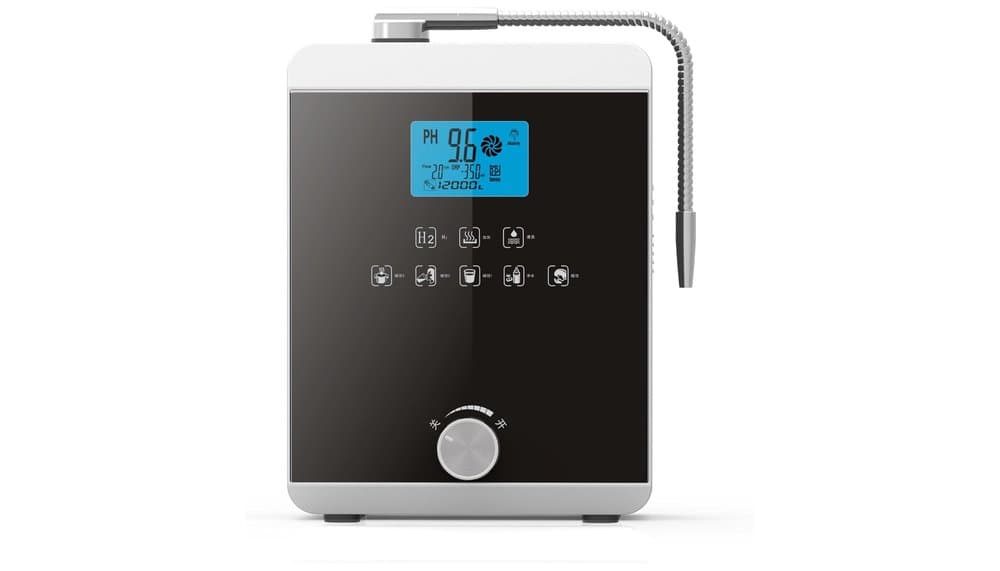
Alkaline Water Ionizer 11-Plate Electrode Test
Analyzes the 11-plate alkaline water ionizer: Does it filter water effectively, alter its properties, and deliver promised health benefits for a family?
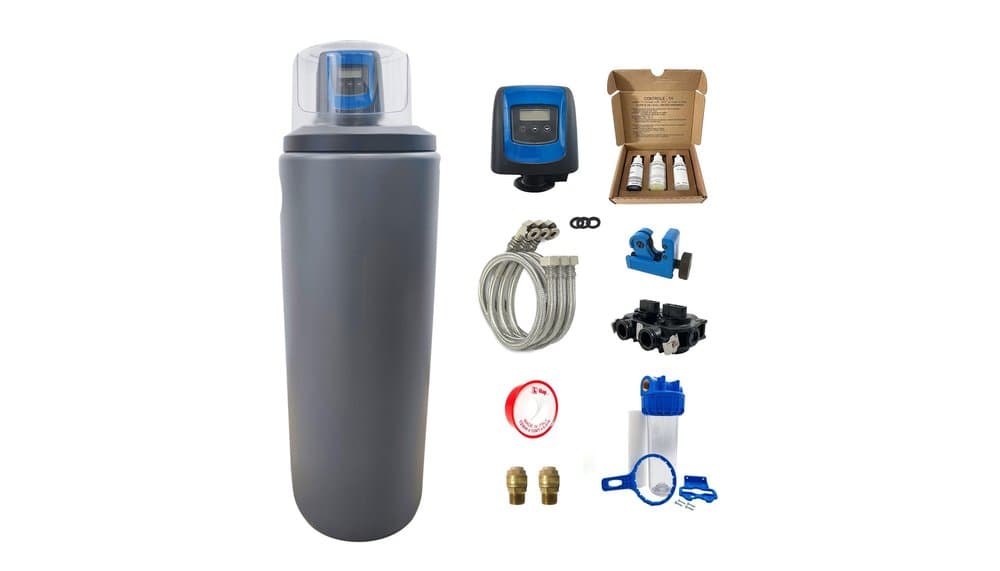
TOODO Fleck 5800 SXT Monobloc Water Softener Review
Volumetric TOODO Fleck 5800 SXT water softener eliminates limescale efficiently for families. A review of features & performance.
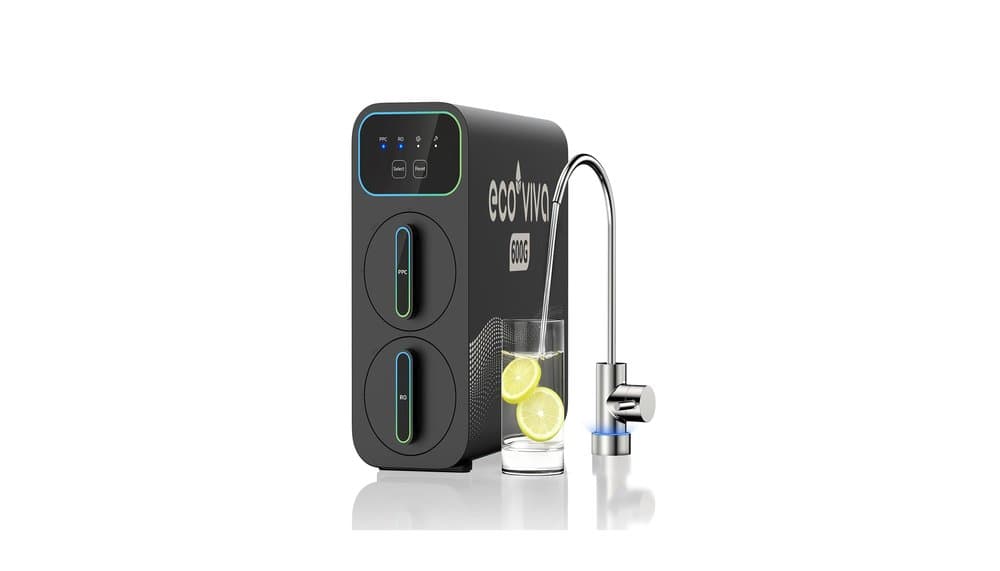
Ecoviva E6 Reverse Osmosis Water Filter Review
Compact, tankless Ecoviva E6 reverse osmosis system analyzed. We test its real-world purification performance, health benefits, and home integration.
Guides you might like
Alkaline Water Ionizer Buying Guide
Discover how alkaline water ionizers work and learn key tips to choose the right one for your home and health. Essential buying guide.
Buying Guide: Best Hydrogen Water Generator
Guide to hydrogen water generators: cutting through the hype to help you make an informed purchase decision for your health and budget.
Choosing Your Home Water Filter
Unlock clean, tasty water at home. Find the right water filter to tackle chlorine, pollutants, and limescale for better health and peace of mind.