Choosing Your Home Water Filter
If you've ever made a face while drinking tap water or if you scrutinize your glass with suspicion wondering what it really contains, choosing a home water filter is a crucial step for your daily peace of mind. Frankly, between the taste of chlorine, limescale residue, or concerns about certain pollutants, it's not a matter of comfort, but of health. Finding the right system can seem complex, but with a few keys, you'll be able to drink clear and tasty water without breaking the bank.
Key Points to Remember
- Choosing the ideal filter depends primarily on a precise analysis of the contaminants present in your water.
- Each filtration technology has a specialty: activated carbon improves taste, water softeners combat limescale, and reverse osmosis eliminates most pollutants.
- The real cost of a filter is evaluated over several years by including the purchase, installation, and replacement of consumables.
- Effectiveness and safety depend on the scrupulous respect of maintenance and the choice of certified products (like NSF/ANSI).
- The system must match your space, your consumption habits, and your willingness to maintain the device regularly.
Analyze the Quality and Characteristics of Your Tap Water
Before buying any appliance, your first mission is to know what's in your glasses. This is the absolute starting point. Investing in the best home water filter for you isn't about copying your neighbor, it's about addressing your specific problems. Without this, you risk spending money to filter... air.
The Official Document to Consult: The Water Quality Report
Your water supplier (municipality or water board) publishes a detailed analysis every year. It's free and it's the baseline. Look for it on their website or request it. Don't read everything, focus on a few key figures.
- Hardness (TH): Indicates the limestone content. Above 30°f, you probably have problems with limescale, dry skin, and a "flat" taste. This points toward water softening systems.
- Nitrate (NO3) Concentration: The quality limit is set at 50 mg/L. If you are above 25 mg/L, it is a serious warning signal that requires effective filtration (reverse osmosis, ion exchange).
- Chlorine Content: There isn't always a value listed, but your nose and palate are infallible detectors. If your water smells like a swimming pool, this is where activated carbon works wonders.
Supplementary Tests You Can Do
The official report is an average. In your building or house, with your old pipes, the reality can be different.
- The simple visual and taste test: Fill a transparent carafe. Suspended particles? A yellowish color? This can indicate rust or sediment. A metallic taste often suggests traces of lead or copper.
- Strip test kits: Available at pharmacies or online for a few euros. They give you a quick (and approximate) idea of pH, hardness, nitrates. It's a good supplement, but don't base everything on this.
- Laboratory analysis: This is the most reliable option if you have a serious concern (old lead pipes, proximity to agricultural or industrial activity). For about 80 to 150€, you will get a complete profile of heavy metals, pesticides, and bacteria. Frankly, if you are considering an expensive system like reverse osmosis, this is a justified investment.
The Verdict: Translating Results into Filtration Needs
Here's how to interpret your findings to target your search:
| What you find in your water... | ...means you should primarily look for a system that removes: | Example of Relevant Technology |
|---|---|---|
| A pronounced chlorine taste/odor | Organic compounds, chlorine and its by-products. | Activated carbon filter (granular or block) |
| Very hard water, white deposits | Limescale (calcium and magnesium). | Water softener, anti-scale filter by crystallization |
| Nitrates > 25 mg/L, suspected pesticides | Nitrates, sulfates, certain heavy metals. | Reverse osmosis, anion exchange resin filter |
| Turbidity, sediment | Suspended particles (rust, sand). | Sediment pre-filter (5 to 20 microns) |
| Bacteriological concern (well, borehole) | Bacteria, viruses, cysts. | UV sterilization (as a supplement to mechanical filtration) |
Don't let yourself be sold a "miracle" system that promises everything. Identify your 2 or 3 real problems. If your water is very hard but otherwise safe, a simple water softener will be much more sensible and economical than a reverse osmosis system, which would be disproportionate treatment here.
Choosing the Right Filtration Technology for Your Priorities
Now that you know what's in your water, it's time to understand the tools at your disposal. Each technology has its specialty. The classic mistake? Wanting a solution that does 100% of everything. Honestly, it doesn't exist, or only at a price and complexity not justified for most households. Focus on effectiveness against your identified problems.
Basic, Proven, and Versatile Technologies
Activated carbon is your best ally against the most common nuisances. Found in "bonnet" style cartridges or denser block form, it captures chlorine, pesticides, certain solvents, and radically improves taste and odor. It's the core of many systems like pitchers or faucet filters. But be careful: it's not very effective on nitrates, fluorides, or limescale. And its filtering power depletes; it must be changed every 3 to 6 months, otherwise it can release contaminants. A quality system based on activated carbon is often an excellent first step towards more pleasant water.
For visible particles or those from plumbing, mechanical filtration is essential. These are membranes or meshes that retain sediments (sand, rust) based on their fineness, measured in microns. A 5-micron prefilter protects finer downstream technologies. If your water is cloudy, this is the first thing to install.
Targeted Technologies for Specific Problems
Here, we step up a level in performance and sometimes complexity.
- Ion exchange is a very effective chemical process. For limescale, a resin exchanges sodium ions for calcium and magnesium ions: that's softening. For nitrates, another resin captures them specifically. The catch? The resin becomes exhausted and must be regenerated with salt (for limescale) or replaced. This generates consumables and some wastewater.
- Reverse osmosis is the Rolls Royce of domestic treatments. It forces water through an extremely fine membrane (0.0001 micron), retaining almost everything: heavy metals, nitrates, fluorides, some viruses, and even... minerals. It's ultra-high performance, but it's also slow, wastes water (for 1L filtered, 2 to 4L can go down the drain), and often requires a pressure pump and a storage tank. It's a last-resort solution for water heavily loaded with specific pollutants.
The Trap of Multi-Stage Systems and Marketing Promises
You will often see systems that stack technologies: sediment prefilter + activated carbon + ion exchange + post-filter. This is logical, as each stage has a role. But be wary of marketing. A "miracle" cartridge that claims to do everything in one step is often less effective than a combination of dedicated stages.
Here is a quick guide to steer you:
| Your main objective... | ...steers you towards these technologies | Points of vigilance |
|---|---|---|
| Improve taste/odor (chlorine) and reduce pesticides | Activated carbon (quality block) | Limited lifespan, ineffective on limescale. |
| Remove limescale (hard water) | Softener via ion exchange, magnetic/crystallization anti-scale filter. | Requires salt and maintenance for ion exchange. |
| Eliminate nitrates, heavy metals, arsenic | Reverse osmosis, specific ion exchange resin. | Reverse osmosis is slow, generates water waste. |
| Disinfect (well water, bacterial risk) | Sterilization via UV lamp. | Requires pre-filtered water (without particles) to be effective. |
The best home water filter for you is the one whose technological combination matches your diagnosis. No need to pay for reverse osmosis if your only battle is against chlorine.
Our Selection
We have selected for you three home water filtration solutions. Whether you're looking to improve the taste of your water, protect your pipes from limescale, or install a complete under-sink system, this technical and practical comparison, based on manufacturer specifications and community feedback, will help you see things more clearly.
| Product | Filtration & Key Actions | Flow Rate | Installation & Maintenance | Strengths (according to reviews) |
|---|---|---|---|---|
| Naturewater NW-BR10B4 | 3 stages (5µ Sediment + Activated Carbon + Mineralization) | Up to 6 L/min | Under sink, interchangeable 10" cartridges | Versatility (drinking water/aquarium), mineral preservation |
| AQUAWATER 105008 | 2 in 1 (20µ + Polyphosphate Anti-scale) | Up to 2 m³/h (approx. 33 L/min) | Upstream from faucet, annual replacement | Extreme simplicity, French manufacturing, appliance protection |
| ORIA Double Pure | Double action (25µ + Anti-scale) with By-pass | 22 L/min | Complete under-sink station with integrated by-pass | Continuous water supply during maintenance, complete ACS-ready kit |
Naturewater NW-BR10B4
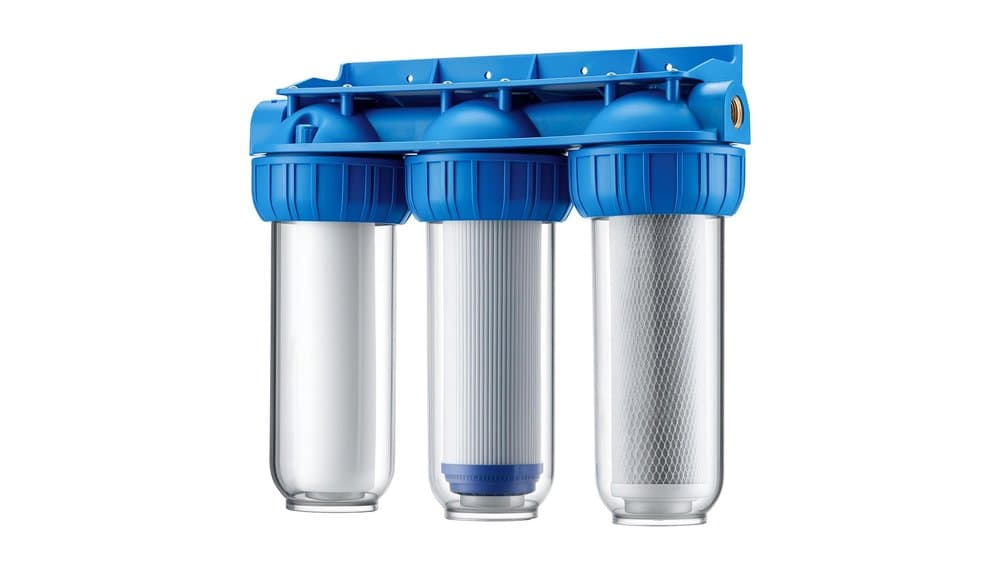
On paper, the Naturewater NW-BR10B4 presents itself as a triple action filtration system designed for complete purification. Its technical specificity lies in its logical sequence: a first 5-micron sediment filter retains suspended particles, followed by a double layer of activated carbon (in granules and block) to eliminate chlorine, chemicals, and heavy metals. The final stage announces a remineralization function, a feature often sought to obtain water with a pleasant taste while preserving its trace elements.
According to user feedback, its strengths are its versatility (many buyers use it for both kitchen water and their aquarium) and the clear improvement in the taste and odor of the water thanks to the activated carbon. The community also notes that its 6 L/min flow rate is generally sufficient for domestic use without significantly slowing down filling a pot or a carafe.
However, reviews highlight some practical limitations. Firstly, it is an under-sink installation requiring some space and basic plumbing skills, even though the mounting kit is provided. Secondly, some users would have preferred clearer indications on the cartridge lifespan, which varies depending on the quality of the inlet water. Finally, although the system preserves minerals, it is not a water softener: its action on limescale is limited compared to specific systems.
AQUAWATER 105008
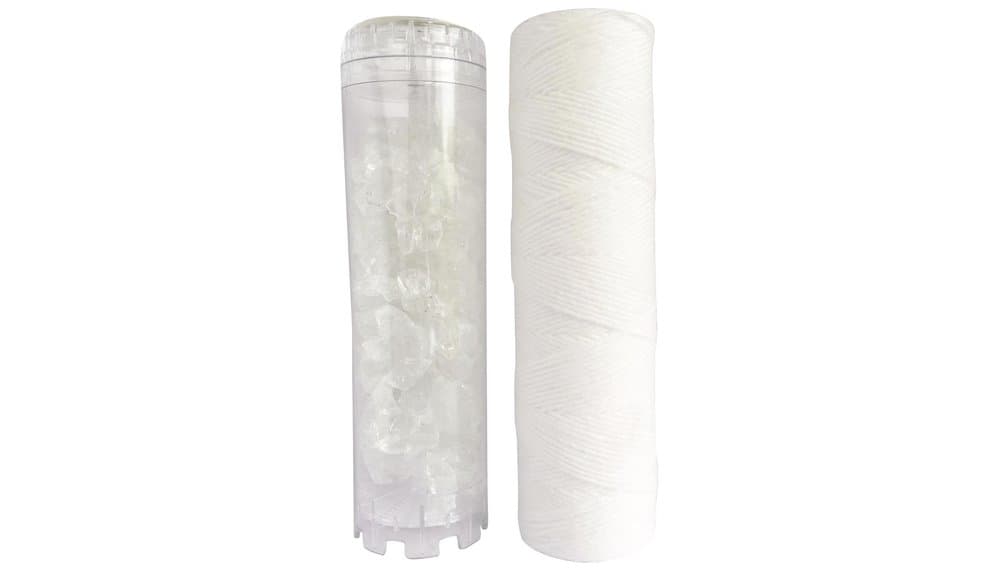
The standard AQUAWATER kit adopts a radically different approach: simplicity and a single target. It consists of a pair of cartridges (20-micron filtration + polyphosphate anti-scale) designed to be installed upstream from a standard faucet, in a 10-inch filter housing. Its main promise is not to purify drinking water in the strict sense, but to protect installations and household appliances from limescale and coarse impurities.
The technical specifications highlight its very high flow rate (up to 2 m³/h) and its French manufacturing. Customer reviews confirm its effectiveness as an equipment protector: many install it to extend the lifespan of their water heater, washing machine, or shower head. Maintenance is simple with an annual replacement of the cartridges, an easy rhythm to remember.
The limitations, according to the community, are inherent to its design. Its filtering action is less fine (20 microns) than the other compared systems, it mainly targets sand and rust. Importantly, it does not significantly alter the taste of water for drinking, as it does not contain activated carbon. It is therefore an excellent technical solution for network protection, but not a potable water purifier. Another point of caution noted: it is not compatible with hot water (max 35°C).
ORIA Double Pure
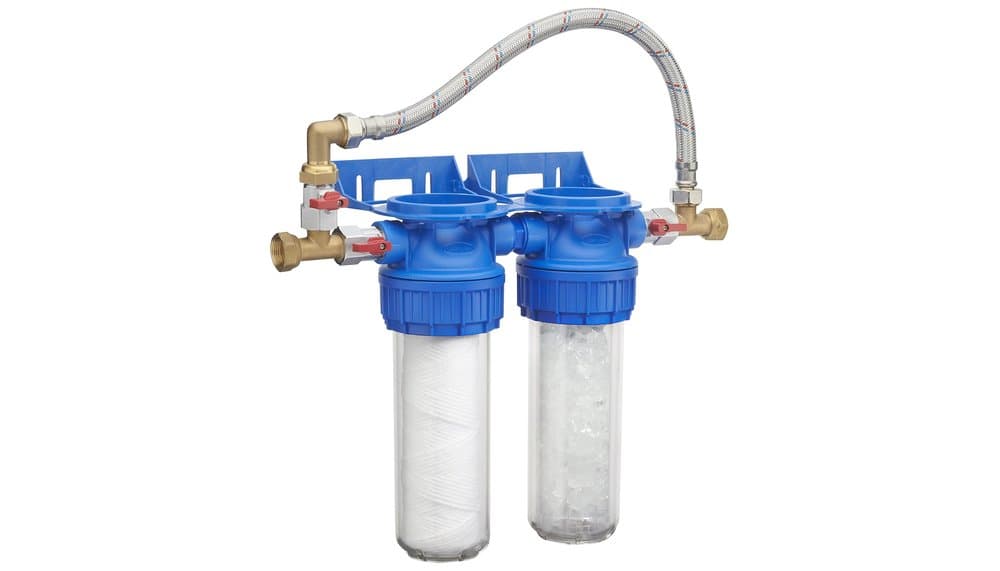
The ORIA Double Pure dual treatment station targets the user who wants a complete, ready-to-install solution with no water interruption during maintenance. It is an all-in-one under-sink kit that combines impurity filtration (25-micron wound cartridge) and anti-scale treatment (polyphosphate cartridge). Its distinctive technical feature is the inclusion of an integrated by-pass with valves, allowing the station to be bypassed to change cartridges without cutting off the main water supply.
User feedback particularly praises this ease of maintenance offered by the by-pass, as well as the fact that the entire unit is ACS certified (Sanitary Conformity Attestation), guaranteeing that all materials are suitable for contact with drinking water. The inclusion of a dedicated wrench in the kit is also appreciated. On paper, its 22 L/min flow rate is very comfortable for supplying an entire home.
On the limitations side, the community notes that the installation, although complete, is a bit more complex due to the presence of the by-pass and the swivel nut fittings which require particular attention during assembly to avoid leaks. As with the AQUAWATER, the anti-scale treatment is based on polyphosphate, an effective method for limiting deposits but which does not "remove" limescale like a resin water softener would. Finally, some would have liked more advanced filtration including activated carbon for taste.
Determine the System That Fits Your Home and Habits
Technology is one thing. But if the system doesn't fit your daily life, it will end up in the closet. Let's be honest, a big system that requires an hour of setup every Saturday is not sustainable. It has to be seamless.
The Space Available Under Your Sink and Your Flow Rate Comfort
What's it like under your sink? Is there space for a unit, a tank, and possibly a small pump? If you live in a small apartment with a tiny kitchen, a bulky and complex system will be a real nightmare.
- Under-sink systems are discreet, permanent, and generally offer excellent flow rates (sometimes 2 to 4 liters per minute). This is ideal for quickly filling a pot. But they require real installation – drilling the countertop for a dedicated faucet, connecting the plumbing. It's a small project, unless you're handy.
- Conversely, faucet-mounted filters or filtering pitchers can be set up in 30 seconds. Their major flaw? The flow rate. For a pitcher, you have to wait for gravity. For a filter screwed onto the tap, the flow rate is often cut in half, which can make rinsing salad feel endless. Does your patience have limits? Ask yourself that.
Your Household Size and Your Daily Consumption
What's the use of perfect technology if the system is empty when you're thirsty? For a couple who mainly drinks water at the table, a 2.5-liter pitcher might suffice. For a family of 4 who cooks, drinks, and fills water bottles all day, you need to think in terms of capacity and output.
Gravity systems (with ceramic jugs) are perfect for this. They offer tanks from 8 to 20 liters, ready to serve at any time. But they take up counter space. That's the compromise: water available in large volume, but in exchange for a certain footprint. It's up to you to see if your counter can handle it.
Your Willingness (and Ability) to Maintain the System
Maintenance is the Achilles' heel of all filters. You don't see it in the ads, but it's the reality. A filter is a living thing. You need to change the cartridges, clean the tanks.
- An all-in-one system with a replacement indicator is valuable for the forgetful. Some models have a little light that turns red, others a simple day counter.
- Modular systems (multiple independent cartridges) are often more economical in the long run because you only change the worn-out element. But it's up to you to note the date on your calendar.
The best home water filter for you isn't the one with the best specs on paper. It's the one you will use without frustration and maintain without fail. If you hate tinkering, opt for extreme simplicity. If you're ready to do some DIY to have perfect water at every tap, go for it. The goal is consistency, not occasional technical prowess.
Evaluating the Real Budget: Installation, Replacement, and Maintenance Costs
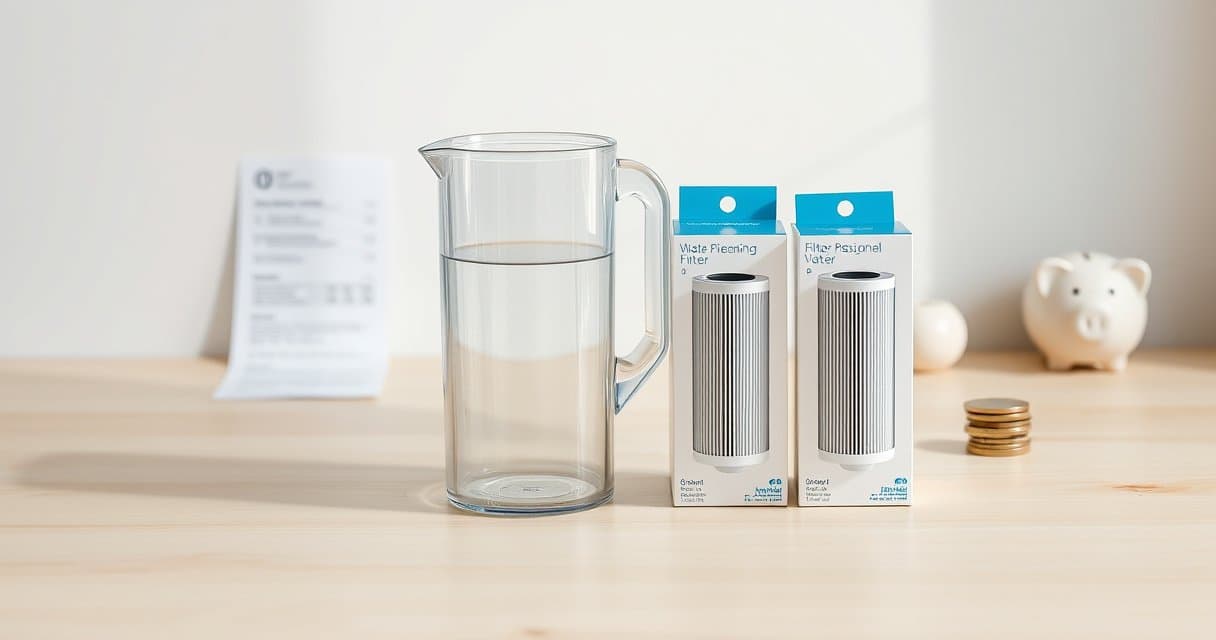
Beware, here is the classic trap: focusing on the purchase price and forgetting everything else. Frankly, it's like buying a 30€ printer whose cartridges cost 50€ every quarter. The real budget is calculated over two or three years, not at the checkout.
The Initial Investment: More Than Just the Price of the Unit
The purchase cost can vary from simple to tenfold. A pitcher voted "meilleur filtre eau maison" by a magazine might cost 40€. A complete under-sink reverse osmosis system with its tank easily starts at 300 or 400€.
But that's just the tip of the iceberg. For fixed systems, add the installation cost if you don't do it yourself. A plumber might charge between 80 and 150€ to install an under-sink filter and drill a hole in the countertop. This is a cost to factor in immediately.
The Recurring Bill: The Cost of Consumables
This is where everything is decided. Ask yourself these questions before buying: How much does a set of cartridges cost? Where do you buy them? Are they always available?
Let's take concrete examples:
- A standard pitcher activated carbon cartridge: between 15 and 25€, to be changed approximately every month for a family. That's nearly 200€ per year.
- A composite cartridge (carbon + sediment) for a faucet-mounted system: 30 to 50€, often with a lifespan of 3 to 6 months.
- Reverse osmosis membranes have a long lifespan (2 to 5 years) but are expensive (70 to 150€). However, the pre-filters that protect them need changing every 6 to 12 months.
Do the annual calculation. A 150€ system with 120€ per year in replacements ends up cheaper than a 50€ system with 200€ per year in replacements. Also check availability. Avoid exotic brands whose filters become impossible to find 18 months later.
Hidden Costs and Maintenance
Maintenance isn't just about cartridges. Some gravity systems require regular cleaning of the ceramics with a brush. Others, like water softeners, require electricity and regenerating salt (budget around 5 to 10€ per month).
And then there is the cost of the water itself. Reverse osmosis has a rejection rate: to produce 1 liter of pure water, it can reject 3 to 4 liters of water to the drain. This increases your water bill and your environmental impact. It's a parameter to consider.
Friendly advice? Never just look at the product's price tag. Ask the seller or look online for the three-year cost. That's the only number that will tell you if the "best" filter is also the smartest one for your wallet.
Ensuring Effectiveness with Rigorous Certifications and Maintenance
You could buy the most expensive system on the market; if you skip these two aspects, it's money thrown out the window. Effective filtration relies on solid proof today and everyday vigilance. It's the only way to drink with complete confidence.
Navigating the Jungle of Certifications
Beware of vague marketing claims like "removes 99.9% of impurities." Of what? According to which protocol? That's meaningless. What matters are independent certifications, conducted in laboratories according to precise standards.
The global benchmark is the NSF/ANSI certification. It's a real mark of seriousness. It's not a single standard: it comes in specific norms. Look closely for the small logo and the number next to it.
- Standard 42: This concerns the reduction of elements affecting taste and odor, like chlorine. It's good for comfort.
- Standard 53: This is the most important one for health. It certifies the reduction of specific contaminants with a health effect, such as lead, PFAS, pesticides, or cyst microorganisms.
- Standard 58: This is specific to reverse osmosis systems.
Other labels exist, like those from the WQA (Water Quality Association) or, in Europe, from DVGW. A product clearly displaying one of these certifications has been objectively tested. Frankly, if a manufacturer is serious, they invest in this. A filter with no independent certification is a risky bet.
Maintenance: The Non-Negotiable Discipline
This is where most people stumble. A filter is not "install and forget." It's active equipment.
Take activated carbon cartridges, for example. Once saturated, they stop filtering. Worse, they can start to release the contaminants they have captured, giving you a concentrate of what you wanted to avoid. Yuck. If the manufacturer indicates a lifespan of 3 months or 1200 liters, it's an average. If your water is heavily loaded, you might need to change it sooner. Write the installation date on some tape stuck to the filter!
For gravity systems with ceramic filters, a weekly mechanical cleaning with a sponge or soft brush is crucial to avoid clogging the pores and maintain the flow rate.
And don't forget overall hygiene. The pitchers, plastic or stainless-steel reservoirs should be washed regularly with soapy water to prevent biofilm formation. A poorly maintained filter can become a nest for bacteria. The "best home water filter" in the world then becomes the worst.
My opinion? The effectiveness promised on the box is only valid on the first day. After that, it depends entirely on your discipline. Consider maintenance as a simple ritual to protect your investment... and your health.
Conclusion
In the end, choosing your home water filter is, first and foremost, a personal choice. A choice for your well-being and your peace of mind.
There is no one-size-fits-all solution. It all depends on your water, your kitchen, and your long-term budget.
The most important thing is to act with full knowledge. Identify what's lingering in your glasses, select the technology that truly protects you, and commit to regular maintenance. It is the only guarantee of healthy and tasty water, day after day.
To your health!
Frequently Asked Questions
How do I know if I need a water filter?
First, analyze your tap water by consulting your town hall's annual report and doing a taste test or using test strips; a chlorine taste, very hard water, or a high nitrate level indicate a need for specific filtration.
What is the best water filter for removing limescale?
To eliminate limescale, an ion exchange water softener or an anti-scale crystallization filter are the most effective technologies, whereas a simple activated carbon filter does not address this problem.
What is the difference between a carbon filter and reverse osmosis?
An activated carbon filter primarily improves taste and odor by removing chlorine and some pesticides, whereas a reverse osmosis system is much more comprehensive and retains almost all pollutants, including nitrates and heavy metals, but is more expensive and wastes water.
How do I maintain a water filter to keep it effective?
It is imperative to follow the cartridge replacement frequencies indicated by the manufacturer, as a saturated filter can release contaminants, and to regularly clean the tanks to prevent biofilm formation.
Is a certification necessary for a water filter?
It is strongly advised to choose a certified filter, particularly according to NSF/ANSI 53 standards for the reduction of contaminants harmful to health or NSF/ANSI 42 for taste improvement, as these labels guarantee independent efficacy tests.
What is the real cost of a water filter over several years?
The real cost includes the purchase price, installation, and especially the regular replacement of consumables; therefore, you need to calculate the budget over 2 or 3 years, as cheap cartridges to purchase can become expensive in the long run if they need to be changed frequently.
100% free and independent — All our articles are written independently, without any sponsorship. We may earn a commission on purchases made through our links, at no extra cost to you.
Guides you might like
Alkaline Water Ionizer Buying Guide
Discover how alkaline water ionizers work and learn key tips to choose the right one for your home and health. Essential buying guide.
Buying Guide: Best Hydrogen Water Generator
Guide to hydrogen water generators: cutting through the hype to help you make an informed purchase decision for your health and budget.
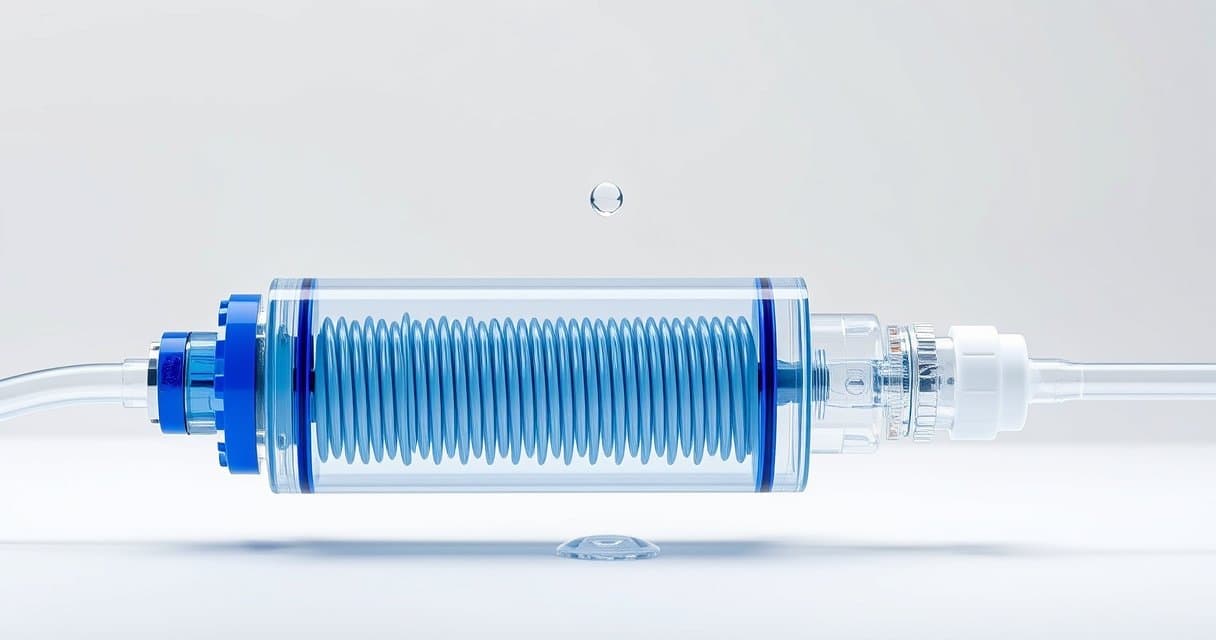
Osmosis System: Buying Guide
Stop chlorine taste & PFAS. Get advanced home filtration with reverse osmosis. Our guide helps you choose wisely.
Articles you might like
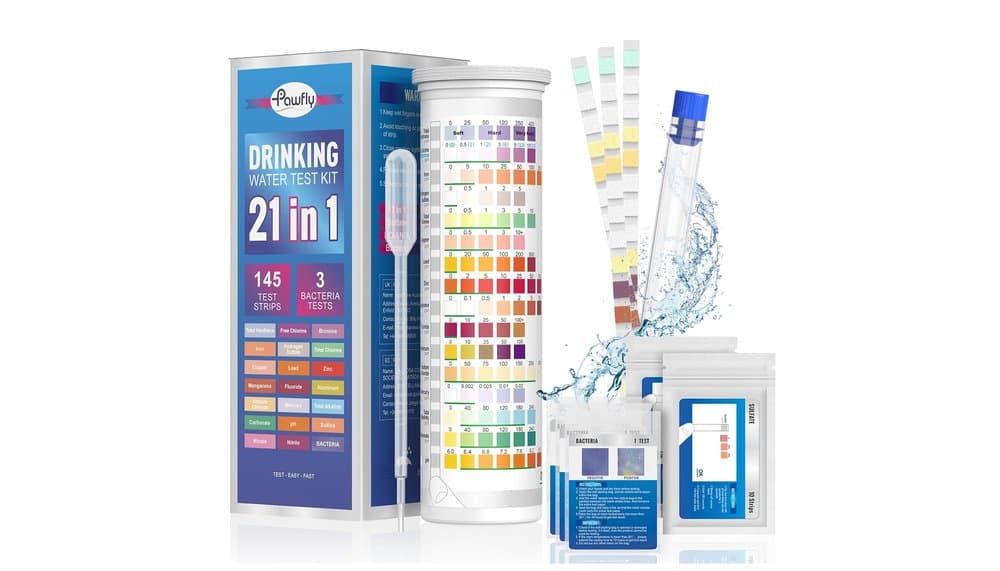
Pawfly 21 in 1 Drinking Water Test Kit Review
Pawfly test kit reviews a 21-in-1 water test strip, analyzing accuracy & value for home tap, well, or aquarium water tests. Get key insights before buying.
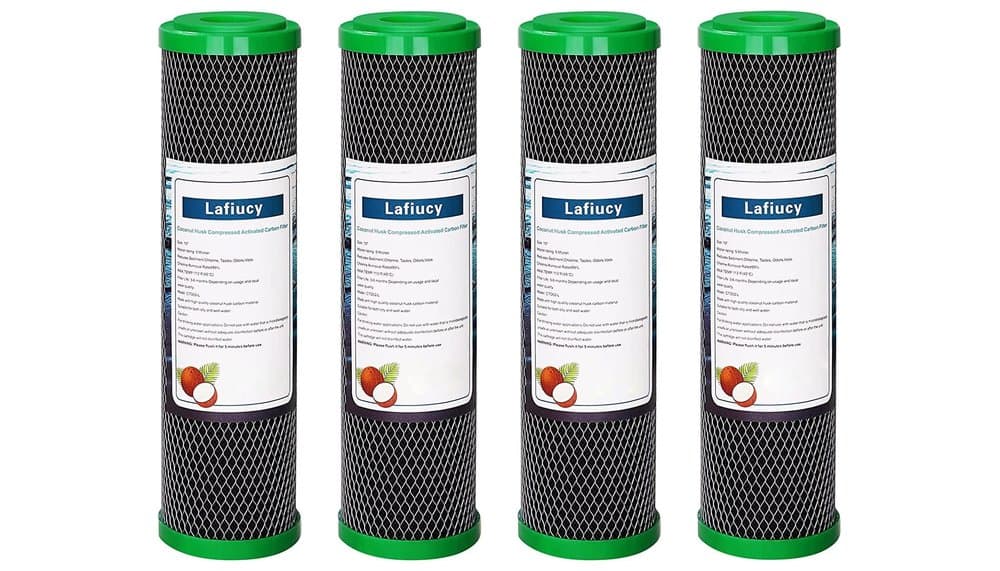
Lafiucy 10 Inch Coconut Carbon Filter Review
Review of the affordable Lafiucy 5 Microns 10-inch activated carbon water filter cartridge, analyzing specs & user feedback for performance.
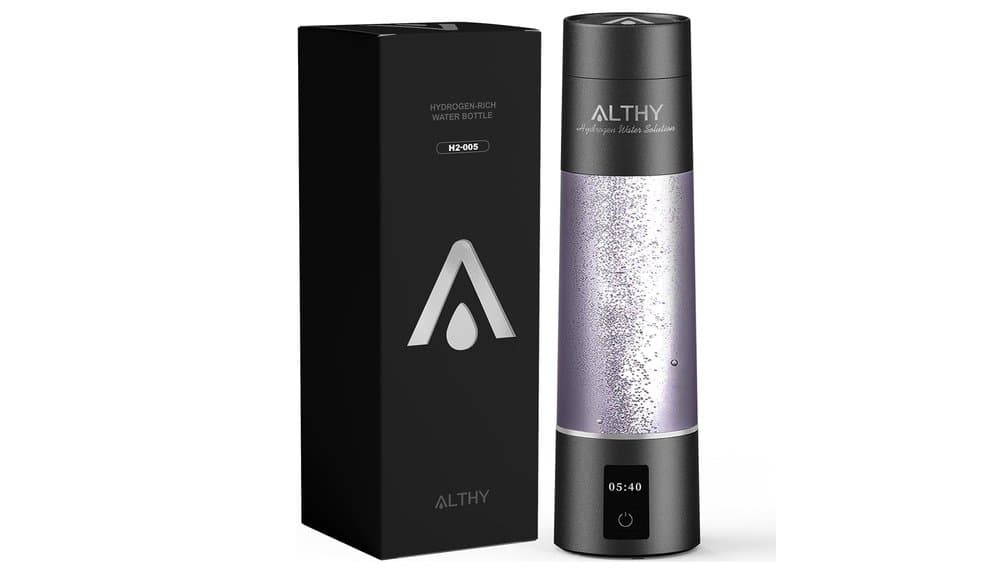
ALTHY Performance Hydrogen Water Bottle Review
Transform water into antioxidant-rich hydrogen water anywhere with the ALTHY portable bottle. A powerful, on-the-go wellness innovation.