Descaling Agent Comparison
Does your kettle already have a white layer, and does your skin feel tight after every shower? You're right in the middle of the limescale puzzle. Fortunately, there are several solutions to protect against it, but not all are equal: between traditional softeners, salt-free systems, and targeted solutions, the choice is vast. Let's clarify the facts together to distinguish truth from falsehood and find what will really work in your home.
Key Points to Remember
- Choosing the ideal anti-limescale system depends primarily on the hardness of your water and your priority: total protection of appliances (salt softener) or ecological comfort without maintenance (physical system).
- The salt softener is the most effective solution for eliminating limescale, but it requires space, regular maintenance, and alters the composition of the water.
- Physical systems (electronic/magnetic) are compact and require no maintenance, but their effectiveness can vary with very hard water and high-temperature heating elements.
- Targeted solutions (shower filters) are affordable and improve skin comfort, but they do not protect appliances and require regular cartridge changes.
- For an optimal return on investment, evaluate the total cost (purchase + maintenance) over the long term against the potential damage from limescale to your equipment.
Understanding Anti-Scale Technologies: How Does Each One Work?
To make a good choice, you must first understand how these systems act. Their mode of action determines everything: their effectiveness, their impact on the water, and your daily life. They can be grouped into three main families, each with its own logic.
The Salt-Based Softener: Chemical Replacement
This is the most radical method. The principle? A tank filled with ion exchange resin captures the calcium and magnesium ions (the limescale) present in the passing water. In exchange, it releases sodium ions (salt). Concretely, the limescale is physically removed from the water. The water is said to be "softened". Regularly, the system regenerates by drawing from its salt tank to clean the resins and flush the captured minerals down the drain. It's very effective, but it alters the composition of your water. Frankly, it's the most advanced system for complete protection of piping and appliances, but it requires a certain commitment.
Physical Systems (Electronic, Magnetic): Transformation
Here, no salt, no chemical product. These devices are installed on the main pipe and emit either an electromagnetic field or impulses. Their goal is not to eliminate limescale, but to modify its crystalline structure. The idea: instead of forming hard deposits (tartar), the minerals remain suspended as fine particles, flushed away with the running water. The advantages are appealing: simple installation, no maintenance, and the beneficial minerals are retained. But be careful, their performance can fluctuate. With very hard water at 40°f (frankly, this is often the critical threshold), or when facing stagnant, very hot water like in a water heater, the effect may be less conclusive. It's an ecological solution, but one whose technical guarantees should be verified.
Targeted and Local Solutions: Treatment at the Source
Do you have a problem mainly in the shower or at a faucet? Spot solutions then make sense. We're talking here about specific shower filters, often based on polyphosphates or crystals, or small magnetic systems that screw directly on. They act as a water "conditioner" at a specific point. Their effectiveness is real for immediate skin comfort and for reducing marks on surfaces. However, they do not protect your washing machine or your water heater. And you must not forget to change the cartridge every 4 to 6 months or so, or risk seeing the effect canceled.
So, what is the best anti-scale system? It all depends on your goal. If you want total eradication and protection of the network, the chemical technology of the softener is unbeatable. If you favor a consumable-free approach for general comfort, a physical system should be closely considered. And if only your well-being in the shower matters, a targeted solution will do the job perfectly, without breaking the bank.
Long-Term Comparative Efficiency: What Can You Really Expect?
The real question is: in five years, will your installation still be protected? Purchase promises are one thing, durability in your daily life is another. Let's talk specifics.
Protection of Appliances and Plumbing
This is the core issue. A well-maintained salt-based water softener offers a near-absolute guarantee. No more limescale in pipes, water heater heating elements, or your washing machine. Manufacturers often mention a lifespan of 15 years for the device, which is credible if you replenish the salt and perform the adjustments. On the other hand, physical systems (magnetic, electronic) offer a different type of protection. They prevent limescale from adhering, but you might still see a fine white powder at the bottom of your kettle that simply needs rinsing out. For plumbing, it's effective, but on very high-temperature heating elements, some users report effectiveness that can diminish over time if the water is extremely hard.
Evolution of Comfort and Household Maintenance
In the beginning, everything is great. But let's look at persistence. With a water softener, the shower remains consistently soft, soap lathers immediately, and glass and faucets hardly ever need descaling. It's constant. With a physical system, initial feedback is often enthusiastic: skin feels softer, marks on shower walls are reduced. The catch? The effect can be less uniform if the water flow rate varies significantly or if the device is not perfectly sized for your flow rate. For targeted solutions like shower filters, effectiveness drops drastically once the cartridge is saturated. If you forget to change it every 6 months, you're back to square one.
The Ultimate Test: Very Hard Water
This is where technologies truly diverge. Take water hardness above 35°f (or 350 ppm of limescale). A properly calibrated salt-based water softener will maintain output water at 0°f. Period. It's mechanical. For an electronic system, the workload is maximal. Some high-end models will hold up, while others, less powerful, will see their effective range exceeded – limescale will eventually deposit. This is a crucial point: in limestone regions, opting for a physical system requires meticulously checking its maximum admissible hardness range. Otherwise, disappointment is guaranteed.
Frankly, if you're looking for the best anti-scale system based strictly on the criterion of proven and constant effectiveness, regardless of hardness, the traditional water softener remains the undisputed champion. But if your water is moderately hard and you prioritize an eco-friendly comfort without heavy maintenance, a quality physical system can be an excellent long-term alternative. You just need to have expectations aligned with the reality of the technology.
Our Selection
Our selection: three approaches to combat limescale
Faced with hard water, limescale deposits can become a real headache, damaging household appliances and plumbing. To remedy this, the market offers very different solutions, ranging from the simple magnet to the complete filtration station. We have analyzed three popular products, based on their technical specifications and community feedback, to help you see more clearly.
| Product | Type of Action | Installation | Capacity / Scope | Key Strengths |
|---|---|---|---|---|
| Maximex Magnetic | Magnetic (1200 Gauss) | Clip onto pipe | Pack of 2, for 4 people | Extreme simplicity, zero maintenance |
| ORIA Double Pure | Filtration (polyphosphate + sediment) | On main water inlet pipe (plumbing) | 12-month cartridges, 4 people | Dual action, ACS compliant, integrated bypass |
| iSpring ED2000 | Electronic (induction) | Collar on pipe + power supply | Whole house | No consumables, retains minerals, eco-friendly |
Maximex Magnetic Anti-Limescale
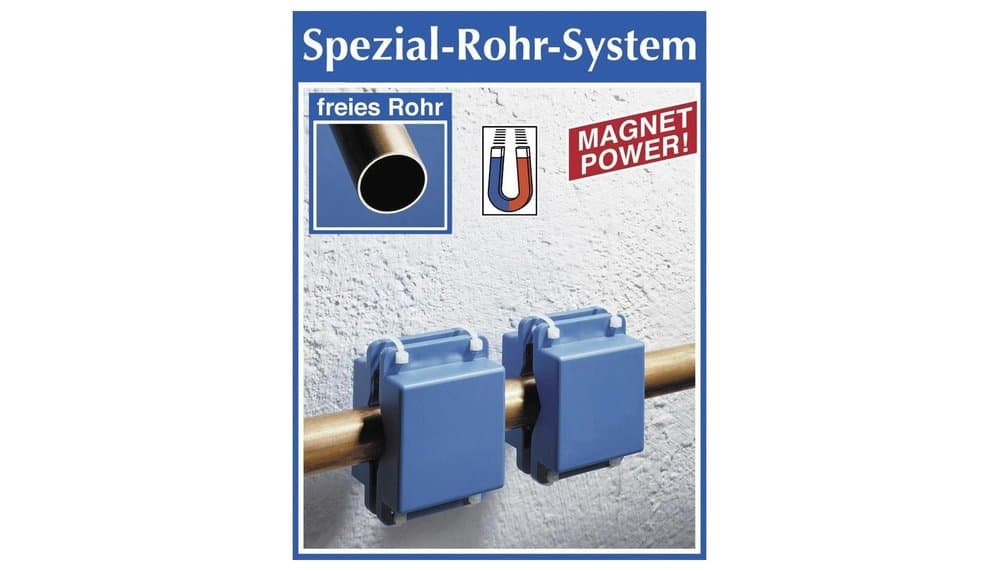
This product embodies the simplest and least invasive anti-limescale solution on the market. The principle is basic: two magnets to clip directly onto the main water inlet pipe, supposed to act using a magnetic force of 1200 Gauss to alter the structure of limescale and prevent it from adhering.
On paper, the arguments are enticing: literally a 10-second installation, no tools, no need to cut off the water, and zero maintenance afterward. The promise of "softer" water for the whole house, without chemicals or electricity, with a compact and discreet housing, has clearly convinced many users.
However, community feedback is very divided and polarized. On one side, some users report a noticeable improvement, fewer white stains on shower walls or a slowed scaling on appliance heating elements. On the other side, a significant portion of the feedback, including from scientific circles relayed by consumers, questions the proven effectiveness of this type of magnetic device on water hardness. The main limitation raised is the lack of tangible, measurable proof of significant action under real-world conditions of pressure and flow. This product can therefore be seen as a low-risk, very low-effort bet, the results of which seem heavily dependent on the specific configuration of each installation and individual perception.
ORIA Double Pure
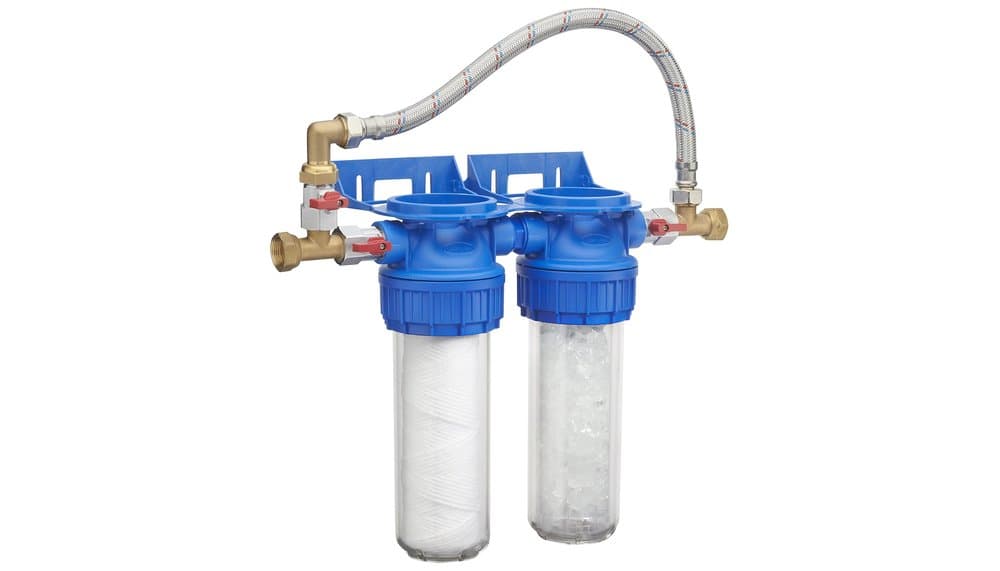
Here, we move to a proven mechanical and chemical solution. The ORIA Double Pure station is a dual-action filter that installs on the main water line, typically under the sink. It combines a sediment filter cartridge (25-micron filtration) and a polyphosphate anti-limescale cartridge, which coats minerals to prevent them from fixing.
User feedback highlights several concrete strengths. First, its comprehensive nature: the kit includes everything needed, including a very practical bypass that allows changing cartridges without cutting off water to the entire house, and swivel fittings that facilitate installation. Secondly, its ACS compliance guarantees that all materials are suitable for contact with drinking water, a mark of seriousness. Reviews often confirm a visible reduction in limescale, protection of appliances, and for some, an improvement in water taste thanks to sediment filtration.
The limitations relate mainly to maintenance and commitment. Unlike other solutions, this one requires annual cartridge replacement (a recurring cost) and an initial installation that may require some plumbing skills or the help of a professional. Furthermore, the action of polyphosphate is preventative and time-limited; it does not dissolve existing limescale and its effectiveness depends on strictly adhering to the replacement schedule. It is a robust, but more demanding solution.
iSpring ED2000
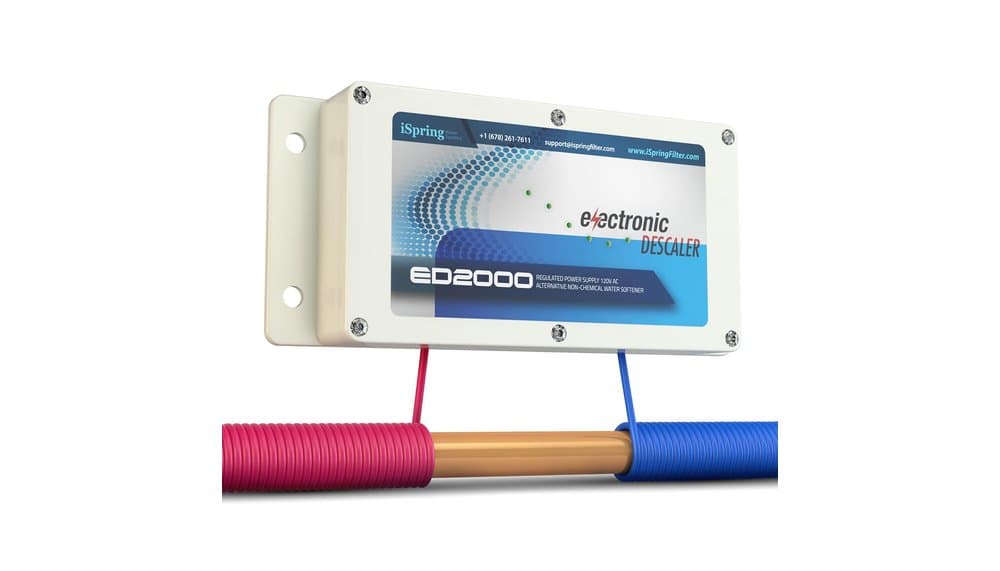
The iSpring ED2000 represents the electronic technology in the fight against limescale. This water conditioner works on the principle of electromagnetic induction: a collar placed around the pipe emits a field that, according to the manufacturer, alters the structure of limescale crystals so they remain suspended in the water instead of adhering.
What interests us here is its positioning as an "eco-friendly" and maintenance-free solution. Customer reviews highlight the complete absence of consumables (no salt, no cartridges), the fact that it retains beneficial minerals (unlike a salt-based water softener), and a relatively simple installation that boils down to fixing the collar and plugging the device into a power outlet. The promise of acting on the entire house and reducing the energy consumption of water heaters and household appliances is also a strong argument.
Community feedback, while generally positive, brings important nuances. First, its effectiveness is not immediate; many users note that it takes several weeks, even a few months, to observe a clear reduction in deposits, the time needed for the treatment to dissolve old limescale. Secondly, its operation depends on a continuous power supply. A power outage or accidental unplugging interrupts the treatment. Finally, as with the magnetic solution, some doubt the stated scientific principle, although the average review score (4/5 on over 2000 ratings) suggests real user satisfaction for many.
Installation, Size, and Daily Maintenance
Here, we move from theory to practice. Because the best system in the world, if it's too complicated to live with, will eventually annoy you. Let's talk about what happens in your home once the box is open.
The Big Day: Installation
There is a gap between technologies. Take the salt-based water softener: it's an operation. You need a connection to the water supply, a drain for the rinse water, an electrical outlet, and a stable space. Clearly, professional installation is almost mandatory. Count on half a day's work and a budget of 300 to 800 euros for installation, depending on the complexity.
On the other hand, a physical system (electronic or magnetic) is generally fixed to the main pipe, without drainage or electricity for purely magnetic models. A good DIYer can often do it themselves in an hour with a set of wrenches. Electronic models require a simple nearby outlet. As for targeted solutions, like a shower filter, it's a matter of minutes: you screw it on and you're good to go.
Size: The space it takes up in your life
This is a decisive criterion, especially in an apartment or a small house. A water softener, with its salt tank, is the size of a small washing machine. It needs a dedicated spot, in the garage, laundry room, or under a spacious sink. Also consider access for refilling with bags of salt.
Electronic systems are much more compact. The control "box" mounts on the wall, and the main device installs on the piping. It takes up about the volume of a shoebox. Magnetic models are even more discreet – often just a collar or tube to clip onto the pipe. A perfectly invisible solution.
The Routine (or Lack of Routine) of Maintenance
This is where your choice will impact your calendar.
- Salt-Based Water Softener: It's a commitment. You need to monitor the salt level and refill it every 1 to 4 months, depending on your consumption and water hardness. It's physical (carrying 25 kg bags) and a bit messy. Once or twice a year, a more thorough cleaning of the tank is recommended. Some high-end models simplify the task, but maintenance remains the trade-off for its total effectiveness.
- Physical Systems: This is their major selling point. Once installed and set, maintenance is almost non-existent. No refilling, no filters to change. For electronic models, just check from time to time that the device is powered on and working. That's it.
- Targeted Filters (shower, tap): Maintenance is light but mandatory and recurring. It involves changing the cartridge every 3 to 6 months, or even sooner if your water is heavily loaded. Forget to change it, and the filter becomes useless, even counterproductive.
My opinion? If you hate the idea of managing salt or thinking about consumables, the traditional water softener is clearly not for you. On the other hand, if you have the space and prefer scheduled but infrequent maintenance over possible forgetfulness, it can be your best anti-limescale system. For a "install and forget" solution, seriously consider physical systems. Their ease of living is a huge advantage.
Total Budget: Initial Investment, Recurring Costs, and Return on Investment
This is the financial chapter. And frankly, the price on the label only tells a small part of the story. To avoid bad surprises, you need to look at the cost over 5 or 10 years. Let's go with a calculator.
Purchase and Installation: The Initial Bill
Price ranges are wide, it all depends on the technology and the size of your home.
- Physical systems (electronic/magnetic) start at around 400-500 euros for a small home. A high-performance model for a family house is often between 800 and 1500 euros. Installation, if you have it done, is usually simple and costs around 100 to 200 euros.
- The salt-based water softener represents the heaviest investment. Plan for between 1500 and 3000 euros for the appliance and its professional installation. At this price, you should demand robust build quality and serious after-sales service.
- For targeted solutions, a good anti-scale shower head with an integrated filter costs 50 to 150 euros. It's a very accessible entry ticket, but it only protects a single water point.
The Expenses That Come Back Every Year
This is the crucial point that is often forgotten. This is where the economic equation can tip.
- The salt-based water softener generates two main recurring costs. Salt first: depending on your consumption, plan for 50 to 150 euros per year. Then, maintenance: an annual resin recharge (every 5 to 10 years, about 200-400 euros) and potentially check-up visits. Over 10 years, easily add 1000 to 2000 euros to the initial costs.
- Salt-free systems, in theory, have no recurring costs. No consumables, no salt. This is their massive economic argument. The only point to watch: if the system is electronic, a very low electricity consumption (a few euros per year).
- With a shower filter, the budget is regular but modest. You need to change the cartridge 2 to 4 times a year, for an annual cost of 30 to 80 euros. This needs to be planned in your shopping.
Return on Investment: Myth or Reality?
Protecting your boiler, washing machine, or water heater is tangible. Less calcareous water significantly reduces scaling. This translates to fewer breakdowns, a longer lifespan for appliances, and optimal energy consumption (a scaled-up water heater overconsumes).
Do the math for your house. Repairing a boiler easily costs 500 euros. Replacing a water heater, over 1000. In the long term, a good anti-scale system can pay for itself just by avoiding one or two major repairs. The true best anti-scale system for your wallet is not necessarily the cheapest to buy, but the one whose total cost (purchase + maintenance) will be less than the damage it prevents.
Personally, I find that the salt-based water softener has a very clear return on investment for large families in areas of very high hardness. For others, the simplicity and absence of recurring costs of physical systems offer an immediately very appreciable economic peace of mind.
How to Make Your Decision? Key Questions to Ask Yourself
You are now armed with all the information. So, how do you decide? Ask yourself these four questions in order. The answers will guide you toward the choice that makes sense for you.
What is the true hardness of my water? (The essential diagnosis)
This is the foundation. No point investing in a tank if you need a fencing foil. Retrieve the latest water quality report from your town hall, often available online. Look for the titre hydrotimétrique (TH), expressed in French degrees (°f). This is your key figure.
- Less than 20°f: Your water is soft. A physical system or even a targeted shower solution may be largely sufficient.
- Between 20 and 30°f: You are in a medium hardness zone. All technologies are on the table, but the effectiveness of salt-free systems must be well verified.
- More than 30°f: The water is hard or very hard. Here, you need a serious solution. A salt-based water softener is often recommended for total protection. If you absolutely want to avoid salt, you must necessarily consider the highest-performing physical systems, specifically designed for very hard water.
What is my main goal: comfort or total protection?
This question often divides households. Be honest with yourself.
- Is your absolute priority to eliminate all risk of limescale for your pipes, boiler, and new appliances, even if it means dealing with a bit of maintenance? The logical answer points toward the salt-based water softener. It is the "comprehensive insurance" solution.
- Or are you primarily looking for better comfort (skin, hair, soft laundry), an ecological solution without wasting water or salt, and are you willing to accept that a bit of scale may remain, particularly on heating elements? Then a properly sized physical system could be your best anti-limescale system.
Do I have the space and necessary technical access?
Take a tour of your technical closet or basement. A salt-based water softener requires floor space, a water inlet, a drain, and an electrical outlet nearby. If you don't have that, it's a heavier renovation project. Salt-free systems are much more compact and are often installed on existing pipes, even in a tight space. This is a practical criterion that can simplify everything.
What budget can I allocate for peace of mind?
Don't just look at the box price. Think about the long term. Are you ready for a higher initial investment (water softener) for modest annual costs (salt)? Or do you prefer a contained upfront cost (physical system) with the promise of almost no recurring expenses? For a renter or someone who wants to test, a quality showerhead is an excellent first step, very revealing.
In the end, the right choice is the one that matches your answers. There is no one-size-fits-all solution, but there is a perfect solution for your situation.
Conclusion
Here we are, the complete tour of the anti-scale subject is finished. Each technology has its strengths and its compromises.
The important thing is to choose based on your water and your priorities. A perfect solution for your neighbor might not be for you.
Whatever your final choice, taking action against scale is a wise investment. For your comfort, for your home, and for the lifespan of your appliances. The ball is in your court.
Frequently Asked Questions
What is the best anti-scale system for a house?
The best system depends on your objective: a salt-based water softener is the most effective for total protection of the plumbing and appliances, while a physical system (electronic/magnetic) is ideal for an eco-friendly, maintenance-free comfort.
How does a salt-based water softener work?
A salt-based water softener physically removes scale from the water via a tank of ion exchange resin, which captures calcium and magnesium ions and replaces them with sodium ions.
Are salt-free anti-scale systems really effective?
Salt-free systems (electronic, magnetic) alter the structure of the scale to prevent it from adhering, but their performance can vary with very hard water (>35°f) or on high-temperature heating elements.
Which anti-scale solution should I choose for an apartment?
For an apartment, prioritize a compact physical system to install on the piping for general comfort, or a targeted solution like a shower filter if only skin comfort is a priority.
What is the annual cost of a water softener?
The recurring cost of a salt-based water softener is primarily the purchase of salt, amounting to between 50 and 150 euros per year, to which must be added the replacement of the resin every 5 to 10 years.
How to protect your skin from scale in the shower?
The simplest solution to protect your skin is to install a specific anti-scale shower filter, whose cartridge must be changed every 4 to 6 months to maintain its effectiveness.
100% free and independent — All our articles are written independently, without any sponsorship. We may earn a commission on purchases made through our links, at no extra cost to you.
Guides you might like
Alkaline Water Ionizer Buying Guide
Discover how alkaline water ionizers work and learn key tips to choose the right one for your home and health. Essential buying guide.
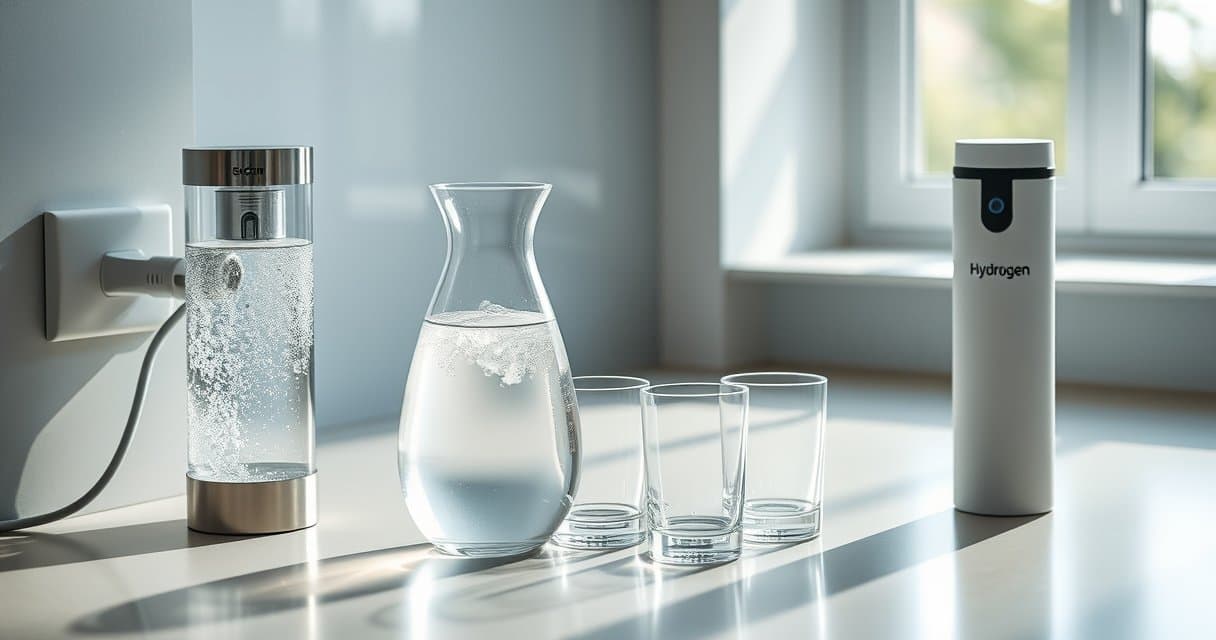
Buying Guide: Best Hydrogen Water Generator
Guide to hydrogen water generators: cutting through the hype to help you make an informed purchase decision for your health and budget.
Choosing Your Home Water Filter
Unlock clean, tasty water at home. Find the right water filter to tackle chlorine, pollutants, and limescale for better health and peace of mind.
Articles you might like
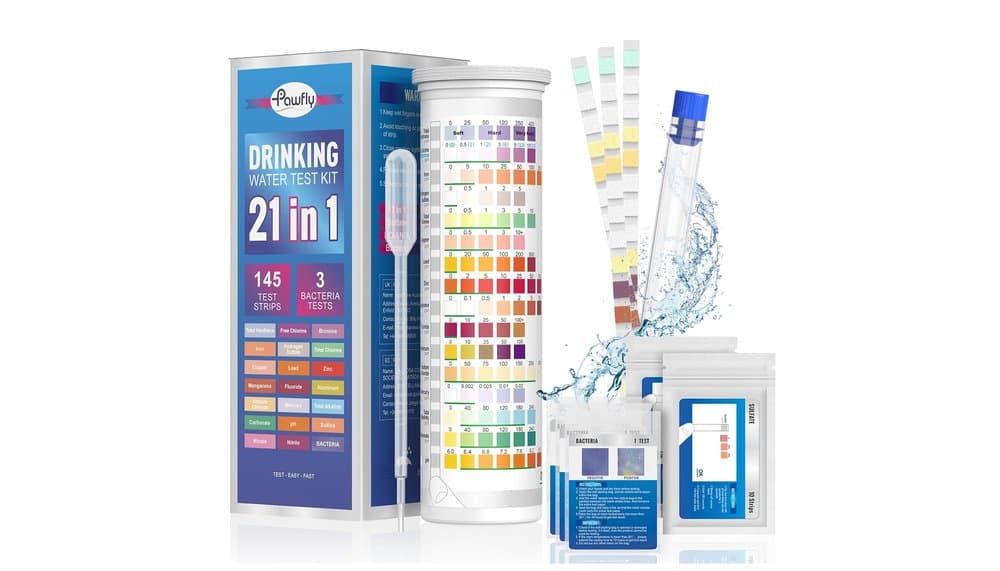
Pawfly 21 in 1 Drinking Water Test Kit Review
Pawfly test kit reviews a 21-in-1 water test strip, analyzing accuracy & value for home tap, well, or aquarium water tests. Get key insights before buying.
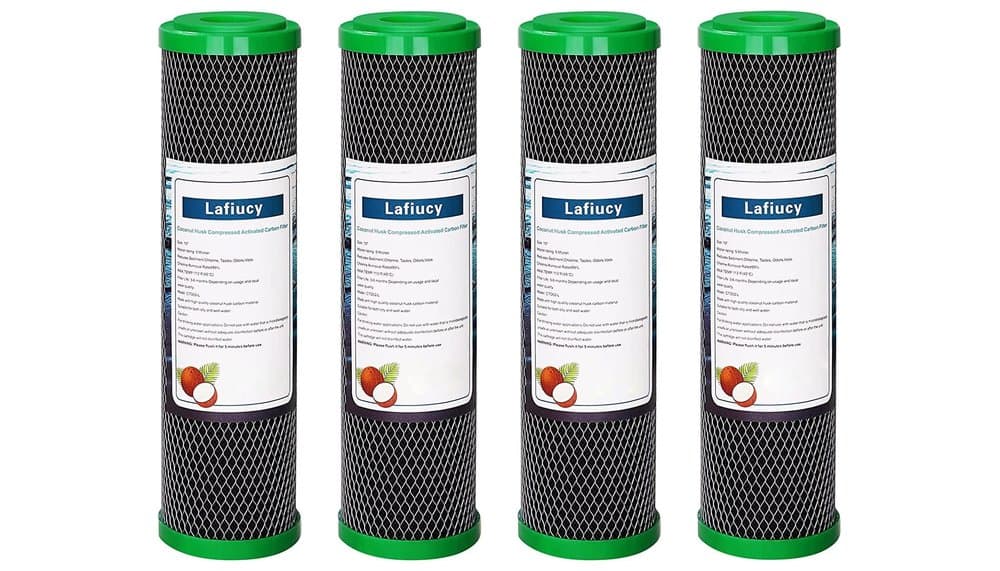
Lafiucy 10 Inch Coconut Carbon Filter Review
Review of the affordable Lafiucy 5 Microns 10-inch activated carbon water filter cartridge, analyzing specs & user feedback for performance.
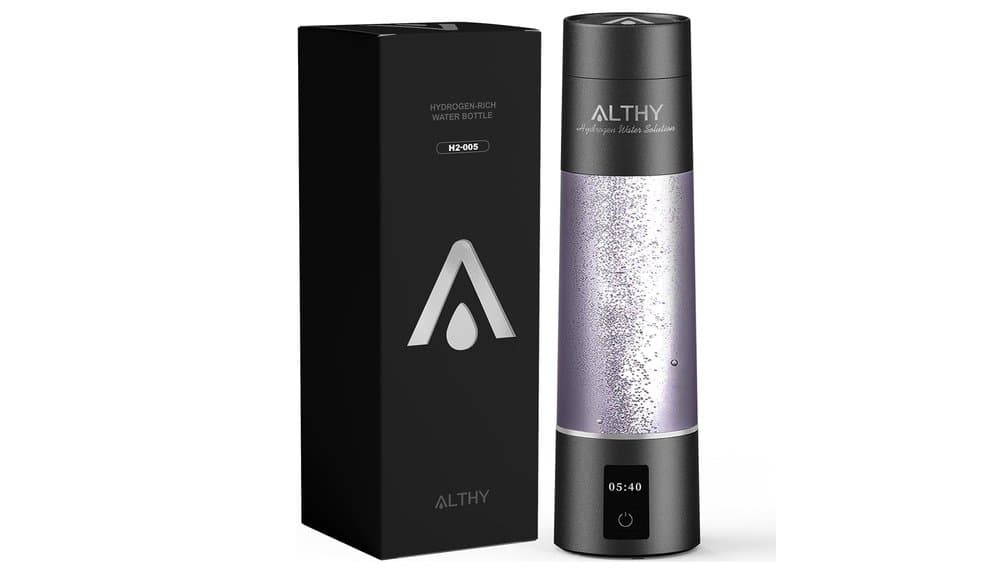
ALTHY Performance Hydrogen Water Bottle Review
Transform water into antioxidant-rich hydrogen water anywhere with the ALTHY portable bottle. A powerful, on-the-go wellness innovation.