Osmosis System: Buying Guide
You know that persistent chlorine taste in your glass of water, or that worry about new regulations on pollutants like PFAS? That's where a reverse osmosis system comes in. Honestly, if you're looking for the most advanced filtration for your home, this is the technology you should turn to. Let's sort fact from fiction together to help you make the right choice, without breaking the bank or complicating your life.
Key Points to Remember
- A preliminary analysis of your water is essential to identify pollutants and choose a suitable reverse osmosis system.
- For pure water without waiting or stagnation, prefer a tankless system with an integrated pump.
- Check the rejection rate (1:1.5 ideal) and NSF certifications to guarantee efficiency and limit water waste.
- Regular maintenance (annual pre-filters, membrane every 2-4 years) is essential to maintain performance.
- A remineralization stage is recommended to improve the taste of purified water intended for drinking.
Analyzing Your Water Composition
Before searching for the best reverse osmosis system, you must first know what it needs to combat. Proceeding blindly is like prescribing medicine without a diagnosis: you risk over-equipping or, worse, under-equipping your setup. Your tap water is unique, and so are its flaws.
To start, obtain your annual water quality report. Your town hall or water service is obligated to publish it. It's free, it's official. Don't just skim it. Look for the key values: hardness (TH in °f), nitrates (in mg/L), pesticides, and if you're lucky, heavy metals like lead or copper. If the document mentions temporary "non-compliances", that's a strong signal.
But this report is a group photo, an average at the scale of your municipality. It says nothing about what's happening in your own pipes, especially if you live in an old building. This is where a simple at-home test becomes indispensable. Frankly, for about twenty euros, a kit that measures hardness, pH, chlorine, nitrites, and nitrates will give you valuable indications about limescale and the presence of certain contaminants. To go further, you can even send a sample to an accredited laboratory for a complete analysis (heavy metals, drug residues, PFAS). It's an investment, but one of irrefutable clarity.
The Pollutants That Truly Justify Reverse Osmosis
Not all filters are equal. A pitcher with activated carbon captures chlorine and improves taste, but it is completely outmatched against certain enemies. Here is what a true reverse osmosis system, and only it, can eliminate almost entirely (we're talking 95 to 99.9%):
- PFAS and drug residues: These emerging, very persistent pollutants are at the heart of new regulations. Basic technologies do not retain them.
- Nitrates and fluorides: Soluble ions that pass through most conventional filters. Reverse osmosis blocks them.
- Heavy metals (lead, mercury, arsenic): Particularly concerning in old networks.
- Microplastics and viruses/bacteria: The membrane, whose pores are smaller than 0.0001 micron, acts as the ultimate physical barrier.
If your main concern is just limescale, a water softener may be sufficient. But if your report shows nitrates at 40 mg/L or if you are in an agricultural area, then it's a no-brainer: reverse osmosis becomes necessary. It's the difference between improving water and purifying it deeply. Understanding this is already half the journey to identifying the right system.
How a Reverse Osmosis System Works and Its Architecture
How can a simple membrane produce almost perfectly pure water? The principle is simple: the pressure from the water main is used to force water through an extremely fine membrane that allows only H₂O molecules to pass. Everything else – salts, metals, pollutants – is flushed to the drain. But in practice, a good reverse osmosis system is much more than a membrane. It is a team of pre-filters that work upstream to protect it, and sometimes options downstream to restore character to the water.
The Backstage Team: The Three Stages of Pre-Filtration
Think of the membrane as a movie star, fragile and expensive. Its role is crucial, but it can't work if you send it anything and everything. That's the job of the pre-filters.
- The Sediment Pre-filter (5 Micron): The brute. It stops rust, sand, suspended particles. Without it, the membrane would clog in a few weeks.
- The Activated Carbon Pre-filter (block or granular): The tactician. It captures chlorine, organic compounds, and improves taste. Its role is critical because chlorine oxidizes and destroys the RO membrane. It's your first line of defense for the lifespan of the system's heart.
- The Reverse Osmosis Membrane: The star, then. Its pores are about 0.0001 micron in size. To give you an idea, a human hair is about 70 microns. It retains up to 99% of dissolved solids. It does the real purification work against dissolved pollutants that the other filters let through.
With or Without a Tank: A Choice That Changes Everything
This is THE big current debate, and it directly impacts footprint and flow rate.
- The Classic System with a Tank (4 to 12 liters): It produces water slowly, stores it in a pressurized tank, and serves it on demand. The advantage? It works even with low inlet water pressure (2 bar can be enough). The major drawback? The water can stagnate, and the flow rate decreases as the tank empties. Frankly, it's the entry-level solution or for small needs.
- The Tankless System (or "tankless"): Modernity. A small integrated electric pump instantly boosts the pressure to supply the membrane. You have pure water on demand, with a constant flow rate (up to 1.5 L/min for the best models). No more stagnation, a reduced footprint. This is clearly the configuration that often defines the best water reverse osmosis system for regular family use, but it requires an electrical outlet and a higher budget.
The Final Options: The Personal Touch
Pure water is good. Pure and pleasant water is better. That's the role of the optional stages placed after the membrane.
- The Post-Carbon Filter: A final polisher that refines the taste, just in case.
- The Remineralizer: A crucial option in my opinion. Reverse osmosis produces water that is too "pure", flat-tasting. A remineralization filter (with calcium, magnesium) reintroduces essential minerals and restores a delicious balance and taste. For daily drinking water, it's a real plus.
- The UV Lamp: A final anti-bacterial sentinel, useful if you have doubts about the microbiological quality of your stored water or the system's output.
Understanding this architecture is understanding what you're paying for. A 3-stage system with a tank will do the bare minimum. A 5 or 6-stage system, tankless and with remineralization, will offer the comfort and performance of a best water reverse osmosis system worthy of the name.
Our Selection
Choosing a reverse osmosis system for your aquarium or home can quickly become a puzzle. To help you see more clearly, we have analyzed three popular models: the ARKA myAqua190, its bigger sibling the ARKA myAqua380, and the iSpring RCC7AK, a more complex system. Here is our breakdown based on their technical specifications and recurring feedback from the user community.
| Product | Daily Output (liters/day) | Filtration Stages | Primary Use | Community Highlights |
|---|---|---|---|---|
| ARKA myAqua190 | 190 L | 3 stages | Aquarium keeping & basic domestic use | Easy installation, compact size |
| ARKA myAqua380 | 380 L | 3 stages | Large aquariums & domestic use | High flow rate without electricity, versatility |
| iSpring RCC7AK | ~284 L (75 GPD) | 6 stages (including remineralization) | Drinking water & human consumption | NSF certification, improved taste, complete system |
ARKA myAqua190
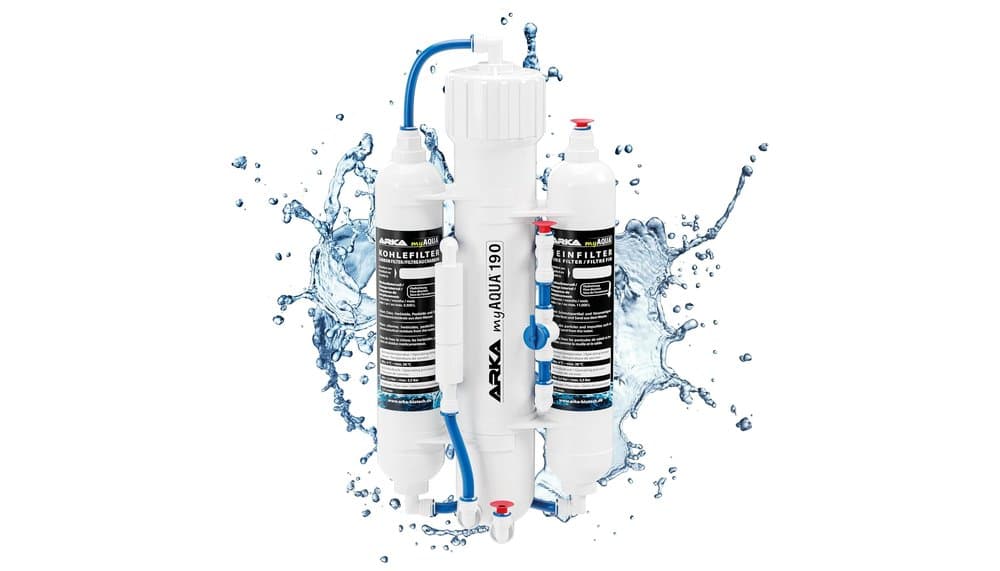
On paper, the ARKA myAqua190 positions itself as an entry-level compact and easy-to-use solution for aquarium keepers or light domestic use (iron, coffee maker). Its main promise is to produce up to 190 liters of reverse osmosis water per day via a three-stage filtration system (sediment, activated carbon, membrane) removing up to 99% of nitrates, phosphates, and heavy metals. The simplicity argument is strong: tool-free installation, quick connection to a faucet, and operation without electricity.
Based on user feedback, its main advantage lies precisely in its almost immediate ease of use, even for beginners. The inclusion of a 3-meter hose and wall mounts is appreciated. The community also notes a visible improvement in water quality in aquariums, with reports of healthier fish and shrimp. The color-coded clips for monitoring cartridge wear are considered practical for maintenance.
However, analysis of reviews highlights some concrete limitations. The advertised output of 190 L/day is often considered ideal for small to medium-sized aquariums, but can be tight for large volumes or frequent water changes. Furthermore, several users point out that the pure water / waste water ratio is about 1 to 3 or 4, which means a certain water consumption. Finally, although it can be used for drinking water, it lacks the specific health certifications for this use, and its 3-stage filtration is less advanced than dedicated systems. It is an excellent targeted solution for aquarium keeping, but less versatile for daily human consumption.
ARKA myAqua380
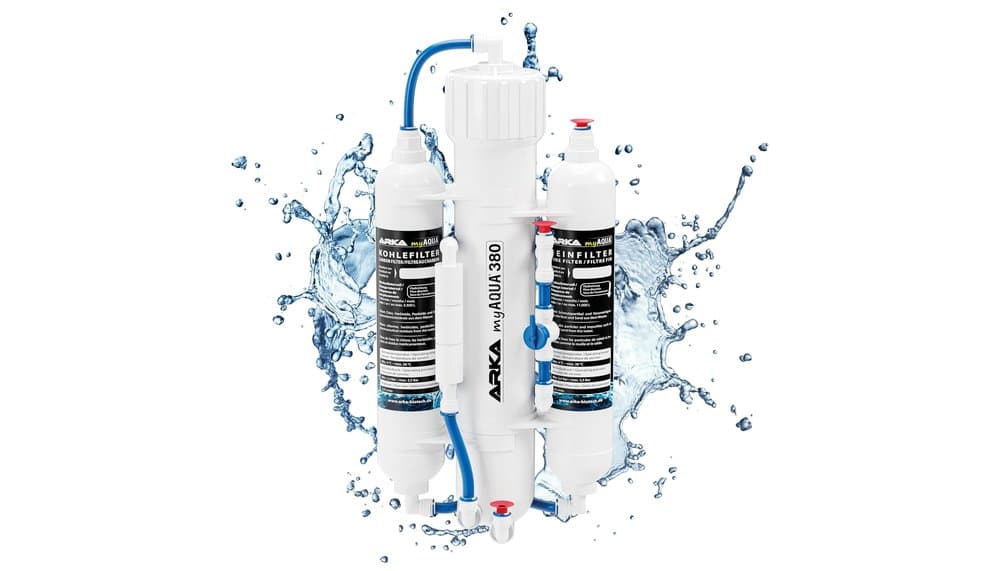
The ARKA myAqua380 is essentially the myAqua190 model with a doubled output (380 L/day) for a similar footprint. The technical specifications are identical in principle: a 3-stage system without electricity, same filtration promises (99% of impurities), and a comparable pure water/waste water ratio (1:3 to 1:4). Its target is clear: aquarium keepers with multiple tanks or large water volumes (reef tanks, large freshwater aquariums).
Community reviews confirm that it meets this need for increased productivity. Users performing large water changes or preparing water for complex systems appreciate not having to wait for hours. Like its smaller sibling, its installation is considered simple and its overall reliability is praised. Its versatility of use (aquarium, household appliances) is also a highlighted strength.
Nevertheless, the feedback warns of the same pitfalls, amplified by the higher flow rate. The upstream water consumption is proportionally higher due to the ratio, a point to consider if you are concerned about your water bill or ecology. Furthermore, the membrane and pre-filters have a lifespan limited by the volume of water treated, and with a higher flow rate, replacements might be needed a bit more frequently if the system is used at full capacity. It is a logical investment if the myAqua190 is undersized for your needs, but not necessarily required for a nano-aquarium.
iSpring RCC7AK
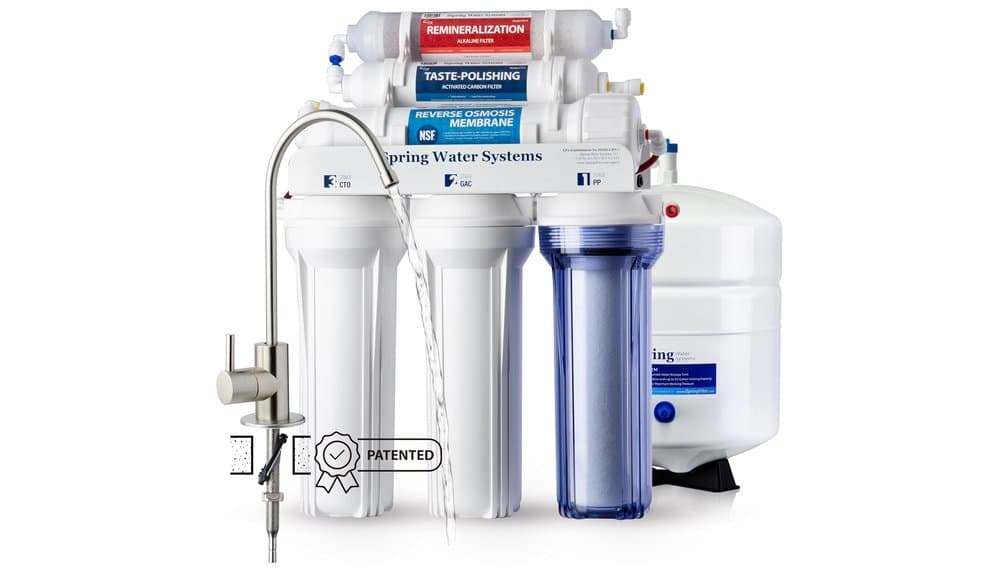
The iSpring RCC7AK belongs to a different category. It is a 6-stage reverse osmosis system designed to be installed under a kitchen sink and certified NSF/ANSI 58 for the production of drinking water. Its major particularity is its alkaline remineralization stage, which adds back beneficial minerals after the RO filtration, thus improving the water's taste and pH. On paper, it promises to remove up to 99% of over 1000 contaminants, including lead, chlorine, and nitrates.
The user community, particularly large for this model, is overall very complimentary. The strengths that come up most frequently are the quality and taste of the produced water, perceived as far superior to standard bottled water. The NSF certification provides significant confidence regarding the claimed system efficiency. Although its installation is more complex (requires drilling for a dedicated faucet), the detailed guides and technical support are judged to be excellent.
However, this sophistication comes at a cost in terms of complexity and size. The installation is clearly more involved than the ARKA systems and requires dedicated space under the sink. Furthermore, maintenance involves replacing multiple filters at regular intervals. Finally, although it can technically produce water for an aquarium, its output of 284 L/day is achieved under optimal pressure conditions, and its primary use remains human consumption. It is the high-end and most complete option for anyone seeking a quality source of drinking water at home, with the added benefit of being able to supply an aquarium.
Performance and Efficiency: Understanding Key Figures
Between marketing promises and reality, there can sometimes be a world of difference. To unmask a good reverse osmosis system, you need to speak the language of numbers. It's not rocket science, but it's these data points that will tell you if the device delivers on its purification promises and what its impact will be on your water bill.
The Rejection Ratio: The True Hidden Cost of Pure Water
This is THE ecological and economic figure to scrutinize. Reverse osmosis doesn't perform miracles: to produce one liter of pure water, it must send several liters down the drain. This ratio is called the rejection ratio.
- A basic or poorly designed model can have a ratio of 1:4, or worse. You consume 5 liters to get 1. That's absurd today.
- High-performance models, equipped with a pump and often an electronic feed valve, achieve a ratio of 1:1 or 1:1.5. You then have 1 liter of wastewater for 1 liter of pure water produced. The difference over a year is colossal. For a family that consumes 3 liters of pure water per day, an old 1:4 system wastes nearly 3300 liters of water per year. A 1:1 model wastes only 1100. The choice is quickly made, isn't it?
Flow Rate: From Patience to Instantaneity
Nothing is more frustrating than a filter that drips water. The flow rate, expressed in liters per minute (L/min) or gallons per day (GPD), is crucial for your comfort.
- A classic reverse osmosis system with a tank (50 GPD) will have a useful flow rate limited by the tank size. Once empty, you must wait for it to refill.
- The most advanced tankless models offer flow rates of 1 L/min (about 380 GPD) or more. This is enough to quickly fill a pitcher or a cooking pot, without waiting. It's this kind of performance that justifies the investment in a meilleur osmoseur eau.
TDS, or The Real-Time Purity Indicator
TDS stands for "Total Dissolved Solids" – the sum of dissolved solids in the water. A TDS meter, built-in or optional, measures this in parts per million (ppm).
- Tap water can vary from 100 to 500 ppm depending on the region.
- A good reverse osmosis membrane should have a rejection rate of 90% to 98%. Concretely, if your water starts at 300 ppm, the filtered water should be between 6 and 30 ppm. This indicator is your best friend for maintenance. If the number suddenly rises, it means the membrane is tired or a pre-filter is saturated. It's real-time monitoring, very valuable.
Certification: Your Guarantee Against Marketing Hype
Anyone can write "removes 99% of contaminants" on a box. The only word that counts is from an independent third-party organization. Look for NSF/ANSI certifications.
- NSF/ANSI 58 certification specifically covers reverse osmosis systems. It certifies the announced contaminant reduction performance (lead, nitrates, arsenic, etc.).
- NSF/ANSI 42 certification concerns the reduction of tastes, odors, and chlorine. A certified product has undergone laboratory tests compliant with rigorous standards. It's the only way to have peace of mind about the system's real effectiveness. It's non-negotiable if you want a serious device.
Daily Life: From Everyday Installation to Maintenance
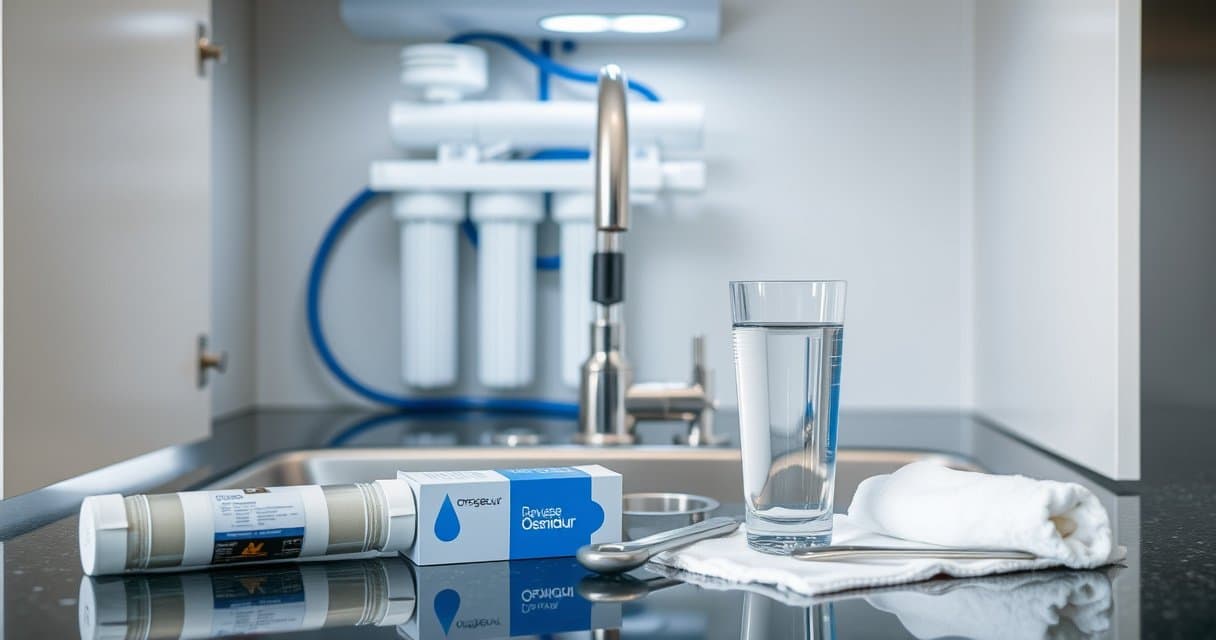
Let's get down to business: what is life like with an under-sink reverse osmosis system? This is where promises meet the reality of Saturday morning DIY and reminders to change filters. Don't worry, it's not overly complicated if you choose the right model.
Installation: For the Seasoned DIYer or Screwdriver to Avoid?
It all depends on the model you have in your hands. There is a real gap.
- So-called "plug & play" or "all-in-one" systems are a blessing. The filtration block is compact, connections are often already in place, and you just need to connect the cold water supply hose to the provided valve and run the purified water line to the dedicated faucet. Allow for a good hour, a bit of patience, and two wrenches. It's very accessible.
- Traditional modular systems, with their three separate pre-filters, the membrane in its housing, and the storage tank, require more work. You need to drill the sink for the faucet, find space for all these components, and connect about ten tubes. If you're not comfortable with it, it's better to call a professional. Frankly, the time and peace of mind saved is often worth the cost.
The Maintenance Schedule: The Essential Routine
This is the point that makes many users give up. A reverse osmosis system is not a "set it and forget it" appliance. It's a living ecosystem that needs attention. Here is the typical schedule:
- The Pre-filters (Sediment and Activated Carbon): These are the frontline soldiers. They should be changed every 6 to 12 months, depending on your consumption and the quality of the incoming water. Neglecting them is condemning the membrane to a premature death, which is much more expensive.
- The Reverse Osmosis Membrane: This is the heart of the system. It typically lasts between 2 and 4 years. Replacing it is simple: unscrew its housing, take out the old one, insert the new one. The trick? Follow the manufacturer's recommendations AND monitor your TDS meter (which we talked about before). A sudden rise in ppm is a clear signal.
- Disinfection: Once a year, it's wise to disinfect the circuit, especially if you have a storage tank, to prevent any bacterial growth. Some high-end models even do this automatically.
The Faucet and Daily Use: The Pleasure of Use
This is the interface with your life. A specific faucet is provided. Basic models have a simple lever. But more advanced models integrate features that change everything: a touch screen with a light indicator for water quality (real-time TDS), a filter change reminder, or even the choice between purified water and remineralized water. This last option is, in my opinion, what makes a meilleur osmoseur eau for daily consumption. Reverse osmosis is so effective that it makes the water taste a bit "flat." A light remineralization step (with calcium and magnesium) gives it back body and a pleasant taste, without impurities. It's the perfect balance.
The Recurring Cost: The Truth About Consumable Prices
Let's be honest, the investment doesn't stop at the purchase. You need to budget for consumables. Avoid models with proprietary or hard-to-find filters; you would be held hostage. For a standard system, budget on average:
- A pack of pre-filters (2 or 3 elements): between €40 and €70 per year.
- A new membrane: between €80 and €150 every 2-4 years. That's an average annual cost of €60 to €100. Compare this price to that of bottled water for a family, and the equation quickly becomes very interesting, not to mention the ecological benefit and convenience. Be sure to check the availability and price of replacement parts before buying your unit, that's a friendly piece of advice.
Conclusion
To choose your osmosis system, the essential is to start from your needs. Identify your priority pollutants. Estimate your actual consumption.
Then balance performance and practicality. A generous flow rate and simplified maintenance make all the difference day-to-day. Don't forget the budget for consumables.
With these keys in hand, you opt for flawless filtration. You gain peace of mind, glass after glass.
Frequently Asked Questions
How does a home reverse osmosis system work?
A reverse osmosis system uses water line pressure to force water through an extremely fine membrane (0.0001 micron) that retains almost all contaminants, such as nitrates, heavy metals, or PFAS, and sends impurities to the drain. It is typically preceded by pre-filters (sediment and activated carbon) to protect this membrane.
What is the wastewater ratio of a reverse osmosis system?
A high-performance system with a pump and a modern electronic valve has a wastewater ratio of about 1:1.5 (1 liter of pure water for 1.5 liters of wastewater), while a basic model can waste up to 4 liters for 1 liter produced. This ratio is crucial for environmental impact and long-term cost.
Does a reverse osmosis system really remove nitrates and PFAS?
Yes, reverse osmosis is one of the few domestic technologies capable of removing 95 to 99% of dissolved pollutants like nitrates, fluorides, PFAS, and pharmaceutical residues. Standard activated carbon filters are not effective against these contaminants.
Should you choose a reverse osmosis system with or without a tank?
A reverse osmosis system with a tank (4 to 12L) is suitable for low consumption and works with low water pressure, while a tankless system provides a constant and immediate flow (up to 1.5 L/min) without stagnation risk, but requires an electrical outlet.
How do you maintain a domestic reverse osmosis system?
Maintenance involves replacing the pre-filters (sediment and carbon) every 6 to 12 months and the main membrane every 2 to 4 years, depending on water quality and consumption. Monitoring TDS (total dissolved solids) using a meter is the best indicator for knowing when to change the membrane.
What is the annual maintenance cost of a reverse osmosis system?
The average annual cost of consumables (pre-filters and membrane amortized) is between 60 and 100 euros. It is essential to check the availability and price of replacement parts before purchase to avoid systems with overly expensive proprietary filters.
100% free and independent — All our articles are written independently, without any sponsorship. We may earn a commission on purchases made through our links, at no extra cost to you.
Guides you might like
Alkaline Water Ionizer Buying Guide
Discover how alkaline water ionizers work and learn key tips to choose the right one for your home and health. Essential buying guide.
Buying Guide: Best Hydrogen Water Generator
Guide to hydrogen water generators: cutting through the hype to help you make an informed purchase decision for your health and budget.
Choosing Your Home Water Filter
Unlock clean, tasty water at home. Find the right water filter to tackle chlorine, pollutants, and limescale for better health and peace of mind.
Articles you might like
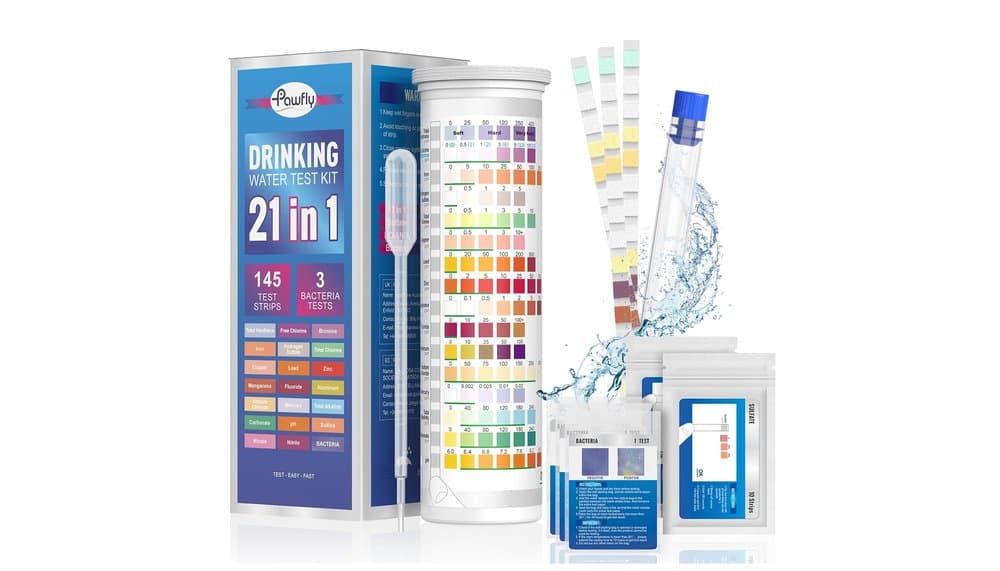
Pawfly 21 in 1 Drinking Water Test Kit Review
Pawfly test kit reviews a 21-in-1 water test strip, analyzing accuracy & value for home tap, well, or aquarium water tests. Get key insights before buying.
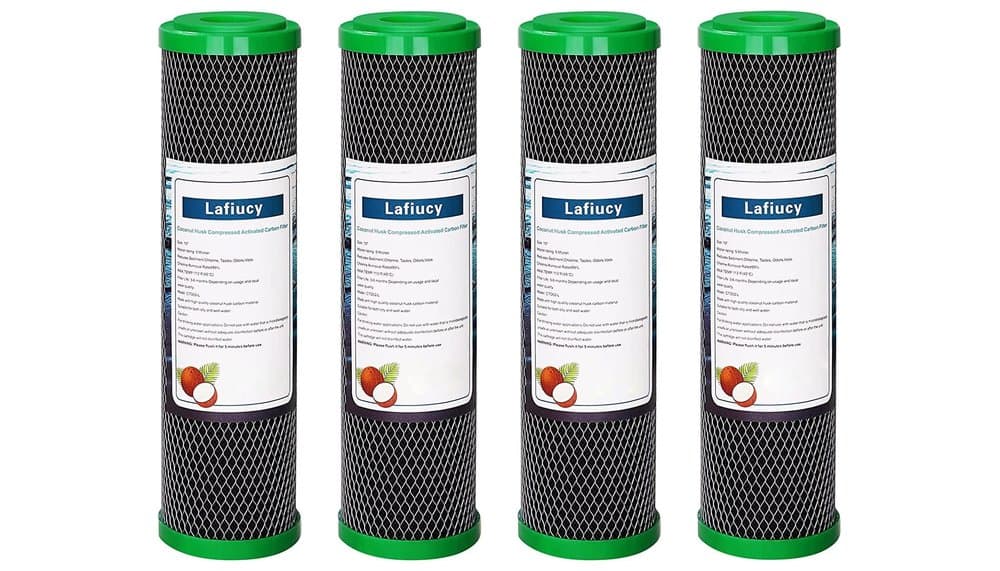
Lafiucy 10 Inch Coconut Carbon Filter Review
Review of the affordable Lafiucy 5 Microns 10-inch activated carbon water filter cartridge, analyzing specs & user feedback for performance.
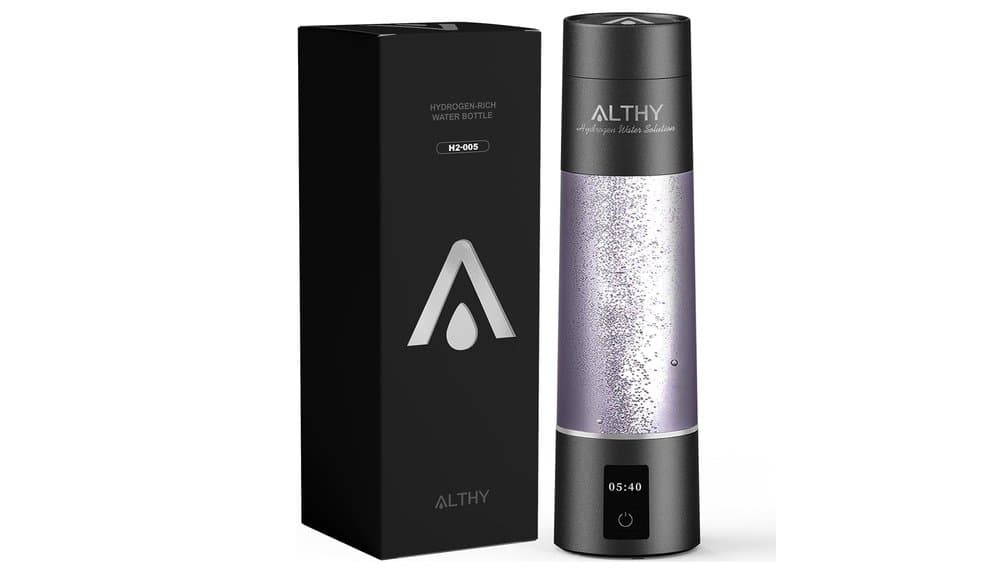
ALTHY Performance Hydrogen Water Bottle Review
Transform water into antioxidant-rich hydrogen water anywhere with the ALTHY portable bottle. A powerful, on-the-go wellness innovation.