Ajima 35 Fermented Grey Ceramic Beads Review
Introduction
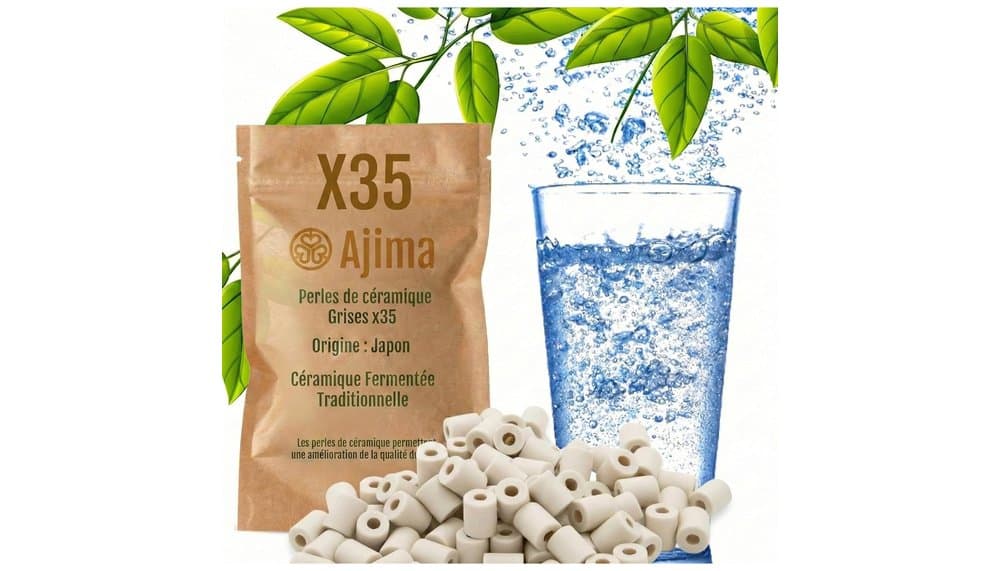
Faced with a multitude of solutions to improve tap water, natural and zero waste systems are increasingly appealing. Among them, ceramic beads promise a simple and ecological approach. The Ajima 35 Fermented Grey Ceramic Beads - Natural Anti-Limescale Water Filter presents itself as a revolutionary product, beads to be placed in any container to purify and soften water. But in the complex landscape of domestic filtration, where the needs for contaminant removal are specific, does this technology live up to its promises? This article analyzes this product from the angle of real-world effectiveness, its impact on water quality and health, and compares it to the technological standards of the industry.
Strong Points
- Extremely easy installation and use: No connections, drilling, or plumber required. Simply place the beads in the container.
- Zero-waste approach and long-term economy: No cartridges to throw away, a product theoretically reusable for years.
- Versatility of use: Suitable for a carafe, kettle, water bottle, or even a washing machine.
- Marked positive feedback on reducing chlorine taste and limescale deposit: The user community consistently validates these two aspects.
Weak Points
- Complete absence of independent scientific validation and certifications: No lab tests (like NSF/ANSI) are cited to support the claims.
- Effectiveness limited to only certain contaminants: The product cannot be considered a complete purification system.
- Vague and unconventional mechanism of action: The claim combining "fermentation" and "far infrared waves" is atypical in the field of filtration.
- No precise data on lifespan, treatment capacity, or effective regeneration: The specifications remain vague on these essential points.
Detailed Analysis: Technology, Effectiveness, and Comparison
The Claimed Mechanism: An Atypical Approach
The product specifications mention a fermentation process of a specific clay, trapping active microorganisms (EM) in a porous ceramic. These microorganisms are said to be able to "neutralize" impurities. The other pillar is the emission of far infrared waves purported to "restructure" water and provide an "antioxidant effect."
What interests us here is scientific transparency and reproducibility. In the filtration industry, proven technologies (activated carbon, reverse osmosis, ion exchange, UV) are based on clear physico-chemical principles and are widely documented, with standards (NSF, WQA) to certify their performance against specific contaminants. The "fermentation + infrared" approach is not standard and, based on research, is not subject to any recognized certification for the removal of specific contaminants like heavy metals or nitrates.
Effectiveness Evaluation on Main Contaminants
Let's analyze point by point what this product likely can and cannot do, cross-referencing manufacturer claims and user feedback.
- Chlorine & Taste/Odor: This is the most credible point and the most validated by users. Activated carbon is the reference for adsorbing chlorine. Customer reviews of the Ajima beads consistently mention water with a "more neutral" taste, "no bleach taste". It is plausible that the porous ceramic surface or microbial action could contribute to a partial reduction of free chlorine, improving taste.
- Limescale (Tartar): This is the second strong point highlighted by the community. Many reviews indicate a visible reduction of white deposit in kettles and carafes. However, one must distinguish between anti-scale and water softener. A true water softener using ion exchange removes calcium and magnesium ions from the water. The beads, however, seem to act by inhibiting the crystallization of limescale, preventing it from depositing on walls. This is a useful action for appliance maintenance, but it does not significantly reduce the hardness (TH) of the water consumed.
- Heavy Metals (Lead, Mercury, Copper...): On paper, the manufacturer does not explicitly claim their removal. Technical analysis leads us to be categorical: without a specific filtering medium (like a chelating resin or a reverse osmosis membrane), it is very unlikely that these beads retain dissolved heavy metals. For this major health concern, this solution is insufficient.
- Nitrates, Pesticides, PFAS, Solvents: Same conclusion. Removing these chemical pollutants, often of small molecular size, requires advanced technology like reverse osmosis or very high-performance activated carbon. Nothing in the description or principle of the Ajima beads suggests they are effective against these contaminants.
- Bacteria & Viruses: No claims in this regard, and that's logical. Only UV-C systems, extreme microfiltration, or reverse osmosis can eliminate microbial pathogens. These beads are not a sterilizer.
- Microplastics: Their size varies but some are invisible. A microporous ceramic could retain some through mechanical filtration, but since the pore size is not specified, this effectiveness cannot be guaranteed. A dedicated sediment filter or a membrane are more suitable.
Comparison with Established Technologies
Let's place the product within the panorama of domestic solutions.
- Vs. Activated Carbon (Faucet Filter/Carafe): Carbon is superior for adsorbing chlorine, organic compounds, and bad tastes. It is certified. The Ajima beads might offer a longer lifespan, but with less effectiveness and less verifiability.
- Vs. Water Softener (Ion Exchange): A water softener actively removes hardness ions. The beads do not soften water, they limit deposit. These are two different objectives.
- Vs. Reverse Osmosis: There is no possible comparison. Reverse osmosis is the gold standard of purification, removing 95-99% of almost all contaminants (salts, nitrates, metals, viruses, etc.). It is a complex system, with wastewater, requiring under-sink installation. The Ajima beads are a basic solution for taste improvement and scale control.
- Vs. Ultra-Violet (UV): UV disinfects, it does not filter chemicals or limescale. Complementary technologies, not competitive.
Ease of Installation, Maintenance, and Cost
On this point, the product excels.
- Installation: None. Simply rinse the beads and place them at the bottom of a container.
- Footprint: None, apart from the space taken in the carafe or kettle.
- Annual Cost: The manufacturer mentions a lifespan of several years, with possible "regeneration" in the sun. The annual cost is therefore potentially close to zero, which is its main economic advantage compared to cartridges that need replacing 2 to 4 times a year for other systems. However, the actual longevity is not certified.
Synthesized Technical Specifications
| Characteristic | Detail for Ajima 35 Fermented Grey Ceramic Beads |
|---|---|
| Main Technology | Fermented porous ceramic, active microorganisms (EM), far infrared emission |
| Targeted Contaminants (Alleged) | Chlorine (taste/odor), impurities, limescale (deposit) |
| Flow Rate | Not applicable (static contact treatment) |
| Recommended Contact Time | 30 minutes to 1 hour |
| Capacity / Lifespan | 35 beads. Announced lifespan: "years". No precise maximum water volume specified. |
| Maintenance | Rinsing with clear water. Possible regeneration in sunlight (according to instructions). |
| Installation | None. Direct use in the container. |
| Certifications | No standard certifications (NSF/ANSI, WQA) mentioned. |
| Recommended Uses | Carafe, water bottle, kettle, washing machine (in a bag). |
What Users Say: Summary of Feedback
Customer reviews, which present a very high overall rating, show a clear consensus on certain points, while leaving the product's limitations in the shadows.
Recurring positive trends are:
- Visible Anti-Scale Effectiveness: This is the number one feedback. Users note a clear decrease, even disappearance, of white deposit in kettles, glass carafes, and coffee makers. "My coffee maker doesn't get scaled anymore," "no more traces on glass water carafes, magical."
- Noticeable Taste Improvement: Many report that the chlorine or "bleach" taste disappears, making tap water "perfectly drinkable," "purer," with a "neutral taste."
- Simplicity and Overall Satisfaction: The ease of use and ecological aspect are praised. Some customers are on their second purchase, a sign of long-term satisfaction.
Expressed (or implied) limitations and questions:
- Effectiveness on Other Parameters Not Verified: As one user states, "Not being a chemist I cannot affirm that all the benefits are there." The reviews never mention a measured improvement (hardness tests, etc.) or a resolved health issue (skin problems related to limescale, etc.). The evaluation remains sensory (taste, sight).
- Quantity and Cost: One comment notes that "The ceramic works well but the quantity is not enough for how much it costs," pointing to a potential quantity/price ratio problem for treating large volumes.
- Absence of Scientific Proof: No user cites a before/after laboratory test. Trust is based on the empirical observation of two effects: taste and scale.
Conclusion
The analysis of the Ajima 35 Fermented Grey Ceramic Beads reveals a product with a dual reality. On one hand, it is a practical, economical, and ecological solution for two common problems: eliminating the bad taste of chlorine and, especially, visibly reducing limescale deposits in appliances and containers. On these specific points, user feedback is predominantly positive and consistent. Its installation is absolutely simple and its long-term ownership cost is negligible.
On the other hand, it is crucial to understand what it is not. It is not a complete water purifier, not a water softener, not a certified filtration system. Its effectiveness against health-concerning contaminants (heavy metals, nitrates, PFAS, bacteria) is neither clearly claimed by the manufacturer nor supported by any independent certification. Its mechanism of action remains obscure and does not meet the scientific standards of the industry.
Final Verdict: These ceramic beads can be a useful accessory for a household wanting to improve the taste of its water and protect its kettle or coffee maker from scale, without investing in a complex system. However, they cannot in any way constitute the primary filtration solution for a family concerned about the sanitary quality of its water, especially if it is suspected of containing chemical pollutants or nitrates. For guaranteed purification, conventional technologies like quality activated carbon (for taste and organic products) and reverse osmosis (for advanced purification) remain the relevant and verifiable choices. The Ajima beads find their place as a supplementary accessory, but not as the cornerstone of responsible water treatment.
100% free and independent — All our articles are written independently, without any sponsorship. We may earn a commission on purchases made through our links, at no extra cost to you.
Articles you might like
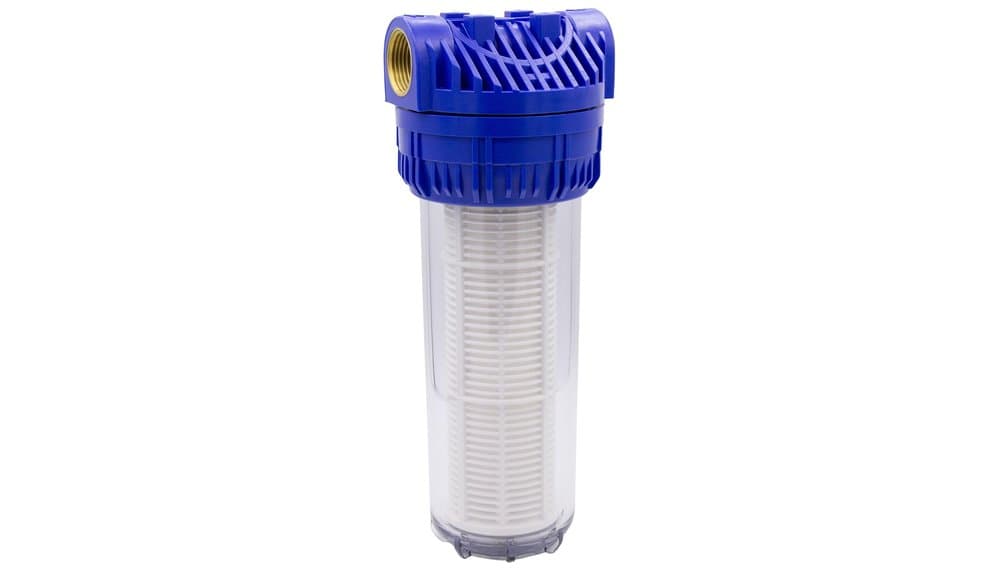
VARIOSAN 18434 Pre-filter Review and Test
Protect your water system with a sediment pre-filter. It's essential mechanical protection, not a purifier, installed before complex main filters.

ALTHY H2-007 Hydrogen Water Bottle & Inhaler Review
Portable bottle that infuses water with hydrogen gas. Learn what it does and doesn't do for water quality in our expert review.
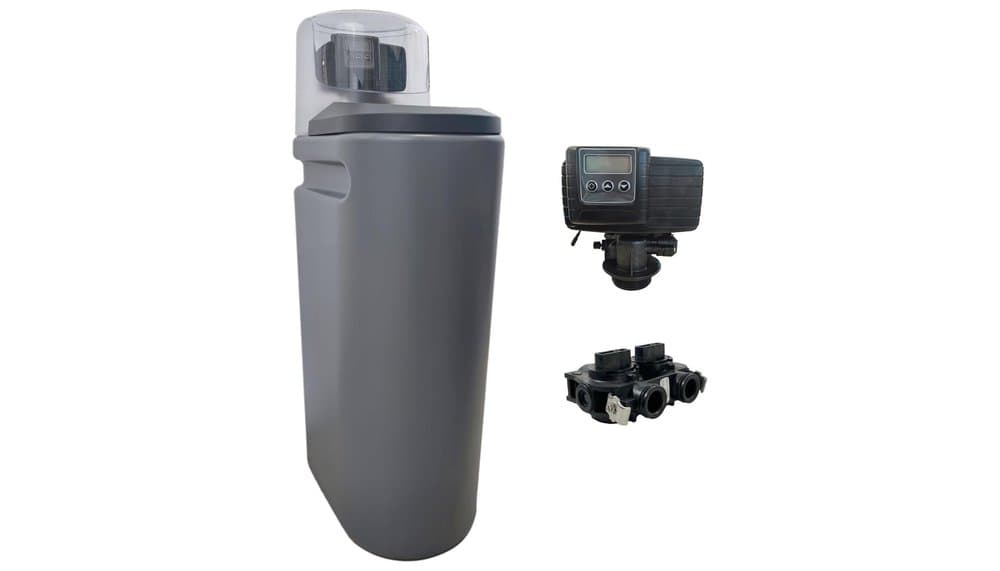
TOODO Water Softener 30l Fleck 5600 SXT Review
Fight hard water limescale with the TOODO 30L Fleck water softener. Protect appliances, improve skin & dishes. A complete home solution.
Guides you might like
Alkaline Water Ionizer Buying Guide
Discover how alkaline water ionizers work and learn key tips to choose the right one for your home and health. Essential buying guide.
Buying Guide: Best Hydrogen Water Generator
Guide to hydrogen water generators: cutting through the hype to help you make an informed purchase decision for your health and budget.
Choosing Your Home Water Filter
Unlock clean, tasty water at home. Find the right water filter to tackle chlorine, pollutants, and limescale for better health and peace of mind.