Ajima Binchotan Water Purifier Sticks (x3) Review
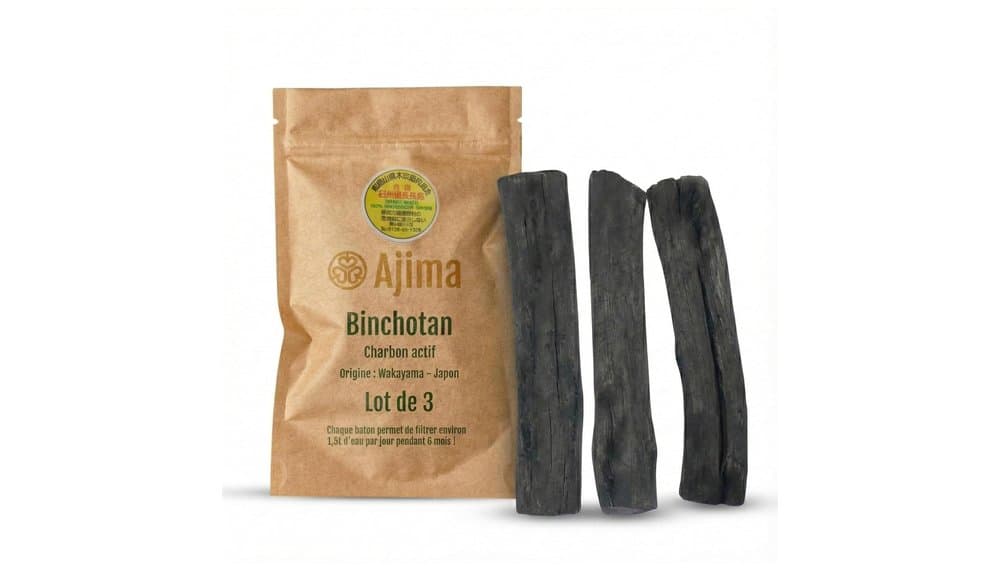
Introduction: The Promise of Natural and Ancestral Filtration
In our quest for healthier and more pleasant-tasting tap water, we are constantly searching for effective, simple, and sustainable solutions. The Ajima Binchotan Activated Carbon Water Purifier Sticks (x3) fits into this approach by proposing an ancestral filtration method: binchotan activated carbon, derived from Wakayama oak in Japan. On paper, the concept is appealing: immersing a charcoal stick in a carafe to purify water naturally, without electrical systems or complex plastic cartridges. But in the often-technical landscape of water purification, where technologies like reverse osmosis, ion exchange, or UV reign, where does this product exactly stand? Can it truly address health and water quality concerns for a family? We will dissect this product, its specifications, and confront its promises with community feedback and expert analysis to determine its place in your daily life.
Strengths
Ease of use and zero installation. The main advantage of Ajima sticks lies in their complete lack of installation. You simply place them in a water container. No plumber, no fixtures, no connections. This absolute portability makes them an ideal companion for water bottles, table pitchers, or even while traveling.
Eco-friendly and economical approach. The sticks are reusable for about three months, according to the manufacturer's recommendations and user feedback. This generates very little waste compared to standard disposable charcoal cartridges. The annual cost of consumables is therefore extremely low, as a single pack of three sticks can cover a year for moderate use. This is a massive argument against proprietary cartridge systems.
Noticeable improvement in organoleptic qualities. This is the point on which feedback overwhelmingly converges. Users report a significant reduction in chlorine taste and odor. The water is described as "softer" and more pleasant to drink, which can encourage better daily hydration.
Weaknesses
Effectiveness limited to a restricted spectrum of contaminants. It is crucial to understand that this technology does not constitute a complete purification system. According to expert analyses and specifications, its action focuses primarily on absorbing chlorine, certain organic compounds, and improving taste. It does not remove nitrates, fluorides, PFAS (perfluorinated chemicals), microplastics, or heavy metals in significant concentrations. It has no effect on water hardness (limescale). It does not disinfect water that is microbiologically suspect.
Lack of precise data on flow rate and capacity. Unlike an under-sink system with a membrane, there is no flow rate in liters per hour. Effectiveness depends on contact time: you generally need to let the stick act for between 4 and 8 hours for optimal results. The advertised capacity ("approximately 1.5L per stick") is indicative and heavily depends on the quality of the source water. It is passive filtration, not on-demand treatment.
Maintenance and fragility. The maintenance procedure – initial boiling for 10-15 minutes, then monthly re-boiling – is perceived as a constraint by some. Furthermore, several users and testers highlight the potential fragility of the sticks, which can break or release fine charcoal particles requiring careful rinsing.
Detailed Analysis: Technology, Health, and Comparisons
Binchotan Activated Carbon Technology Under the Microscope
Binchotan activated carbon is produced by very high-temperature carbonization of Wakayama oak. This process gives it an extreme micro-porosity, creating a considerable adsorption surface area. Its mode of action is twofold:
- Adsorption: It physically traps certain molecules (like those of chlorine, pesticides, or solvents) in its pores.
- Light mineralization: It releases minerals such as calcium, magnesium, or iron into the water, which can contribute to a rounder taste.
However, the scientific community and filtration experts remind us that adsorption is a selective and limited process. The charcoal pores have a defined size and saturate once full. Unlike a block activated carbon filter under pressure (like in multi-stage systems), the freely immersed stick has a much lower retention capacity and processing speed.
Health Evaluation: What Does It Actually Remove?
Let's examine its declared and observed effectiveness on common contaminants:
- Chlorine: High effectiveness. This is its strong point. The improvement in taste and odor attests to this.
- Heavy metals (lead, mercury): Low to moderate, and unreliable effectiveness. Although the manufacturer mentions the absorption of "heavy metal particles," expert tests indicate that for significant protection against these toxic contaminants, specific systems (filters certified NSF 53 for lead) or reverse osmosis are necessary.
- Limescale (calcium, magnesium): No effectiveness. Activated carbon does not exchange ions and does not soften water. It does not alter hardness.
- Nitrates and Fluorides: No effectiveness. These ions are not adsorbed by this type of carbon.
- PFAS and Microplastics: Likely zero or very low effectiveness. PFAS filtration requires advanced technologies (special activated carbon, anion exchange resins). Larger microplastics could be partially trapped, but nothing is guaranteed.
- Microbiological contaminants (bacteria, viruses): No effectiveness. The product does not disinfect. It is designed for water that is already potable from the tap.
Health conclusion: The Ajima Binchotan is a potable water enhancer, not an all-terrain purifier. It is perfect for softening the unpleasant taste of chlorine in already compliant municipal water. It must not under any circumstances be used to make non-treated water (well, spring, questionable water abroad) potable.
Comparison with Other Filtration Technologies
- Vs. Reverse Osmosis: Reverse osmosis is the pinnacle of purification, removing 95-99% of nearly all contaminants, including heavy metals, nitrates, fluorides, and a large portion of PFAS. But it is costly, bulky, requires installation, and has a water rejection rate (wastage). Binchotan is the opposite: simple, no waste, but with very limited effectiveness.
- Vs. Classic Filtering Pitchers (type Brita): The principle (activated carbon) is similar, but the formulation and contact surface differ. Testers note that binchotan often offers a longer lifespan (3 months vs. 1 month) and a reduced environmental impact. However, some pitchers include an ion exchange resin that slightly reduces limescale, which the stick does not do.
- Vs. Tap or Under-Sink Activated Carbon Filters: These systems offer instant flow and much greater filtration capacity thanks to water pressure and a larger mass of carbon. They are better suited for intensive family use.
- Vs. Water Softener: No comparison possible. The softener specifically treats limescale through ion exchange, a problem binchotan ignores.
- Vs. UV Sterilizer: UV kills microorganisms but does not remove chemical contaminants. The two technologies would be complementary, but UV is unnecessary for already disinfected municipal network water.
Place in the ecosystem: The Ajima Binchotan finds its niche as an economical and mobile supplementary solution to improve the taste of water at the office, while traveling, or in a small carafe on the table. It is not designed for centralized treatment of cooking or drinking water for an entire family.
Technical Specifications
| Characteristic | Detail |
|---|---|
| Product Name | Ajima Binchotan Activated Carbon Water Purifier Sticks (x3) |
| Technology | Binchotan Activated Carbon (Wakayama oak) |
| Indicative Capacity | Approximately 1.5 liters per stick (simultaneous use possible) |
| Lifespan | Approximately 3 months per stick (according to manufacturer and usage) |
| Installation | None. Free immersion in any container. |
| Maintenance | Boil for 10-15 min before first use. Re-boiling recommended every 4-6 weeks. |
| Power Supply | None (non-electric) |
| Targeted Contaminants (main) | Chlorine, certain organic compounds affecting taste and odor. |
| Not Removed | Limescale, nitrates, fluorides, heavy metals (effectiveness not guaranteed), PFAS, microplastics, bacteria/viruses. |
| Flow Rate | None. Passive filtration requiring 4-8 hours of contact. |
| Size | None (apart from the space in the carafe or bottle). |
What Users Say: A Synthesis of Feedback
Customer reviews, with an overall very high rating, allow us to identify clear trends.
Recurrent positive points:
- Improved taste: The most frequent mention is the elimination of chlorine taste and obtaining "softer," "better" water. Many users report drinking more water because of this.
- Simplicity and ecology: Users appreciate the "zero waste" aspect and the durability of several months, often comparing them favorably to filter pitcher cartridges deemed "overpriced."
- Value for money: For its targeted use (taste improvement), it is considered a good investment, economical in the long term.
Negative points and reservations:
- Fragility and particles: Several accounts report sticks that break or release charcoal "dust," requiring careful rinsing under clean water.
- Doubts about origin: Some customers note that the packaging or label seems to indicate a provenance other than Japan, questioning the authenticity of the "genuine Wakayama charcoal."
- Perceived variable effectiveness: A minority of users notices no notable difference in the taste of their water, which could be explained by low initial chlorine content or overly high expectations.
- Maintenance constraint: The step of initial boiling and monthly re-boiling is sometimes forgotten or considered tedious.
Experts and specialized forums confirm these trends. They validate effectiveness on chlorine and taste compounds, but heavily insist on the system's limitations: you must not ask it to purify non-potable water or remove serious chemical contaminants. They position it as a comfort accessory for already healthy water.
Conclusion: For Whom Is It the Right Choice?
The Ajima Binchotan Activated Carbon Water Purifier Sticks (x3) is not a miracle solution for water purification. It is a specific tool, with measurable and limited performance.
We recommend it if: You are looking for a simple, ecological, and inexpensive method to improve the taste and odor of your already potable tap water. You want a mobile solution for your office or travels. You want to reduce your consumption of plastic bottles and disposable filter cartridges. Your priority is chlorine removal.
We do not recommend it if: Your water has issues with hardness (limescale), suspicions of contamination by nitrates, lead, or other heavy metals, or if you need instant flow for the whole family. In these cases, you need to turn to certified and adapted systems: a softener for limescale, reverse osmosis, or a specific filter for chemical contaminants.
In summary, these Ajima charcoal sticks deliver on their promises as natural and durable water enhancers. They excel in their niche. However, it is crucial to understand that they are not a substitute for a complete domestic filtration system when the quality of the source water requires more technological and certified intervention. For daily family use, they can perfectly complement the water in the table carafe, but will not replace centralized treatment if it proves necessary for health or comfort reasons.
100% free and independent — All our articles are written independently, without any sponsorship. We may earn a commission on purchases made through our links, at no extra cost to you.
Articles you might like
Lafiucy 10 Inch Coconut Carbon Filter Review
Review of the affordable Lafiucy 5 Microns 10-inch activated carbon water filter cartridge, analyzing specs & user feedback for performance.
ALTHY Performance Hydrogen Water Bottle Review
Transform water into antioxidant-rich hydrogen water anywhere with the ALTHY portable bottle. A powerful, on-the-go wellness innovation.
Swiss Aqua Technologies IPS Kalyxx Water Softener Review
IPS Kalyxx magnetic water conditioner offers scale prevention without salt, electricity, or maintenance, using a permanent magnet.
Guides you might like
Alkaline Water Ionizer Buying Guide
Discover how alkaline water ionizers work and learn key tips to choose the right one for your home and health. Essential buying guide.
Buying Guide: Best Hydrogen Water Generator
Guide to hydrogen water generators: cutting through the hype to help you make an informed purchase decision for your health and budget.
Choosing Your Home Water Filter
Unlock clean, tasty water at home. Find the right water filter to tackle chlorine, pollutants, and limescale for better health and peace of mind.