COMAP TH Test Strips Review: Check Water Hardness
Introduction
In the world of domestic water treatment, the first step before any investment decision is always diagnosis. To assess the need for a water softener, an anti-scale system, or even to verify the effectiveness of your existing installation, measuring water hardness is crucial. It is with this in mind that we analyze the COMAP TH Water Hardness Test Strips today. This is not a filtration system, but an essential diagnostic tool for any household concerned about its water quality and the longevity of its appliances. We will dissect this seemingly simple product, based on its specifications, community feedback, and its real utility in a comprehensive water management approach.
Key Strengths
Analysis of the available data highlights several clear advantages of these test strips.
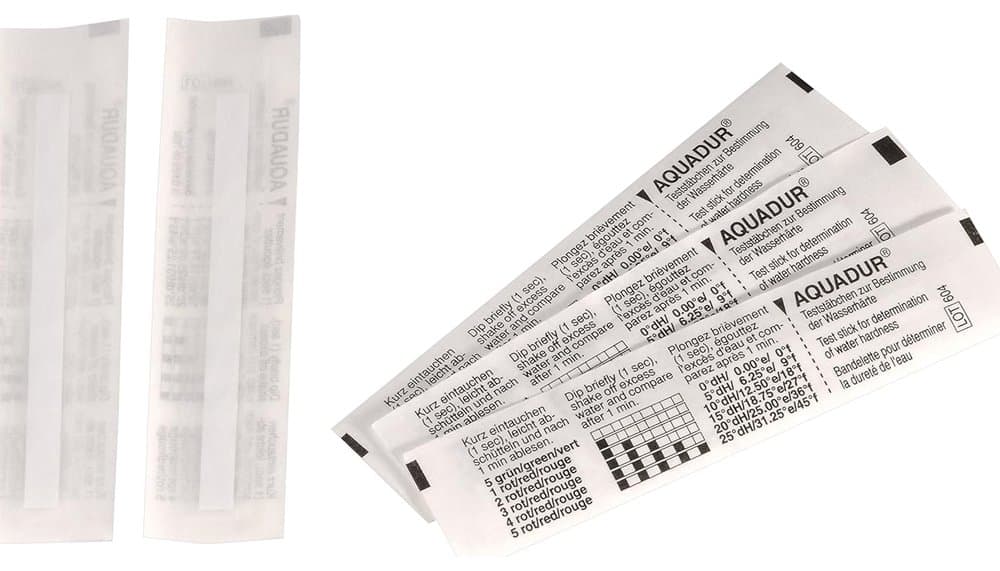
Ease of use is unanimously praised. The process is intuitive: dip, wait one minute, compare with the color chart. According to user feedback, even novices can obtain a result without difficulty. The multilingual instructions, including French, are considered clear and complete.
Result speed is a major asset. In one minute, the user obtains an indication of their water hardness in French degrees (°f), the most common reference in France for evaluating limestone concentration (calcium and magnesium). This immediacy allows for an express diagnosis.
French manufacturing is a reassuring element for many consumers, often associating this origin with quality control and rigorous production standards. The COMAP brand, well-known in the plumbing and heating sector, brings a guarantee of technical seriousness.
Finally, based on comparisons made by buyers, this kit is often positioned as one of the most accessible references on the market for a reliable hardness test, despite a sometimes debated per-strip cost.
Weak Points
The analysis also highlights limitations inherent to this type of product and specifically noted by users.
The limited number of strips (5) is the most frequent point of criticism. Several reviews point out that the packaging can give the impression of containing more. For regular monitoring (before/after a softener, tests at different water draw points), the quantity can prove insufficient, requiring the purchase of several packets.
These strips are a tool for indicative measurement, not for laboratory precision. They provide a hardness range (for example: 15-25 °f, 25-35 °f), not an exact value. For fine-tuning a water softener, this precision may be sufficient, but it does not replace a complete water analysis.
The single measurement principle should be emphasized. Unlike a filtration system, this product does not treat any contaminants. Its role is purely informational. It does not detect chlorine, heavy metals, nitrates, PFAS, or microplastics. Its sole target is calcium and magnesium hardness. This makes it a specialized tool, but incomplete for a global assessment of water sanitary quality.
Finally, long-term stability can be an issue. Like any chemical reagent on paper support, the strips can degrade if poorly stored (humidity, heat), which could skew results after a long storage period.
Detailed Analysis
Place in the Water Treatment Ecosystem
The COMAP TH Water Hardness Test Strips are the equivalent of a thermometer for a doctor. Before prescribing a treatment – whether it's a simple magnetic anti-scale filter, an ion exchange softener, or a more complex system like reverse osmosis – the main "symptom" must be known: the limestone content. Water that is too hard (> 25 °f) causes scaling in pipes, household appliances (water heater, washing machine) and reduces detergent efficiency. Conversely, water that is too soft can be corrosive to metals. This test is therefore the cornerstone of an informed approach.
Comparison with Other Diagnostic Technologies
Compared to other measurement methods, the strips find their niche. Drop-count test kits (titration with liquid reagent) are often more precise and allow for more measurements, but they are generally more expensive, more complex to handle, and require counting drops. Electronic devices (TDS meters) measure conductivity, a value correlated to total mineralization, but which does not specifically distinguish calcium and magnesium from other mineral salts. The COMAP strips thus offer the best compromise for occasional domestic use: speed, simplicity, and specificity for hardness.
Effectiveness and Reliability
On paper, the specs announce a result in 1 minute for a range in French degrees. Testers and the community confirm that the color change is clear and reading on the provided scale is simple. Reliability seems good for occasional use and under normal storage conditions. It is a perfect tool for answering essential questions: "Is my water hard?" and "Is my softener properly adjusted?" However, it should not be expected to provide precision to the exact degree, which exceeds its specifications.
Ease of Installation and Use
There is, of course, no installation required. The "plug-and-play" aspect is total. The footprint is negligible (a small flat packet) and the product can be used by the whole family without risk. This is an undeniable asset for a quick check.
Technical Specifications
| Characteristic | Detail |
|---|---|
| Product Name | COMAP TH Tongue Water Hardness Test |
| Reference | S900671 |
| Contents | 5 reactive test strips |
| Measured Parameter | Total Hardness (TH) of water |
| Unit of Measurement | French degrees (°f) |
| Reading Time | 1 minute |
| Product Dimensions | 15 x 7.5 x 0.1 cm |
| Weight | 20 g |
| Manufacturer Warranty | 2 years |
| Place of Manufacture | France |
| Recommended Uses | Home, swimming pool, laboratory |
What Users Say
The synthesis of over 800 customer reviews reveals a strong consensus around this product, with an average rating of 4.4/5 stars. The trends are clear.
Recurring positive points revolve around overall satisfaction and effectiveness. Many users buy them for "setting up a water softener" and are "very happy" because "the result is quick and clear". Ease is emphasized: "Very easy to use", "everything is well explained". Many appreciate their usefulness for checking "the effectiveness and proper setting of the softener", especially in regions where "the water [is] very hard". The simplicity of the process (fill a glass, dip for 1 second, wait 1 minute) is highly praised.
Negative or critical points focus essentially on two aspects. First, the quantity perceived as low for the price: "There are only 5 strips in the pack. The photo gives the illusion that there are more". Second, a few users mention the value for money: "it's a bit expensive for 5 bits of paper but it's the cheapest you can find", indicating that despite a high unit cost, the product remains competitive in its segment.
No significant feedback reports manufacturing defects, unreadable colors, or incomprehensible instructions. The few ratings below 3 stars seem related to disappointed expectations about quantity, not the functional performance of the product.
Conclusion
The COMAP TH Water Hardness Test Strips position themselves as a reliable, simple, and effective diagnostic tool for a specific need: measuring the limestone content of your water. They do not claim to be a filtration solution, but rather the indispensable prerequisite for any consideration of water treatment. In the home ecosystem, they perfectly meet the needs for occasional verification or monitoring of a water softener.
Their main advantage is democratizing a technical check by making it accessible to everyone, without special skills. Their main drawback is linked to their very nature as a limited-use consumable product. For a family wishing to perform an initial diagnosis or occasionally check their installation, the 5 strips are sufficient. For rigorous monthly monitoring at several water points, the cost of measurement can become a factor to consider.
Ultimately, if you are wondering about your water hardness, have just installed a softener, or suspect a setting drift, this COMAP kit is a minimal, quick, and reliable investment. It will tell you nothing about PFAS or nitrates, but it will give you a clear and actionable answer about limestone, one of the most impactful parameters for your daily life and your home. It is an essential, and often sufficient, first step towards informed control of your water quality.
100% free and independent — All our articles are written independently, without any sponsorship. We may earn a commission on purchases made through our links, at no extra cost to you.
Articles you might like
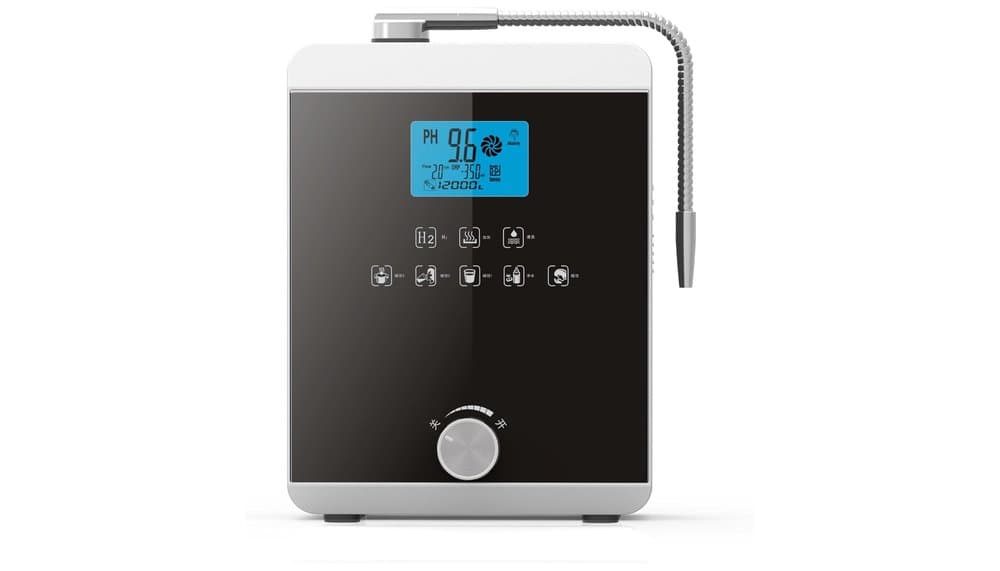
Alkaline Water Ionizer 11-Plate Electrode Test
Analyzes the 11-plate alkaline water ionizer: Does it filter water effectively, alter its properties, and deliver promised health benefits for a family?
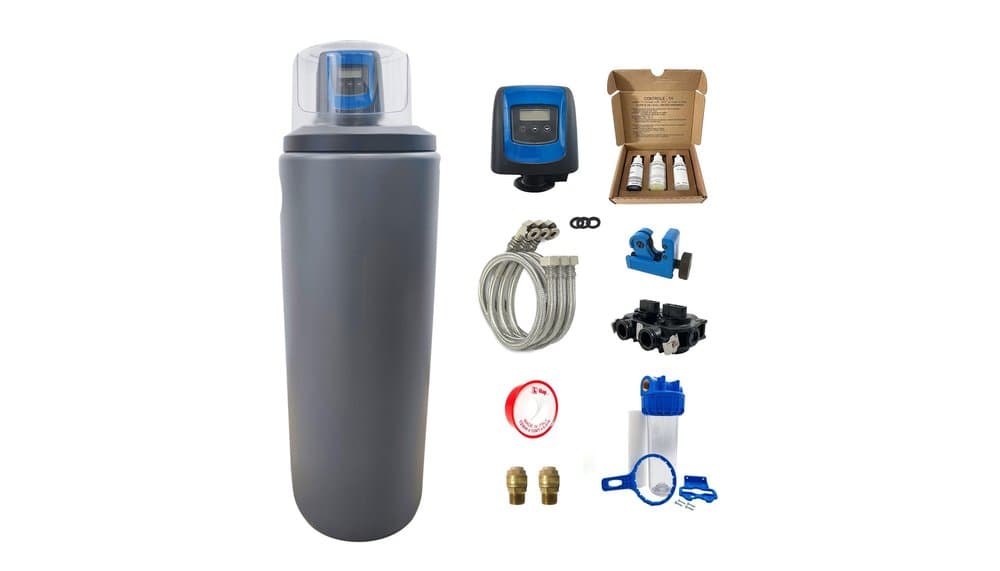
TOODO Fleck 5800 SXT Monobloc Water Softener Review
Volumetric TOODO Fleck 5800 SXT water softener eliminates limescale efficiently for families. A review of features & performance.
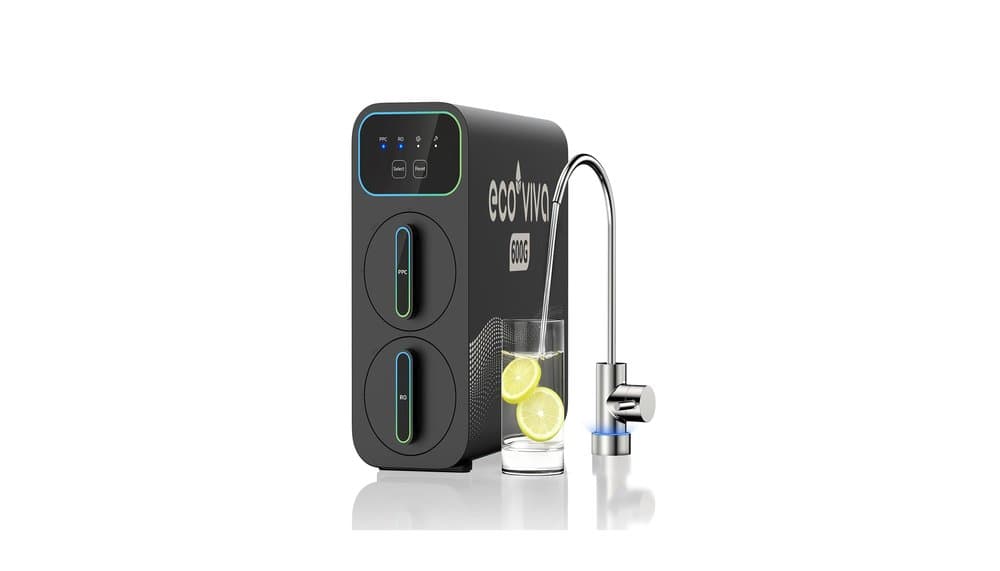
Ecoviva E6 Reverse Osmosis Water Filter Review
Compact, tankless Ecoviva E6 reverse osmosis system analyzed. We test its real-world purification performance, health benefits, and home integration.
Guides you might like
Alkaline Water Ionizer Buying Guide
Discover how alkaline water ionizers work and learn key tips to choose the right one for your home and health. Essential buying guide.
Buying Guide: Best Hydrogen Water Generator
Guide to hydrogen water generators: cutting through the hype to help you make an informed purchase decision for your health and budget.
Choosing Your Home Water Filter
Unlock clean, tasty water at home. Find the right water filter to tackle chlorine, pollutants, and limescale for better health and peace of mind.