iSpring T32M RO Storage Tank Review & Test

Introduction: The Tank, a Key Element for Effective Reverse Osmosis
When discussing domestic reverse osmosis systems, people often think of membranes, pre-treatment filters, or the dedicated faucet. However, one component is essential to transform a slow filtration process into a smooth user experience: the pressure storage tank. The iSpring T32M RO Water Storage Tank is one such tank, presented as a robust and reliable standard in the world of water purification. But what is its real added value for a household concerned about its daily water quality?
In this comprehensive analysis, we will demystify the role of this tank and evaluate the iSpring T32M from every angle. We will not simply list its specifications. We will dissect its impact on the final water quality, its ease of installation, and its durability, based on the manufacturer's technical specifications and the concrete experience of thousands of users. If you are considering installing or improving a reverse osmosis system, understanding the usefulness of this tank is a crucial step.
Strengths of the iSpring T32M
On paper, the iSpring T32M stands out for a design focused on longevity and food safety. Its main asset is its NSF certification, a guarantee of compliance with strict sanitary standards, which is reassuring for a product in permanent contact with drinking water. The shell is made of steel, giving it superior robustness compared to all-plastic models and better resistance to shocks or physical stress under the sink.
The butyl food-grade diaphragm technology is another key point. This material is designed to be inert, transferring no taste or odor to the stored water, a legitimate concern with some lower-quality plastic tanks. Testers emphasize that this flexible membrane also provides complete sealing between the pure water and the pressurized air chamber, preventing contamination and ensuring a stable output pressure.
Finally, its design is universally compatible with the majority of reverse osmosis systems on the market thanks to its standard 1/4″ fittings. It comes with its mounting bracket, allowing secure installation horizontally or vertically, which is appreciated for optimizing the often limited space under a sink.
Weaknesses and Limitations
Analysis of user feedback and the inherent constraints of this type of product reveals some limitations.
The main one concerns space. With dimensions of approximately 28 x 28 x 36 cm, this 3.2-gallon (about 12-liter) tank is not discreet. It requires a sufficiently spacious sink cabinet, which can be a constraint in compact or already cluttered kitchens.
Secondly, although it is a passive accessory, it requires periodic maintenance. The air pressure in the bladder (pre-set between 7 and 10 PSI) must be checked and adjusted approximately once a year with a simple bicycle pump to guarantee optimal performance. Incorrect pressure can lead to incomplete filling or low flow at the faucet.
Finally, a point raised by several users in recent years concerns immediate compatibility with European plumbing. Some older reviews mentioned difficulties with threads, requiring the purchase of additional adapters. However, recent feedback indicates that this issue seems to have been corrected by iSpring, which now reportedly includes the necessary adapters in its complete kits.
Detailed Analysis: Impact on Water Quality and Performance
Role in Contaminant Removal
It is crucial to understand that the iSpring T32M tank does not filter anything at all. Its function is purely logistical: to store water already purified by the reverse osmosis system to which it is connected. Effectiveness against contaminants therefore depends entirely on the quality of the filters and RO membrane installed upstream.
That said, its role is indispensable to fully benefit from the advantages of reverse osmosis. Without a tank, you would be forced to wait several minutes to fill a simple glass of water, as the osmosis process is naturally slow. The T32M allows you to have immediately available a volume of water free from chlorine, heavy metals (lead, arsenic, mercury), nitrates, PFAS, microplastics, and virtually all limescale (in the form of dissolved minerals). It unlocks the potential of RO technology for practical domestic use.
Flow Rate, Rejection Rate, and Capacity
The 3.2-gallon (12-liter) capacity is a well-calibrated standard. In reality, not all of this volume is immediately usable; about one-third to one-half is available under pressure before the flow rate drops significantly and the system restarts. This still corresponds to several liters of water available instantly, which is more than sufficient for filling carafes, pots, or kettles without waiting.
The flow rate at the faucet is directly linked to the air pressure in the tank. When correctly adjusted, it provides a comfortable and constant flow, much higher than the thin stream produced directly by the membrane. As for the water rejection rate (the water laden with contaminants sent to drain), it is determined by the RO membrane and not by the tank. The latter has no impact on this ratio, which is typically 1:3 to 1:4 (1 liter of pure water for 3 to 4 liters of rejected water) for high-performance domestic systems.
Ease of Installation and Size
Installing the tank itself is simple: it is mounted to the wall or the bottom of the cabinet with its bracket and connected via a single 1/4″ tube to the "tank" outlet of the RO system. The difficulty, if any, lies in the complete installation of the reverse osmosis system, which may require drilling the sink for the faucet and connecting a water supply and a drain.
The community notes that for novice DIYers, following iSpring's video tutorials makes the process accessible. For others, using a plumber for the initial connections is recommended. Once installed, its size is its main physical drawback, but it is the price to pay for on-demand pure water.
Value for Money and Long-Term Cost
As an individual component, the T32M represents a modest investment relative to the value it adds to an RO system. Its real impact on the annual cost of consumables is indirect but positive. By allowing storage, it reduces the start/stop cycles of the pump (on pressurized systems) and could contribute to slower wear of the membrane. The only recurring costs are the pre-treatment filters (sediment, activated carbon) to be changed every 6 to 12 months and the RO membrane itself every 2 to 5 years, depending on the input water quality and consumption. The tank itself is designed to last for many years.
Technical Specifications
| Characteristic | Detail |
|---|---|
| Product Name | iSpring T32M RO Water Storage Tank |
| Nominal Capacity | 3.2 gallons (approximately 12 liters) |
| Shell Material | Steel (rust-resistant coating) |
| Diaphragm Material | Food-grade butyl, BPA-free |
| Pre-charge Pressure | 7 - 10 PSI |
| Fittings | 1/4″ NPT (National Pipe Thread) |
| Included Valve | Stainless steel ball valve |
| Certification | NSF (sanitary standards) |
| Dimensions (L x W x H) | Approximately 28 x 28 x 36 cm |
| Installation Type | Under-sink, horizontal or vertical |
| Included Components | Tank, mounting bracket, valve |
What Users Say: Summary of Customer and Expert Reviews
Analysis of thousands of customer reviews and expert feedback on forums reveals a very clear consensus, with an exceptional average rating of 4.6/5. Here are the strong trends that emerge.
Recurring Positive Points:
- Reliability and Durability: Users describe a solid and leak-free product that works perfectly for years. The steel is often cited as a mark of quality compared to plastic models.
- Tangible Improvement in Water Quality: Although linked to the complete RO system, the tank's presence is implicitly validated by testimonials about the complete absence of limescale in kettles and coffee makers, and a "pure" water taste that is consistent, without variations.
- Compatibility and Installation: The majority of recent feedback highlights that installation is simple thanks to video guides and that threading compatibility issues (imperial vs. metric) have been resolved in sold kits, with iSpring now reportedly including the necessary adapters for Europe.
- Responsive Customer Support: Several reviews positively mention the reactivity and helpfulness of iSpring's customer service, especially for warranty registration or technical questions.
Negative Points or Points of Attention:
- Past Compatibility Problems: Some reviews, often older, point out the lack of adapters for European plumbing, requiring an additional purchase. This point seems to have been corrected in recent shipments.
- Size: Its size is sometimes noted as significant, requiring careful checking of the available space under the sink before purchase.
- Maintenance Needs: Savvy users remind others of the importance of checking the air pressure annually to maintain performance, a step sometimes forgotten by novices.
Overall, the community perceives the iSpring T32M as a reliable and essential component that "does its job" without fail. Problems encountered are more often related to the initial installation of the overall system than to the tank itself.
Conclusion: A Robust Investment to Unleash the Potential of Your Reverse Osmosis
The iSpring T32M RO Water Storage Tank is not a gimmick product. It is a fundamental element that transforms a technical filtration process into a practical solution for family life. Its analysis reveals a well-designed product, robust thanks to its steel construction, safe with its NSF certification and food-grade butyl diaphragm, and universally compatible.
Its main flaw, its size, is the inevitable trade-off for its function: storing a sufficient volume of water to meet peak demand. The overwhelmingly positive user feedback confirms its long-term reliability and its role in obtaining consistent, high-quality water directly from the faucet.
If you choose a reverse osmosis system to eliminate a wide range of contaminants like nitrates, heavy metals, or PFAS, a quality tank like the iSpring T32M is indispensable. It represents a modest investment relative to the durability and convenience it provides, bridging the gap between the technical performance of purification and the daily experience of healthy, on-demand water. It is the centerpiece that makes reverse osmosis technology truly domestic and user-friendly.
100% free and independent — All our articles are written independently, without any sponsorship. We may earn a commission on purchases made through our links, at no extra cost to you.
Articles you might like
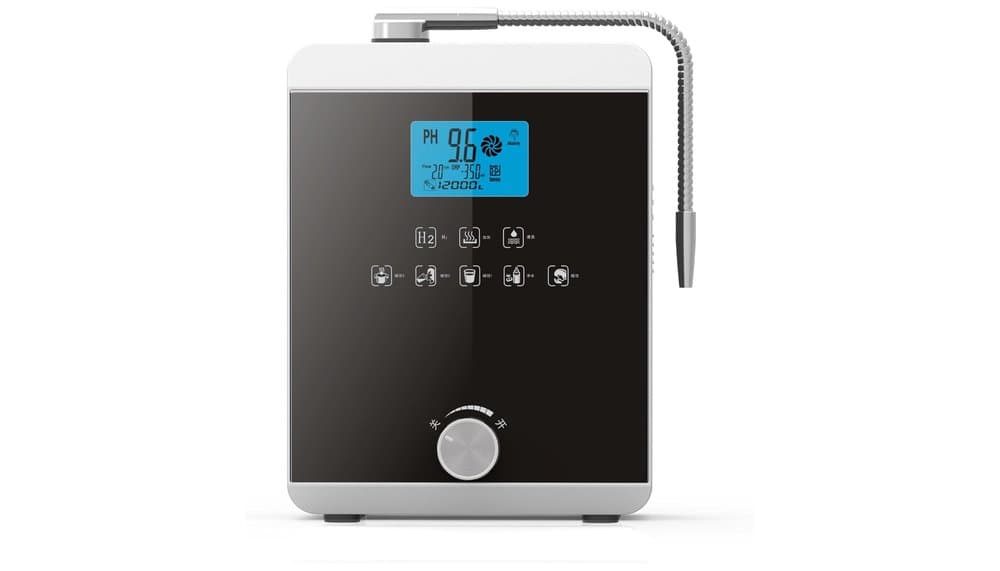
Alkaline Water Ionizer 11-Plate Electrode Test
Analyzes the 11-plate alkaline water ionizer: Does it filter water effectively, alter its properties, and deliver promised health benefits for a family?
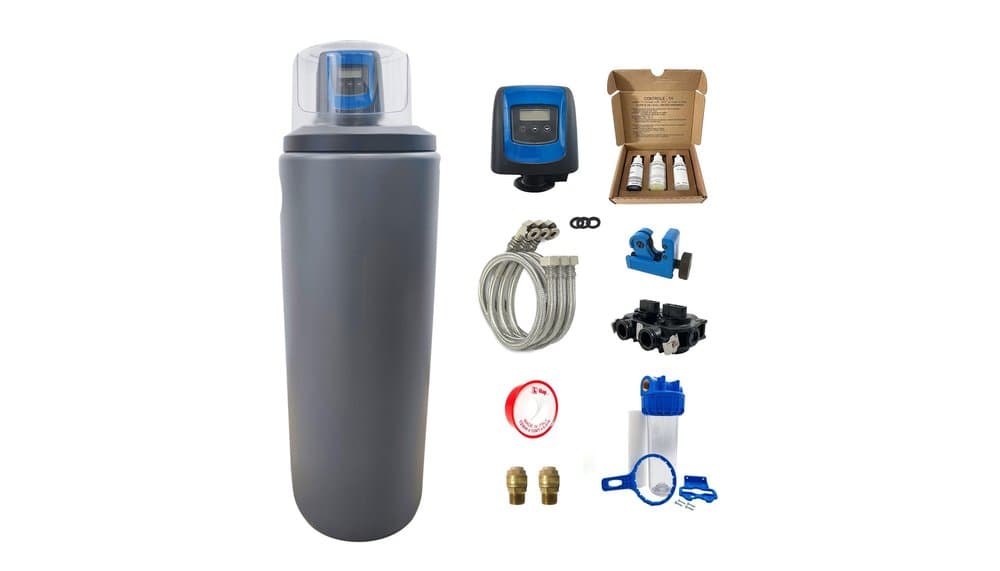
TOODO Fleck 5800 SXT Monobloc Water Softener Review
Volumetric TOODO Fleck 5800 SXT water softener eliminates limescale efficiently for families. A review of features & performance.
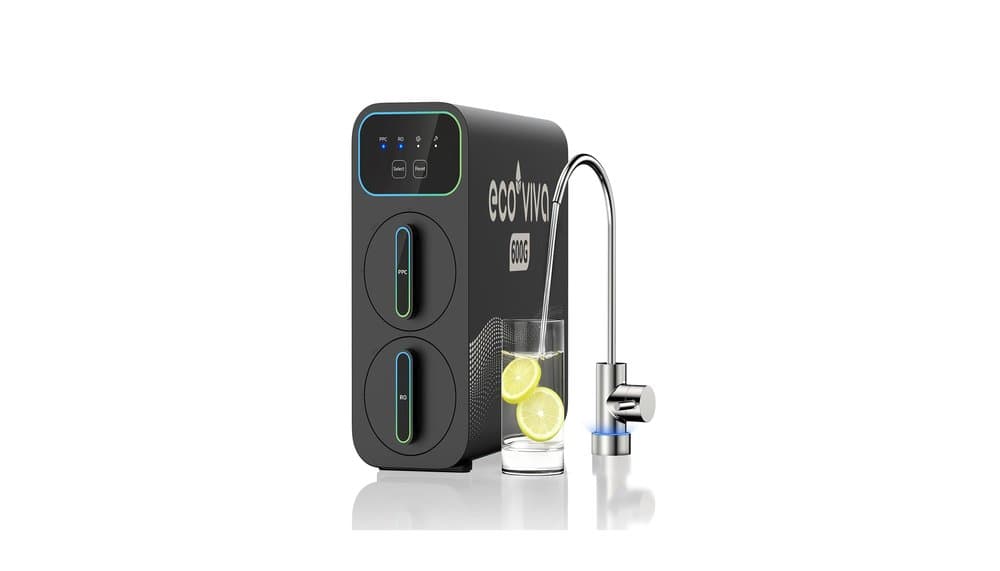
Ecoviva E6 Reverse Osmosis Water Filter Review
Compact, tankless Ecoviva E6 reverse osmosis system analyzed. We test its real-world purification performance, health benefits, and home integration.
Guides you might like
Alkaline Water Ionizer Buying Guide
Discover how alkaline water ionizers work and learn key tips to choose the right one for your home and health. Essential buying guide.
Buying Guide: Best Hydrogen Water Generator
Guide to hydrogen water generators: cutting through the hype to help you make an informed purchase decision for your health and budget.
Choosing Your Home Water Filter
Unlock clean, tasty water at home. Find the right water filter to tackle chlorine, pollutants, and limescale for better health and peace of mind.