Naturewater Water Softener Station 30L Tank Review
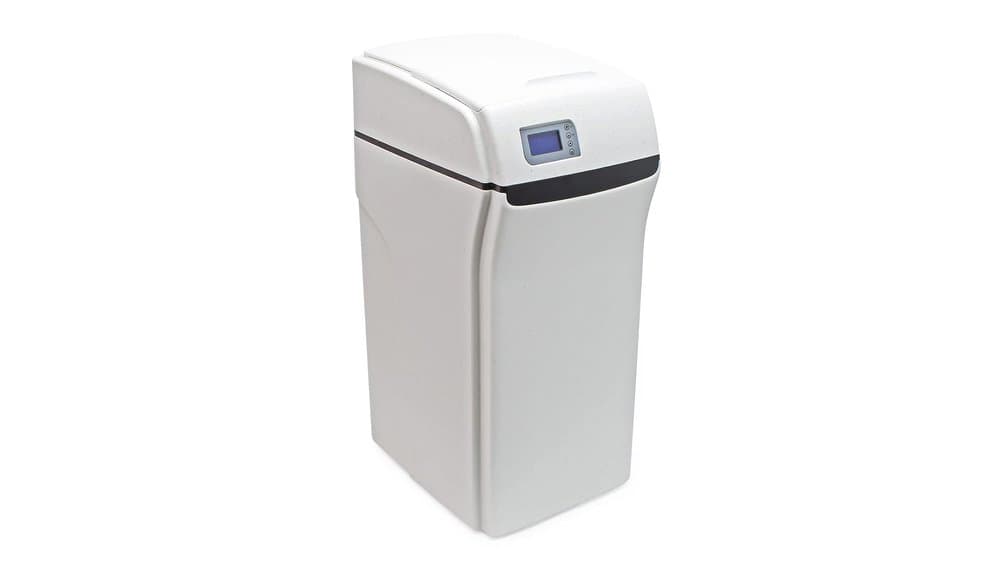
Introduction
In the world of domestic water treatment, the war against limescale is often the first front. Many of us are looking for a solution to protect our appliances and improve our daily comfort without delving into complex filtration systems. The Naturewater Automatic Water Softening Station with 30L Tank positions itself precisely in this niche: that of targeted softening. It is not a multi-purpose purification system, but a full-fledged water softener. Our analysis will therefore focus on what this appliance does and does not do, by dissecting its specifications, user feedback, and its relation to health and water quality in the broad sense.
Key Strengths
- Fully Automatic Operation: The appliance manages resin regeneration automatically based on consumption, a major comfort advantage compared to manual models.
- Long Autonomy: The 30-liter brine tank allows for extended intervals between salt refills, especially for medium-sized families.
- High Flow Rate: With an announced capacity of 3000 liters per hour, the appliance does not create a noticeable pressure restriction in the home, even during simultaneous uses.
- Equipment Protection: Its primary role is effective: reducing scale formation in pipes, water heaters, washing machines, and dishwashers, promising to extend their lifespan.
- Control Interface: The presence of a screen for setting the initial water hardness offers basic customization of the system.
Weaknesses
- Technical Installation: Feedback converges on the fact that setup is not trivial and requires plumbing skills and an additional investment in accessories.
- Significant Footprint: With dimensions of 36.5 x 48 x 80 cm, it is a bulky piece of equipment that requires dedicated space (garage, utility room, laundry room).
- Single Target: It eliminates only limescale. It does not treat other contaminants like chlorine, heavy metals, or nitrates.
- Complex User Interface: Several users point out the difficulty in understanding and correctly setting the control panel, despite having a manual.
- Recurring Salt Cost: The initial investment must be supplemented by the regular consumption of regenerating salt tablets.
Detailed Analysis
Effectiveness Against Contaminants: A Limescale Specialist, and That's All
It is crucial to understand the philosophy of this product. The Naturewater Automatic Water Softening Station uses ion exchange technology. This method is specific and highly effective for only one type of "contaminant": the ions responsible for hardness.
- Limescale (Calcium & Magnesium): This is its exclusive and primary target. The resin exchanges these ions for sodium ions (salt). Effectiveness is real and proven by this technology, used for decades in both industry and homes. The water is effectively softened.
- Chlorine, Tastes & Odors: No action. The appliance does not include an activated carbon filter. Chlorine and organic compounds therefore pass through.
- Heavy Metals (Lead, Copper, etc.), Nitrates, PFAS, Microplastics: No action. These contaminants are not targeted by ion exchange in this configuration. To remove them, a complementary system would be needed, typically reverse osmosis or specific filters.
- Bacteria & Viruses: No action. There is no UV lamp or sterilizing membrane.
Health Conclusion: This softener improves domestic comfort (skin, laundry, appliances) and may reduce detergent consumption. It does not alter the microbiological safety of the water and does not eliminate chemical pollutants. The sodium addition is minimal and generally negligible for health, except for a strictly controlled salt diet prescribed by a doctor.
Technical Performance and Operating Costs
- Flow Rate and Waste: With 3000 L/h, the flow rate is more than sufficient for a house. There is no continuous water waste as with reverse osmosis. The only "waste" occurs during the automatic regeneration cycle, which uses water to rinse the resin and flush out the captured calcium/magnesium ions. This water goes to the drain. The frequency of this cycle depends on water hardness and consumption volume.
- Required Pressure: The range of 1.5 to 5 bars is standard. It is imperative to check your network pressure and add a pressure reducer if it exceeds 5 bars to avoid damaging the appliance.
- Annual Consumable Cost: Here, the calculation is simple. The main consumable is regenerating salt (tablets). The annual cost depends directly on water hardness and household consumption. One should also plan, depending on the quality of the inlet water, for the possible installation of sediment filters upstream to protect the softener valve. These filters (€5 to €20 each) are changed 1 to 2 times a year. The resin itself has a long lifespan (often 10 years or more) if the appliance is properly maintained, which is a strong long-term economic point.
Technology Comparison
- Vs. Reverse Osmosis (RO): RO is a complete purification system (limescale, metals, nitrates, bacteria, etc.) but with a limited flow rate, significant water waste, and higher maintenance costs (membrane changes, pre-filters). The two technologies are complementary: a softener can be placed upstream of an RO system to protect it from scale.
- Vs. Activated Carbon: Activated carbon improves taste and removes chlorine and some chemicals, but does not soften water. Again, the purposes differ.
- Vs. Magnetic/Electrolytic Anti-Scale Systems: These systems (like the "auto-cleaning" function mentioned in the specifications) alter the structure of limescale to prevent it from adhering, without removing it. The ion exchange of the Naturewater is a chemical substitution action, much more effective and proven for real softening.
Ease of Installation and Footprint
This is a critical point highlighted by the community. The installation is not "plug & play". According to user feedback, one must plan for fittings, isolation valves, a bypass, and potentially the intervention of a plumber. One user notes that the cost of accessories and hoses can reach that of the appliance if you don't already have them. The footprint is substantial. A stable floor space is needed, close to a water supply, a drain, and an electrical outlet.
Technical Specifications
| Characteristic | Detail |
|---|---|
| Main Technology | Ion Exchange (Resin) |
| Main Treatment | Softening (removal of Calcium & Magnesium) |
| Max Flow Rate | 3000 Liters / Hour |
| Operating Pressure | 1.5 - 5 Bars |
| Salt Tank Capacity | 30 Liters (approx. 30 kg) |
| Automation | Programmable Automatic Regeneration |
| Dimensions (W x D x H) | 36.5 x 48 x 80 cm |
| Power Supply | Mains (power cord) |
| Installation | Freestanding |
| Consumables | Salt tablets, pre-filter (recommended) |
What Users and Testers Say
Synthesizing available customer reviews and technical analyses paints a consistent picture.
Recurrent Positive Points:
- Satisfaction with Results: Users note a clear improvement, with water less aggressive on the skin, fewer white marks, and quieter operation of household appliances.
- Perceived Reliability: The build is generally judged as robust and of good quality for its price segment.
- Comfort of Automation: Once set up, the appliance works without intervention, which is highly appreciated.
Recurrent Negative Points or Areas of Caution:
- Difficult Settings: This is the most frequent pain point. The control panel and its logic are described as not intuitive. "Deciphering the settings is tough," confirms one user, despite a manual in French.
- Technical Installation: It is not for everyone. The need to buy additional accessories (filters, installation kit, hoses) is highlighted and can increase the final bill.
- Footprint: Its volume is mentioned as a constraint to anticipate before purchase.
Web experts confirm these trends, emphasizing the need to properly size the appliance relative to water hardness and household size to optimize its salt consumption and efficiency.
Conclusion
The Naturewater Automatic Water Softening Station with 30L Tank is a classic and effective automatic softener in its field of expertise: eliminating limescale. Its large tank, generous flow rate, and automation make it a serious solution for families dealing with hard water, wanting to protect their installations and gain in comfort.
However, one should not be mistaken: it is not a purification system. It does not make polluted water potable and does not improve its taste if that taste is due to chlorine. Its main flaw lies in an implementation and setup that require a certain level of know-how or the use of a professional.
Who is it a good choice for? For a household whose water is simply hard (and not contaminated by other things), which has space in a utility room, and is looking for a reliable "set and forget" solution to fight scale. For those seeking pure drinking water, this softener will need to be paired with a specific filter (pitcher, under-sink reverse osmosis system) downstream. The value for money is good considering the technology and autonomy, provided one factors the cost and complexity of installation into their calculation.
100% free and independent — All our articles are written independently, without any sponsorship. We may earn a commission on purchases made through our links, at no extra cost to you.
Articles you might like
Alkaline Water Ionizer 11-Plate Electrode Test
Analyzes the 11-plate alkaline water ionizer: Does it filter water effectively, alter its properties, and deliver promised health benefits for a family?
TOODO Fleck 5800 SXT Monobloc Water Softener Review
Volumetric TOODO Fleck 5800 SXT water softener eliminates limescale efficiently for families. A review of features & performance.
Ecoviva E6 Reverse Osmosis Water Filter Review
Compact, tankless Ecoviva E6 reverse osmosis system analyzed. We test its real-world purification performance, health benefits, and home integration.
Guides you might like
Alkaline Water Ionizer Buying Guide
Discover how alkaline water ionizers work and learn key tips to choose the right one for your home and health. Essential buying guide.
Buying Guide: Best Hydrogen Water Generator
Guide to hydrogen water generators: cutting through the hype to help you make an informed purchase decision for your health and budget.
Choosing Your Home Water Filter
Unlock clean, tasty water at home. Find the right water filter to tackle chlorine, pollutants, and limescale for better health and peace of mind.