Joypur Survival Filter Straw Review & Test
Introduction
On our site, dedicated to the in-depth analysis of water purification systems, we usually examine complex domestic installations like under-sink reverse osmosis or ultrafiltration. Today, we are shifting perspective to look at a purification tool at the extreme opposite end of the spectrum: the Joypur Survival Filter Straw Water Purifier. This product embodies the philosophy of minimalist, portable, and emergency filtration. Our analysis will not focus on its effectiveness for treating household tap water, but will objectively evaluate its real capabilities within its claimed domain of application: survival, hiking, and emergency use. By cross-referencing its technical specifications, community feedback, and tester findings, we will determine precisely what this straw is for and, most importantly, what it is not for.
Key Strengths
Exceptional Compactness and Portability
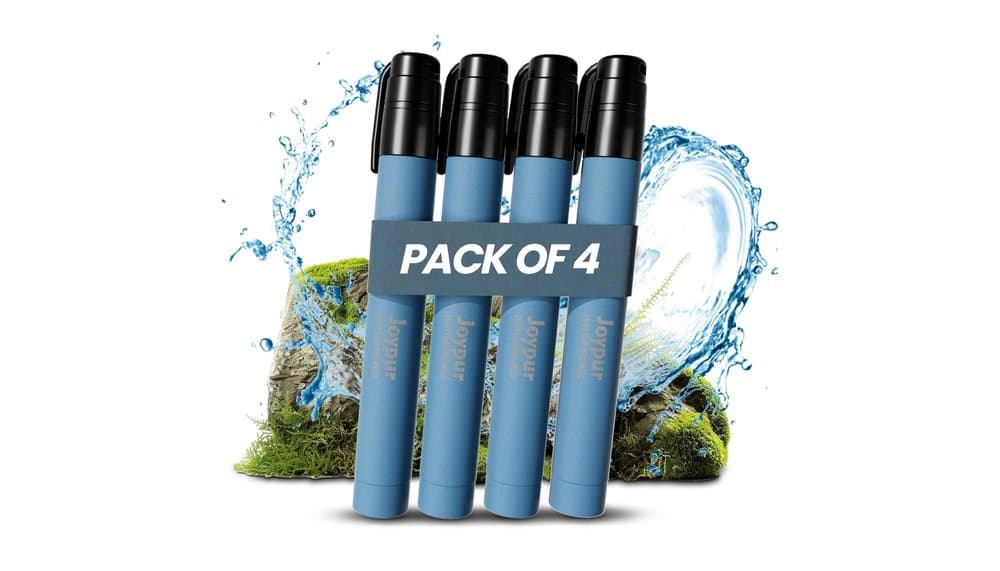
The first argument for the Joypur Survival Filter Straw is its format. With dimensions similar to a large pen (1.8 x 1.8 x 14 cm) and a featherweight of around 21 grams, it is designed to be forgotten at the bottom of a bag or pocket. Users overwhelmingly confirm this advantage, noting that it is "small and easy to store in a backpack" or "takes up little space." This characteristic makes it a discreet companion for any emergency, hiking, or travel kit.
Immediate Simplicity of Use
No installation, no plumber, no power source. The technology here is brutally simple: one end goes in the water, you suck from the other. This accessibility is a major asset in stressful situations or for occasional use. Feedback indicates it is a "simple" and "functional" product, perceived as a minimalist insurance against thirst in an uncontrolled environment.
Targeted Pathogen Filtration
On paper, the specs claim removal of 99.99999% of bacteria (like E. coli, Salmonella) and 99.9999% of protozoa (like Giardia, Cryptosporidium). This performance is made possible by an ultrafiltration membrane with a pore size of 0.01 micron. This positions it, theoretically, as an effective shield against the most common microbiological risks in untreated surface waters.
Key Weaknesses
Very Limited Effectiveness on Chemical Contaminants
This is the fundamental limit every user must understand. The Joypur Survival Filter Straw is a mechanical tool, not a chemical one. Its membrane blocks pathogens by size, but it is completely ineffective against:
- Dissolved chemicals (pesticides, nitrates, PFAS)
- Heavy metals (lead, arsenic, mercury)
- Chlorine, chemical tastes and odors (without significant integrated activated carbon)
- Limescale and dissolved minerals
- Viruses (smaller than 0.01 micron) – an important limitation rarely highlighted.
Its name "purifier" can be misleading; it filters microbes, but does not purify water of all its contaminants.
Slow Flow Rate and Suction Effort
The advertised flow rate is 400 ml/min, which seems adequate. However, user experience and expert tests on the web unanimously highlight that the flow rate is often perceived as slow and requires "non-negligible suction effort." Quenching thirst fully can become tedious, and this characteristic makes it poorly suited for filtering water for a group or for cooking.
Uncertain Durability and Longevity
The product sheet announces a lifespan of 1000 liters per straw. The community and testers express recurring doubts about this real durability. Several factors impact it: water turbidity (which clogs the membrane), suction power, and manufacturing quality. Some users report a drop in performance or premature clogging. One French review mentions, by the way: "I have doubts about the product's actual filtering quality."
Limited Versatility and Robustness
The product is designed for a single use: drinking directly from the source. It does not allow filtering water for storage in a bottle or for cooking, unless performing an impractical manipulation. Furthermore, several expert reviews note a perception of fragility, with tips or a body that may seem insufficiently robust for intensive use in extreme conditions. It is a troubleshooting tool, not a field equipment for an expedition.
Detailed Analysis: Technology and Value for Money
Technology: Manual Pressure Ultrafiltration
The Joypur uses an Ultrafiltration (UF) membrane. Unlike domestic Reverse Osmosis (RO), which requires hydraulic pressure and wastewater discharge to remove even ions and viruses, UF works like a microscopic sieve. It is very effective on bacteria and protozoa, but, we repeat, has no effect on dissolved substances. Compared to an activated carbon filter (excellent for chemicals and taste, but poor on bacteria) or a UV lamp (excellent for sterilizing, but without particle filtration), the Joypur is therefore single-task.
Its water rejection rate is 0%: all aspirated water is consumed, which is an advantage in a shortage situation, unlike an RO system which may reject several liters to produce just one.
Annual Cost of Consumables
The concept here is different. There are no annual consumables per se, but a total lifespan of the object. The cost per liter therefore depends directly on the volume actually filtered before the straw is out of service. If the advertised 1000 liters are achieved, the cost per liter is negligible. However, if the membrane clogs prematurely at 100 or 200 liters due to muddy water, the real cost skyrockets. Testers, by the way, advise pre-filtering very turbid water with a cloth to protect the membrane.
Value for Money for Daily Family Use
Absolutely not suitable. That is not its role. For daily domestic use, it is infinitely less effective, less practical, and more costly in the long run than a good activated carbon under-sink filter or a reverse osmosis system. Its value for money must be evaluated strictly within its context: a portable, individual life insurance with a low entry price.
For a family hiking, a single unit would be very cumbersome. The brand offers multi-packs (2, 4, 8 units), which allows equipping the group, but the consumption experience (sucking on one's straw at length) remains far below the comfort of a hydration bladder with an integrated filter or a gravity filtration system.
Synthesized Technical Specifications
| Characteristic | Joypur Survival Filter Straw Specification | Our Analysis |
|---|---|---|
| Main Technology | Ultrafiltration Membrane (0.01 micron) | Effective on bacteria/protozoa. Ineffective on viruses, chemicals, metals. |
| Targeted Contaminants | Bacteria (99.99999%), Protozoa (99.9999%) | Microbiological target validated by specs. |
| NON-Targeted Contaminants | Viruses, Heavy Metals, Nitrates, PFAS, Chlorine, Limescale, Dissolved Chemicals | Major limitation to know depending on source water quality. |
| Flow Rate | 400 ml/min (advertised) | User feedback: slow flow requiring significant effort. |
| Lifespan / Capacity | Up to 1000 liters per straw | Real lifespan highly variable, dependent on water turbidity. Questionable. |
| Installation | Portable, immediate. None. | Main advantage. |
| Size | Very small (pen format). Weight ~21g. | Main advantage confirmed by users. |
| Maintenance / Consumable Cost | None. Replacement of the entire straw after use. | Unpredictable cost per liter. No intermediate consumables. |
| Versatility | Direct suction only. | Does not allow storing filtered water. Very restrictive use. |
What Users and Testers Say
The synthesis of 376 reviews (overall rating of 4.4/5) and expert analyses paints a clear consensus.
Recurring positive points:
- Applauded compactness and lightness: "compact size, fits in a pocket", "small and easy to pack".
- Satisfaction with simplicity and concept: "simple and small", "good little individual straw", "functional".
- Perceived as good insurance for a modest price: "Gibt ein Gefühl von Sicherheit für den Notfall" (gives a feeling of security for emergencies).
- Many buyers acquire it for potential future use ("not tested yet but looks great"), which partly explains the high ratings.
Expressed negatives and doubts:
- Questions about real effectiveness: Several reviews, like the one cited above, express doubts about the "actual filtering quality." This is often linked to a lack of visible tests or limited trust in the manufacturer's claims.
- Perception of fragility: Some expert testers point out a perceived lack of robustness.
- Practical usage limits: The inability to store water and the need to pre-filter muddy water are constraints well identified by the informed community.
The trend is clear: the Joypur Survival Filter Straw is appreciated as a minimalist, compact, and simple emergency object, bought for peace of mind at a low cost. Its real long-term performance, ease of use, and versatility are regretted or questioned, as they do not rival with higher-end outdoor filtration equipment.
Conclusion
The Joypur Survival Filter Straw Water Purifier is a product that does not tolerate ambiguity. It is neither a universal purifier, nor a solution for the home, nor equipment for demanding adventurers.
It is a last-resort, individual, and portable tool, whose value lies in its ability to drastically reduce the microbiological risk from surface water in an emergency situation. Its effectiveness against bacteria and protozoa, if the specs are real, is its one and only health-related argument. Against chemical contaminants, it is completely powerless.
Our final analysis is therefore nuanced and contextual. We recommend it as an accessory to slip into a glove compartment, a bug-out bag, or a small day-hiking backpack, to deal with urgent thirst with questionable water. We do not recommend it as a primary filtration solution for camping, multi-day hiking, travel in tropical areas, or for anyone seeking to improve the overall quality of their water. For these uses, pump systems, gravity systems, or integrated filter bottles incorporating activated carbon stages and sometimes ion-exchange resins offer much more complete protection and superior ease of use.
In short, the Joypur is the aquatic equivalent of a survival blanket: cumbersome as a handkerchief, vital in a specific situation, but uncomfortable and limited for regular use.
100% free and independent — All our articles are written independently, without any sponsorship. We may earn a commission on purchases made through our links, at no extra cost to you.
Articles you might like
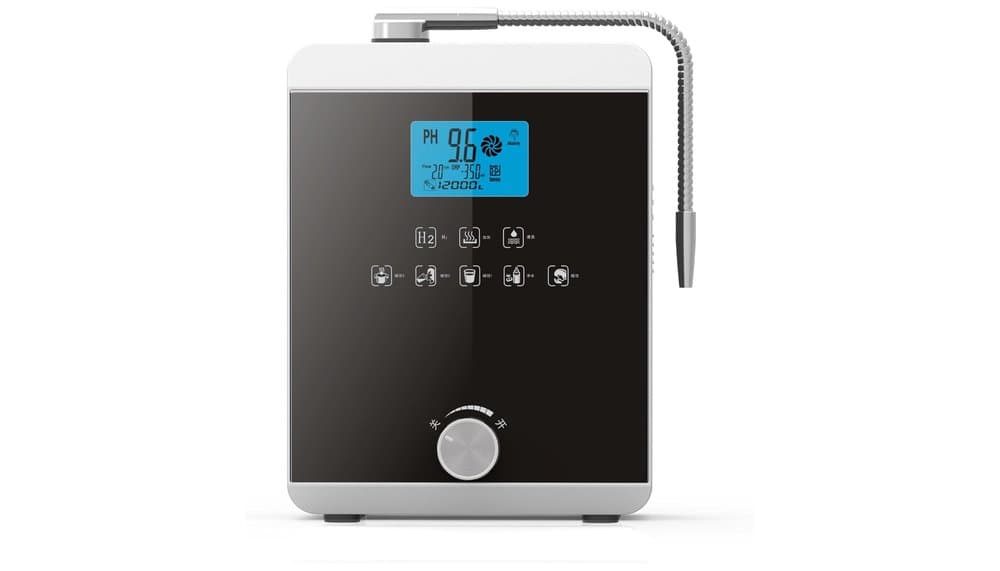
Alkaline Water Ionizer 11-Plate Electrode Test
Analyzes the 11-plate alkaline water ionizer: Does it filter water effectively, alter its properties, and deliver promised health benefits for a family?
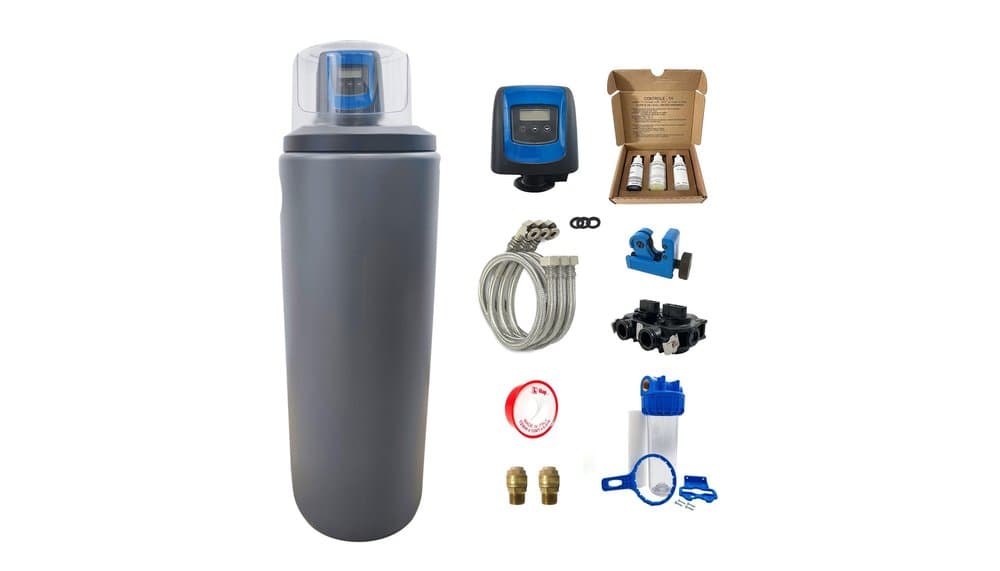
TOODO Fleck 5800 SXT Monobloc Water Softener Review
Volumetric TOODO Fleck 5800 SXT water softener eliminates limescale efficiently for families. A review of features & performance.
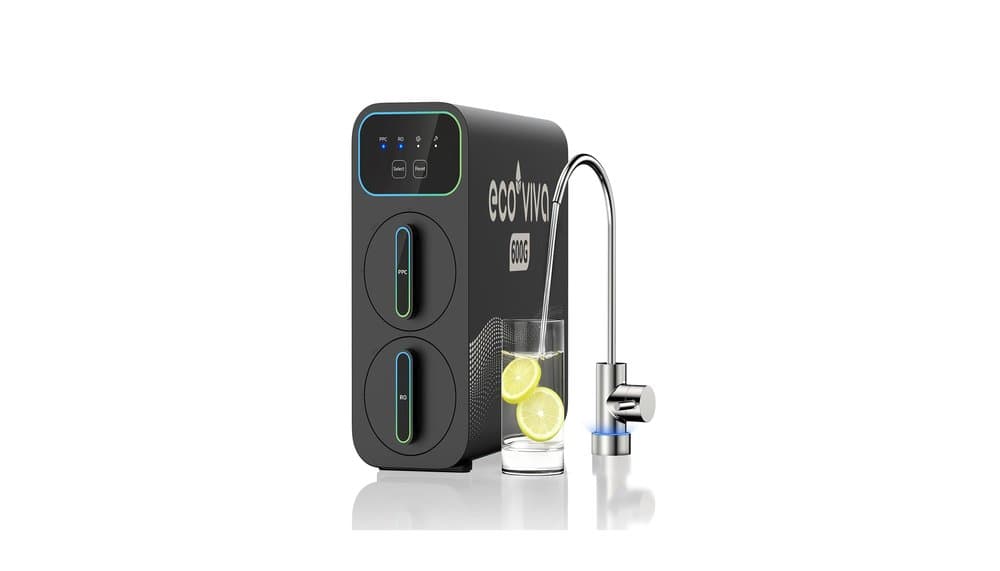
Ecoviva E6 Reverse Osmosis Water Filter Review
Compact, tankless Ecoviva E6 reverse osmosis system analyzed. We test its real-world purification performance, health benefits, and home integration.
Guides you might like
Alkaline Water Ionizer Buying Guide
Discover how alkaline water ionizers work and learn key tips to choose the right one for your home and health. Essential buying guide.
Buying Guide: Best Hydrogen Water Generator
Guide to hydrogen water generators: cutting through the hype to help you make an informed purchase decision for your health and budget.
Choosing Your Home Water Filter
Unlock clean, tasty water at home. Find the right water filter to tackle chlorine, pollutants, and limescale for better health and peace of mind.