iSpring RCC7 Reverse Osmosis Water Filter Review
Introduction
When discussing domestic water filtration, reverse osmosis (RO) is often considered the gold standard for purity. Among the many systems available, the iSpring RCC7 75GPD 5-Stage Reverse Osmosis Water Filter System has established itself as an extremely popular model, notably for its value for money. In this article, we will dissect this system from the perspective that matters most to us: its effectiveness in producing healthy water, its daily performance, and its impact on a family's budget and environment. We rely on the manufacturer's technical specifications, tests reported by independent experts, and feedback from the user community to provide you with a complete and objective view.
Main Strengths
- Comprehensive 5-stage filtration: The system targets a very wide spectrum of contaminants, from the coarsest to the microscopic.
- Excellent value for money: According to market analysis, it offers performance equivalent to more expensive systems.
- DIY-friendly installation: The kit is complete and the push-fit connections greatly facilitate installation by a non-professional.
- Daily flow rate suitable for families: A production of 75 gallons (approximately 284 liters) per day covers common drinking and cooking water needs.
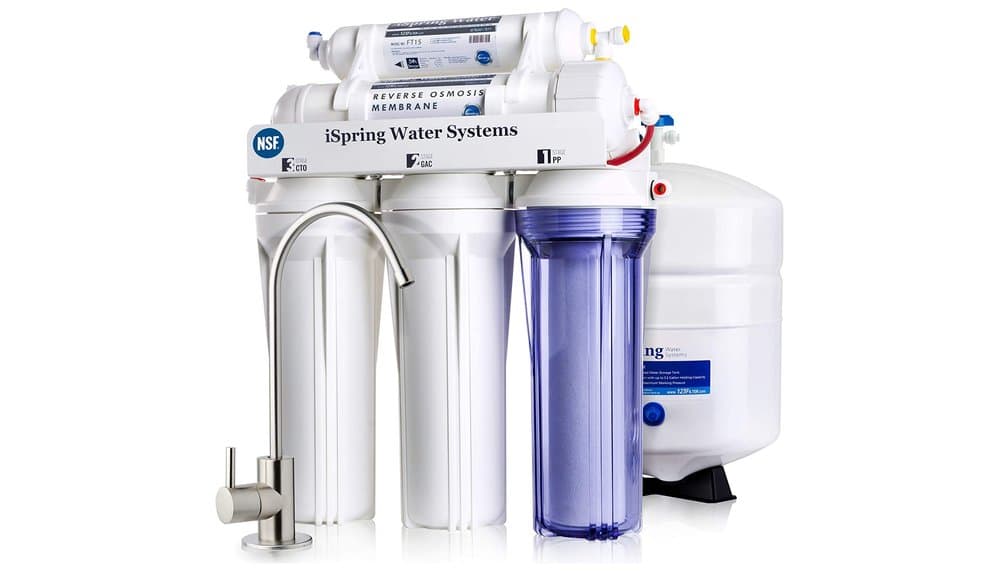
- Transparency on filter status: The transparent housing of the first stage allows for a visual assessment of the pre-filter's clogging.
Weaknesses to Consider
- Undersink footprint: With its 3.2-gallon (12-liter) storage tank, the system requires significant space under the sink.
- Potentially high wastewater ratio: Performance on this point seems variable and can be worse than the advertised figures, depending on the inlet water pressure.
- Recurring consumable costs: Like any reverse osmosis system, the annual replacement of filters and the membrane represents a regular investment.
- Dependence on water pressure: Without an integrated booster pump, optimal efficiency requires an inlet water pressure of at least 45 psi.
- Perceived quality of some components: Some users point out the provided faucet, which they sometimes judge to be less premium than the rest of the system.
Detailed Analysis of the iSpring RCC7 75GPD System
Filtration Effectiveness and Health
The heart of our analysis lies here. The 5-stage system is a proven architecture:
- Sediment filter (5 microns): Captures suspended particles (rust, sand, dust).
- Granular Activated Carbon (GAC) filter: Reduces chlorine, volatile organic chemicals (VOCs), and improves taste and odor.
- Carbon Block filter (CTO, 5 microns): Final polishing before the RO membrane, removes fine contaminants and protects the RO membrane.
- Reverse Osmosis Membrane (75 GPD, 0.0001 micron): This is the crucial stage. It removes up to 99% of a panel of over 1000 contaminants. On paper, this includes heavy metals (lead, arsenic, mercury), nitrates, fluorides, salts (sodium, calcium responsible for scale), some viruses and bacteria, and a large portion of PFAS and microplastics thanks to its extremely fine porosity. It is this stage that produces water of remarkable purity.
- Post Activated Carbon filter (polishing): Further refines the water's taste after storage in the tank.
Technology comparison: Compared to a simple activated carbon filter (like a pitcher or faucet-mounted type), reverse osmosis is radically more effective against inorganic contaminants (metals, nitrates, salts). Compared to an ion-exchange water softener, it removes the minerals responsible for scale but does not replace them with sodium, and it filters much more than just hardness. It does not use salt or chemical regeneration. Unlike a UV sterilizer that only kills microorganisms without removing chemicals, reverse osmosis does both, but it is also not designed as a last-resort sterilizer. It is therefore a complementary and very comprehensive technology.
Daily Performance: Flow Rate and Waste
- Production flow rate: The 75 GPD (Gallons Per Day) membrane allows for the production of approximately 11.8 liters per hour. For standard use (drinking water, coffee, cooking), this is largely sufficient for a family of 4 to 6 people, especially with the 12-liter tank that provides an immediate reserve. Testers note that refilling the tank after use takes several hours, which is normal.
- Wastewater ratio: This is the sensitive point of reverse osmosis. The manufacturer mentions a ratio, but field feedback is less uniform. One user reports a ratio of 7:1 (7 liters of wastewater for 1 liter of purified water), well above the 1:1 sometimes advertised. In reality, this ratio depends heavily on the inlet water pressure, temperature, and filter condition. Without a booster pump, one can expect an average ratio of 3:1 or 4:1, which remains an ecological and economic point to consider. The "wasted" water can be recovered for watering or cleaning.
Usage Cost and Maintenance
The acquisition cost is only part of the equation. The replacement of consumables must be anticipated:
- Pre-filters (stages 1,2,3): Should be changed approximately every 6 months.
- Post-filter (stage 5): Should be changed every 12 months.
- RO membrane (stage 4): Lifespan of 24 to 36 months depending on the quality of the inlet water and pre-filter maintenance.
According to available replacement packs, the average annual cost for a family (changing pre-filters 2x/year and post-filter 1x/year) is typically between 80 and 120 euros. This is a budget to factor in to maintain the system's effectiveness. The community notes that the availability of iSpring consumables is good.
Installation and Ease of Use
This is a widely recognized strength. Testers and users confirm that installation is within the reach of a competent DIYer. The system is delivered complete, with color-coded tubing and quick-connect fittings that eliminate the risk of leaks from improper tightening. The instructions and online videos are described as clear. The operation generally takes 2 to 3 hours. The main constraint remains the footprint: the available space under the sink must be measured, as the tank and the four filter housings occupy significant space.
Key Technical Specifications
| Characteristic | Detail |
|---|---|
| Model | iSpring RCC7 75GPD |
| Main Technology | 5-Stage Reverse Osmosis (RO) |
| Production Flow Rate | 75 Gallons Per Day (~284 L / ~11.8 L/h) |
| Targeted Contaminants | Sediments, Chlorine, Heavy metals (Pb, As, Hg...), Fluoride, Nitrates, Salts (scale), PFAS, microplastics, some viruses & bacteria. |
| Minimum Filtration Size | 0.0001 micron (RO membrane) |
| Storage Tank | 3.2 gallons (approximately 12 liters) |
| Minimum Required Water Pressure | 45 PSI (no integrated pump) |
| Included Components | RO system, metal faucet, tank, complete installation kit. |
| Warranty | 3 years (manufacturer) + lifetime technical support. |
| Typical Maintenance | Pre-filters: 6 months. Post-filter: 12 months. Membrane: 24-36 months. |
What Users and Testers Say
The synthesis of thousands of customer reviews and expert analyses paints a very consistent picture.
Recurring positive points:
- Exceptional water quality: Users are unanimous on the radical improvement in the water's taste, odor, and clarity. Expressions like "best water of my life" or "tastes like bottled water" are frequent.
- Reliability and durability: For the majority, the system works without issues for years with regular maintenance.
- Satisfactory installation: Most DIYers who follow the instructions achieve a successful, leak-free installation. Customer support is cited as responsive if needed (replacement of defective parts).
- Value for money: It is very frequently described as excellent compared to premium brands.
Frequently raised negative points or criticisms:
- Water waste: This is the most frequent and well-documented criticism. Many users measure a wastewater/pure water ratio much less favorable than marketing promises, confirming our technical analysis.
- Footprint: The need for a spacious sink cabinet is emphasized.
- Isolated quality issues: A few reports mention minor leaks at connections (often resolved by better connection) or a perception of average quality for the provided faucet.
- Drain noise: The sound of wastewater draining into the pipe can be audible, which some find bothersome.
Conclusion
The iSpring RCC7 75GPD 5-Stage Reverse Osmosis Water Filter System is, according to the analysis of available data, a solid and very competitive choice for a family looking to take control of their drinking water quality. Its effectiveness in removing a wide spectrum of contaminants is undeniable and proven by user satisfaction with the water's taste and purity.
Its main asset is its excellent balance between performance and price. However, this choice implies accepting its intrinsic constraints: a significant footprint under the sink and a potentially high wastewater ratio, turning part of your water bill into a "consumable" for purity. Regular maintenance is also a recurring cost to budget for.
We particularly recommend it for households whose municipal water is high in nitrates, aggressive scale, or has pronounced tastes/odors, and who have sufficient space under the sink. For those with low water pressure (less than 3 bar), it would be prudent to consider versions of this system that include a booster pump. It is an initial investment that, for many, advantageously replaces buying bottled water, both economically and in terms of perceived quality.
100% free and independent — All our articles are written independently, without any sponsorship. We may earn a commission on purchases made through our links, at no extra cost to you.
Articles you might like
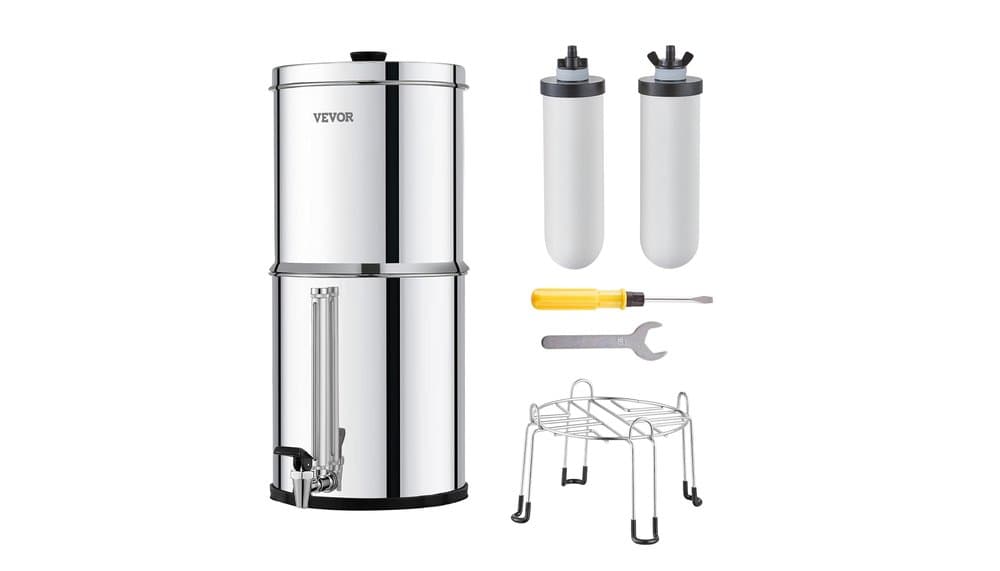
VEVOR 8.5L Gravity Water Filter Review
VEVOR's 8.5L gravity water filter needs no electricity, using simple mechanical filtration for healthy, purified drinking water in any location.
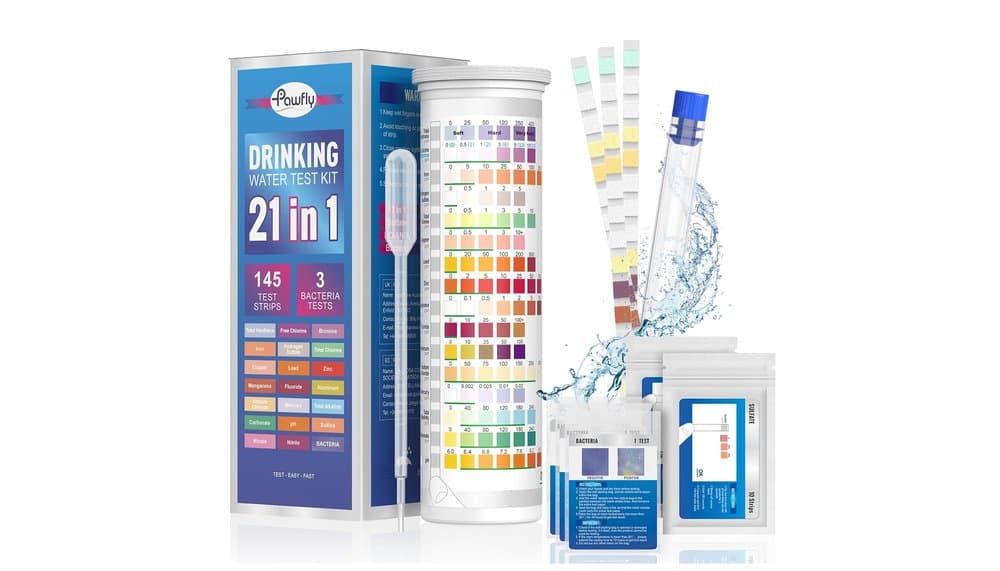
Pawfly 21 in 1 Drinking Water Test Kit Review
Pawfly test kit reviews a 21-in-1 water test strip, analyzing accuracy & value for home tap, well, or aquarium water tests. Get key insights before buying.
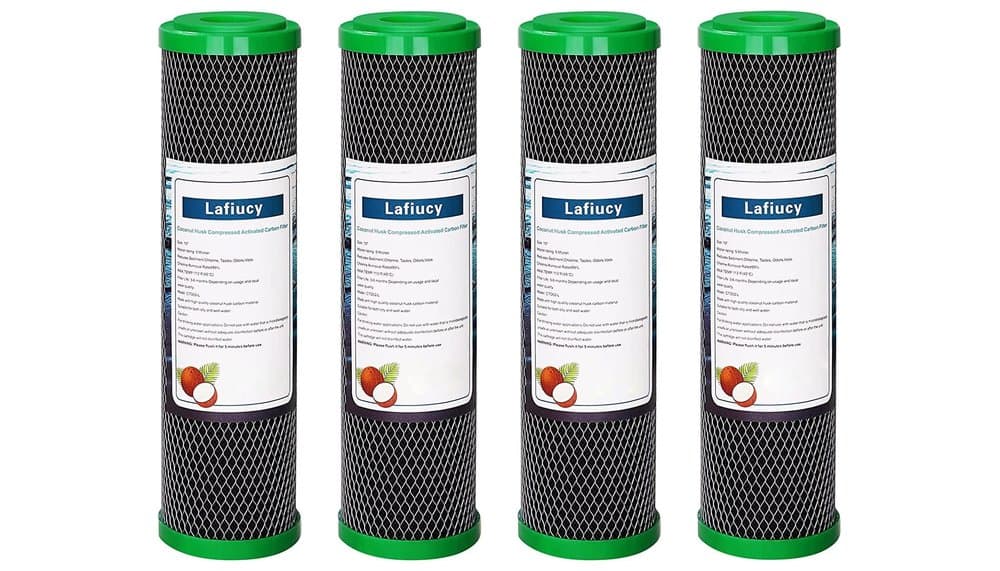
Lafiucy 10 Inch Coconut Carbon Filter Review
Review of the affordable Lafiucy 5 Microns 10-inch activated carbon water filter cartridge, analyzing specs & user feedback for performance.
Guides you might like
Alkaline Water Ionizer Buying Guide
Discover how alkaline water ionizers work and learn key tips to choose the right one for your home and health. Essential buying guide.
Buying Guide: Best Hydrogen Water Generator
Guide to hydrogen water generators: cutting through the hype to help you make an informed purchase decision for your health and budget.
Choosing Your Home Water Filter
Unlock clean, tasty water at home. Find the right water filter to tackle chlorine, pollutants, and limescale for better health and peace of mind.