ROVOGO 3-Way Filtered Kitchen Sink Mixer Tap Review

Introduction
Faced with growing concerns about tap water quality, the idea of integrating a filtration solution directly into the kitchen sink is appealing. This is exactly what the ROVOGO 3-Way Filtered Kitchen Sink Mixer Tap offers. This three-way mixer tap positions itself as a central piece of equipment, promising to deliver hot water, cold water, and filtered drinking water from a single installation point. Here, we will dissect this product, not as a simple faucet, but as the centerpiece of a domestic water purification system. Our analysis will focus on its actual capacity to improve water quality, its compatibility with different filtration technologies, and its suitability for daily, healthy family use.
Key Strengths of the ROVOGO 3-Way Filtered Tap
The main strength of this product lies in its integrated concept. It eliminates the need for a dedicated faucet for filtered water, thus freeing up space on the sink and offering a unified aesthetic. Feedback converges on its compact and modern design in brushed steel, which fits into most kitchens. The presence of a telescopic spray head with 3 modes (aerated stream, spray, pause) adds appreciated versatility for household tasks.
From a "water quality" standpoint, its architecture is relevant: it features two independent water circuits. One for untreated hot and cold water, the other exclusively for water that has passed through your under-sink filtration system. This avoids any risk of cross-contamination, an essential foundation for ensuring the purity of drinking water.
Finally, according to comparisons and reviews, this model positions itself as a cost-effective alternative to three-way mixer taps from major faucet brands, making this integrated functionality accessible to a wider audience.
Weak Points and Limitations to Be Aware Of
The first limitation, and a major one, is that the ROVOGO tap does not filter water by itself. It is only a distribution point. The quality of filtration depends entirely on the under-sink system you connect it to. Its role is to shape the flow, not to purify it.
User feedback and testers highlight an installation that can be tricky. Managing the three supplies (hot, cold, filtered) and the compatibility of the 1/4-inch quick-connect fittings require some DIY skills or the intervention of a plumber. Some users also note a splashing problem with the spray head in the high position, and an occasionally uneven finish quality on some plastic components, which is common in this price segment.
Finally, there is no or very little structured after-sales service or long-term warranty, meaning the user assumes the risks in case of mechanical failure.
Detailed Analysis from the Filtration and Health Perspective
Compatibility and Effectiveness Against Contaminants
The quick-connect fitting for 1/4" OD tubing makes the ROVOGO compatible with the vast majority of under-sink filtration systems on the market. This is where the real battle for health takes place.
- With an activated carbon filter: This is the most common option. Such a system, connected to the "filtered water" line, will effectively remove chlorine, bad tastes, odors, and some volatile organic compounds (VOCs). The best carbon blocks can also reduce some heavy metals like lead or mercury, and some PFAS. However, it is ineffective against nitrates, limescale (dissolved salts), or small-sized microplastics.
- With a reverse osmosis (RO) system: This is the most comprehensive solution. An RO unit connected to the ROVOGO tap will remove up to 99% of a wide range of contaminants: heavy metals, nitrates, fluoride, viruses & bacteria, almost all salts (thus limescale), and most PFAS and microplastics. Its weak point is often a slower flow rate and water waste (for 1 liter purified, 3 to 4 liters may be sent to drain).
- Other technologies: The tap could also distribute water from a water softener (ion exchange for limescale), or a UV sterilizer (to eliminate microorganisms).
Clear Conclusion: The ROVOGO is an excellent dispenser, but the effectiveness against specific contaminants depends 100% on the filtration system you choose and install upstream.
Practical Performance: Flow Rate, Installation, and Hidden Costs
- Filtered Water Flow Rate: It will not be limited by the faucet, but by the filtration system. A standard carbon filter offers a nearly normal flow. A reverse osmosis system, however, significantly reduces the flow rate (often around 8-12 liters per hour for domestic models), which often requires an under-sink storage tank. The faucet simply dispenses what the filter sends it.
- Installation: Sometimes basic instructions (not always in French) and the multiplicity of connections make installation complex for a novice. You need to drill or have a sink hole of 35-48mm, connect three supply lines, and ensure the seal of each junction. Professional installation is often recommended.
- Annual Cost of Consumables: This is a critical and often underestimated point. With the ROVOGO, you commit to maintaining a filtration system. Annual costs vary enormously:
- For a simple carbon filter: 30 to 80€ for cartridge replacement.
- For a reverse osmosis system: you need to factor in the replacement of pre-filters (carbon, sediment) every 6-12 months (50-100€/year) and the reverse osmosis membrane every 2 to 5 years (80-200€). This cost must be factored into the cost-effectiveness calculation.
Value for Money and Family Use
For a family, the convenience of having filtered water on demand is undeniable. The ROVOGO, with its attractive entry price, allows for allocating more budget to the filtration system itself, which is wise. Its compact size and 360° rotation make it a practical tool for filling pots or carafes. However, its long-term durability under intensive use is not guaranteed to the same level as premium brands. It's a compromise choice: sacrificing some longevity and customer support to obtain an integrated feature at a controlled cost.
Technical Specifications
| Characteristic | Detail |
|---|---|
| Product Name | ROVOGO 3-Way Filtered Kitchen Sink Mixer Tap |
| Main Material | 304 Stainless Steel (body), Plastic components (spray head) |
| Finish | Brushed |
| Number of Lines | 3 (Hot Water / Cold Water / Filtered Water) |
| Mounting Type | On deck plate (1 hole, Ø 35-48 mm) |
| Total Height | 38 cm |
| Main Spout Reach | 21 cm |
| Spray Head | Telescopic (extends ~33 cm), 3 modes (Stream, Spray, Pause) |
| Filtration Connection | Quick-connect for 1/4" OD tubing (filters not included) |
| Recommended Water Pressure | 1 to 10 bar |
| Cartridge | Ceramic (for hot/cold water mixing) |
What Users and Testers Say
A synthesis of customer reviews and expert feedback highlights clear trends.
Recurring Positive Points:
- Appreciated versatility and convenience: Users love having access to filtered water without an extra faucet. "Very practical", "all-in-one solution" are frequent comments.
- Design and Finish: Many find it "attractive", "very classy" and note it "looks like good quality" for the price.
- Spray Head Functionality: The 3 modes are judged useful and the spray head extension is sufficient.
Negative Points and Warnings:
- Installation Complexity: This is the major point of friction. "The connections weren't labeled", "the tubing for the filter connection was missing", "the instructions were incomplete".
- Splashing Problem: Several reviews report that "water splashes a lot" or "spritze etwas aus dem Waschbecken" when the spout is oriented in a certain way, especially with high flow.
- Perceived Quality of Materials: While the steel is well-rated, some components (like the spray head) seem light or less premium.
- Filtered Water Flow Rate: Some note that the flow through the small filtered water spout is naturally weaker, which is a physical characteristic, not a defect.
Conclusion
The ROVOGO 3-Way Filtered Kitchen Sink Mixer Tap is a clever and economically interesting solution for those wishing to centralize the distribution of hot, cold, and filtered water at a single point. Its main merit is making this configuration accessible.
However, it is crucial to understand that it is only the tip of the iceberg. Its contribution to your health depends entirely on the under-sink filtration system you pair it with. The elimination of chlorine, heavy metals, nitrates, or microplastics will be determined by the choice of this system (activated carbon, reverse osmosis, etc.) and the rigor of its maintenance.
We recommend it to savvy DIYers or families prepared to invest in professional installation, who are primarily looking for the convenience of a budget-conscious 3-in-1 faucet. For those who prioritize bulletproof durability and localized customer service, established faucet brands remain a safer choice, but at a significantly higher cost. In summary, it is a good tool that fulfills its function, provided you accept its limitations and properly configure the filtration ecosystem it depends on.
100% free and independent — All our articles are written independently, without any sponsorship. We may earn a commission on purchases made through our links, at no extra cost to you.
Articles you might like
Alkaline Water Ionizer 11-Plate Electrode Test
Analyzes the 11-plate alkaline water ionizer: Does it filter water effectively, alter its properties, and deliver promised health benefits for a family?
TOODO Fleck 5800 SXT Monobloc Water Softener Review
Volumetric TOODO Fleck 5800 SXT water softener eliminates limescale efficiently for families. A review of features & performance.
Ecoviva E6 Reverse Osmosis Water Filter Review
Compact, tankless Ecoviva E6 reverse osmosis system analyzed. We test its real-world purification performance, health benefits, and home integration.
Guides you might like
Alkaline Water Ionizer Buying Guide
Discover how alkaline water ionizers work and learn key tips to choose the right one for your home and health. Essential buying guide.
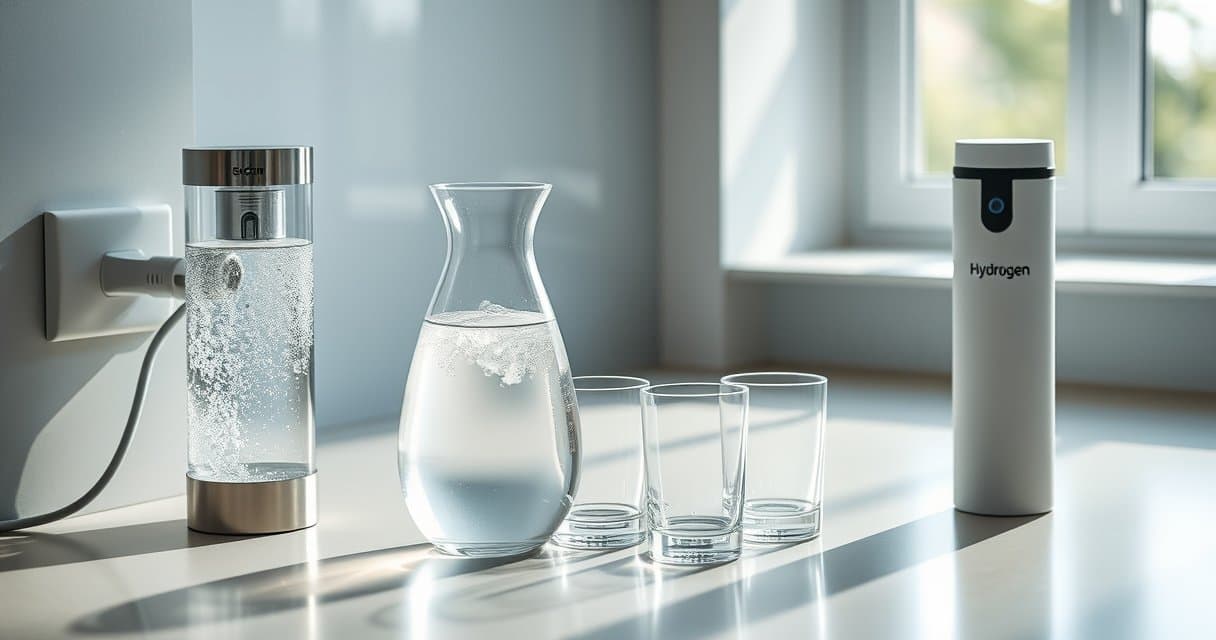
Buying Guide: Best Hydrogen Water Generator
Guide to hydrogen water generators: cutting through the hype to help you make an informed purchase decision for your health and budget.
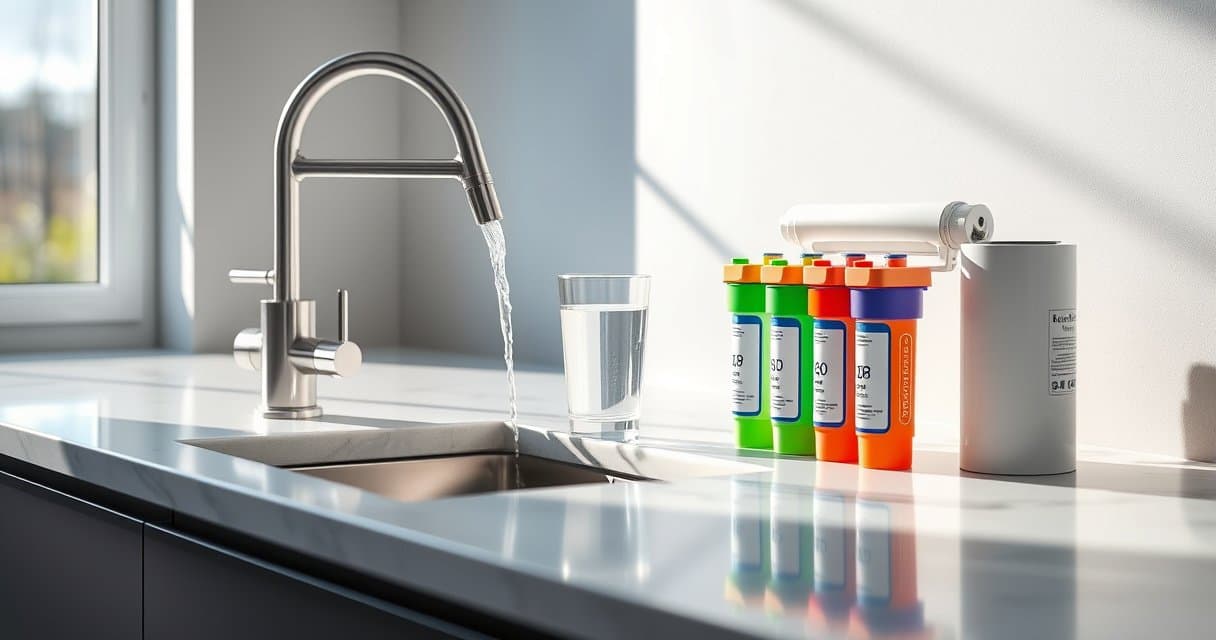
Choosing Your Home Water Filter
Unlock clean, tasty water at home. Find the right water filter to tackle chlorine, pollutants, and limescale for better health and peace of mind.