Nutabevr Kitchen Thermometer Digital Review
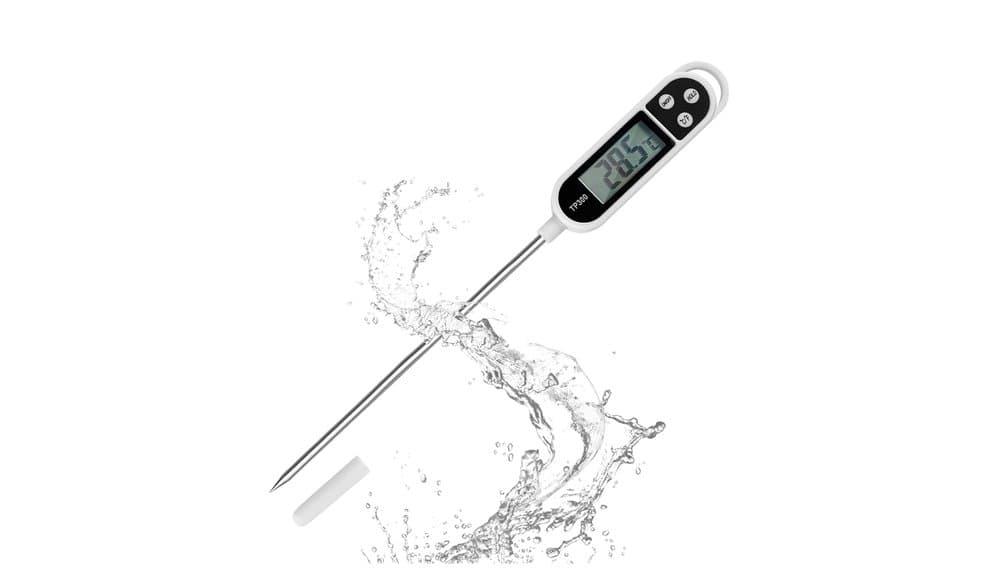
Nutabevr Kitchen Thermometer Digital
Introduction
On a website dedicated to domestic water quality, we spend our time analyzing devices that measure and control invisible parameters to protect health. Today, we shift perspective, but maintain the same rigor of analysis. We are examining the Nutabevr Kitchen Thermometer Digital Cooking Thermometer. Although its role is not to purify, it shares a fundamental goal with our filtration systems: the precise control of a critical parameter for health and quality. Here, it is temperature, a determining factor for food safety (eliminating bacteria) and culinary success. Through the lens of our technical analysis habits, we will assess whether this tool is a reliable ally in your kitchen.
Strong Points
Based on specifications and user feedback, the Nutabevr Kitchen Thermometer presents several convincing assets for daily use.
Its main selling point is its versatility and wide measurement range. With a capacity to read temperatures from -50°C to +300°C, it covers almost all domestic needs, from checking a freezer to measuring frying oil, to meats, pastries, and liquids like milk or hot water.
The community particularly appreciates its ease of use. The device is described as intuitive, without complex setup. The "Hold" function is consistently cited as a major advantage: it allows freezing the displayed temperature on the LCD screen, enabling safe removal of the probe from a hot dish to read the value comfortably, at a distance.
The design is conceived for practical storage. The presence of a hanging hole and a protective cap for the fine tip of the probe is noted positively. These elements, often absent on basic models, extend the device's lifespan and make it an organized tool.
Finally, the fine and long probe (14.5 cm) is a technical asset. Its fineness allows piercing foods with minimal damage, and its length provides a comfortable safety distance between the user's hand and the heat source, be it an oven, barbecue, or saucepan.
Weak Points
Analysis of expert feedback and negative customer reviews highlights limitations that temper the enthusiasm.
The most frequent friction point concerns the speed and stability of the measurement. Contrary to the highlighted "instant read" display, several testers and users report a stabilization time of several seconds, sometimes perceived as too slow in dynamic cooking situations. A few reports also mention bugs or inconsistent displays, eroding confidence in the reading.
The absolute accuracy is questioned for demanding uses. The technical sheet announces an accuracy of ±1°C, which is acceptable for general use. However, comparisons with reference instruments suggest this margin can be exceeded on some units, making it less suitable for precise cooking techniques like pastry or low-temperature cooking (sous-vide) where a one-degree difference matters.
Long-term robustness is an unknown. The web context from experts highlights fragile durability on some entry-level models. The fact that the device is not waterproof limits its cleaning to simple wiping and makes it vulnerable to grease splashes or shocks in a kitchen environment.
Finally, its positioning is clear: it is an entry-level thermometer. It lacks the advanced features of more expensive models like Bluetooth connectivity, programmable alarms, presets by meat type, or multiple probes. It does the basic job, but without frills.
Detailed Analysis
Performance and Real-World Accuracy
On paper, the specifications of the Nutabevr Kitchen Thermometer are comprehensive and seem suitable for the home. The extended temperature range and 0.1°C resolution are serious characteristics. However, the difference between "specs" and the real user experience lies in the reliability of the measurement over time. Culinary testing experts insist on one point: consistency. A thermometer can be accurate one day and drift the next if poorly made. Most feedback indicates it is reliable enough to determine if a chicken is cooked or if oil is at the right temperature, but note that its credibility drops for more scientific applications.
Compared to the technologies we usually evaluate (reverse osmosis, UV), the "technology" here is simple: a thermoresistive probe and an electronic conversion circuit. The critical point, as with an activated carbon filter, lies in the quality of the components and the assurance of a stable reading. The mixed reviews on responsiveness suggest that the electronic components used may be of lower quality to maintain a low price.
See today's priceEase of Use and Ergonomics
This is where the product seems to score the most points. Setup is immediate: just insert a battery. Handling is intuitive with a single button to turn on and activate the Hold function. Changing the unit (°C/°F) is done simply, a detail appreciated by users following international recipes.
The ergonomics of the long, fine probe are a real asset for safety, allowing distance from steam and heat. The protective cap is a smart design element that addresses a real need: protecting the sensitive probe tip and preventing it from piercing a drawer. This attention to practical detail is often praised by the community.
Market Comparison
In the ecosystem of kitchen thermometers, the Nutabevr clearly positions itself as an economical alternative to specialized brands. Compared to a high-end Thermoworks or Inkbird, renowned for their pinpoint accuracy, speed, and durability, the Nutabevr makes compromises. It sacrifices speed and some long-term guarantees for an accessible price.
Its value for money is judged good for occasional family use. For a family that simply wants to avoid serving undercooked roast beef or check a baby bottle's temperature, it represents a low investment for a significant gain in food safety. For a barbecue or pastry enthusiast who uses their thermometer several times a week and depends on ultra-reliable measurements, investing in a more robust and faster model will likely be justified.
Technical Specifications
| Characteristic | Nutabevr Kitchen Thermometer Specification |
|---|---|
| Measurement Range | -50°C to +300°C (-58°F to +572°F) |
| Announced Accuracy | ±1°C / ±1°F |
| Display Resolution | 0.1°C / 0.1°F |
| Response Time | 2-3 seconds (announced) |
| Probe Length | 14.5 cm |
| Probe Material | Food-grade stainless steel |
| Power Supply | Battery (type unspecified, generally LR44 or similar) |
| Main Functions | Instant read, "Hold" function, °C/°F selection |
| Included Items | Thermometer, Probe protective cap |
| Standards | CE Marking |
What Users Say
The synthesis of over 1,800 customer reviews (with an overall rating of 4.3/5) and web expert analyses gives us a nuanced but revealing panorama.
Positive trends are clear:
- A vast majority of users find it practical, simple, and effective for basic use. Mentions of "gets the job done", "solid", "accurate for my use" come up often.
- The "Hold" function and the readability of the LCD screen are unanimously praised.
- Its perceived value for money is good. Many describe it as a useful purchase without breaking the bank.
- Its versatility (measuring ambient, liquids, oven, etc.) is appreciated.
Recurring criticisms point to specific flaws:
- A sometimes slow response time, not always matching the announced "2-3 seconds", is the most frequent complaint among negative reviews.
- Doubts about long-term accuracy and experiences of drift or erratic behavior ("frequent bugs") emerge in a significant minority of reviews.
- The build quality is described as "acceptable" but not premium. Some express reservations about its longevity under intensive use.
- The lack of advanced features (alarms, connectivity) is noted by the most demanding users, who compare it to other products on the market.
In summary, the user experience confirms it is a mainstream and satisfying product for the majority, but shows its limits with expert users or under demanding conditions.
Conclusion
The Nutabevr Kitchen Thermometer Digital Cooking Thermometer is the culinary equivalent of a basic activated carbon filter: it fulfills an essential function in an accessible and satisfactory manner for the greatest number, without claiming absolute technical excellence.
Our technical analysis and the synthesis of feedback converge towards a clear conclusion. This device is a wise choice for the occasional or family cook looking for a simple, versatile, and inexpensive tool to improve the safety and consistency of their cooking. Its strengths – long probe, Hold function, readable screen – are real and meet concrete needs.
However, we cannot ignore its limitations. Its sometimes fluctuating measurement speed and the questions about its absolute accuracy and durability confine it to a supporting tool role. For critical applications where every degree counts, or for professional or very regular use, the community of testers and experts recommends turning to specialized brands, more robust and responsive.
Ultimately, if your need is to check the doneness of a steak, the temperature of soup, or frying oil more reliably than by instinct, the Nutabevr represents a tangible and cost-effective improvement to your kitchen equipment. But if you are getting into sous-vide cooking, confectionery, or low & slow barbecue where temperature is a sacred parameter, it will likely be the weak link in your precision chain. As with a water filtration system, the final choice depends on the importance you place on absolute reliability and frequency of use.
100% free and independent — All our articles are written independently, without any sponsorship. We may earn a commission on purchases made through our links, at no extra cost to you.
Articles you might like
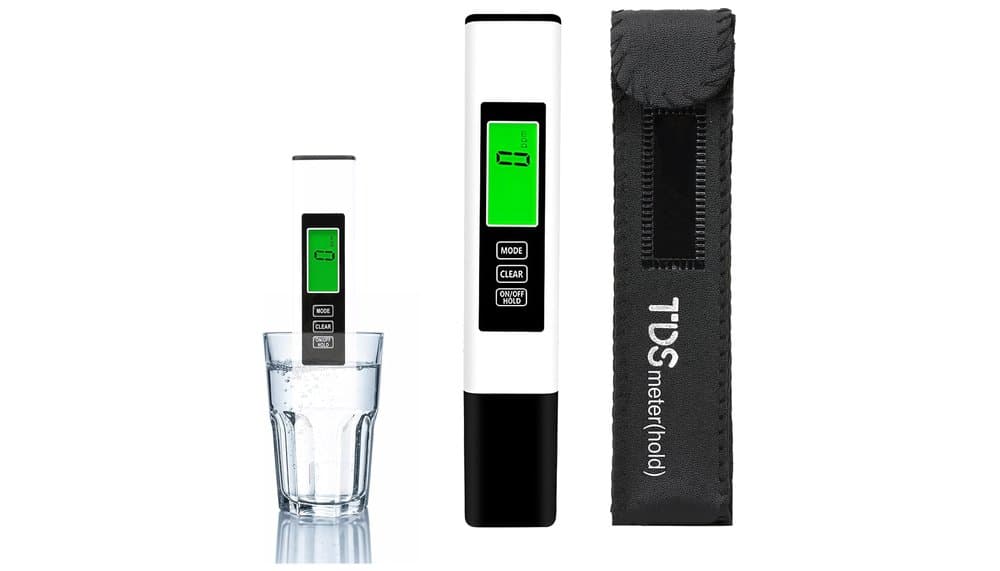
TDS Digital Water Tester 3-in-1 Review
Measure TDS, EC & water temperature instantly. Essential digital tester for data-driven water quality decisions in your home.
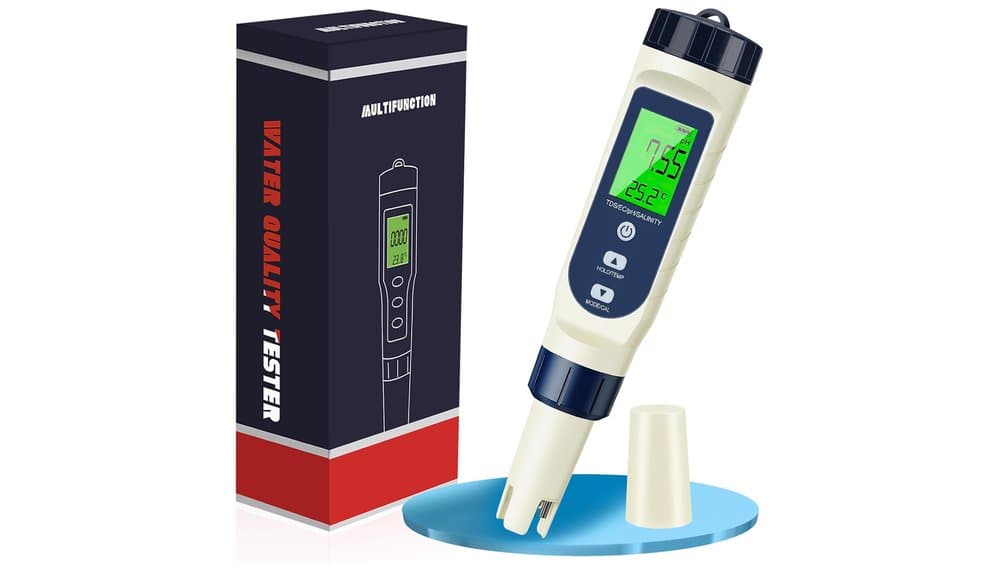
5-in-1 Digital Water Tester Review: pH, TDS, EC
Test water quality instantly: pH, TDS, EC, salinity & temperature. Verify your home filtration system's effectiveness.

Fmzrbnih TDS-7 Digital Water Tester Review and Test
Analyzes the popular Fmzrbnih TDS-7 tester, detailing its true capabilities, limitations, and role in monitoring water filtration system performance.