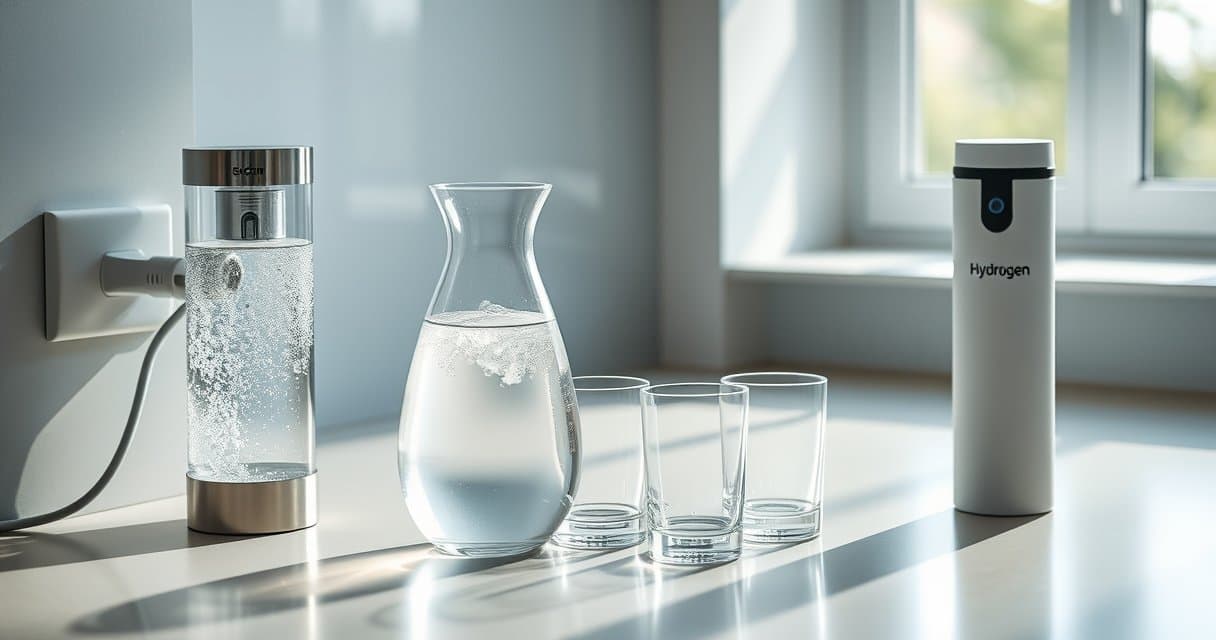
Waterdrop 10UB-UF Ultrafiltration Undersink Filter Review
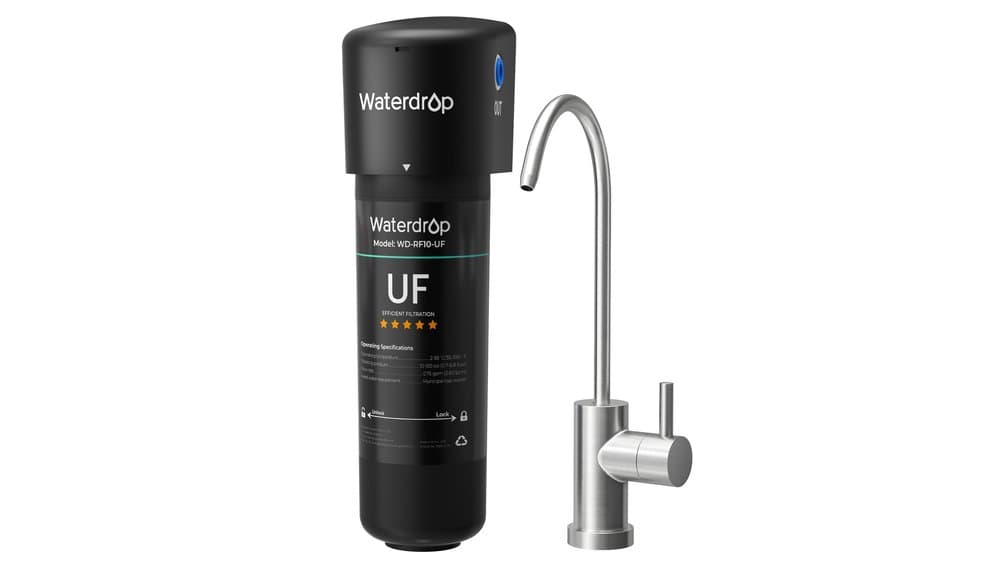
Waterdrop 10UB-UF Ultrafiltration Undersink Filter
Introduction
In the world of domestic water filtration, under-sink systems represent a sought-after balance between performance, discretion, and ease of use. The Waterdrop 10UB-UF 0.001μm Ultrafiltration Undersink Filtration System positions itself in this niche with what is presented as advanced ultrafiltration (UF) technology. Here, we will dissect this product not based on personal tests, but by rigorously analyzing its official technical specifications, cited certifications, and cross-referencing this data with the massive feedback from the user community and expert analyses available online. The goal is to clearly determine what this system can and cannot do for your water quality, its value for money, and its suitability for daily family use.
Strong Points
According to available data, the Waterdrop 10UB-UF presents several marked advantages.
Extremely Simple Installation and Compact Design: This is the most praised asset. The system uses push-to-connect quick fittings that eliminate the need for soldering or special tools. The majority of user feedback confirms installation in less than 30 minutes, often by novices. Its reduced footprint (approximately 9.9 x 9.1 x 31.2 cm) allows it to fit in most sink cabinets, an advantage for small kitchens or rentals.
Excellent Organoleptic Improvement: Its primary mission is brilliantly accomplished. The combination of activated carbon from coconut and the ultrafiltration membrane effectively removes chlorine, its odors, and tastes. Users consistently speak of water with a "bottled taste" or "neutral" taste, comparable or superior to that from common pitcher filters.
High Flow Rate and No Water Waste: Unlike a reverse osmosis system, there is no wastewater sent down the drain. The advertised flow rate is 0.75 GPM (approx. 2.8 L/min), which users validate as very comfortable for quickly filling a pot or a pitcher. It preserves water pressure.
Cost-Effective in the Medium Term: The advertised cost of the single replacement cartridge WD-RF10-UF is highlighted as competitive. Compared to the regular purchase of pitcher cartridges or bottled water, the calculation is often in its favor over a year.
Weak Points
The system has limitations inherent to its technology, which are crucial to understand.
Does Not Alter the Mineral Composition of Water: This is its main limitation. The system does not reduce TDS (dissolved mineral salts like calcium and magnesium). It therefore does not remove limescale (although it may retain some suspended particles). If your goal is to obtain "soft" water, this is not the right choice.
Targeted, But Incomplete, Filtration Spectrum: Ultrafiltration at 0.01 μm (or 0.001 μm according to claims) is excellent for particles and bacteria, but less so for dissolved chemical contaminants. According to its certifications (NSF/ANSI 42 & 53), it reduces chlorine, taste, odor, lead, and certain suspended particles. On the other hand, it is ineffective against nitrates, fluorides, PFAS (endocrine disruptors), or pesticides in dissolved form. It is not designed for untreated well water.
Dependence on Inlet Pressure: A few reviews note that if the home's water pressure is very high and the faucet is opened fully, vibrations or a slight reduction in flow may occur. This requires moderating the faucet opening.
Detailed Analysis
Effectiveness Against Contaminants: What It Really Filters
Let's examine its action, filter by filter, based on its specifications and NSF/ANSI certifications.
- Chlorine, Taste and Odors: This is its strong point. The activated carbon block layer from coconut is very effective. Tested according to NSF/ANSI 42, the results are tangible from the first uses.
- Particles and Sediments: The ultrafiltration membrane (0.01 μm) acts as an ultra-fine sieve. It retains rust, sands, silts, and most microplastics (usually > 1 μm), as well as cysts and bacteria (like E. coli, Cryptosporidium).
- Lead and Heavy Metals: NSF/ANSI 53 certification attests to a reduction of lead. This is important. However, it is crucial to note that this reduction most likely comes from the cartridge material's ability to adsorb lead, not from ion exchange. Its effectiveness on other heavy metals like mercury or arsenic is not explicitly NSF 53 certified according to the provided data, although the manufacturer mentions it.
- What It Does NOT Filter:
- Limescale (dissolved calcium and magnesium): Confirmed by the manufacturer and testers. TDS remains stable.
- Nitrates, Fluorides, Sulfates: Dissolved contaminants of small molecular size, not stopped by UF.
- Dissolved Chemical Contaminants: PFAS, pesticides, herbicides, drug residues are not targeted by this technology.
- Viruses: They are generally smaller (0.02 to 0.1 μm) than the stated pore size. The system is not presented as virucidal.
Ultrafiltration vs. Reverse Osmosis vs. Activated Carbon: The Technology Match-Up
It is essential to place this product in the technological landscape.
- Activated Carbon Alone (pitchers, faucet filters): Improves taste/odor/chlorine. Retains some organic contaminants. Does not reliably filter heavy metals, bacteria, or fine particles. Short lifespan.
- Ultrafiltration (Waterdrop 10UB-UF): Goes further than simple carbon. Adds a physical barrier against bacteria and particles. Preserves minerals, does not waste water, high flow rate. Ideal for already potable municipal water where you want to improve clarity and taste.
- Reverse Osmosis (RO): The most thorough purification. Removes 95-99% of dissolved contaminants, including nitrates, heavy metals, sodium, viruses, and significantly lowers TDS. Drawbacks: produces wastewater (waste), slower flow rate, often requires a booster pump and a pressure tank, higher maintenance cost.
Verdict: The Waterdrop 10UB-UF is not a competitor to RO systems. It is a complementary and distinct product, intended for those who prioritize preserving minerals, a natural flow rate, and minimalist installation, while demanding filtration superior to simple activated carbon.
Ease of Installation and Daily Use
On this point, the data is unanimous. The kit is complete: filter, dedicated lead-free stainless steel faucet, tubes, T-connectors, gaskets, and Teflon tape. The most complex step remains drilling the countertop for the new faucet, but suitable drill bits are affordable. The quick fittings work as advertised. For replacement, the twist-and-lock system allows changing the cartridge in seconds, without tools and without cutting the water supply, a real ergonomic plus.
Annual Cost of Consumables and Value for Money
The system uses a single integrated cartridge (WD-RF10-UF) combining all filtration stages. Its lifespan is advertised as 12 months or 28,000 liters (approx. 8,000 gallons), which is substantial for a family of 4. According to the manufacturer's information, the cost of this replacement cartridge is less than €30. The annual filtration cost therefore boils down to this amount, to which must be added the negligible electricity for the replacement indicator light (battery). Compared to buying 2-3 pitcher cartridges per month or bottled water, the savings are significant, with superior comfort and effectiveness.
Technical Specifications
| Feature | Detail |
|---|---|
| Filtration Technology | Multistage: Activated Carbon + Ultrafiltration Membrane |
| Filtration Fineness | 0.01 micron (0.001 μm) according to specs |
| Flow Rate | 0.75 GPM (approx. 2.8 L/min) at 60 psi |
| Capacity / Lifespan | 28,000 liters or 12 months (whichever comes first) |
| Target Contaminants (certified) | Chlorine, taste, odor (NSF/ANSI 42). Lead (NSF/ANSI 53). Suspended particles, sediment, rust. |
| NON-Target Contaminants | Limescale (TDS), Nitrates, Fluorides, Sodium, Viruses, PFAS. |
| Water Waste | None (direct flow filtration system) |
| Faucet Included | Yes, lead-free stainless steel |
| Installation Required | Connection to cold water supply. Countertop drilling for faucet. |
| Dimensions (HxWxD) | 31.2 x 9.9 x 9.1 cm |
| Recommended Water Pressure | Not specified, but works with standard network pressure. |
What Users and Experts Say
The synthesis of over 2,500 reviews and online expert analyses paints a clear consensus.
The praise is majority and convergent:
- Taste and Odor: The improvement is described as "immediate," "spectacular," "no more chlorine taste." Many favorably compare the taste to that of their old Brita pitcher.
- Installation: Terms like "very simple," "within everyone's reach," "5 minutes" come up repeatedly. The quality of the quick fittings is praised.
- Flow Rate: Judged "very decent," "sufficient," "surprising" relative to expectations of a pressure drop. Filling a 1.5L pitcher in 30 seconds is commonly reported.
- Value for Money: Perceived as excellent, especially when comparing long-term cost to bottled water or pitcher alternatives.
Recurring Criticisms and Remarks:
- Inaction on Limescale: This is the most mentioned "flaw," although the manufacturer clearly states it. Some users discovered this after purchase.
- Vibrations at Maximum Flow: A few users note a vibration or whistling phenomenon if the faucet is opened fully, resolved by slightly reducing the opening.
- Variable Accessory Quality: The supplied roll of Teflon tape is sometimes considered a bit skimpy. Some recommend having extra gaskets on hand as a precaution.
- Replacement Indicator: The electronic indicator (on some models) runs on battery and is not based on actual water quality, only on a timer.
Web experts confirm this assessment: an excellent product for its segment (UF), ideal for municipal water, offering a very good compromise between simplicity, organoleptic performance, and cost of ownership, provided you don't expect demineralization or advanced chemical purification.
Conclusion
The Waterdrop 10UB-UF 0.001μm Ultrafiltration Undersink Filtration System is a well-designed product that excels in its category. It is not a Swiss army knife of purification, but a specialized and formidably effective tool for what it promises.
We recommend it without hesitation if your priorities are: eliminating chlorine and bad tastes, removing particles, sediment, and microplastics, benefiting from clear, pleasant-tasting water with normal flow, all with DIY installation and minimal, economical maintenance. It is perfect for families using municipal water who want to stop buying bottled water or get rid of bulky pitchers.
On the other hand, look elsewhere if your water is very hard and you want to fight limescale, if it contains nitrates, or if you need total purification against a wide range of dissolved chemical contaminants. In these cases, a reverse osmosis system will be a more suitable investment.
Ultimately, for a majority of households connected to the public network, this Waterdrop represents a smart investment that significantly and simply improves the quality of drinking and cooking water on a daily basis.
100% free and independent — All our articles are written independently, without any sponsorship. We may earn a commission on purchases made through our links, at no extra cost to you.
Articles you might like
Waterdrop WD-10UB Under Sink Water Filter Review
Install the Waterdrop WD-10UB under-sink water filtration system quickly. Includes faucet. Improve drinking water with effective, high-capacity filtration.

Waterdrop UL12A Under-Sink Water Filter Review
No-RO under-sink filter system for effective water filtration with high flow, easy DIY installation, and cost-efficient maintenance.

Waterdrop TSB Under Sink Water Filter System Review
Review of the Waterdrop TSB 3-stage under-sink water filter system. Analysis of its filtration performance, technology, and long-term costs.