Waterdrop TSB Under Sink Water Filter System Review

Introduction
In the world of home water filtration systems, the choice often comes down to a balance between effectiveness, ease of use, and maintenance. The Waterdrop TSB 3-Stage Under Sink Water Filtration System presents itself as an all-in-one solution, promising purified water through three dedicated cartridges. It is not a reverse osmosis system, but an advanced multi-stage filtration system. We will analyze its real-world performance for health, its technology, its long-term cost, and its suitability for a family's needs, all based on its official specifications and concrete feedback from the community.
Strengths
DIY Installation and Speed: The most unanimously praised point is the simplicity of installation. The system is designed for installation without a plumber, with push-fit connections and guided drilling. The "3-minute" promise is regularly confirmed by users, even the least DIY-savvy.
Noticeable Improvement in Taste: The majority of feedback converges on a clear improvement in the taste and smell of water. The elimination of chlorine is effective, making water more pleasant to drink and eliminating the need for bottled water for many.
Certifications and Safety: The NSF/ANSI 42 certification against chlorine and particles is a mark of seriousness. The materials are described as robust, with extensive pressure testing, which inspires confidence regarding durability and the absence of leaks.
Reduced Footprint and Dedicated Faucet: Its vertical and compact design fits easily under most sinks. The separate stainless steel faucet is a real plus, allowing for a source of purified water and a source of unfiltered water for other uses.
Weaknesses
No Reduction of Scale (TDS): This is the main technical limitation. This system does not reduce dissolved mineral salts, responsible for scale. Users in very hard water areas note that white deposits in kettles or spots on glasses persist. This is not its purpose, but one must be aware of it.
Reduction in Pressure: A common side effect of this type of filtration is a decrease in flow at the dedicated faucet. Several users confirm this, although this decrease is considered acceptable for drinking water or cooking use.
Cost of Consumables to Anticipate: The initial cost is not the only one to consider. The price of replacement cartridges, although standard for the market, is regularly mentioned as a recurring expense to budget for.
Limited Effectiveness on Certain Contaminants: Unlike reverse osmosis, its action on nitrates or specific heavy metals is limited or not certified. It targets a precise list of pollutants, but does not offer the absolute barrier of an osmosis membrane.
Detailed Analysis: Technology and Health
Which Contaminants Are Actually Eliminated?
The Waterdrop TSB operates on a 3-stage filtration system cumulating 8 purification processes. Let's analyze each stage:
- Sediment Filter (PP): This is the first mechanical barrier. It retains suspended particles like rust, sand, microplastics, and sediment. This is essential for protecting subsequent stages and clarifying the water.
- Activated Carbon Block Filter (GC): This is the heart of taste improvement. The NSF/ANSI 42 certification attests to the effective reduction of chlorine, bad odors, and taste. It also adsorbs certain volatile organic compounds (VOCs). This is the cartridge that makes the water taste "drinkable."
- Composite Filter (CT): This is the "expert" stage. It combines several technologies:
- Ion Exchange Resin: Specifically designed to target fluoride. The manufacturer announces a 97% reduction, which is significant if this is a problem in your water supply.
- KDF (Kinetic Degradation Fluxion): A media based on copper and zinc effective at reducing certain heavy metals like lead, mercury, and hexavalent chromium, as well as inhibiting bacterial growth within the filter.
- High-Performance Activated Carbon: Completes the action of the second stage on chemical contaminants, including PFAS/PFOA/PFOS (the "forever chemicals"). This is a major asset against these emerging contaminants.
In summary: This system is very effective against chlorine, bad tastes, sediment, PFAS/PFOA, and fluoride. It has an effect on certain heavy metals via KDF. However, it does not reduce scale (TDS), is not the optimal solution against nitrates (which often require reverse osmosis or specific ion exchange), and does not eliminate viruses or bacteria (which would require a UV lamp). It retains beneficial minerals like calcium and magnesium, which is a design choice.
Flow Rate and Consumption
This is not a reverse osmosis system, so there is no wastewater discharge (no waste). The water entering the filter is entirely available at the faucet, filtered. This is a significant ecological and economic advantage compared to osmosis.
The flow rate is not explicitly given in L/h in the specs, but user feedback indicates it is sufficient to quickly fill a pitcher or a glass. Some note lower pressure than at the main faucet, which is normal given the resistance of the filter media. For cooking and drinking use, this flow rate is ample.
Annual Cost of Consumables
This is a crucial calculation. The system uses three cartridges with different lifespans:
- PP Filter (sediment): Replacement every 6 months.
- GC Filter (carbon): Replacement every 8 to 12 months.
- CT Filter (composite): Replacement every 12 to 18 months.
Estimated Annual Cost: Based on the retail prices of refills (WD-10PP, WD-10GC, WD-10CT) and standard family consumption, the annual cost revolves around a certain amount which must be divided by the number of users. It is generally cheaper than an equivalent consumption of bottled water, but higher than a simple pitcher-type carbon filter. This recurring budget must be anticipated.
Ease of Installation and Daily Use
On this point, the data is clear: the system is designed for DIY. The presence of a drilling template, adaptable fittings (3/8" and 1/2"), and the "Twist and Lock" technology to change cartridges in a few seconds is a real success. The community confirms that installation is within reach for most people, although some may encounter difficulties depending on their existing plumbing configuration. The vertical footprint is an asset for limited under-sink spaces.
Technical Specifications
| Characteristic | Detail |
|---|---|
| Model Name | Waterdrop WD-TSB-10 |
| Technologies | Mechanical Filtration (PP), Activated Carbon Block, KDF, Anti-Fluoride Resin |
| Certifications | NSF/ANSI 42 (Standard 42 for taste/odor/chlorine), IAPMO |
| Targeted Contaminants | Chlorine, Taste & Odors, Sediment (rust, silt), PFAS/PFOA/PFOS, Fluoride (up to 97%), certain heavy metals (lead, mercury via KDF) |
| NON-Targeted Contaminants | Scale (TDS), Nitrates (limited effectiveness), Viruses/Bacteria |
| Total Capacity | Up to 8000 gallons (approx. 30,000 liters) – varies based on input water quality |
| Flow Rate | Not specified in L/h. Filling a 12 oz (35cl) glass in ~5 seconds per manufacturer. |
| Wastewater | None (0% waste, unlike reverse osmosis) |
| Mineral Retention | Yes (Calcium, Magnesium, etc.) |
| Filter Lifespan | PP: 6 months / GC: 8-12 months / CT: 12-18 months |
| Installation | DIY, no plumber. Push-fit connections. |
| Faucet Included | Yes, lead-free stainless steel. |
| Power | Completely passive system (no electricity) |
What Users and Testers Say
An analysis of hundreds of available reviews reveals very clear trends, both positive and negative.
Recurrent Praise:
- Transformed Taste: The number one argument. Phrases like "water tastes excellent," "no more bottled water," "no more chlorine taste" come up repeatedly. The sensory improvement is tangible for the vast majority.
- Simple Installation: "Easy to install," "setup in 20 minutes," "clear instructions." Even novices manage it, and customer service is often cited as responsive in case of questions.
- Value for Money: Many calculate the savings compared to buying bottled water and find the system cost-effective in the medium term.
- End of Plastic Bottles: The ecological and practical aspect (no more carrying groceries) is an important driver of satisfaction.
Criticisms and Highlighted Limitations:
- Ineffective Against Scale: This is the main point of frustration for those who expected too much. Comments like "white deposit still present in the kettle," "not for very hard water areas" are clear. It must be understood that this product is not a water softener.
- Pressure Drop: "The flow is low," "the pressure dropped a lot" is frequently mentioned. This seems accepted as a normal trade-off for filtration.
- Price of Refills: "The replacement cartridges are expensive" is a common refrain. Users advise properly budgeting for long-term maintenance.
- Expectations on Purity: A few users, disappointed by the persistence of scale, conclude that it's better to invest directly in a reverse osmosis system for more thorough purification, despite its cost and water waste.
Conclusion
The Waterdrop TSB 3-Stage Under Sink Water Filtration System is a product that knows exactly what it is and does it very well. It is not a universal system, but a targeted and effective solution for households whose priority is to obtain water with a pleasant taste, free from chlorine, bad odors, sediment, and emerging contaminants like PFAS and excess fluoride.
Its main asset is its balance: advanced purification without the complexity, water waste, and sometimes excessive demineralization of reverse osmosis. The DIY installation and extremely simple maintenance make it an ideal candidate for families who want a "set and forget" solution for their drinking and cooking water.
However, its main caveat is also its technical characteristic: it does not address scale (TDS). If your goal is to have "soft" water to protect your appliances or eliminate all mineral deposits, you need to look towards another technology.
Final Verdict: For a vast majority of users, whose tap water is already generally safe but altered by chlorine and certain organic pollutants, the Waterdrop TSB offers a significant improvement in daily quality of life. It is a cost-effective and ecological investment that ends the chore of bottles. For situations requiring total purification of dissolved solids or bacteriological disinfection, one should look towards systems incorporating reverse osmosis and/or UV sterilization.
100% free and independent — All our articles are written independently, without any sponsorship. We may earn a commission on purchases made through our links, at no extra cost to you.
Articles you might like
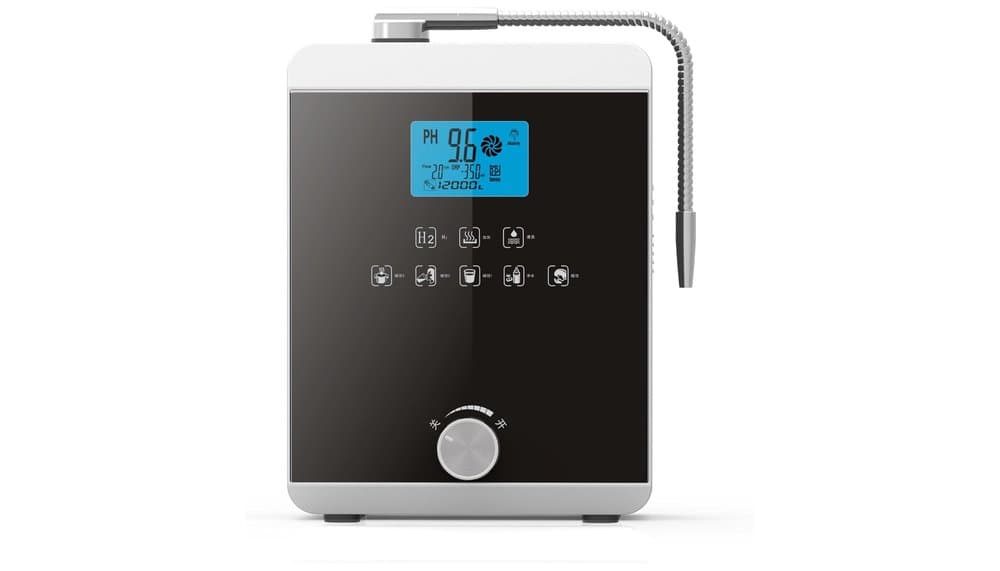
Alkaline Water Ionizer 11-Plate Electrode Test
Analyzes the 11-plate alkaline water ionizer: Does it filter water effectively, alter its properties, and deliver promised health benefits for a family?
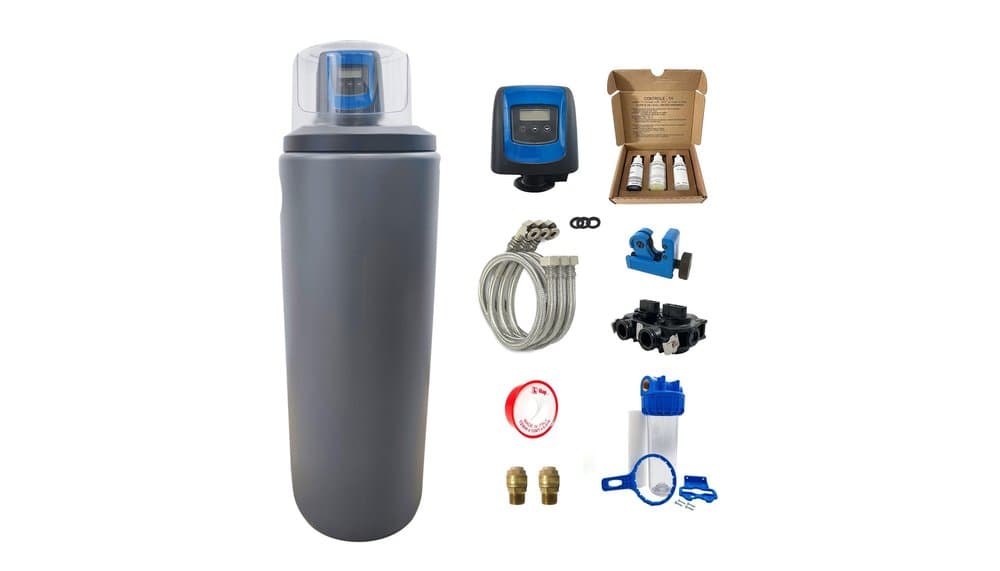
TOODO Fleck 5800 SXT Monobloc Water Softener Review
Volumetric TOODO Fleck 5800 SXT water softener eliminates limescale efficiently for families. A review of features & performance.
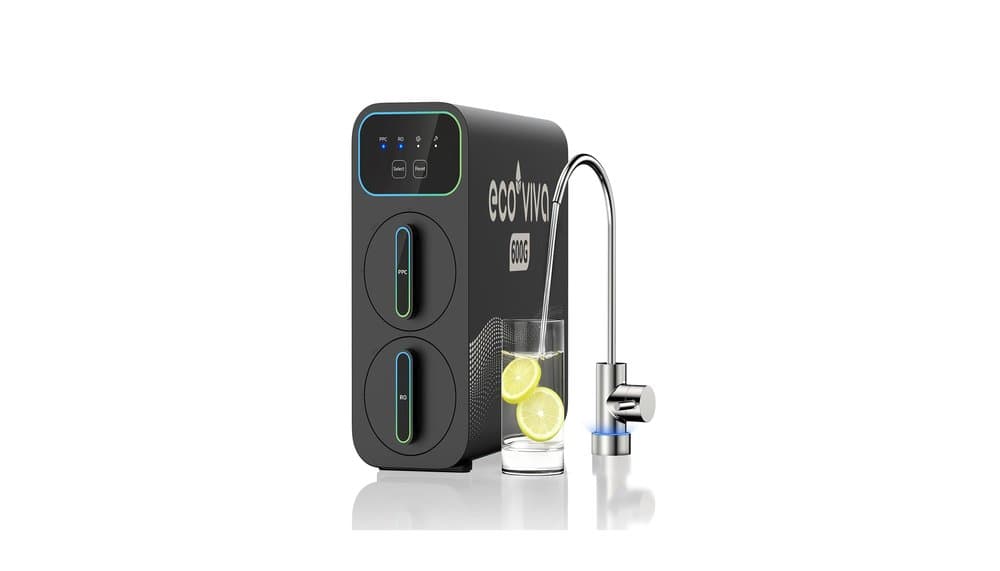
Ecoviva E6 Reverse Osmosis Water Filter Review
Compact, tankless Ecoviva E6 reverse osmosis system analyzed. We test its real-world purification performance, health benefits, and home integration.
Guides you might like
Alkaline Water Ionizer Buying Guide
Discover how alkaline water ionizers work and learn key tips to choose the right one for your home and health. Essential buying guide.
Buying Guide: Best Hydrogen Water Generator
Guide to hydrogen water generators: cutting through the hype to help you make an informed purchase decision for your health and budget.
Choosing Your Home Water Filter
Unlock clean, tasty water at home. Find the right water filter to tackle chlorine, pollutants, and limescale for better health and peace of mind.