COMAP S900503 20 Micron Filter Cartridges Review

Introduction: A Sediment Filter, and Nothing More?
In the vast jungle of water filtration systems, understanding the precise function of each component is essential for making informed choices. The product COMAP S900503 Filter Cartridges 20 Micron Set of 3 Pieces is one of these fundamental elements, but it is crucial to grasp exactly what it does, and especially what it does not do. It is a product that receives many positive reviews, but an honest analysis must demystify its real capabilities for our health and daily comfort.
This is not a complete purification system, but a mechanical filtration consumable. This set of three cartridges plays a specific role in the treatment chain. We are going to dissect its performance, its role in a filtration ecosystem, and see if user feedback confirms its utility.
Strong Points
Universal Compatibility and Ease of Sourcing: The major strength of these COMAP cartridges lies in their standardization. Designed for 9¾ inch housings, they are compatible with a very wide range of water treatment stations, including recognized brands like BWT (TX07 series, notably), ORION, DIPRA, VECTOR, and APIC. This versatility makes it an accessible replacement product, avoiding dependence on a single supplier. Purchasing a pack of three also ensures several months of autonomy, or even over a year depending on usage.
Perceived Excellent Value for Money: According to customer reviews, the economic argument is massively favored. Phrases like "very economical pack," "unbeatable price," or "good value for money" recur frequently. For a pre-filtration solution, this criterion is often decisive.
Simple and Reliable Operation: As a polypropylene (PP) pleated sediment filter, its technology is proven. It does not require electrical power, does not generate wastewater, and has no secondary consumables. Its installation is simple: replace the old cartridge with the new one in the designated housing. The NSF certification (although the specific standard is not detailed) is a mark of confidence regarding materials in contact with drinking water, reassuring about the absence of migration of undesirable substances.
Weak Points
Very Limited Filtration Capacity: This is the inherent limit of its design. A 20-micron cartridge only filters suspended particles visible under a microscope or to the naked eye when concentrated. It acts as a mechanical sieve. Therefore, it has no effect on:
- Dissolved chemical contaminants (chlorine, nitrates, PFAS, pesticides).
- Heavy metals (lead, copper) in ionic form.
- Limescale (calcium and magnesium).
- Tastes and odors (for this, activated carbon is needed).
- Viruses and bacteria (much smaller than 20 microns).
- Microplastics smaller than 20 microns.
Not a Standalone Solution for Water Quality: Presenting this product as a "purifier" would be misleading. It is strictly a protective prefilter. Its role is to protect downstream equipment (water softener, carbon filter, reverse osmosis system) by preventing premature clogging of their sensitive components by sediment.
Variable Lifespan and Risk of Clogging: According to expert analyses, its lifespan depends entirely on the particle load in the incoming water. In a municipal water supply with high sediment or in well water, it can saturate quickly, causing a significant drop in water pressure. It must then be replaced more often than the typical 6-month interval. Conversely, for clear water, finer micron rating (5 or 1 micron) might be more appropriate.
Detailed Analysis: Place and Performance in a Domestic Ecosystem
Role in the Treatment Chain
To truly understand the usefulness of the COMAP S900503, one must view it as the first line of defense. Imagine a complete domestic filtration system. Water arrives from the mains. The first logical and economical step is to remove the "dust" traveling with it: rust from pipes, sand, mineral particles. That is exactly the role of this sediment filter.
By capturing these coarse impurities, it fulfills two critical missions:
- Protect Downstream Equipment: A reverse osmosis membrane (with pores about 0.0001 microns) or the resins in a water softener are very fragile against abrasives. A good sediment prefilter like this one significantly extends their lifespan.
- Improve the Efficiency of Subsequent Stages: An activated carbon filter clogged with sediment can no longer properly adsorb chlorine or organic compounds. By offloading this mechanical work, the COMAP cartridge allows chemical purification technologies to function optimally.
Technology Comparison: Where Does Sediment Filtration Stand?
Given health considerations, it is vital to compare technologies. Here is a table to position mechanical filtration (20 microns) in the landscape:
| Technology | Primary Target | Effective on... | Ineffective on... | Approx. Annual Cost | Maintenance |
|---|---|---|---|---|---|
| Sediment Filter (ex: COMAP 20µ) | Suspended Particles | Rust, sand, dust, silt | Any dissolved contaminant, tastes, bacteria | Low (cost of cartridges) | Replacement every 6-12 months |
| Activated Carbon | Organic Compounds, Chlorine | Tastes, odors, chlorine, some pesticides | Nitrates, heavy metals, limescale, bacteria | Moderate | Replacement every 6-12 months |
| Softening (Ion Exchange) | Hardness (Limescale) | Calcium, magnesium | Everything except limescale | High (salt, electricity, regeneration) | Regular salt recharge |
| Reverse Osmosis (RO) | Virtually all contaminants | 99%+ of salts, heavy metals, nitrates, PFAS, bacteria | Requires a sediment prefilter (like COMAP) and carbon | Moderate to High (membranes, prefilters) | Prefilter changes, membrane every 2-5 years |
| UV Sterilization | Micro-organisms | Bacteria, viruses | Particles, chemicals, tastes | Low (UV bulb) | Lamp change every year |
Comparison Conclusion: The COMAP S900503 is a complementary and insufficient technology. For truly purified and healthy water, it must absolutely be coupled with at least one other technology, most often activated carbon for tastes/chlorine, and potentially reverse osmosis for complete purification.
Flow Rate, Size, and Installation
- Flow Rate: The manufacturer's specifications do not indicate a nominal flow rate (in L/h or GPM). However, experts highlight a crucial point: to avoid significant pressure drops, the cartridge should be chosen with a nominal flow rate at least twice the desired usage flow rate. A standard 10-inch cartridge like this one is generally designed for common domestic flow rates. The community notes that, when new, it does not noticeably impact pressure. A drop in pressure is the main indicator of clogging.
- Size: The dimensions are those of a standard cartridge (about 25 cm tall). The size is therefore that of the 10-inch housing in which it fits, often installed under the sink.
- Ease of Installation: Replacing the cartridge itself is a simple DIY operation, achievable without a plumber: turn off the water, unscrew the housing, replace the cartridge and seal, screw back on. The difficulty lies in the initial installation of the housing on the plumbing, which may require professional help if one is not equipped.
Technical Specifications
| Characteristic | Detail |
|---|---|
| Product Name | COMAP S900503 Filter Cartridges 20 Micron Set of 3 Pieces |
| Filter Type | Sediment (mechanical) |
| Material | Pleated Polypropylene (PP) |
| Filtration Rating | 20 microns |
| Average Capacity | Approx. 180 m³ (varies with water quality) |
| Compatible With | All standard 9¾ inch (10") housings |
| Compatible Brands | BWT (TX07), ORION, DIPRA, VECTOR, APIC, AQUAWATER, etc. |
| Certification | NSF (for materials) |
| Contents | Pack of 3 replacement cartridges |
What Users and Experts Say
A synthesis of 529 customer reviews (with an average rating of 4.7/5) and available technical analyses paints a very consistent picture of the product.
The recurring positive points are unanimous:
- Perfect Conformity and Compatibility: "Matches the description," "identical to the original," "fits my station perfectly" are phrases that come up constantly. Users have no unpleasant surprises regarding size or threading.
- Value for Money: This is the watchword. Terms like "economical," "unbeatable price," "good value for money" dominate the comments. For a consumable, this is a decisive criterion.
- Satisfaction with the Basic Function: For those using it as a prefilter for a softener or more complex system, the product fulfills its mission. One user even notes: "I think it's even better than the ones I had before."
Points of caution or negatives are rarer but instructive:
- Perceived Medium Quality: One review mentions "Average quality," which may reflect lower durability than premium brands in difficult water conditions. This is not a high-end product, but an economical and standard solution.
- Understanding Its Role: No user complains about its ineffectiveness against limescale or tastes, which indicates they generally understand its function as a sediment filter. Experts, on the other hand, insist on this point: one should not expect this item to improve the chemical or organoleptic quality of the water.
The trend is clear: this product is highly appreciated as a reliable and economical consumable for a specific pre-filtration need. It meets the expectations of those looking for a standard replacement.
Conclusion
The COMAP S900503 Filter Cartridges 20 Micron Set of 3 Pieces is a product that excels in its domain, provided the boundaries of that domain are well defined.
For a family looking to protect its installation (water softener, water heater, reverse osmosis system, fixtures) from premature wear caused by sediment, this pack of cartridges is an excellent option. Its value for money, wide compatibility, and ease of use make it a sensible and risk-free purchase.
On the other hand, for a family whose main goal is to improve the sanitary quality and taste of its drinking water, this product alone is completely insufficient. It does nothing against chlorine, nitrates, limescale, or heavy metals. It must be considered as the first piece of a more complex puzzle, including at minimum a stage of activated carbon.
Our final analysis is therefore unequivocal about its capabilities: it is an effective and economical sediment prefilter, period. Its purchase is recommended to all owners of compatible water treatment systems who wish to maintain their installation with a reliable component. But it must under no circumstances be confused with a purification solution. For your health, understand well that its role is to protect equipment, not to purify the water you drink.
100% free and independent — All our articles are written independently, without any sponsorship. We may earn a commission on purchases made through our links, at no extra cost to you.
Articles you might like
ALTHY Performance Hydrogen Water Bottle Review
Transform water into antioxidant-rich hydrogen water anywhere with the ALTHY portable bottle. A powerful, on-the-go wellness innovation.
Swiss Aqua Technologies IPS Kalyxx Water Softener Review
IPS Kalyxx magnetic water conditioner offers scale prevention without salt, electricity, or maintenance, using a permanent magnet.
Huining RO Water Filter Cartridge Review & Test
Universal RO filter cartridge replacement. Maintains water purity and extends your system's life.
Guides you might like
Alkaline Water Ionizer Buying Guide
Discover how alkaline water ionizers work and learn key tips to choose the right one for your home and health. Essential buying guide.
Buying Guide: Best Hydrogen Water Generator
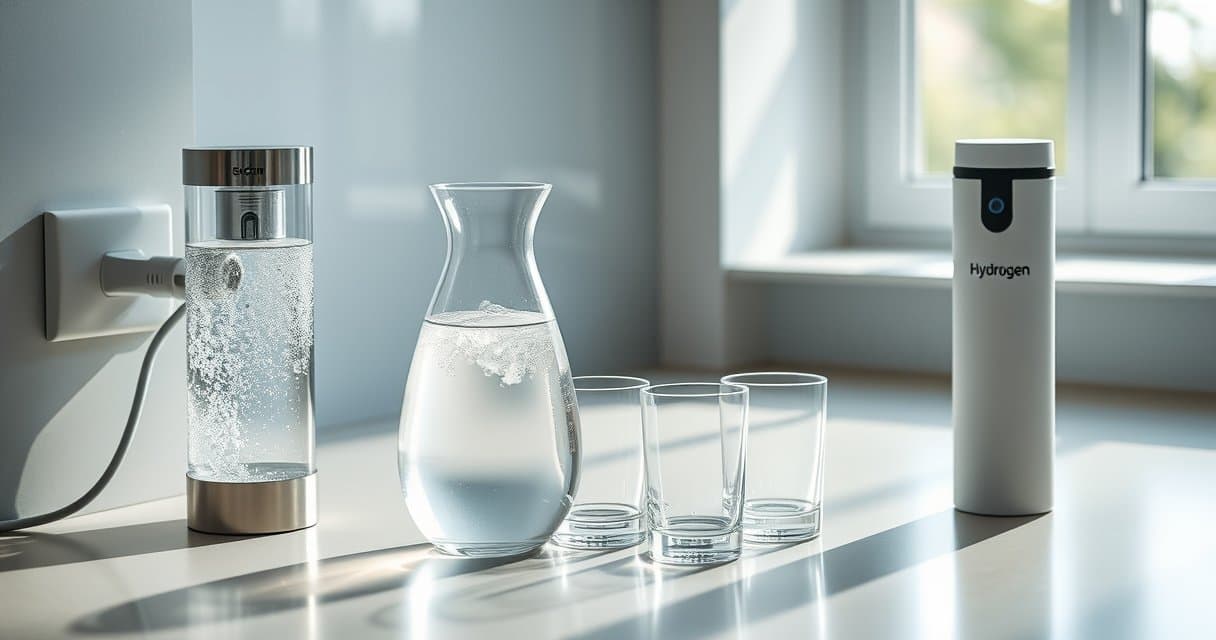
Guide to hydrogen water generators: cutting through the hype to help you make an informed purchase decision for your health and budget.
Choosing Your Home Water Filter
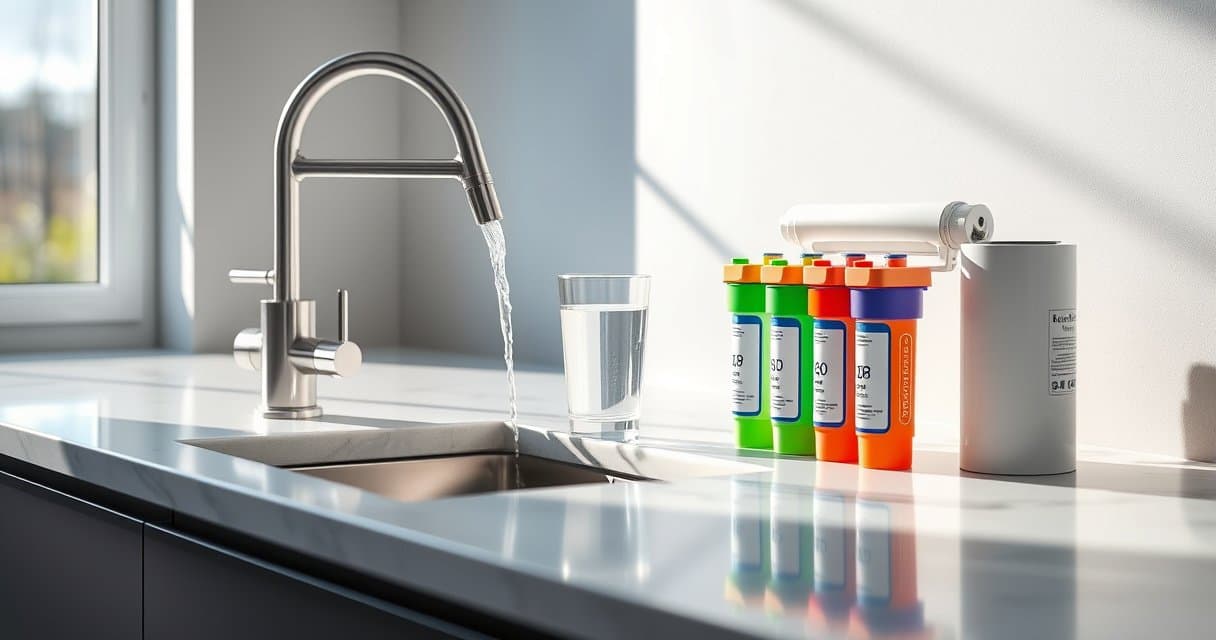
Unlock clean, tasty water at home. Find the right water filter to tackle chlorine, pollutants, and limescale for better health and peace of mind.