Culligan US-DC3-R Replacement Water Filter Review

Comprehensive Analysis of the Culligan US-DC3-R Direct Connect Replacement Water Filter Cartridge
In our quest for healthy and pleasant drinking water in daily life, under-sink filters represent a discreet and effective solution. The Culligan US-DC3-R Direct Connect Replacement Water Filter Cartridge is the consumable heart of one of these popular systems. It is not a standalone filter, but rather the replacement cartridge for the US-DC3 model. Our analysis therefore goes beyond a simple consumable to evaluate the complete system it perpetuates, from the crucial angles of water quality, health, and daily practicality.
Strengths and Weaknesses
Before diving into the details, here is what emerges from the technical specifications and field feedback.
Strengths:
- NSF Certification and advertised reduction of up to 99% of lead, a major health benefit.
- Extremely simple installation thanks to the quick-connect "twist-lock" (bayonet) system, with no need for specific tools.
- High capacity: a filtration capacity of 4,750 gallons (approximately 18,000 liters) or 12 months.
- Preserved flow rate: a flow rate of 1.2 liters per minute (approximately 72 L/h) is advertised, sufficient to fill a carafe without excessive waiting.
- Significant improvement in the taste and odor of water for a majority of users.
Weaknesses:
- Filtration limited to targeted contaminants: this is not a reverse osmosis system, so it is ineffective against dissolved minerals (limescale), nitrates, or PFAS.
- Risk of leaks: some user feedback reports sealing issues at the connection points if installation is not perfect.
- Size: the cartridge, of substantial size (approximately 27 cm tall), can be difficult to fit under shallow or cluttered sinks.
- Mandatory annual replacement: even though the capacity is large, effectiveness against microbiological contaminants can decline over time, requiring a strict change at 12 months.
Detailed Analysis: Technology, Health, and Performance
What contaminants does it actually remove?
The Culligan US-DC3-R relies on a combined mechanical and chemical filtration technology, primarily via quality activated carbon and likely a fine filtration membrane. On paper, its certifications and descriptions indicate effective action against several families of contaminants:
- Chlorine, bad tastes and odors: This is its strong point. Activated carbon is very effective at adsorbing these compounds, which explains the immediate sensory improvement reported by users.
- Heavy metals (Lead): The promise of up to 99% lead reduction is significant. Lead is a concerning contaminant in old piping, and this performance makes it a relevant choice for many households.
- Sediments and turbidity: The integrated pre-filter retains suspended particles (rust, sand).
- Microbial cysts (Cryptosporidium, Giardia): Filtration at 1 micron or less (typical for this type of certified cartridge) blocks these chlorine-resistant parasites.
However, it is essential to understand its limits. This filter does not remove:
- Dissolved minerals like limescale (calcium, magnesium). It does not soften water.
- Nitrates, common in well water or certain agricultural regions.
- Perfluorinated compounds (PFAS), persistent emerging pollutants, which require more specific filtration (high-performance activated carbon or reverse osmosis).
- Very small microplastics (although it may retain some).
- Viruses and bacteria smaller than a micron, against which only UV disinfection or fine reverse osmosis would be effective.
In summary, it is an excellent municipal water "enhancer" filter, designed to eliminate the most common contaminants from the distribution network (chlorine, lead, sediments) and cysts, but it does not provide "total" water purification.
Technology Comparison: Where does it stand?
Compared to other domestic technologies, the Culligan US-DC3 system ranks as an advanced activated carbon filtration system.
- Vs. Simple Activated Carbon (pitcher or faucet filter): It offers much greater capacity and flow rate, heavy metal reduction, and a more practical fixed installation.
- Vs. Reverse Osmosis (RO): Reverse osmosis is much more comprehensive (it removes 95-99% of nearly all solutes, including limescale, nitrates, fluoride, sodium, PFAS). However, it has a slower flow rate, a water waste ratio (typically 1:4, meaning 4 liters wasted for 1 liter filtered) and a higher annual cost (replacement of membranes and pre-filters). The Culligan US-DC3-R has no water waste and its only recurring cost is the cartridge itself.
- Vs. Water Softener (ion exchange): A softener does not filter, it exchanges calcium and magnesium ions (limescale) for sodium. It does not remove microbes, heavy metals, or chemicals. It is a complementary appliance for treating limescale problems throughout the entire house.
- Vs. UV Sterilizer: The UV lamp kills bacteria and viruses but removes no chemical contaminants, metals, or particles. It is often paired with a pre-filter like the Culligan.
The choice therefore depends on the main problem. For neutral-tasting water, free from chlorine and lead risk, the Culligan system is a simple and economical solution. For very pure, almost demineralized water (ideal for aquariums, steam irons, or in case of complex pollution), reverse osmosis is necessary.
Ease of Installation and Daily Use
This is one of its major selling points. The Direct Connect system is designed for a "turnkey" replacement. According to user feedback, the procedure is as follows: turn off the water, release pressure by opening the filtered water faucet, turn the old cartridge a quarter turn to remove it, and clip in the new one. The community notes that this simplicity is ideal for non-handy people. No plumber is required for the replacement.
For the initial installation of the housing, it requires drilling the sink or countertop for the dedicated faucet and connecting the cold water supply line via the provided hoses. This step is within reach of a competent DIYer, but may intimidate some.
The size of the housing and the large US-DC3-R cartridge must be considered. Check the clear height under the sink, especially if you have a complicated drain assembly or a garbage disposal. This is a point of vigilance regularly raised.
Value for Money and Annual Cost
Value for money is judged over time. The main advantage is the reduction of the annual cost to a single expense: the Culligan US-DC3-R cartridge. There are no pre-filters to change every 6 months or expensive membranes like in reverse osmosis. For a family of 4 consuming filtered water for drinking and cooking, the 12-month or 18,000-liter capacity is generally sufficient, representing a very contained and predictable operating cost.
The perceived value is high when the tap water has a strong chlorine taste or suspicion regarding old lead pipes. The improvement is tangible and immediate. For households whose water is already of good sanitary quality but has an unpleasant taste, it is a perfectly suitable solution.
Technical Specifications
| Characteristic | Detail |
|---|---|
| Model | Culligan US-DC3-R (replacement cartridge) |
| Compatible with | Culligan Direct Connect systems US-DC1, US-DC2, US-DC3 |
| Filtration Technology | Activated carbon, mechanical filtration (likely <1 micron) |
| Certifications | NSF Standard (against lead, cysts, chlorine) |
| Capacity | 4,750 gallons (approximately 18,000 liters) or 12 months |
| Flow Rate | 1.2 liters per minute (approximately 72 liters/hour) |
| Target Contaminants | Chlorine, bad tastes/odors, lead (up to 99%), sediments, microbial cysts (Cryptosporidium, Giardia) |
| Contaminants NOT treated | Limescale, nitrates, fluoride, sodium, PFAS, viruses, free bacteria |
| Installation | Under sink, quick "twist-lock" connection system |
| Cartridge Dimensions | Approximately 27 x 8.6 x 8.6 cm |
| Maintenance | Cartridge replacement every 12 months maximum |
What Users and Testers Say
The synthesis of available customer reviews and expert analyses draws a clear consensus on several points.
Recurring praise focuses on:
- Ease of replacement: "Easy to install", "practical twist-lock", "no tools needed" are omnipresent mentions. Users appreciate being able to do it themselves in a few minutes.
- Taste improvement: The majority of feedback confirms significantly better tasting water, softer, without chlorine smell or aftertaste. This is the main satisfaction.
- Capacity: Many note that the cartridge effectively lasts nearly a year for a standard family, which represents good value for money and low maintenance hassle.
- Discreteness and finish: The faucet provided with the system is considered aesthetically pleasing, and the fact that all water from the faucet is filtered (not partially via a spout attachment) is appreciated.
Criticisms and points of vigilance highlighted:
- Risk of leaks: Several accounts report leaks at the connection point after installation. The community suggests carefully checking the locking clip and ensuring the O-ring is in place and lubricated. Careful installation is key.
- Filtration limits: Informed users remind that this is not a water softener (limescale still passes through) and not an ultra-fine purifier. One must know its expectations.
- Size: Under small sinks, installation can be tight. It is advised to measure the available space before purchasing the initial system.
- Adherence to frequency: Some note that the cartridge must be replaced at 12 months without fail, even if the flow rate still seems good, to guarantee effectiveness against microbiological contaminants. One user even suggests writing the installation date on the cartridge.
Overall, the very high average rating (4.7/5) reflects widespread satisfaction. The reported problems often seem related to an installation error rather than an intrinsic manufacturing defect.
Conclusion
The Culligan US-DC3-R Direct Connect Replacement Water Filter Cartridge is much more than a simple replacement part. It is the guarantor of the performance of a well-designed, easy-to-use, and effective under-sink filtration system for a family's basic needs.
Our analysis allows us to recommend it without reservation for households primarily seeking to significantly improve the taste and odor of their tap water, while protecting against lead and parasitic cysts. Its ease of maintenance and controlled annual operating cost make it a pragmatic and economical solution.
However, one must not ask the impossible of it. If your priority is to eliminate limescale to protect your appliances, a water softener will be necessary. If your water is highly charged with nitrates, fluoride, or suspected of containing emerging pollutants like PFAS, you will need to turn to a reverse osmosis system, accepting its constraints (slower flow, water waste, more complex maintenance).
For a majority of urban or suburban users with treated but strongly chlorinated-tasting municipal water, the system maintained by the US-DC3-R cartridge represents an excellent balance between performance, simplicity, and value. The key to success lies in careful installation of the housing and strict adherence to the annual replacement frequency of this cartridge.
100% free and independent — All our articles are written independently, without any sponsorship. We may earn a commission on purchases made through our links, at no extra cost to you.
Articles you might like
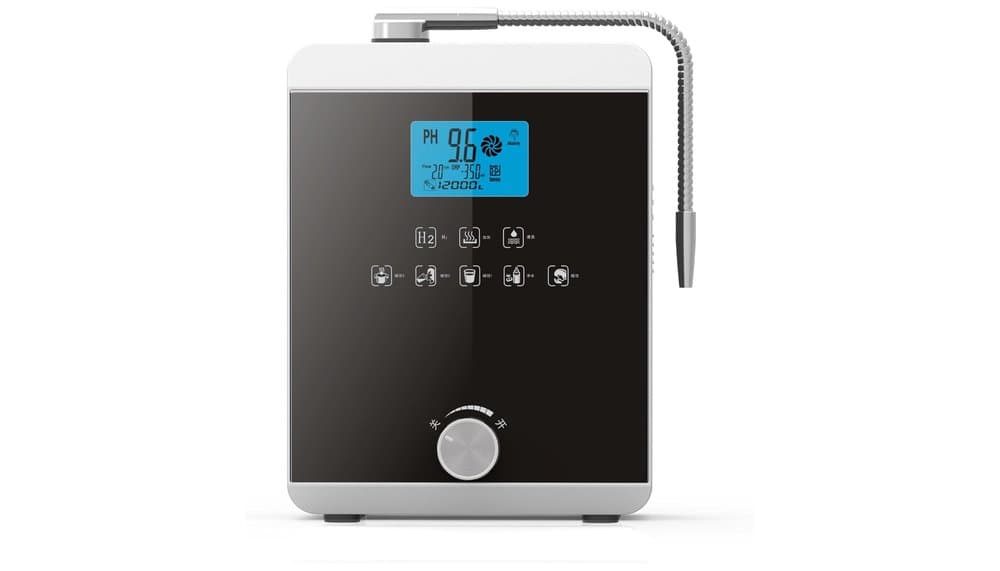
Alkaline Water Ionizer 11-Plate Electrode Test
Analyzes the 11-plate alkaline water ionizer: Does it filter water effectively, alter its properties, and deliver promised health benefits for a family?
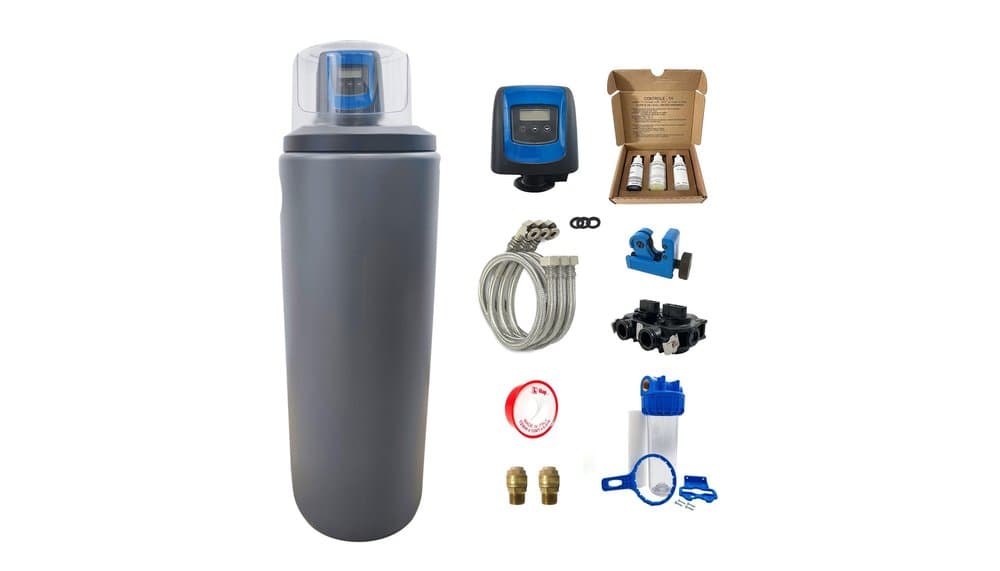
TOODO Fleck 5800 SXT Monobloc Water Softener Review
Volumetric TOODO Fleck 5800 SXT water softener eliminates limescale efficiently for families. A review of features & performance.
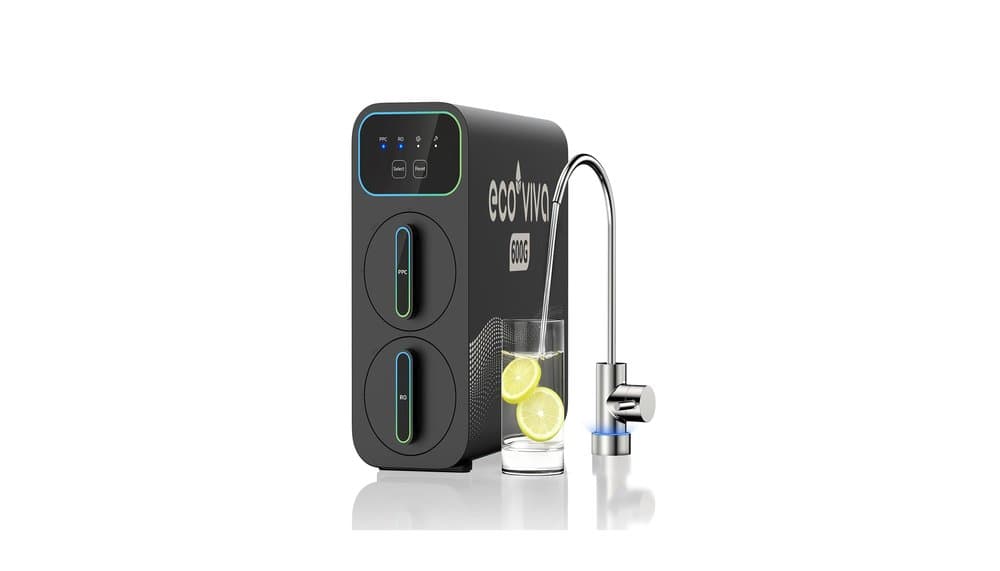
Ecoviva E6 Reverse Osmosis Water Filter Review
Compact, tankless Ecoviva E6 reverse osmosis system analyzed. We test its real-world purification performance, health benefits, and home integration.
Guides you might like
Alkaline Water Ionizer Buying Guide
Discover how alkaline water ionizers work and learn key tips to choose the right one for your home and health. Essential buying guide.
Buying Guide: Best Hydrogen Water Generator
Guide to hydrogen water generators: cutting through the hype to help you make an informed purchase decision for your health and budget.
Choosing Your Home Water Filter
Unlock clean, tasty water at home. Find the right water filter to tackle chlorine, pollutants, and limescale for better health and peace of mind.