iSpring ED2000 Whole Home Descaler Test

Analysis of the iSpring ED2000 Whole Home Electronic Water Descaler
In a market saturated with promises about water treatment, the iSpring ED2000 Whole Home Electronic Water Descaler presents itself as a radically different solution from conventional systems. It is neither a filter nor a salt-based water softener. Its ambition is to combat the inconveniences of limescale throughout the entire home, without altering the composition of the water and without maintenance. But does this technological promise hold up against the concrete expectations of families concerned about their water quality and the health of their installations? Here we analyze its specifications, its real-world performance based on community feedback, and its positioning against other purification technologies.
Strengths
The main appeal of the iSpring ED2000 rests on three fundamental pillars that respond to very specific consumer demands.
Extremely simple installation and maintenance. This is its most undeniable asset. According to technical data and user feedback, the device requires no plumbing modifications. It attaches by clamping around the main water supply pipe (even on PVC or PEX) and plugs into a power outlet. No need to call a plumber. Furthermore, the product is zero maintenance: no salt refills, no cartridges to replace, no draining. Once installed and plugged in, it operates without intervention. Its minimal footprint (40 x 10 x 30 cm) makes it a discreet solution.
Preservation of the water's mineral composition. Unlike an ion-exchange water softener, the ED2000 does not remove minerals like calcium and magnesium. It does not alter the chemistry of the water, which is a major argument for people on a low-sodium diet or those who wish to keep essential minerals in their drinking water. It also does not generate wastewater, unlike reverse osmosis systems.
Zero annual operating cost. After purchase, the operating cost is limited to the device's negligible electricity consumption. There are no annual costs for consumables (membranes, filters, salt), which represents substantial long-term savings compared to most other water treatment systems.
Weaknesses
These advantages must be weighed against limitations inherent to its technology, clearly identified by testers and the community.
Non-radical and variable effectiveness. This is the central point of debate. The iSpring ED2000 does not eliminate limescale. It uses an electronic pulse technology intended to modify the crystalline structure of hardness minerals (calcium carbonate), so they remain suspended in the water as fine particles (a powder) rather than depositing as hard scale. Real-world effectiveness depends heavily on the initial water hardness and installation conditions. Web experts emphasize that for very hard water, its action is often perceived as less tangible and less reliable than a traditional water softener.
No filtration of contaminants. It is crucial to understand what this device does not do. It does not remove any contaminants such as chlorine, heavy metals (lead, mercury), nitrates, PFAS, microplastics, bacteria, or viruses. Its action is exclusively limited to the limescale problem. To obtain purified drinking water, it absolutely must be coupled with a filtration system (filtering pitcher, under-sink activated carbon filter, reverse osmosis).
Limitations on hot water and stagnant water. Several user reviews highlight a weakness: its effect seems to diminish or be ineffective on hot water, particularly inside the water heater tank, where scale deposits are most problematic. One user also notes that water that stagnates for a long time in pipes or pitchers can lose the "conditioned" effect and become scaling again.
Detailed Analysis: Technology and Health Performance
To objectively evaluate the iSpring ED2000, it must be placed within the landscape of water treatment technologies and its real impact on daily water quality understood.
What is its active principle? The technical sheet mentions electric induction. Concretely, the device generates an electromagnetic field around the water pipe. The objective is to act on calcium and bicarbonate ions to promote the formation of aragonite (a non-adhering form of calcium carbonate) rather than calcite (which forms hard scale). On paper, this technology is attractive because it is passive and requires no consumables.
Impact on water quality and health. From a health perspective, the main benefit advanced is skin and hair comfort. By preventing limescale from depositing, the water can be perceived as less "aggressive," potentially beneficial for sensitive skin or dry hair. However, as it does not filter anything, the presence of chlorine, for example, whose drying effect on the skin is known, is not altered. It does not purify drinking water. Its action on limescale can reduce the use of detergents and descaling products, which is an ecological plus and limits exposure to these chemicals.
Key technological comparison:
- Vs. Salt Water Softener (Ion Exchange): The water softener physically removes calcium and magnesium ions to replace them with sodium or potassium ions. It effectively eliminates hardness, but alters the taste of the water, increases its sodium content, requires salt, maintenance, and generates brine discharge. The ED2000 is a non-chemical, maintenance-free alternative that preserves minerals.
- Vs. Filtration (Activated Carbon, Reverse Osmosis): These systems target contaminants. Activated carbon reduces chlorine, bad tastes, some pesticides. Reverse osmosis removes up to 99% of dissolved contaminants (metals, nitrates, etc.) but has a limited flow rate, a significant water waste rate, and requires costly membrane replacements. The ED2000 is complementary: it treats limescale throughout the house, while a reverse osmosis filter under the kitchen sink provides ultra-pure drinking water.
- Vs. UV Systems: UV sterilization eliminates microorganisms. It has no effect on limescale or chemicals. The technologies are perfectly compatible and address different needs.
Flow rate and coverage. The iSpring ED2000 is designed to treat all water entering the house. It does not impose flow restrictions, unlike a reverse osmosis system. It is advertised for very hard water (10-19 grains per gallon, approximately 17 to 32 °fH). It thus protects all appliances: washing machine, dishwasher, water heater, faucets.
Technical Specifications
| Characteristic | iSpring ED2000 Detail |
|---|---|
| Technology | Electronic conditioning by induction (pulses) |
| Targeted Contaminants | None removed. Targets limescale (prevents deposits) |
| Effective Filtration | None. Does not filter chlorine, heavy metals, nitrates, PFAS, microplastics, bacteria. |
| Flow Rate | Unlimited (installed on main line) |
| Water Waste Rate | 0% (no water wasted) |
| Consumables / Annual Cost | None. No filters, salt, or membranes to replace. |
| Installation | No plumbing. Clamp-on pipe mounting + electrical connection. |
| Maintenance | None (maintenance-free) |
| Preserves Minerals | Yes, retains calcium and magnesium. |
| Adds Sodium | No. |
| Dimensions (L x H x D) | 40 x 30 x 10 cm |
| Pipe Compatibility | All types (Copper, PVC, PEX...) |
| Warranty & Support | 1-year refund, lifetime technical support |
What Users Say
Analysis of over 2100 customer reviews and expert feedback online reveals a nuanced picture, with very clear trends.
Recurring positive points:
- Visible reduction in scale: A majority of satisfied users report a clear decrease in white deposits on faucets, shower walls, and glass. They describe scale that no longer builds up and cleans off with a simple wipe.
- Easy installation: The simplicity of installation is consistently praised. "Quick and easy installation," "no need for a plumber" are phrases that constantly recur.
- Perceived comfort: Many note "softer" water for skin and hair after a few weeks of use. Some also report improved lathering of soaps and detergents.
- Value for money: For those who see results, the absence of recurring costs and the simplicity of the system are perceived as an excellent investment.
Negative points and reservations:
- Uneven effectiveness and skepticism: 1-star reviews often come from users who perceive absolutely no difference, even after several months. This confirms expert analyses on the variability of results depending on water hardness and installation.
- Electrical interference problem: A crucial and well-documented negative point is the need to install the device at a distance (about 3.5 meters) from any electrical equipment and the plumbing ground. One user reports a malfunction of their washing machine due to this proximity, a significant design flaw to anticipate.
- Limitation on hot and stagnant water: As noted earlier, several testimonials indicate a loss of effectiveness on the water heater and for stored water, which limits its usefulness for protecting water heater tanks.
- Not suitable for purifying drinking water: Users clearly warn: "this is not a device for someone who wants to drink water." Its role is clearly to protect installations, not to purify.
Conclusion
The iSpring ED2000 Whole Home Electronic Water Descaler is a product that finds its place in a very specific niche. It is not a miracle solution for very hard, scaling water, and it will never replace a traditional salt water softener in the most extreme situations.
On the other hand, for a household facing moderately hard water, seeking a preventive, ecological, and maintenance-free solution to protect its pipes and appliances, reduce scale marks on surfaces, and improve water comfort, the ED2000 presents a solid case. Its DIY installation, zero operating cost, and preservation of minerals are its master strengths.
The key to success lies in realistic expectations: it is a water conditioner, not a water softener in the classic sense. For healthy, purified drinking water, it absolutely must be paired with a dedicated filtration system (activated carbon or reverse osmosis). Its main operational flaw remains the requirement to keep it away from other electrical devices, an installation constraint that must absolutely be checked before purchase. For those whose context suits it, it represents an interesting and economical option in the arsenal of home water management.
100% free and independent — All our articles are written independently, without any sponsorship. We may earn a commission on purchases made through our links, at no extra cost to you.
Articles you might like
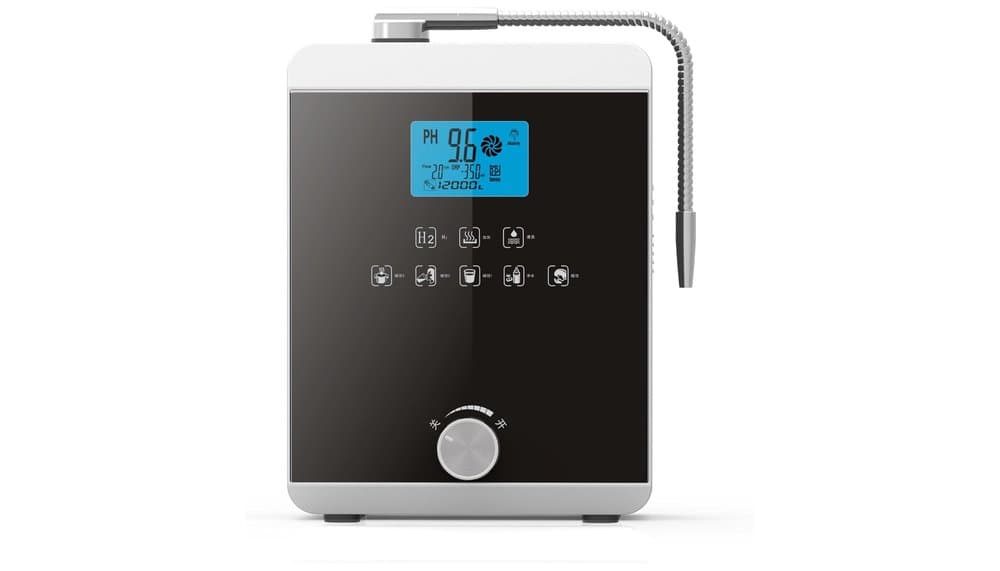
Alkaline Water Ionizer 11-Plate Electrode Test
Analyzes the 11-plate alkaline water ionizer: Does it filter water effectively, alter its properties, and deliver promised health benefits for a family?
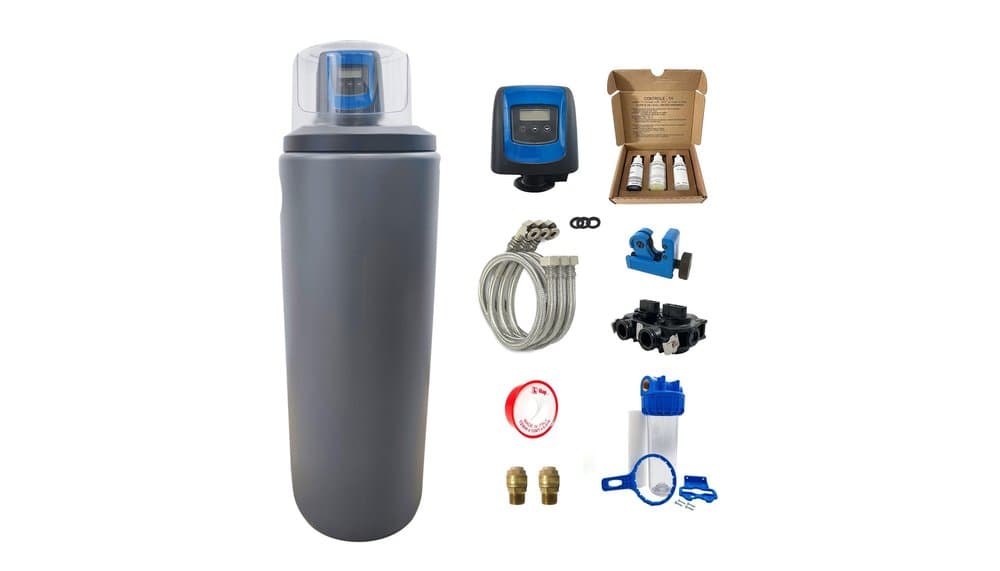
TOODO Fleck 5800 SXT Monobloc Water Softener Review
Volumetric TOODO Fleck 5800 SXT water softener eliminates limescale efficiently for families. A review of features & performance.
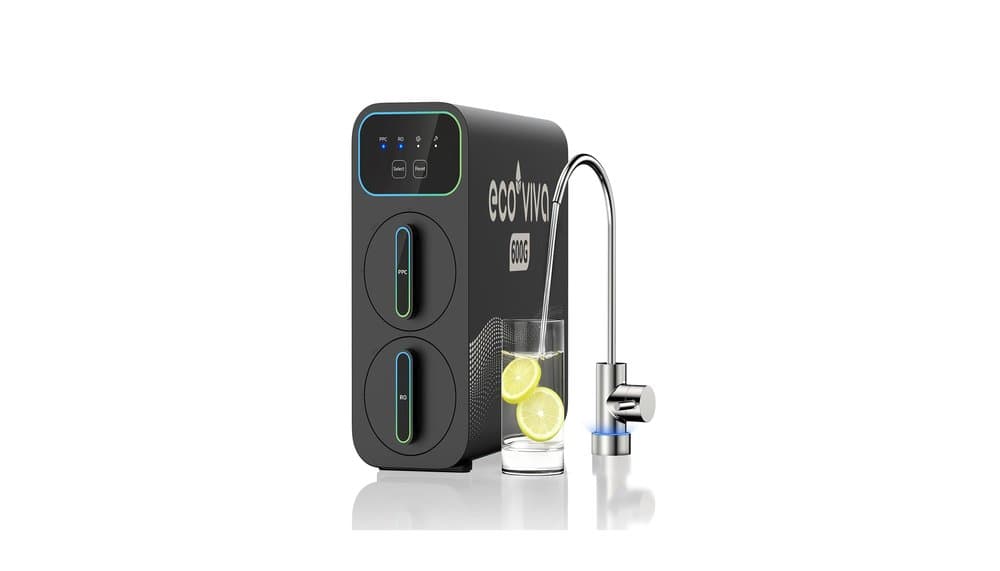
Ecoviva E6 Reverse Osmosis Water Filter Review
Compact, tankless Ecoviva E6 reverse osmosis system analyzed. We test its real-world purification performance, health benefits, and home integration.
Guides you might like
Alkaline Water Ionizer Buying Guide
Discover how alkaline water ionizers work and learn key tips to choose the right one for your home and health. Essential buying guide.
Buying Guide: Best Hydrogen Water Generator
Guide to hydrogen water generators: cutting through the hype to help you make an informed purchase decision for your health and budget.
Choosing Your Home Water Filter
Unlock clean, tasty water at home. Find the right water filter to tackle chlorine, pollutants, and limescale for better health and peace of mind.