iSpring WSP50-E Reusable Whole House Sediment Filter Review
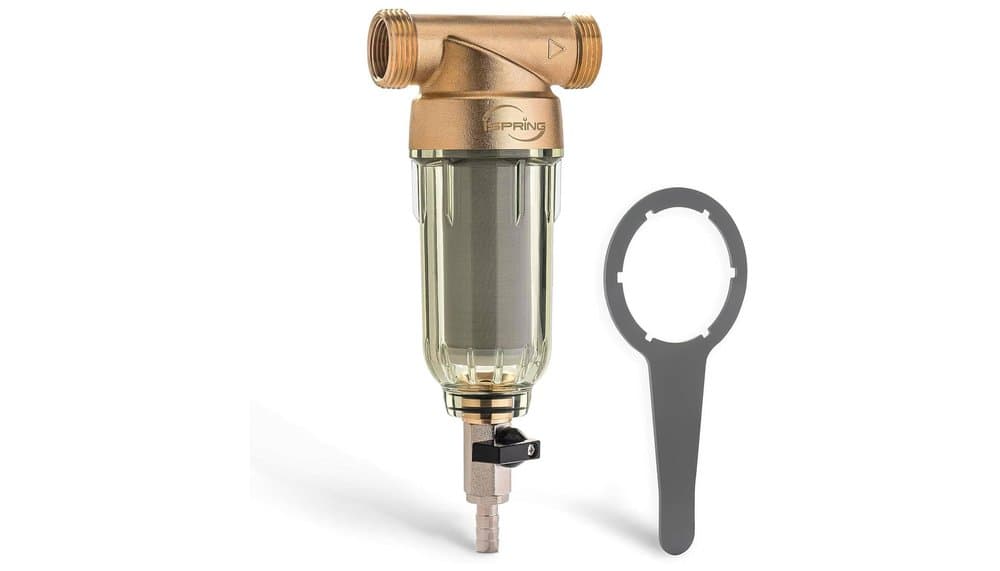
Introduction
In the world of domestic filtration, the first line of defense is often the most crucial. The iSpring WSP50-E Reusable Whole Home Sediment Filter positions itself as a mechanical pre-filter designed to protect your entire network and appliances. On paper, it promises a robust and economical approach to sediment. But what is its real value in a comprehensive family water quality strategy? Here, we analyze this product frankly, cross-referencing its technical specifications with community feedback and expert opinions, to determine if it delivers on its promises and, more importantly, what you can expect for your health and your installation.
Strengths & Weaknesses: A Synthetic View
Before diving into details, here is what clearly emerges from the analysis.
Strengths
- Robust and durable design: Lead-free brass head and stainless steel screen built to last.
- Long-term economy: Reusable and manually backwashed filter, eliminating the recurring cost of disposable cartridges.
- Simplified maintenance: Integrated flush valve and transparent housing for quick inspection and cleaning without disassembly.
- Easy installation: Standardized fittings (G 1" - 3/4") for easy integration into most residential installations.
- Effective protection for plumbing and appliances: Captures large sediment that damages faucets, water heaters, and fine filtration systems downstream.
Weaknesses
- Filtration limited to purely mechanical: Acts only on solid particles. No action on chemical, biological, or dissolved contaminants.
- Risk of rapid clogging: In heavily loaded water (wells, old networks), the 50 micron fineness may require weekly, even daily flushing.
- Strictly indoor use: Limited to a temperature range of 4°C to 38°C, which excludes any installation in an unheated outdoor space.
- Not a water "treatment": Must not be confused with a purifier. Its role is solely preventive for the infrastructure.
Detailed Analysis: Technology, Efficiency, and Value for Money
Technology and Real Efficiency: A Simple Mechanical Screen
The iSpring WSP50-E uses mechanical screen filtration technology. Water passes through a 50-micron stainless steel screen, which physically retains particles of that size or larger. It's a proven and reliable technology for what it does.
Let's evaluate its action on typical contaminants:
- Sediment (sand, rust, dirt): EXCELLENT. This is its primary function.
- Microplastics (large): GOOD. Those larger than 50 microns will be captured.
- Chlorine, Dissolved heavy metals, Nitrates, PFAS, Hardness: NO ACTION. This filter uses neither activated carbon, nor reverse osmosis membrane, nor ion exchange resin. These dissolved or chemical contaminants pass through the screen unchanged. It does not alter the taste, odor, or hardness of the water.
- Bacteria and viruses: NO ACTION. The size of pathogens is far below 50 microns. A UV lamp or a reverse osmosis membrane would be necessary.
Conclusion on efficiency: This product is a protective pre-filter, not a purification system. Its role is to relieve the load on more sophisticated filters placed after it (carbon cartridges, RO membranes), thus significantly extending their lifespan and reducing their replacement frequency. It is essential if your water is cloudy or loaded with particles, but completely insufficient if you are looking to improve drinkability or taste.
Flow Rate, Installation, and Size
- Flow Rate: Although not specified in L/h by the manufacturer, its design with wide fittings (1") and an open mesh screen (50µ) implies very low pressure drop. It is perfectly suited for the flow rates needed for a whole house, ensuring sufficient pressure at all draw points.
- Installation: Experts agree on the ease of installation for a skilled DIYer. The standard fittings and pre-integrated flush valve simplify assembly. However, working on the main water supply requires cutting off the water and making soldered or threaded connections. If you are not comfortable with plumbing, calling a professional remains prudent.
- Size: With its approximate dimensions (30 cm tall), it requires dedicated space at the water entry point (usually garage, utility room, basement). Its vertical "spin-down" format is less bulky than a standard "Big Blue" housing.
Annual Cost and Value for Money
This is where the product truly shines. The annual cost of consumables is virtually zero. Only the initial investment is required. According to the manufacturer and user feedback, the stainless steel screen has a lifespan of 1 to 2 years before wear or potential damage necessitates its replacement. Compared to a disposable cartridge pre-filter that needs to be changed every 3 to 6 months, the savings over a few years are substantial. The value for money is therefore excellent for its specific use: protecting an entire installation from sediment at minimal recurring cost. However, if your water is naturally very clear, this investment might be less justified.
Technical Specifications
| Characteristic | Detail |
|---|---|
| Filtration Type | Mechanical (screening) |
| Filtration Fineness | 50 microns |
| Technology | Reusable "Spin-Down" filter with manual backwash |
| Materials | Lead-free brass head, stainless steel screen, transparent housing |
| Connections | Female G 1" - 3/4" thread on both ends |
| Maximum Flow Rate | Suitable for standard residential flow rates (not specified) |
| Operating Pressure | 1.4 - 6.9 bars (20 - 100 PSI) |
| Temperature Range | 4°C to 38°C (indoor use only) |
| Maintenance | Manual flushing via integrated valve (frequency varies based on load) |
| Screen Lifespan | Estimated 1-2 years |
| Consumables | Replacement screen (sold separately) |
What Users and Experts Say
The synthesis of customer feedback and available technical analyses paints a clear consensus.
The recurring positive points are unanimous:
- Satisfaction with durability and sturdiness: Users praise the metal construction, perceived as much more reliable than plastic models.
- Savings achieved: Those who switched from disposable filters note the elimination of recurring costs, which is highly appreciated.
- Simplicity of flushing: The procedure of opening the valve to flush out sediment is considered extremely simple and effective. The transparent housing is popular for visualizing dirt accumulation.
- Noticeable improvement for cloudy water: Well owners or those with old pipes report a clear reduction of deposits in toilets, washing machines, and obvious protection for their reverse osmosis systems.
The criticisms and warnings are just as instructive:
- Underestimated flushing frequency: The main sticking point concerns heavily loaded water. Several reports indicate the filter can clog in a few days, requiring very frequent flushing. This confirms the manufacturer's warning.
- Limit of 50-micron filtration: Some would have preferred a finer mesh model or with interchangeable options. Very fine dust or suspended clay can pass through.
- Misunderstanding of its role: A few disappointed buyers thought the filter would soften water or remove chlorine. This highlights the importance of understanding it is solely a mechanical pre-filter.
- Possible noise or vibrations: A few rare reports mention slight whistling or vibrations during water flow, often related to non-optimal installation or pressure.
Conclusion
The iSpring WSP50-E Reusable Whole Home Sediment Filter is a specialized tool that excels in its field: economical and durable mechanical pre-filtration. It is a wise and cost-effective investment for anyone wishing to protect their plumbing, appliances, and fine filtration systems (reverse osmosis, water softener) from the abrasion and fouling caused by sediment.
However, it is crucial to calibrate your expectations. This product does not purify your water for consumption purposes. It will not affect hardness, chlorine, heavy metals, or nitrates. Its practical efficiency depends entirely on the particle load in your water. In an urban context with clear water, it may only need flushing once a quarter. Faced with heavy well water, it will become a weekly maintenance point.
Our recommendation is clear: see it as the cornerstone of a complete system. Install it upstream of your setup. For healthy, pleasant-tasting tap water, it must absolutely be paired with other technologies – such as an activated carbon filter for chemical and organic compounds, and if necessary, a reverse osmosis system for dissolved contaminants. In this configuration, the WSP50-E becomes an indispensable guardian, extending the life and efficiency of all elements that follow it, for minimal long-term investment.
100% free and independent — All our articles are written independently, without any sponsorship. We may earn a commission on purchases made through our links, at no extra cost to you.
Articles you might like
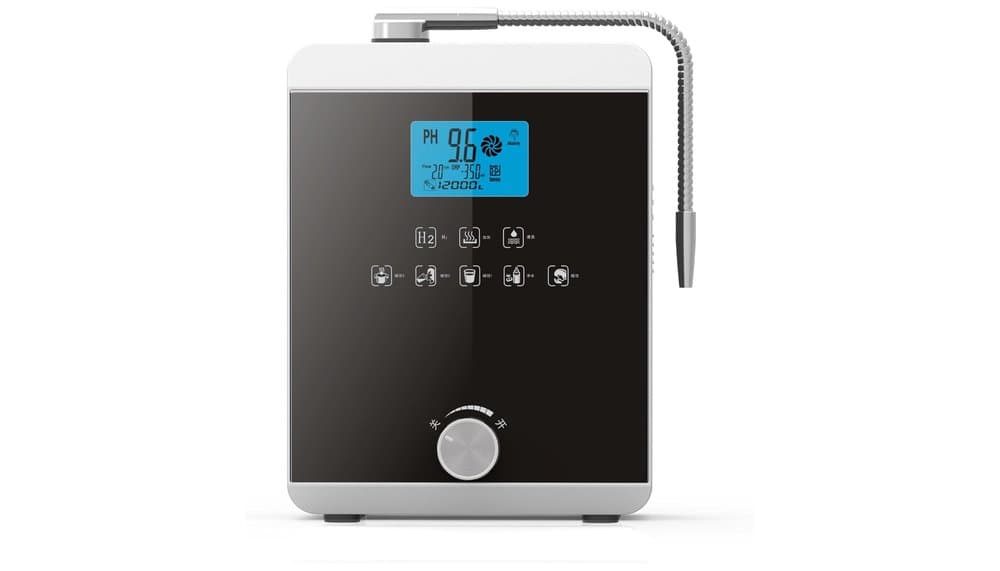
Alkaline Water Ionizer 11-Plate Electrode Test
Analyzes the 11-plate alkaline water ionizer: Does it filter water effectively, alter its properties, and deliver promised health benefits for a family?
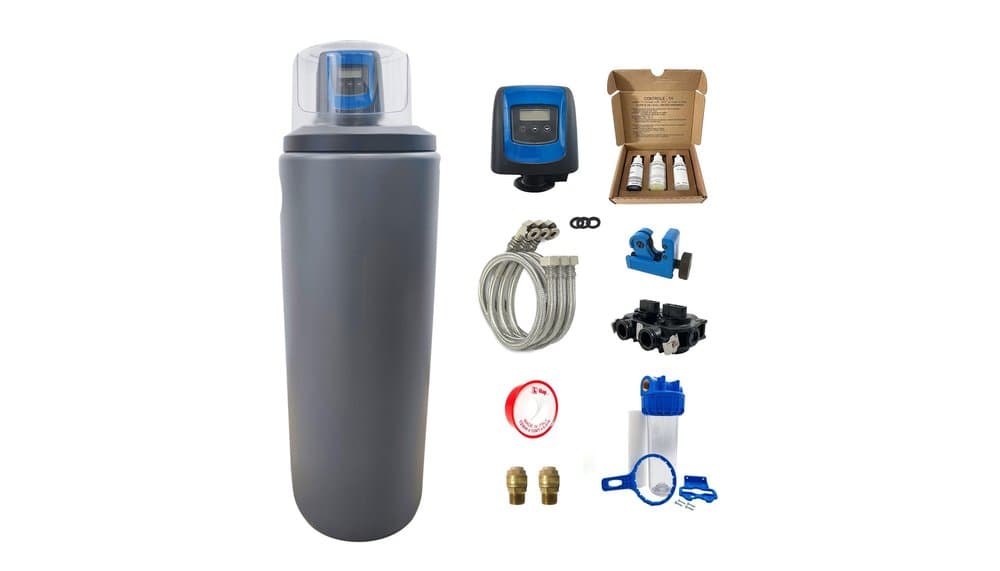
TOODO Fleck 5800 SXT Monobloc Water Softener Review
Volumetric TOODO Fleck 5800 SXT water softener eliminates limescale efficiently for families. A review of features & performance.
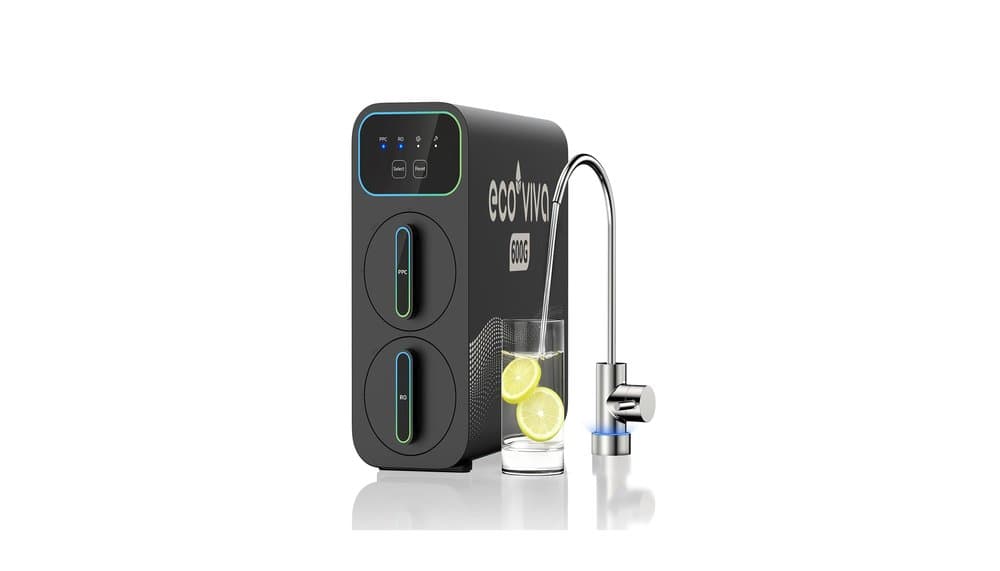
Ecoviva E6 Reverse Osmosis Water Filter Review
Compact, tankless Ecoviva E6 reverse osmosis system analyzed. We test its real-world purification performance, health benefits, and home integration.
Guides you might like
Alkaline Water Ionizer Buying Guide
Discover how alkaline water ionizers work and learn key tips to choose the right one for your home and health. Essential buying guide.
Buying Guide: Best Hydrogen Water Generator
Guide to hydrogen water generators: cutting through the hype to help you make an informed purchase decision for your health and budget.
Choosing Your Home Water Filter
Unlock clean, tasty water at home. Find the right water filter to tackle chlorine, pollutants, and limescale for better health and peace of mind.