Naturewater NW-RO50-BX23 RO System Review

Comprehensive Analysis: Naturewater NW-RO50-BX23 5-Stage Reverse Osmosis System
In the world of home water filtration, reverse osmosis systems are considered the ultimate benchmark for obtaining water free from the majority of contaminants. The Naturewater NW-RO50-BX23 5-Stage Reverse Osmosis System falls into this category with its promises of advanced filtration and compact housing. But beyond the technical specifications, what is it really worth for a family's health and daily use? We have analyzed the technical data, user feedback, and the principles of reverse osmosis to provide a clear assessment.
What interests us here is whether this device effectively combines purification performance, ease of use, and long-term cost-effectiveness.
Main Strengths
The Naturewater system has features that explain its appeal on paper.
A comprehensive multi-stage filtration. The promise of a 5-stage system is serious. It follows the classic and effective architecture of a reverse osmosis system: a sediment pre-filter for particles, two activated carbon stages (block and granular) for chemicals and chlorine, the reverse osmosis membrane for dissolved contaminants, and finally a post-carbon filter to refine the taste. On paper, this cascade of filters aims to eliminate a wide spectrum of pollutants.
The presence of a Booster Pump. This is a major technical advantage. The reverse osmosis membrane requires sufficient pressure to function optimally. The integrated pump ensures consistent flow and efficiency, even in homes where the mains water pressure is low or fluctuating. This translates into more reliable production of pure water and better membrane longevity.
A production capacity suited for a family. With an announced production of 190 liters per day (approximately 50 gallons), the system is sized to cover the drinking and cooking water needs of an average household. Testers note that this capacity is generally sufficient for daily use without shortage.
Weaknesses and Compromises
Like any domestic reverse osmosis system, the Naturewater NW-RO50-BX23 presents compromises inherent to the technology.
Significant water waste. The technical sheet indicates a rejection rate of 1:3, meaning that for 1 liter of pure water produced, 3 liters of water concentrated with contaminants are sent to the drain. This is on the low end of the average for RO technology, but it represents non-negligible water wastage, to be considered from an ecological standpoint and on the water bill.
Slow flow rate and production inertia. Reverse osmosis is a slow physical process. Even with a pump, the instantaneous flow rate at the pure water faucet remains limited by the membrane's capacity and the size of the storage tank. One user notes, for example, that she gets about "1.5 liters every half hour" when refilling the tank. This usually isn't a problem for filling a pitcher but can be frustrating if you want to quickly fill a large pot.
Technical installation and under-sink space requirement. Although marketed as easy to install, the DIY community nuances this point. Installation requires connecting the device to the cold water supply, the drain, and installing a dedicated faucet. Several user reviews indicate a need for 2 to 3 hours for a person with basic plumbing knowledge and highlight the lack of clarity in the manual. Furthermore, the housing and storage tank occupy significant space under the sink.
Detailed Analysis: Health, Performance, and Costs
Water Quality and Health: Which contaminants are actually removed?
According to the manufacturer's specifications, the system promises to remove up to 96% of a wide range of impurities. Here is what can reasonably be expected from a 5-stage configuration with an RO membrane:
- Heavy metals (lead, mercury, chromium, copper, nickel...): Reverse osmosis is very effective against these contaminants. The membrane, with its extremely fine pores (about 0.0001 micron), blocks them.
- Chlorine, pesticides, herbicides, pharmaceuticals: These compounds are primarily targeted by the two activated carbon stages (stages 2 and 3). Reverse osmosis provides an additional barrier. Overall effectiveness is high.
- Nitrates and fluoride: The RO membrane is capable of significantly reducing their concentration, although the rejection rate depends on pressure, temperature, and membrane age.
- Limescale (calcium, magnesium): Reverse osmosis removes almost all of the minerals responsible for water hardness, producing "demineralized" or "softened" water. Note: water that is completely demineralized is not ideal for exclusive long-term consumption; some users add an optional remineralization filter.
- Microplastics and bacteria: The pore size of the RO membrane is smaller than that of most bacteria and microplastics, offering a very effective physical barrier.
- PFAS (per- and polyfluoroalkyl substances): This is a crucial point. Quality activated carbon filters can reduce some PFAS, but reverse osmosis is one of the most effective domestic technologies for removing them, with rejection rates often above 90%. The 5-stage configuration of the Naturewater is therefore relevant against this emerging threat.
In summary, this system is technically equipped to provide water of remarkable purity, close to demineralized water, by eliminating the vast majority of contaminants of concern for health.
Practical Performance: Flow Rate, Waste, and Maintenance
The real flow rate is announced at 190 liters/day (approximately 8 liters/hour). In practice, this flow rate is constant over 24 hours, but the user draws from a pressurized tank (typically 3 to 4 gallons, or ~11 to 15 liters). Once the tank is empty, one must wait for it to refill, hence the impression of slowness mentioned by some.
The 1:3 rejection rate is an important factor. For a family consuming 10 liters of pure water per day, about 30 liters of waste water will be produced. This water can be recovered for watering or cleaning, but its drainage must be planned.
The annual cost of consumables is a key part of the budget. According to user feedback, the complete set of 5 replacement filters would cost around €30 and must be changed every 10 to 12 months. The RO membrane (the most expensive component) has a longer lifespan, typically 2 to 3 years, depending on the input water quality and its preservation by the pre-filters. Therefore, an annual budget of €30 to €60 should be planned depending on the year (filters only or filters + membrane), not including the potential replacement of the UV lamp on equipped models.
Technology Comparison and Real-World Effectiveness
Here is how the Naturewater's reverse osmosis compares to other technologies:
- Vs. Activated Carbon Filters Alone (Pitcher, faucet): Much more effective. Carbon alone improves taste and reduces chlorine and some chemicals, but is ineffective against nitrates, dissolved heavy metals, fluoride, and the majority of inorganic contaminants.
- Vs. Water Softener (ion exchange): Different target. The softener exchanges calcium and magnesium ions (limescale) for sodium. It does not remove bacteria, pesticides, heavy metals, or nitrates. It protects appliances but does not purify water for drinking.
- Vs. UV Sterilization: Complementary technology. UV deactivates bacteria and viruses but does not remove any chemicals, metals, or particles. It is sometimes coupled with reverse osmosis (as in some versions of Naturewater) for total microbiological safety.
- Vs. Distillation: Similar in purity achieved, but distillation is very energy-intensive, slow and removes all minerals, without distinction between good and bad.
Reverse osmosis, and therefore the Naturewater, offers the best broad-spectrum effectiveness / cost ratio for domestic use, despite its water wastage drawback.
Key Technical Specifications
| Aspect | Naturewater NW-RO50-BX23 Specification |
|---|---|
| Main Technology | 5-Stage Reverse Osmosis |
| Announced Daily Flow Rate | 190 liters / day (50 GPD) |
| Hourly Flow Rate | ~8 liters / hour |
| Pure Water / Waste Water Ratio | 1 : 3 (1 liter produced for 3 liters wasted) |
| Filtration Stages | 1. 5µ Sediment Pre-filter<br>2. Activated Carbon Block Filter<br>3. Granular Activated Carbon Filter<br>4. Reverse Osmosis Membrane<br>5. Activated Carbon Post-filter |
| Special Equipment | Integrated Booster Pump |
| Service Pressure | Requires minimum input pressure (compensated by pump) |
| Installation | Under sink, wall mounting possible |
| Power Supply | Mains power (for pump and optional UV) |
| Maintenance | Pre/post filter replacement: 6-12 months. Membrane: 24-36 months. |
What Users and Testers Say
Analyzing hundreds of customer reviews and expert feedback reveals a nuanced but instructive picture.
Recurring positive points:
- Perceived water quality as excellent: Most users are very satisfied with the final result. They note neutral-tasting water, a disappearance of chlorine taste, and a visible reduction of limescale in kettles. Several also use it successfully for their aquariums, a sign of controlled purity.
- Perceived good value for money: For those who managed the installation without issues, the system is considered to offer a lot of performance for its price, especially compared to more premium brands.
- Visible filtration effectiveness: Photos shared by users show pre-filters turning orange or brown after just a few days in areas where tap water is cloudy, tangible proof of its action.
Reported negative points and problems:
- Tricky installation and insufficient manual: This is the most frequent complaint. Many lament an unclear manual and had to resort to online tutorials. Assembly errors (like not removing a tube before closing a cover) lead to leaks.
- Quality control issues and inconsistent customer service: Several reports mention defective parts upon receipt (leaking fittings, burnt-out UV lamp, undersized transformer that overheats). The experience with after-sales service seems very variable: some describe it as responsive and accommodating, others as non-existent ("chat bot").
- Pump noise: The presence of the pump, although useful, generates a perceptible noise when it activates, noted as bothersome by some.
- Necessary safety precautions: A detailed review raises a crucial safety point for models with UV: the bulb is 220V in a submerged housing. In case of a seal leak, an electrocution risk exists. The user strongly recommends grounding the stainless steel tank to guard against any danger.
The general trend shows that when the device is properly installed and without defective parts, it provides complete satisfaction. However, the lottery of manufacturing quality and the installation difficulty make it a product rather recommended for knowledgeable and patient DIYers.
Conclusion: For Whom Is It the Right Choice?
The Naturewater NW-RO50-BX23 5-Stage Reverse Osmosis System is a device with solid technical specifications that, on paper, perfectly meets the needs of a family seeking to eliminate almost all contaminants from their drinking water. Its effectiveness against heavy metals, nitrates, PFAS, and microplastics is undeniable thanks to its RO membrane assisted by a pump.
However, our analysis of field feedback reveals that its main flaw is not in its performance, but in its accessibility. Installation is more complex than advertised and the risks of receiving a defective part or having to deal with a non-responsive customer service are real.
We therefore primarily recommend it to people who are:
- Handy and patient, willing to dedicate time to installation and potentially troubleshoot startup problems.
- Concerned about maximum purification of their water and aware of the compromise on water waste.
- Looking for an interesting performance/price ratio, while accepting that they may potentially have to replace some original components with higher quality parts (e.g., transformer).
For a non-DIY household or one wanting a "turnkey" solution with impeccable customer service, it will likely be preferable to turn to brands with a network of certified installers and a reputable customer service, even at a higher entry price. The Naturewater NW-RO50-BX23 remains a powerful and economical option, but one that requires an investment in time and resourcefulness to reach its full potential.
100% free and independent — All our articles are written independently, without any sponsorship. We may earn a commission on purchases made through our links, at no extra cost to you.
Articles you might like
Lafiucy 10 Inch Coconut Carbon Filter Review
Review of the affordable Lafiucy 5 Microns 10-inch activated carbon water filter cartridge, analyzing specs & user feedback for performance.
ALTHY Performance Hydrogen Water Bottle Review
Transform water into antioxidant-rich hydrogen water anywhere with the ALTHY portable bottle. A powerful, on-the-go wellness innovation.
Swiss Aqua Technologies IPS Kalyxx Water Softener Review
IPS Kalyxx magnetic water conditioner offers scale prevention without salt, electricity, or maintenance, using a permanent magnet.
Guides you might like
Alkaline Water Ionizer Buying Guide
Discover how alkaline water ionizers work and learn key tips to choose the right one for your home and health. Essential buying guide.
Buying Guide: Best Hydrogen Water Generator
Guide to hydrogen water generators: cutting through the hype to help you make an informed purchase decision for your health and budget.
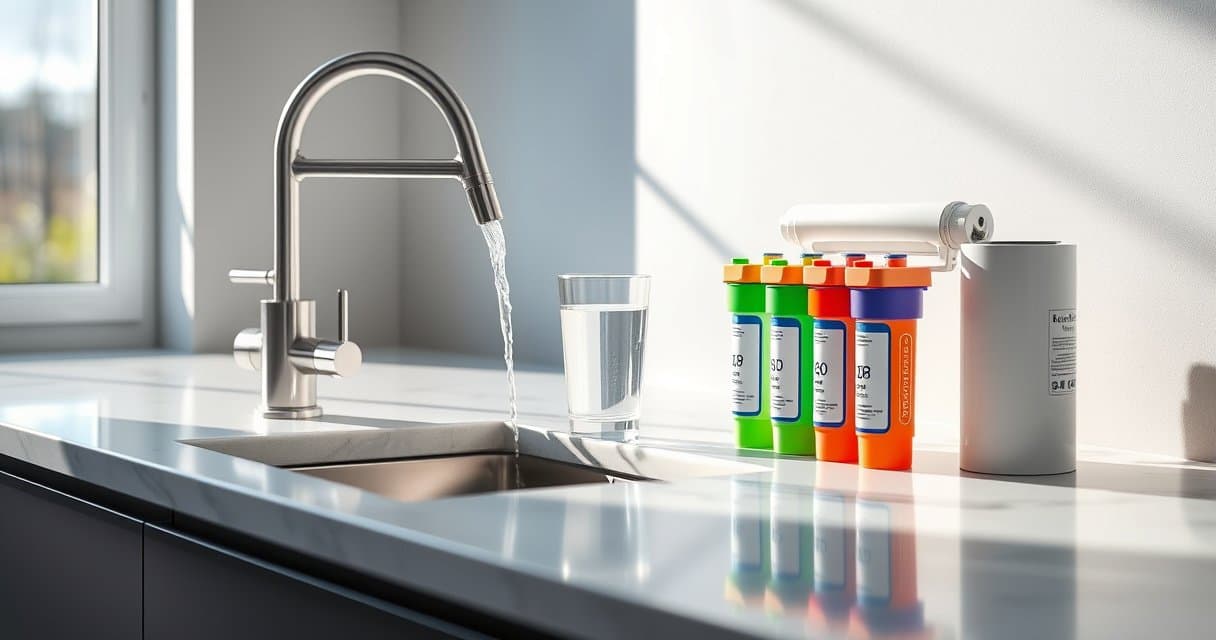
Choosing Your Home Water Filter
Unlock clean, tasty water at home. Find the right water filter to tackle chlorine, pollutants, and limescale for better health and peace of mind.