Naturewater NW-RO50-NP35 Reverse Osmosis System Review

Complete Analysis: Naturewater NW-RO50-NP35 – The 5-Stage Reverse Osmosis System
In the world of home water filtration, reverse osmosis remains the gold standard for anyone seeking to obtain water of the highest purity from their tap. The Naturewater NW-RO50-NP35 positions itself as a complete 5-stage system, promising up to 190 liters of purified water per day. We will dissect its promises, its real-world performance, and its relevance for your health and daily life, based on its technical specifications and concrete feedback from the user community.
What interests us here is whether this system delivers on its commitments regarding contaminant removal, how it performs with hard water, and what its true annual operating cost is. We will also compare it to other technologies to give you a clear picture.
Strong Points
- Advanced 5-Stage Filtration: The classic and proven architecture guarantees in-depth purification.
- Generous Daily Flow Rate: A capacity of 190 liters per day is more than sufficient for a family's drinking and cooking water needs.
- Broad Contaminant Removal: On paper, the system targets a very wide range of pollutants, from the most common to the most concerning.
- Inclusion of a Booster Pump: A major asset to ensure optimal performance even with low mains water pressure.
- Competitive Price-Quality Ratio: According to community comparisons, it is often perceived as offering performance equivalent to more expensive models.
Weak Points
- Significant Waste Water Ratio: Like the majority of domestic reverse osmosis systems, it operates with a 1:3 waste ratio (1 liter of pure water for 3 liters of waste water).
- Quality of Some Accessories: User feedback points to stop valves or fittings of average quality that may prove less durable.
- Lack of Mineralization: The process purifies the water but also removes beneficial minerals. An optional remineralization cartridge is an addition to consider.
- Sometimes Vague Manual and Support: Some users note that the instructions can be unclear or generic.
Detailed Analysis: Performance, Health, and Daily Use
Water Quality and Health: Which Contaminants Are Really Removed?
The Naturewater NW-RO50-NP35 is based on a 5-stage filtration sequence: a sediment pre-filter, one or two activated carbon pre-filters (to protect the membrane), the reverse osmosis membrane, and a polishing post-filter of activated carbon.
This combination is formidably effective. The reverse osmosis membrane, the heart of the system, is capable of retaining particles down to 0.0001 microns. Based on the manufacturer's specifications and the physical principles of the technology, we can state that this system removes or strongly reduces:
- Dissolved Solids (limescale, salts): The membrane effectively retains them. This is the main benefit for combating scale.
- Heavy metals (lead, mercury, arsenic): Their molecular size is larger than the membrane's pores.
- Nitrates and Phosphates: They are removed at a very high rate, often above 95%.
- Chlorine, bad tastes and odors: This is the role of the activated carbon stages, before and after the membrane.
- Bacteria, viruses, and protozoa: The membrane constitutes an impassable physical barrier for these microorganisms.
- Certain pesticides, herbicides, and pharmaceutical residues: The activated carbon/membrane combination offers good reduction.
- PFAS (per- and polyfluoroalkyl substances): Reverse osmosis is one of the most effective technologies for removing these "forever chemicals" according to environmental studies. The system contributes significantly to this.
- Microplastics: Without a doubt, they are completely filtered out by the pre-filters and the membrane.
Technology Comparison: Compared to a simple activated carbon filter (which mainly removes chlorine and tastes), or an ion exchange water softener (which only targets limescale), reverse osmosis is the most versatile and radical solution. It is more complete than a UV system alone (which only sterilizes microbes but does not remove chemicals). Electrolysis (to create kangen water) is a completely different and controversial process that does not include upstream filtration.
Important Note: Reverse osmosis water is very pure, therefore slightly acidic and aggressive. For daily consumption, some experts recommend adding a sixth stage: a remineralization cartridge to reintroduce some calcium and magnesium and stabilize the pH. This is not included with the NW-RO50-NP35, but the system is modular.
Technical Performance: Flow Rate, Waste Water, and Installation
Flow Rate and Capacity: The advertised flow rate of 190 liters per day (approximately 8 liters per hour) is a good standard for family use. This means the storage tank (not included in the basic specs of this model? Verification needed) refills in a few hours. Users confirm an acceptable flow at the faucet, although some note it can seem slow if the tank is empty – this is the case for all reverse osmosis systems without a high-pressure pump.
Waste Water Ratio: This is the sensitive ecological and economic point. The ratio is 1:3. For every 1 liter of pure water produced, 3 liters are sent to the drain. This represents higher water consumption. Based on 5 liters of reverse osmosis water consumed per day, this generates 15 liters of waste water. It's the price of purity.
Installation and Dimensions: According to feedback, installation is within reach of a competent DIYer. The system is designed for under-sink installation. Its dimensions (42 x 13 x 44 cm) make it compatible with most cabinets. However, several users highlight two crucial points:
- The need to add a non-return valve (not supplied) to protect the plumbing and the system.
- That the supplied mounting bracket can be considered unstable; a more robust mounting is sometimes necessary. The presence of the integrated booster pump simplifies things as it avoids having to check and artificially boost the mains pressure.
Annual Cost of Consumables
This is a key factor in the choice. A reverse osmosis system requires regular maintenance to guarantee its effectiveness and the health of the membrane.
Here is an estimate of typical replacements and costs (indicative, prices vary by supplier):
- Sediment and Carbon Pre-Filters (stages 1, 2, 3): To be replaced every 6 to 12 months. Estimated annual cost for a set: between €30 and €60.
- Reverse Osmosis Membrane (stage 4): Lifespan of 2 to 4 years depending on the input water quality and pre-filter maintenance. Amortized annual cost: between €25 and €50.
- Activated Carbon Post-Filter (stage 5): To be replaced every 12 months. Annual cost: between €15 and €30.
In total, the average annual cost of consumables is between €70 and €140. It is imperative to check the availability of specific replacement cartridges for this model before purchase.
Technical Specifications
| Feature | Detail |
|---|---|
| Product Name | Naturewater NW-RO50-NP35 Reverse Osmosis Water System |
| Technology | 5-Stage Reverse Osmosis (RO) |
| Daily Flow Rate | 190 liters / day (50 Gallons Per Day - GPD) |
| Hourly Flow Rate | Approximately 8 liters / hour |
| Waste Water Ratio | 1:3 (1 liter of pure water for 3 liters of waste water) |
| Booster Pump | Yes, integrated (Booster Pump) |
| Targeted Contaminants | Chlorine, limescale, heavy metals, nitrates, phosphates, bacteria, viruses, pesticides, PFAS, microplastics |
| Installation | Under sink, wall mount possible |
| Power Supply | Mains power (for the pump) |
| Dimensions (LxWxH) | 42 cm x 13 cm x 44 cm |
| Filtration Stages | 1. Sediment Filter <br>2. & 3. Activated Carbon Filters (pre-filtration)<br>4. 50 GPD RO Membrane<br>5. Activated Carbon Post-Filter (polishing) |
| Particularities | Control pressure gauge, dedicated faucet supplied |
What Users and the Community Say
A synthesis of nearly 300 reviews (average rating 4.0/5) and online discussions gives us a nuanced and realistic picture.
Recurring positive points:
- Noticeable Improvement in Taste: The vast majority of users report more pleasant water, without chlorine or limescale taste.
- Performance for Aquariums: Many use it for their aquarium and are satisfied with the water parameters obtained (low pH, low TDS).
- Price-Quality Ratio: It is often described as good value for money for the reverse osmosis performance obtained.
- Operation with the Pump: Users of the version with the pump (NP35) confirm its usefulness for a constant flow rate.
Negative points or criticisms:
- Quality of Accessories: Several reviews mention a faucet of average quality that may fail or leak after a few months of use.
- Unclear Instructions: The manual is sometimes considered minimalist, generic, or poorly translated, making installation less intuitive.
- Drainage Issues: A few reports mention leaks or constant dripping at the drain connection, often related to a defective part or an assembly error.
- Variable Purity: An experienced user notes that the TDS (Total Dissolved Solids) measurement at the output is slightly higher than that of another, higher-end reverse osmosis system, suggesting a membrane of standard, but not exceptional, efficiency.
Clear trends:
- The product is generally reliable and does what is expected: produces very pure water.
- Installation requires a minimum of technical know-how and sometimes the purchase of additional parts (non-return valve).
- The availability and cost of consumables are a point of concern for the longevity of the investment.
Conclusion: Who is the Naturewater NW-RO50-NP35 For?
The Naturewater NW-RO50-NP35 is a solid and high-performing reverse osmosis system that largely lives up to its promises for water purification. Its main asset is its ability to remove a very broad spectrum of contaminants, from the most classic (chlorine, limescale) to the most concerning (nitrates, PFAS), while offering a daily flow rate suitable for a family.
The integrated booster pump is a decisive advantage over basic models, ensuring stable performance even in apartment buildings or with low mains pressure.
We particularly recommend it for:
- Families wishing to secure their drinking and cooking water.
- Aquarium enthusiasts needing soft, demineralized water.
- People living in areas with poor-quality tap water (high nitrate levels, very hard water).
- DIYers ready to handle the installation and annual maintenance.
Points to Watch: One must be aware of the waste water ratio (1:3) and anticipate the recurring cost of filters. The quality of some fittings may require monitoring or preventive replacement. Finally, for exclusive daily human consumption, adding a remineralization cartridge could be beneficial.
In summary, if you are looking for a complete reverse osmosis solution, with an integrated pump, at a controlled price, the Naturewater NW-RO50-NP35 represents a reasonable and effective choice. It's a robust workhorse that requires a bit of elbow grease during installation and diligence in maintenance, but will provide great service for your water quality.
100% free and independent — All our articles are written independently, without any sponsorship. We may earn a commission on purchases made through our links, at no extra cost to you.
Articles you might like
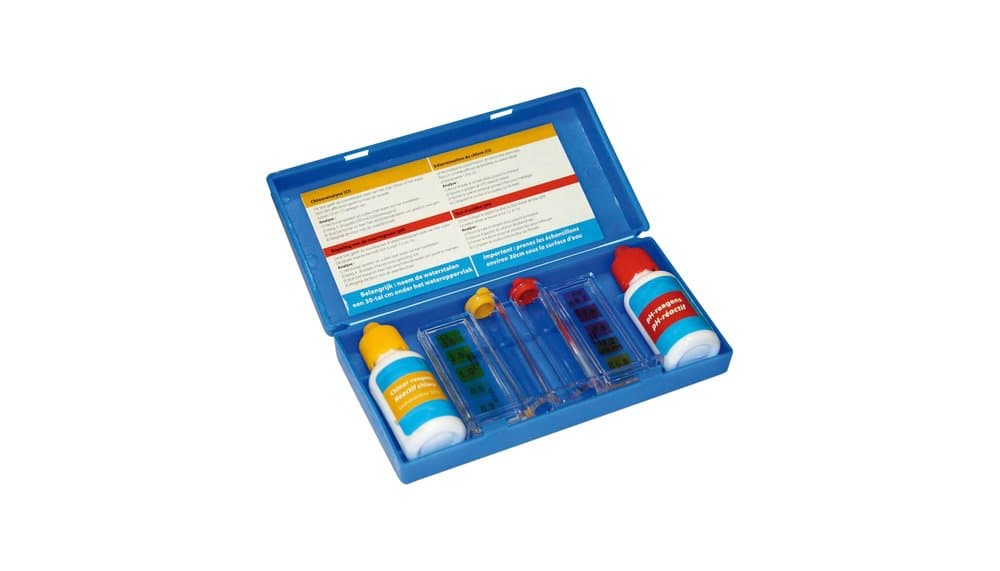
BSI Pool & Spa pH & Chlorine Tester Kit Review
Easy-to-use liquid drop test kit monitors essential pH and chlorine levels for balanced, safe, and clear swimming pool water.
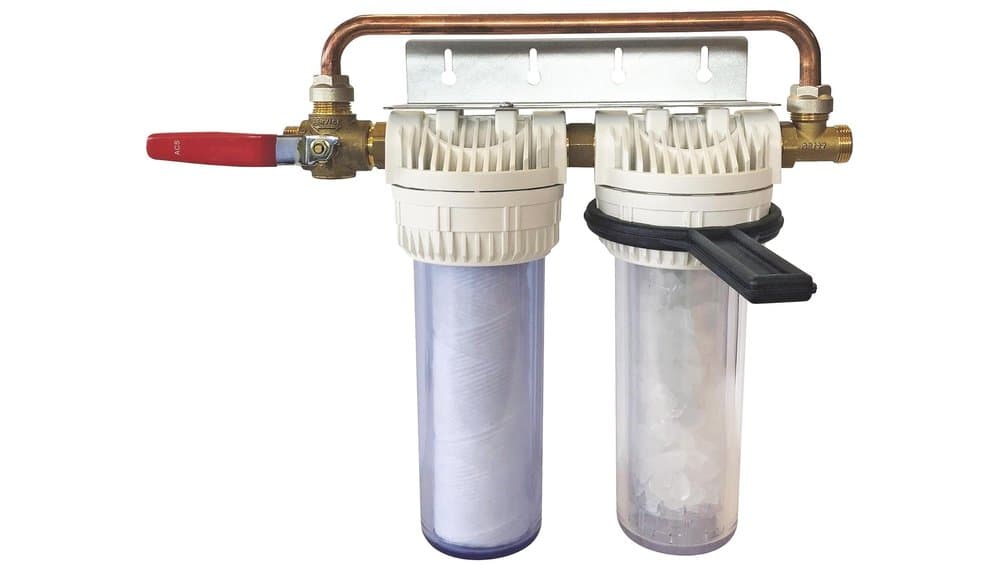
AQUAWATER Dual Filter System Review
French-made dual-cartridge system reduces limescale & improves tap water quality. Easy maintenance.
Bulk Water Bottle Sports Bottle Review
Analysis of the Bulk Water Sports Bottle: a simple container focused on leak-proof water storage and transport convenience, not purification.
Guides you might like
Alkaline Water Ionizer Buying Guide
Discover how alkaline water ionizers work and learn key tips to choose the right one for your home and health. Essential buying guide.
Buying Guide: Best Hydrogen Water Generator
Guide to hydrogen water generators: cutting through the hype to help you make an informed purchase decision for your health and budget.
Choosing Your Home Water Filter
Unlock clean, tasty water at home. Find the right water filter to tackle chlorine, pollutants, and limescale for better health and peace of mind.