TDS Digital Water Tester 3-in-1 Review
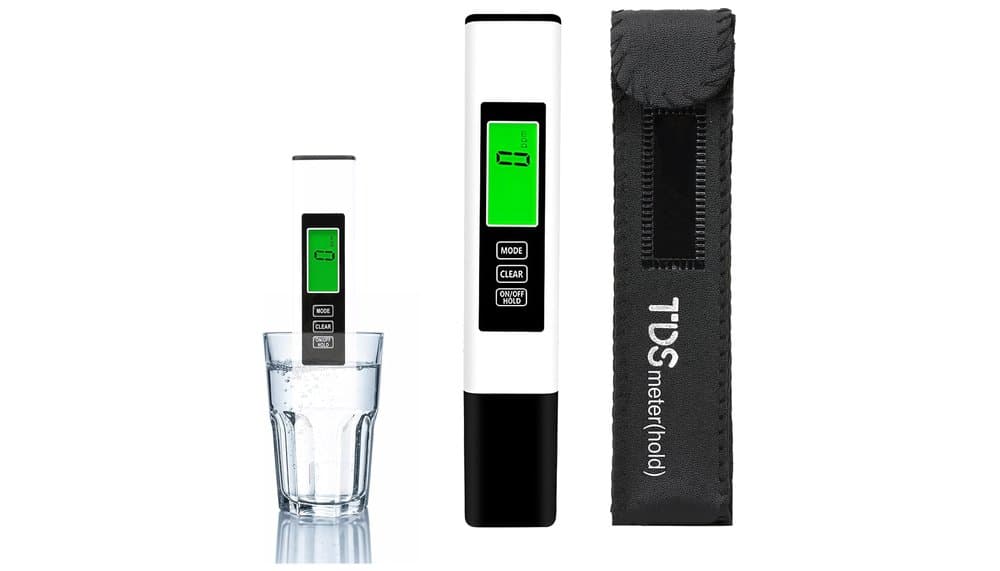
TDS Digital Water Tester 3-in-1
Introduction
For any household concerned about its water quality, a tester is not a gadget, but an essential diagnostic tool. It allows us to move beyond doubts and impressions to base our decisions on data. The subject of our analysis today is the TDS Digital Drinking Water Tester 3-in-1 Water Quality Monitor. This small device, often compared to an electronic pen, promises to measure three key parameters: TDS (Total Dissolved Solids), EC (Electrical Conductivity), and temperature. Its advertised field of application is vast, ranging from drinking water to aquariums, swimming pools, and hydroponics. In the specific context of domestic filtration, we will examine it with a critical eye: what does it actually measure, what does it not measure, and how can it be an ally in checking the effectiveness of our installations?
It is crucial to understand from the outset that this tester is not a contaminant analyzer. It does not detect specific pollutants. Its role is to measure an overall quantity, an indication of the water's mineral and ionic load. It is this fundamental distinction that will guide our analysis.
Strengths
This tester presents several assets that explain its adoption by a wide community of users.
- Simplicity and speed of use: This is its main selling point. According to user feedback, it is ready to use, with no configuration. Simply immerse the probe, wait a few seconds for the display to stabilize, and the reading is available. No technical skills are required.
- Compact and portable format: Its small size and light weight make it a tool that can be taken anywhere, ideal for testing water on the go, at a friend's house, or on vacation, as mentioned by one user.
- Advertised versatility: The combined TDS/EC/temperature measurement in a single device avoids having to buy several devices. This meets various needs: checking approximate hardness (related to TDS), conductivity for hydroponic plants, or the temperature of aquarium or pool water.
- Perceived good value for money: For a modest investment, the user gains access to three measurement functions. Testers point out that for occasional and indicative domestic use, this represents good value.
Weaknesses
The product's limitations are also important to understand in order to adjust our expectations.
- Insufficient user manual: Several users, including a tester in France, point out the lack of information in the provided manual. The device gives a number, but no interpretation or indicative table of TDS values for drinking water is included, leaving the user alone with the result.
- A measurement limited to the overall: This is the most important limitation. The tester does not distinguish the nature of dissolved solids. A low TDS can come from pure water, but also from water contaminated by non-ionic substances (like certain organic residues). Conversely, a high TDS can indicate water rich in healthy minerals (calcium, magnesium). It is completely ineffective at detecting specific contaminants like chlorine, non-ionized heavy metals, nitrates, PFAS, microplastics, or bacteria.
- Not an indicator of potability: A low TDS in no way guarantees that the water is healthy and free of pathogens or chemical pollutants. Only a complete laboratory test can attest to potability.
- Probe durability: Web context and expert reviews warn of the need for rigorous maintenance (rinsing and drying) of the metal probe to avoid corrosion and measurement drift over time. Its long-term robustness may be a point of attention.
Detailed Analysis: A Monitoring Tool, Not an Analysis Tool
To evaluate this product from the perspective of domestic filtration, its role must be repositioned. It is not a judge, it is a witness.
What the TDS Digital Drinking Water Tester REALLY Measures (and Its Link to Health)
The device measures the electrical conductivity (EC) of the water, which it then converts into an estimated TDS value (in ppm). The more ions (electrical charges) the water contains, the more it conducts current and the higher the displayed TDS. These ions can be:
- Natural minerals: Calcium, magnesium, potassium, sodium (which constitute the water's "taste").
- Salts: Carbonates, sulfates, chlorides.
- Certain ionized heavy metals: Such as lead or copper in ionic form, but without specifically identifying them.
Its interest for health is therefore indirect. It allows monitoring of the water's overall mineralization. Water with a very low TDS (< 50 ppm) will be very soft water, potentially aggressive to pipes (risk of metal dissolution). Water with a very high TDS (> 500-600 ppm) may have a pronounced taste, scale appliances, and its impact on health depends on the nature of the salts present (a high sodium content, for example, can be problematic).
See today's priceIts Usefulness for Verifying Filtration Systems
This is where the device finds its true relevance in our field.
- Reverse Osmosis (RO): This is the premier application. A performing reverse osmosis system must drastically reduce the TDS of the feed water. A standard rejection rate is between 1:3 and 1:5 (1 liter of pure water for 3 to 5 liters of waste water). With this tester, one can measure the TDS of tap water (input) and the TDS of the RO water (output). A reduction of 90 to 98% is expected. An abnormally rising TDS in the output is a clear indicator that it is time to change the membrane (the main consumable, with a lifespan of 2 to 5 years depending on the model and the quality of the feed water). It does not give the flow rate in L/h, but a noticed drop in flow at the tap coupled with a rise in TDS signals membrane clogging.
- Water Softeners (ion exchange): These systems exchange calcium and magnesium ions (responsible for limescale) for sodium ions. The conductivity (EC) may even increase slightly, because sodium is a good conductor. The TDS itself remains overall stable or varies slightly. The tester is therefore of little use for checking a softener's effectiveness on hardness; a test strip for TH (Total Hardness) is more suitable.
- Activated Carbon Filters: These excellent filters for removing chlorine, bad tastes, odors, and certain organic contaminants have little impact on the TDS of minerals. The displayed number will therefore hardly change after a good quality carbon filter, which does not mean it is not working. Its verification is done by taste and smell.
- Ultrafiltration & Ceramic: Like carbon, these technologies target particular or microbiological contaminants without significantly affecting the dissolved mineral salt content. The TDS will remain stable.
In summary: This tester is particularly recommended for owners of a reverse osmosis system who want to objectively monitor the state of their membrane and the quality of the filtrate. For other technologies, its usefulness is very limited.
Ease of Installation and Daily Use
There is no installation required. The device is supplied with its batteries (LR44) and is immediately operational. Its negligible size allows it to be stored in a kitchen drawer. For family use, it can reassure or, conversely, alert to a sudden change in raw water quality (for example, a seasonal variation in the municipal source) or the failure of a filter. It is a simple preventive control tool.
Technical Specifications
| Parameter | Detail |
|---|---|
| Product Name | TDS Digital Drinking Water Tester 3-in-1 |
| Measured Parameters | TDS (Total Dissolved Solids), EC (Electrical Conductivity), Temperature |
| TDS Measurement Range | 0 to 999 ppm (parts per million) |
| Display | Backlit LCD |
| Power Supply | 2 LR44 button cell batteries (included) |
| Announced Accuracy | Not specified in detail on common data sheets |
| Response Time | A few seconds (automatic reading) |
| Special Functions | Auto-off, Low battery indicator |
| Dimensions | Pen format, compact and light (~10g) |
| Intended Uses | Drinking water, aquariums, pools, hydroponics, general use |
What Users and Testers Say
The synthesis of available customer reviews and expert feedback shows a clear consensus.
The recurring positive points are:
- Simplicity and Speed: Users unanimously emphasize the ease of use. "It displays the same value when used several times in the same water, which is already a good sign," notes a tester, indicating good reproducibility for basic use.
- Usefulness for Comparisons: Its major asset is the ability to compare waters. Before/after filter, tap/bottled, different sources. A user uses it to check "the proper functioning of my filter."
- Appreciated Versatility: The thermometer function is used for pools, and the TDS/EC monitoring for aquariums or plants. Its portable format is popular for travel.
The negative points or expressed limitations are:
- Lack of Context for Interpretation: The main criticism concerns the manual, considered too basic. The user must search for reference scales to interpret TDS values themselves.
- Sufficient but Limited Accuracy: Testers agree that the device is reliable for domestic and indicative use, but one should not expect the accuracy of a laboratory instrument. One expert review summarizes it well: "It is suitable for users looking for a simple tool for occasional checks, keeping in mind that it is an orientation device."
- Sometimes Surprising Results: One user notes that a bottled water (Cristalline) shows a higher TDS than their tap water, which makes them question the real meaning of "quality." This perfectly illustrates that a low TDS is not synonymous with "better" water for health, but simply with less mineralized water.
Conclusion
The TDS Digital Drinking Water Tester 3-in-1 Water Quality Monitor is a practical, simple, and accessible tool that has its place in the toolkit of any household attentive to its water, provided one clearly understands what it does and does not do.
We strongly recommend it in one specific case: for monitoring and maintaining a reverse osmosis system. In this context, it becomes a wise investment, allowing you to control membrane efficiency and optimize the replacement schedule for consumables, thus ensuring the system's long-term performance.
For other filtration technologies (activated carbon, UV, water softeners), its usefulness is marginal, because it does not measure the contaminants they target. It should certainly not be relied upon to assess microbiological safety or the presence of specific chemical pollutants like nitrates or PFAS.
Ultimately, consider it as a thermometer for the mineralization of your water. A thermometer does not tell you what illness you have, but it indicates if you have a fever, prompting you to see a doctor. In the same way, this TDS tester will not tell you what is in your water, but an abnormal variation in the measurement should prompt you to investigate further, for example via a laboratory analysis. Used with this understanding, it is a valuable ally for the informed management of your domestic water.
100% free and independent — All our articles are written independently, without any sponsorship. We may earn a commission on purchases made through our links, at no extra cost to you.
Articles you might like
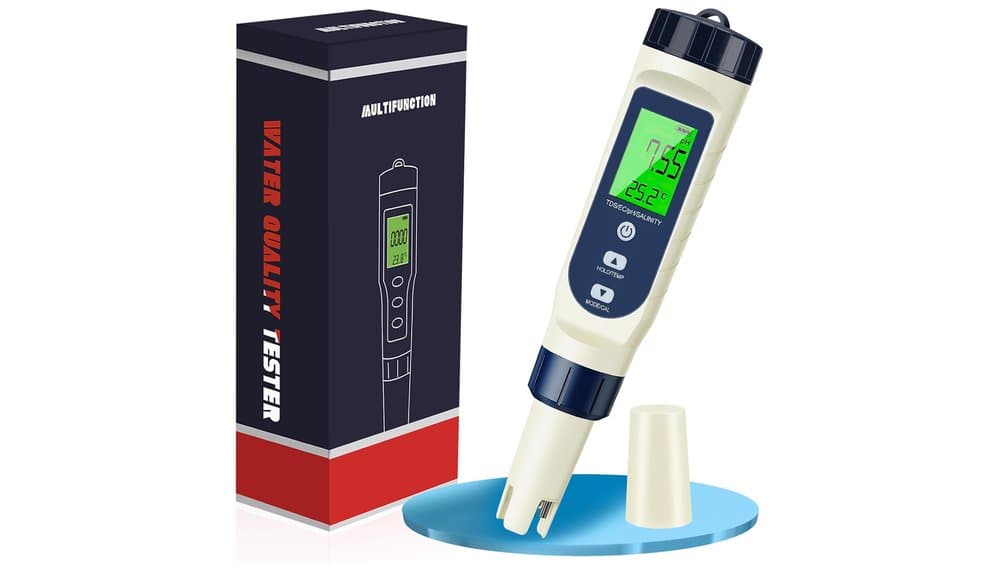
5-in-1 Digital Water Tester Review: pH, TDS, EC
Test water quality instantly: pH, TDS, EC, salinity & temperature. Verify your home filtration system's effectiveness.

Fmzrbnih TDS-7 Digital Water Tester Review and Test
Analyzes the popular Fmzrbnih TDS-7 tester, detailing its true capabilities, limitations, and role in monitoring water filtration system performance.

Flintronic 4-in-1 Digital pH Meter Tester Review
Measure water quality; don't purify it. The Flintronic 4-in-1 digital tester gives precise pH, TDS, EC, and temperature readings for informed decisions.
Guides you might like
Pick the best water tester
Test your water for limescale, metals, or nitrates. Choose the right home water tester for health, taste, and appliance concerns.
Choosing Your Home Water Filter
Unlock clean, tasty water at home. Find the right water filter to tackle chlorine, pollutants, and limescale for better health and peace of mind.
Alkaline Water Ionizer Buying Guide
Discover how alkaline water ionizers work and learn key tips to choose the right one for your home and health. Essential buying guide.