TOODO Kube 11L Water Softener Test & Review
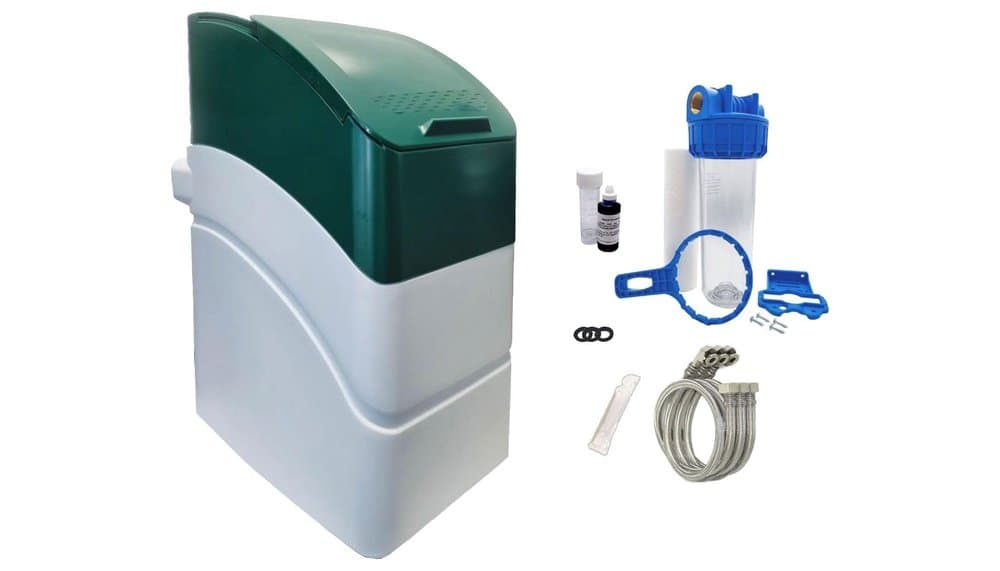
TOODO Kube 11L Water Softener Test &
Introduction: A Compact Water Softener to Combat Limescale
In the world of domestic water treatment systems, water softening holds a very specific place. It is not about purifying water to make it drinkable, but about removing its hardness, i.e., the calcium and magnesium ions responsible for limescale. The TOODO Kube 11L Water Softener presents itself as a technical solution for this precise problem. It is a non-electric, compact water softener, clearly positioned for small spaces and households of 1 to 2 people. Here, we will analyze this product in depth, not as testers, but by dissecting its specifications, its technology, and the available feedback from the user and expert community. The goal is to understand who this device is really suitable for and what its expected performance is in terms of comfort and home protection.
Identified Strengths
According to its specifications and consolidated feedback, the TOODO Kube 11L has several major strengths.
Non-electric and economical operation. Its volumetric mechanical system is a real strong point. It does not consume electricity, which eliminates an operating cost and simplifies installation. Regeneration is triggered only after a predefined volume of water has flowed, which is presented as a technology that avoids waste of water and salt.
Minimal footprint. With a capacity of 11 liters of resin and a weight of 17 kg once in place, it is designed to be installed in tight spaces, such as a kitchen cabinet or under the sink in a small home. Its status as an "ultra-compact" softener is central to its marketing.
Simplified installation and commissioning. The product is sold ready-to-use, complete with its accessory kit (valve, fittings, bypass, etc.). On paper, this makes it suitable for installation by a competent DIYer, without requiring complex electrical work.
Targeted effectiveness against limescale. As an ion exchange water softener, its mission is clear: to exchange calcium and magnesium ions for sodium ions. According to user feedback from regions with very hard water, it fulfills this function, significantly reducing white marks and protecting household appliances.
Weaknesses and Limitations to Know
The analysis of community feedback and technical characteristics also reveals important limitations to consider before purchase.
Very restricted scope of action. This is the fundamental limit to understand: a water softener is not a multi-purpose filtration or purification system. It does not remove contaminants of concern for health such as heavy metals, nitrates, PFAS, microplastics, or chlorine (from a taste perspective). Its only role is to combat hardness. For quality drinking water, it must absolutely be coupled with an additional filter (activated carbon, for example).
Limited capacity and regeneration constraint. The 11 liters of resin destine it for a small household (1-2 people) with moderate consumption. During the regeneration phase, which can last over an hour, the softener is not operational and delivers untreated water (or goes into bypass). This is a drawback of single-resin systems compared to dual-tank models which ensure service continuity.
Questions about durability and finish. Several user and expert reviews point out concerns about build quality. Reports of products arriving damaged, fragile casings, or parts coming loose warrant caution. The design of the salt tank is specifically criticized for its lack of a separator, making the use of salt blocks impractical and potentially promoting the formation of "mush."
Lack of data on annual consumable costs. The specifications do not indicate the estimated lifespan of the resin or the cost or reference of the regenerating salt bags. This lack of transparency makes it difficult to assess the medium-term cost of ownership.
Detailed Analysis: Technology, Performance, and Use
Ion Exchange Technology Under the Microscope
The TOODO Kube 11L is based on the proven technology of ion exchange. It is the standard for water softening. The cationic resin, charged with sodium ions (Na+), captures calcium (Ca2+) and magnesium (Mg2+) ions. When the resin is saturated, it is regenerated by a brine (salt-saturated water), which recharges the resin with sodium and flushes the limescale ions into the drain. This technology is very effective for its sole objective: removing limescale. It does not involve continuous water waste like reverse osmosis, only a periodic discharge (regeneration and rinse water) estimated at a few tens of liters per cycle.
See today's priceComparison with Other Treatment Technologies
It is crucial to position this product against other systems:
- Vs. Reverse Osmosis (RO): RO is a fine filtration (0.0001 micron) that removes almost everything, including minerals (including calcium). It is much more versatile but also more expensive, bulkier, with a lower flow rate and significant water waste. The softener is simpler and less expensive for the sole problem of limescale.
- Vs. Activated Carbon: Carbon filters organic molecules, chlorine, bad odors/tastes. It does not soften water. The two technologies are complementary.
- Vs. UV or Electrolysis: These are disinfection technologies (bacteria, viruses). They have no impact on water hardness.
The Kube 11L is therefore a specialized tool, not to be confused with a water purifier for food use.
Installation and Daily Maintenance
On paper, installation is presented as simple. In reality, the community emphasizes that to avoid any risk of leakage and ensure proper long-term operation, the use of a plumber is strongly recommended, especially for connection to the water supply and setting up the bypass. Its maintenance consists of ensuring a regular supply of specific water softener salt (pellets or blocks) and adjusting the regeneration frequency based on the initial water hardness.
Recap Technical Specifications
| Characteristic | Detail for the TOODO Kube 11L |
|---|---|
| Main Technology | Ion Exchange (cationic resin) |
| Targeted Contaminants | Limescale only (Calcium & Magnesium ions) |
| Other Contaminants (Not treated) | Heavy metals, Nitrates, PFAS, Microplastics, Chlorine, Bacteria |
| Resin Capacity | 11 Liters |
| Power Supply | None (Volumetric mechanical system) |
| Installation Type | Countertop / Under sink (requires water connection) |
| Usable Flow Rate | Standard domestic flow, not limited by the device (outside regeneration phase) |
| Water Waste | Only during regeneration cycles (a few tens of L/cycle) |
| Target Audience | Household of 1 to 2 people, apartment, small house |
| Weight | 17 kg (empty / ready to install) |
| Consumables | Regenerating salt (variable annual cost, not disclosed) |
| Maintenance | Salt refilling, valve adjustment based on water hardness |
What Users and the Community Say
The synthesis of available feedback, particularly from the expert web context and forums, paints a nuanced but instructive picture.
The recurring positive points revolve around basic effectiveness. Users installed in regions with very hard water (like the Paris basin, Kent, Sussex) confirm a tangible improvement in daily life: disappearance or significant reduction of limescale marks on faucets and shower walls, improved feel of water on the skin, increased effectiveness of washing products (detergent, soap), and protection of appliances like kettles or washing machines. The fact that it is non-electric is also highly appreciated for simplicity and savings.
The main criticisms focus on build quality and design. Several reports mention problems upon receipt (damaged packaging, broken parts). Long-term reliability is questioned, with mentions of plastic components seeming fragile. The salt tank without a separator is a unanimously shared point of frustration, complicating maintenance. Finally, compared to high-end dual-resin systems, it is perceived as an entry-level or "adequate" version, with the inherent limitations of its single-resin status (service interruption during regeneration).
One piece of advice often comes up: inspect the device carefully upon delivery and seriously consider professional installation to secure the investment.
Conclusion: Who is the TOODO Kube 11L For?
The TOODO Kube 11L Water Softener is a specialized tool that addresses a precise need. Its analysis shows it can be a relevant solution for a small home (like an apartment) occupied by 1 to 2 people, facing a significant limescale problem, and looking for a simple solution without an electrical connection.
However, its limitations must be accepted. It does not purify your drinking water and only protects you from scale. Its real-world performance seems good fundamentally, but doubts persist about the robustness of some units and design details (salt tank). Its value for money will therefore depend heavily on the real durability of the received unit.
Our recommendation is clear: if your absolute priority is softening to protect your equipment and improve your comfort in a small household, and you are prepared to monitor its maintenance and condition, the Kube 11L can be a candidate. On the other hand, for a larger family, for those seeking a complete purification solution, or for users demanding flawless reliability and finish, it will be necessary to look towards more advanced systems, potentially dual-resin and paired with an activated carbon filter for drinking water.
100% free and independent — All our articles are written independently, without any sponsorship. We may earn a commission on purchases made through our links, at no extra cost to you.
Articles you might like
TOODO Fleck 5600 SXT 20L Water Softener Review & Test
Review of the TOODO Fleck 5600 SXT water softener. Analyzes its performance, reliability for hard water homes.
TOODO Water Softener Resin Refill Review
Discover why Toodo's resin is the crucial, often overlooked heart of your water softener's ion exchange process for combating hard water.
TOODO Fleck 5800 SXT Monobloc Water Softener Review
Volumetric TOODO Fleck 5800 SXT water softener eliminates limescale efficiently for families. A review of features & performance.
Guides you might like
Water Softener Buying Guide
Solve hard water problems! Learn how to choose the right water softener to eliminate limescale, protect your skin, laundry, and appliances for good.
Alkaline Water Ionizer Buying Guide
Discover how alkaline water ionizers work and learn key tips to choose the right one for your home and health. Essential buying guide.
Buying Guide: Best Hydrogen Water Generator
Guide to hydrogen water generators: cutting through the hype to help you make an informed purchase decision for your health and budget.