XNZMYN 3-4 Inch Water Pressure Reducer Review
Introduction
In the world of domestic water treatment, pressure management is often the forgotten, yet fundamental, step. A filtration system, no matter how sophisticated, requires stable and optimal water pressure to function efficiently and last. It is in this context that we analyze the XNZMYN 3-4 Inch Water Pressure Reducer today. This product, an adjustable pressure reducer equipped with a gauge and an integrated filter, presents itself as a key component to protect an installation. We will examine it from the angle that interests us: that of water quality and filtration system performance. It is not a purifying filter, but does its role as a pressure guardian make it an indispensable ally for your health and that of your appliances?
Key Strengths
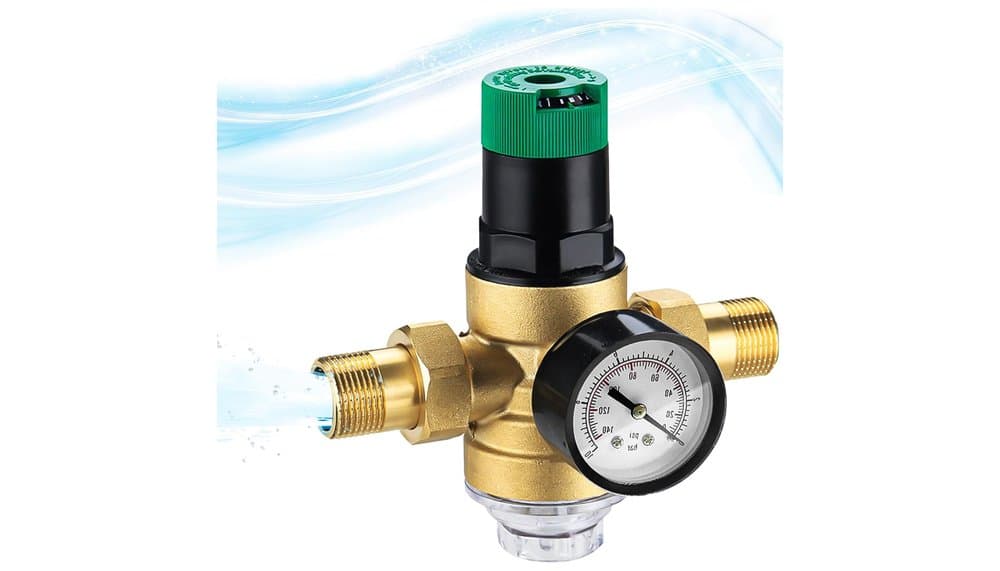
Brass Construction and Versatility. On paper, the specifications announce a housing made of solid brass, a material known for its robustness and corrosion resistance. This destines it for a long lifespan, even under high-pressure conditions. Its design includes a manual adjustment ring and an integrated pressure gauge, offering immediate visual and manual control over the output pressure. Its standard 3/4 inch (DN20) fitting makes it compatible with most domestic main water supplies.
Protection of Sensitive Equipment. Its primary function is to stabilize and reduce the incoming pressure. For a reverse osmosis system, pressure that is too high can damage the membranes prematurely, while pressure that is too low reduces flow and increases the water rejection rate. By maintaining a constant pressure around 3-4 bars (adjustable between 0 and 6 bars according to the manual), this reducer protects costly appliances like water softeners, water heaters, and of course, advanced filtration systems.
Integrated Pre-Filtration. A non-negligible asset is the presence of an integrated mesh filter with a stated fineness between 10 and 60 microns. Although coarse, this pre-filter plays an essential role by capturing sediment, rust particles, and micro-debris that could clog finer sediment filters downstream or damage appliance valves. It constitutes a first mechanical barrier.
Weaknesses
Medium-Term Reliability Questioned. Feedback from the community and expert reviews converge on one point: durability is the Achilles' heel of this type of product. While brass is a solid material, the machining quality and assembly of the internal components (piston, seal) and the gauge are criticized. Recurring reports indicate leaks appearing after a few months, particularly at the threaded connections or the junction with the gauge.
Gauge Accuracy and Reliability. The gauge, although practical, is often identified as the most fragile component. Several users report gauges that are hard to read, imprecise, or break down quickly. This limits the reliability of the adjustment, sometimes forcing reliance on the "feel" of the adjustment knob.
Delicate Installation for a Novice. The seal of the threaded connections is crucial. User feedback indicates that using standard hemp thread may prove insufficient. The community systematically advises using quality PTFE (Teflon) tape and careful tightening to avoid any risk of leakage, which can make installation intimidating for an occasional DIYer. Some also note an annoying whistling noise when water flows through, a sign of internal turbulence or a regulation defect.
Detailed Analysis: What Role in a Filtration System?
Impact on Purification and Health
It is essential to clarify: the XNZMYN 3-4 Inch Water Pressure Reducer does not remove any chemical or biological contaminants. It does not filter chlorine, heavy metals, limescale, nitrates, PFAS, or microplastics. Its role is not to purify, but to create the optimal conditions for your purification systems to do so correctly.
Its contribution to health through water is therefore indirect but critical:
- Protection of the Reverse Osmosis (RO) Membrane: A stable and suitable input pressure (ideally between 3 and 4 bars) is vital for an RO system. Pressure that is too low results in low flow and a very high water rejection rate (up to 80% water wasted). Pressure that is too high or unstable stresses the membrane, reduces its lifespan, and can compromise its filtration efficiency. This reducer aims to optimize this parameter.
- Preservation of Pre-Filtration Cartridges: The 10-60µm mesh filter captures large particles, thereby protecting the 5 or 1µm sediment filters located downstream. This helps extend their lifespan and reduce the frequency (and thus the cost) of replacements.
- Overall System Performance: All technologies (activated carbon, UV, ion exchange) work better with constant flow and pressure. Sudden variations can leach activated carbon too quickly or create preferential pathways in resins, reducing their real-world efficiency.
Ease of Installation and Footprint
Based on feedback, installation is within the reach of a skilled DIYer but requires method. The product is typically installed on the main water supply, after the meter and the main shut-off valve. Its modest footprint (approximately 14x10x15 cm) allows it to fit in most utility closets. The difficulty lies in achieving leak-proof connections. The community's experience is clear: plan for quality PTFE tape and carefully check for leaks after turning the water on. The operation does not necessarily require a plumber, but a lack of knowledge about threaded connections can lead to setbacks.
Value for Money for Family Use
The product positions itself as an economical alternative to pressure reducers from specialized plumbing brands. For a modest budget, you get an adjustable regulation function and a pre-filter, which fixed-entry-level models do not offer. For a family looking to protect an existing filtration system (especially an RO system) or regulate the general pressure of the house, the feature-to-price ratio can seem attractive.
However, the hidden cost may be long-term reliability. If the product leaks after a year or if the gauge fails, the initial savings are called into question. For daily use and essential protection of your appliances, investing in a model from an established, reputable brand (Caleffi, Honeywell, Watts) may prove more cost-effective in the long run, despite a higher acquisition cost. The XNZMYN thus finds its place in lighter installations, seasonal uses (watering), or as a first experiment with pressure regulation.
Technical Specifications
| Characteristic | Detail |
|---|---|
| Product Name | XNZMYN 3-4 Inch Water Pressure Reducer |
| Body Material | Brass |
| Connection Diameter | 3/4" (DN20) |
| Max. Inlet Pressure | 1.0 MPa (10 bars) |
| Adjustable Outlet Pressure | 0.1 - 0.6 MPa (1 - 6 bars / 0-87 psi) |
| Integrated Mesh Filter | 10 - 60 microns |
| Gauge Included | Yes, 1 MPa (10 bars) |
| Operating Temperature | 4°C to 40°C |
| Certifications | EN 1074-1, EN 1717, EN 12164 |
| Dimensions | Approximately 14.4 x 10.5 x 15.4 cm |
What Users Say
By analyzing the hundreds of available reviews, a clear trend emerges with an overall rating of 4.2/5.
The recurring positive points are numerous. Users praise the perceived quality for the price, noting a product that is "complete," "heavy," and "well-finished." Many appreciate the ease of adjustment thanks to the green knob and the convenience of having an integrated gauge to visualize the pressure. Its effectiveness for applications like protecting a water heater, reducing pressure for watering, or stabilizing pressure upstream of a system is regularly confirmed: "Does the job," "Works perfectly." Some compare it favorably to more expensive brands, seeing it as good initial value for money.
The negative points are targeted and significant. The most frequently cited problem concerns gauge reliability, with mentions like "the gauge doesn't work" or observations about its limited accuracy. Sealing issues come right after: leaks appear at the connections, often requiring reassembly with PTFE tape. Noise (whistling) when water flows is also reported by several users. Finally, some feedback mentions premature failure or effectiveness that diminishes over time ("Not effective. I plan to change it"). These elements paint a profile of a product that works well upon installation, but whose durability over several years is uncertain.
Conclusion
The XNZMYN 3-4 Inch Water Pressure Reducer is equipment with enticing technical specifications for anyone looking to regulate and stabilize their home's water pressure. Its value in a filtration ecosystem is real: it protects sensitive equipment and optimizes the operating conditions of a reverse osmosis system or other purification technologies.
However, our analysis based on community feedback forces us to temper its interest for demanding daily family use where reliability is key. While it represents a functional and economical entry-level solution, its potential construction weaknesses – particularly concerning the gauge and seals – make it a choice to consider cautiously for a critical installation where a leak or failure would be problematic.
For long-term protection of your filtration system and for complete peace of mind, investing in a pressure reducer from a specialized brand with an established reliability history likely remains the best strategy. The XNZMYN, on the other hand, can be a valid option for secondary, temporary applications, or for savvy DIYers ready to monitor its behavior and intervene if necessary.
100% free and independent — All our articles are written independently, without any sponsorship. We may earn a commission on purchases made through our links, at no extra cost to you.
Articles you might like
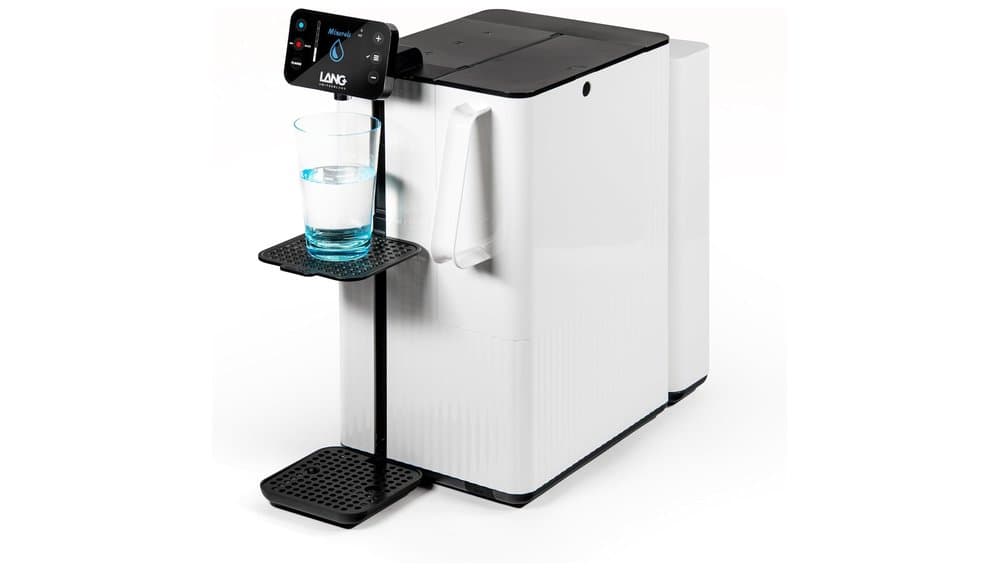
LANG TheWell2 Purifier Review: Mineralized Water Test
A premium water purifier & mineralizer. Does its all-in-one convenience justify the cost? Our analysis examines its promise vs. practicality.
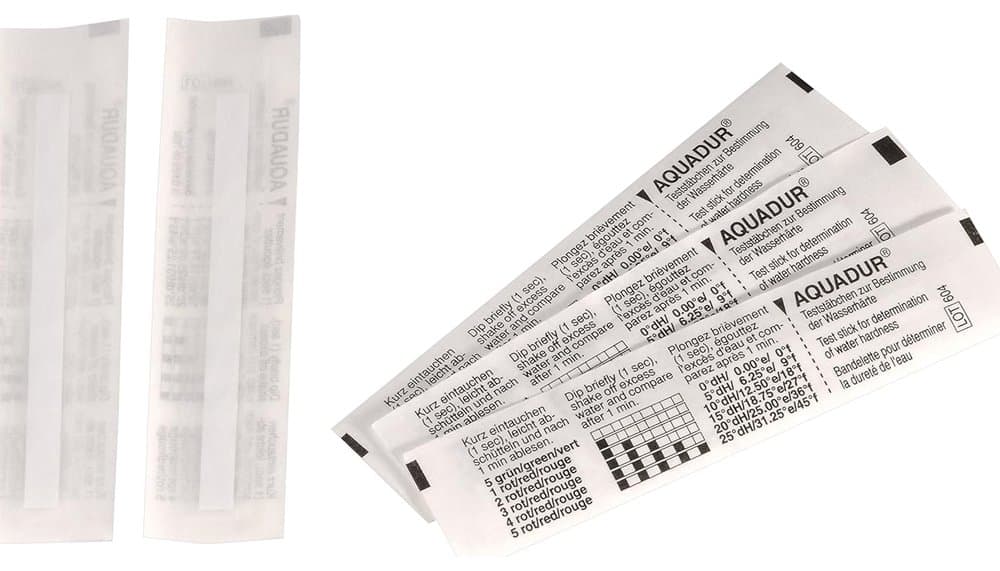
COMAP TH Test Strips Review: Check Water Hardness
COMAP TH Test Strips: Quickly measure your water hardness at home. An essential diagnostic tool to assess your need for a softener or anti-scale system.
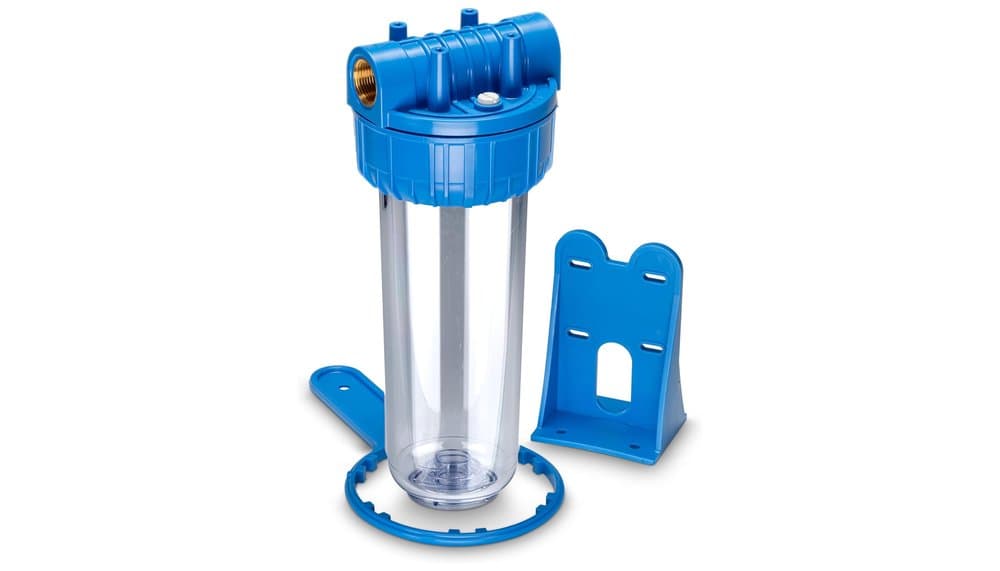
WK wk 34stach10 Empty Filter Housing Kit Review
A housing kit for your filter media. The WK 34stach10 holds replacement cartridges but contains no filter itself.
Guides you might like
Alkaline Water Ionizer Buying Guide
Discover how alkaline water ionizers work and learn key tips to choose the right one for your home and health. Essential buying guide.
Buying Guide: Best Hydrogen Water Generator
Guide to hydrogen water generators: cutting through the hype to help you make an informed purchase decision for your health and budget.
Choosing Your Home Water Filter
Unlock clean, tasty water at home. Find the right water filter to tackle chlorine, pollutants, and limescale for better health and peace of mind.