AquaTru Alkaline Mineral Water Purifier Test
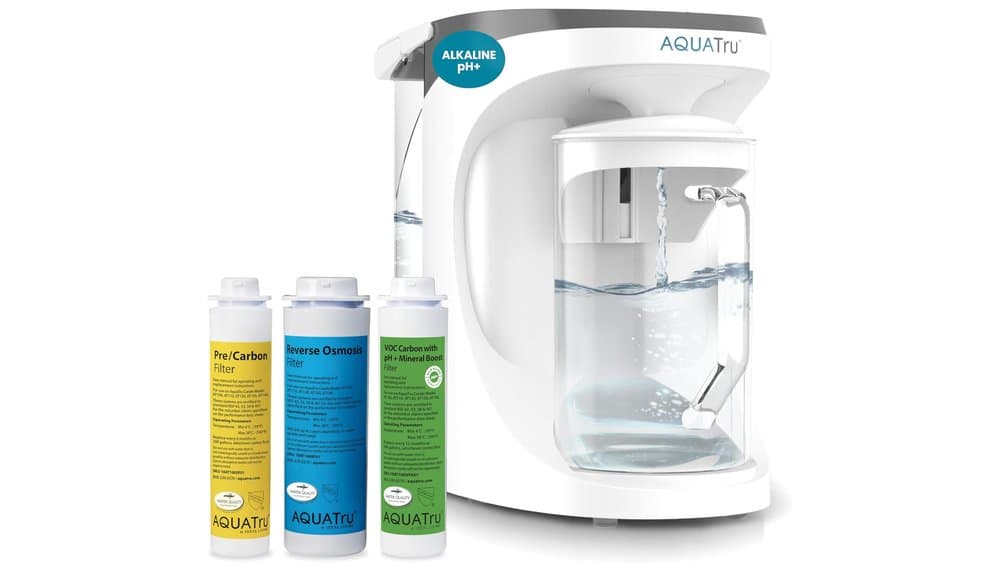
AquaTru Alkaline Mineral Water Purifier
Introduction: An All-in-One Water Purifier on Your Countertop
Faced with growing distrust of tap water quality, more and more households are turning to home purification solutions. In this landscape, reverse osmosis (RO) systems often represent the holy grail of filtration, promising water of exceptional purity. However, their traditional installation, often complex and requiring a plumbing connection, puts off many users. It is into this gap that the AquaTru Alkaline Mineral VOC Countertop Water Purifier steps.
This product presents itself as an innovative hybrid solution: it combines the power of certified reverse osmosis with the simplicity of a countertop appliance, requiring no installation whatsoever. It goes even further by integrating a final stage of remineralization and alkalization. But does this "3-in-1" promise hold up in daily life? What is the true cost of this purity? We analyze this purifier here from the angles of health, technical performance, and practical use for a family.
The Strengths of the AquaTru Alkaline Mineral VOC
The specifications and community feedback point to several decisive advantages.
Undeniable and certified filtration efficiency. This is its main selling point. The 4-stage reverse osmosis technology is capable of removing a wide range of contaminants. According to the certifications highlighted by the brand, the system is effective against heavy metals (lead, arsenic), PFAS ("forever chemicals"), chlorine, nitrates, pharmaceuticals, microplastics, and certain viruses and bacteria. For domestic use, this performance level is equivalent to the most advanced under-sink RO systems.
Absolute installation simplicity. This is a paradigm shift. You simply take it out of the box, plug it into an electrical outlet, and fill its tank with tap water. No plumbing connections, no drilling, no call to a plumber. This accessibility makes it ideal for renters or those who do not wish to modify their kitchen.
A glass storage carafe. Faced with questions about potentially released organic compounds from plastic, the use of a glass carafe to collect and store purified water is a real health plus and a choice appreciated by quality-conscious users.
Integrated mineral addition and alkalization. The final stage with the Alkaline Mineral VOC filter does more than just remove residual Volatile Organic Compounds (VOCs). It adds minerals like calcium, magnesium, and potassium, which improves the taste and "mouthfeel" of the water. It also raises the pH, producing so-called alkaline water, a function highly sought after by a segment of consumers.
The Weak Points and Compromises to Know
The technology and design of the AquaTru also involve compromises that buyers must evaluate.
Slow flow rate and high waste water ratio. This is the physical trade-off of non-plumbed reverse osmosis. The flow rate is approximately 0.8 to 1.2 liters per hour depending on input water pressure and quality. Therefore, you must anticipate your needs. Furthermore, RO technology generates waste water (to flush away contaminant concentrates). Here, the waste water ratio is approximately 1:4 (1 liter of purified water for 4 liters of waste water). This "waste" is typical of small RO systems and is a significant ecological and economic point.
Noticeable size and noise. The appliance, with its tank and carafe, occupies a considerable amount of counter space. Additionally, according to user feedback, the small pump is audible during the filtration cycle (about 15-20 minutes per liter), which can be bothersome in an open living space like an open-plan kitchen.
A recurring cost for consumables. Performance comes at a price. The filters have a limited lifespan:
- Pre/Carbon Filter: To be replaced every 6 months.
- Reverse Osmosis (RO) Filter: To be replaced every 2 years (or sooner in very hard water).
- Alkaline Mineral VOC Filter: To be replaced every 12 to 18 months. Therefore, you must budget for this recurring annual cost to maintain the system's effectiveness.
Fragility and design constraints. Several reviews report the fragility of the glass carafe, which is susceptible to breaking if dropped. The plastic tank (although BPA-free) can scratch easily during cleaning. Finally, the system is designed to operate only with the original carafe correctly positioned, which limits flexibility.
Detailed Analysis: Technologies, Health, and Family Use
Reverse Osmosis Unleashed: How Does It Work?
Unlike under-sink systems that use line pressure, the AquaTru uses a small electric pump to force water through an extremely fine semi-permeable membrane. This membrane is the heart of the system and retains almost all molecules larger than that of water (H2O). The 4 announced stages are typically: 1) a sediment pre-filter, 2) an activated carbon filter for chemicals and chlorine, 3) the RO membrane itself, and 4) the alkaline/mineral post-treatment filter. This combination is technically very robust.
See today's priceWater Quality and Health: What Is Removed, What Is Added?
The strength of RO is its broad-spectrum action. It is particularly effective on inorganic contaminants that other filters struggle to remove: fluoride, nitrates, arsenic, lead, hexavalent chromium, and perchlorates. Its ability to remove PFAS (PFOA/PFOS) is also a major asset against these persistent pollutants.
The final "Alkaline Mineral VOC" filter is a stage of comfort and personalization. Reverse osmosis produces very pure water, but also demineralized and slightly acidic water. For some people, this water can taste "flat." Re-mineralization improves taste and provides trace elements. Increasing the pH (generally between 8 and 9) meets a popular demand for alkaline water, even though the specific health benefits of this alkalinity are still debated in the scientific community.
Ease of Use and Daily Maintenance
The installation is trivial, that's undeniable. For a family, the slow operating cycle means you have to think about starting filtration in advance to fill a carafe or water bottle. The ritual consists of: 1) filling the tank with tap water, 2) waiting for the cycle to finish, 3) emptying the waste water from the tank (an internal compartment holds it), 4) retrieving the carafe of purified water. This manual process, although simple, must be compared to the permanent availability of an under-sink system with a pressurized tank.
Technology Comparison
- Vs. Activated Carbon (Brita, Berkey): The AquaTru is radically more effective on inorganic contaminants (metals, fluoride, nitrates) and very small molecules like PFAS. A standard pitcher only improves taste and removes some chlorine.
- Vs. Under-Sink Reverse Osmosis: Equivalent performance, but the AquaTru avoids installation and is portable. In return, it is slower, noisier, requires manual management of waste water, and its long-term cost (filters) may be higher.
- Vs. Water Softener/Ion Exchange: These are different functions. A softener removes limescale (calcium/magnesium) to protect pipes but does not purify water of other contaminants. The AquaTru filters many more things but does not specifically treat hardness, which can prematurely foul its membrane.
Summary Technical Sheet
| Feature | Detail for the AquaTru Alkaline Mineral VOC |
|---|---|
| Primary Technology | 4-Stage Reverse Osmosis (RO) with electric pump |
| Installation | None. Countertop, electrical plug-in only. |
| Target Contaminants | Heavy metals (Pb, As), PFAS, Fluoride, Nitrates, Chlorine, Pharmaceuticals, Microplastics, VOCs, certain pathogens. |
| Complementary Filtration | Re-mineralization (Ca, Mg, K) and pH increase (alkaline water) |
| Approximate Flow Rate | ~1 Liter / hour (variable) |
| Waste Water Ratio | Approximately 1:4 (1L purified / 4L wasted) |
| Consumables | - Pre-filter/Carbon: 6 months <br> - RO Membrane: 2 years <br> - Alkaline Mineral Filter: 12-18 months |
| Carafe Capacity | 1.8 liters (glass) |
| Noise | Perceptible during the filtration cycle |
| Size | Compact appliance but occupies dedicated counter space |
What Users Say: A Synthesis of Feedback
Analyzing hundreds of available reviews reveals very clear trends, both positive and negative.
Praise is predominant and focuses on the essentials: An overwhelming majority of users are extremely satisfied with the water quality and taste. Phrases like "the water has never tasted so good," "I feel confident drinking my water," or "I notice a real difference" come up repeatedly. The ease of installation ("ready in 5 minutes") is also a recurring point of satisfaction. Many appreciate the transparency of the glass carafe and not storing water in plastic.
Criticisms, less frequent but recurring, point to design flaws and surprises:
- Carafe fragility: Many accounts report accidental breakage (dropping, breaking in the dishwasher). Its replacement is described as costly and sometimes difficult to obtain.
- Imperfect waste water management: Several users note that the system can sometimes re-filter waste water if the carafe is removed and then replaced during a cycle, which is counterproductive. The lack of an on/off switch is regretted.
- Material durability: The plastic tank scratches and dulls easily when washed, giving an impression of poor finish.
- Customer service and maintenance: Some reports mention difficulties with customer service or maintenance instructions (descaling) considered vague or excessive, potentially requiring premature replacement of the expensive RO filter.
Overall, the high overall rating (4.3/5) confirms that for most buyers, the crucial filtration performance largely overshadows the ergonomic flaws.
Conclusion: Who Is This AquaTru For?
The AquaTru Alkaline Mineral VOC Countertop Water Purifier is not a flawless miracle product, but it fulfills a specific mission impressively.
We recommend it without reservation if your absolute priority is to obtain the purest possible water directly at home, without the slightest complex installation. It is the ideal solution for renters, small spaces, or those who want professional-level purification without undertaking renovations. Its effectiveness against PFAS and heavy metals makes it a particularly wise choice in areas with problematic water quality.
On the other hand, you should think twice if you are very sensitive to noise, if you have significant and immediate water needs (large family), if manual management of waste water puts you off, or if you are concerned about the fragility of the glass carafe.
It is an initial and recurring investment for optimal water quality. For those who accept its compromises – slowness, noise, and maintenance – it represents one of the simplest and most effective ways to take back control over what is in your glass of water, every day.
100% free and independent — All our articles are written independently, without any sponsorship. We may earn a commission on purchases made through our links, at no extra cost to you.
Articles you might like
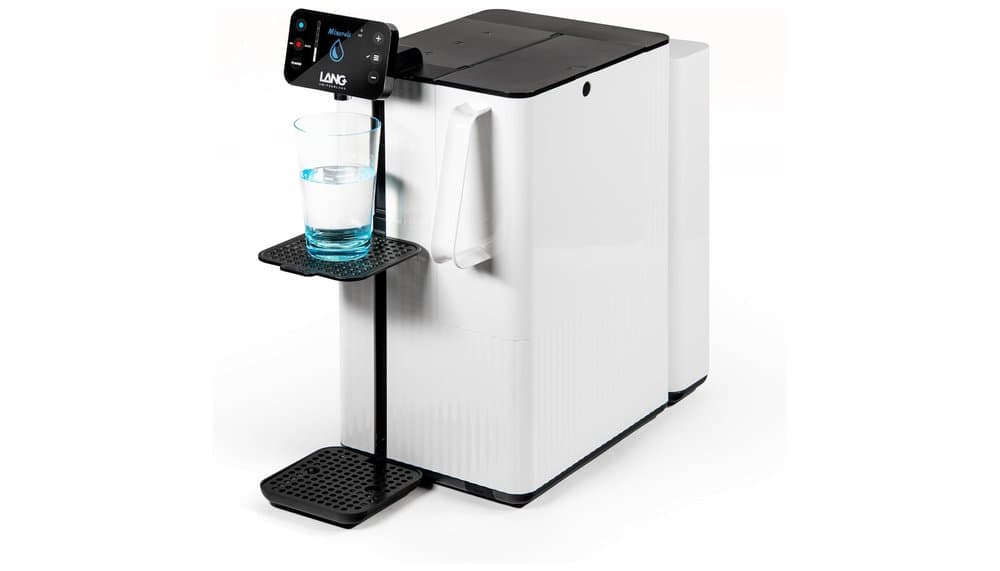
LANG TheWell2 Purifier Review: Mineralized Water Test
A premium water purifier & mineralizer. Does its all-in-one convenience justify the cost? Our analysis examines its promise vs. practicality.

Measury Aquarium 190 L-Tag Osmosis Water Purifier Review
Pure home & aquarium water: See how the Measury Aquarium 190 L-Tag RO system performs on purity, running costs, and real-world effectiveness.

Hominas Hydrogen Stick Mineral Purifier Filter Review
Portable water filter stick claims to create antioxidant-rich alkaline hydrogen water. Analysis examines if it works or is just another health fad.
Guides you might like
Alkaline Water Ionizer Buying Guide
Discover how alkaline water ionizers work and learn key tips to choose the right one for your home and health. Essential buying guide.
Buying Guide: Best Hydrogen Water Generator
Guide to hydrogen water generators: cutting through the hype to help you make an informed purchase decision for your health and budget.
Choosing Your Home Water Filter
Unlock clean, tasty water at home. Find the right water filter to tackle chlorine, pollutants, and limescale for better health and peace of mind.