Measury Aquarium 190 L-Tag Osmosis Water Purifier Review

Introduction
In the world of domestic water purification, reverse osmosis systems have established themselves as the benchmark for obtaining water of near-absolute purity. The Measury Aquarium 190 L-Tag Osmosis Water Purifier is specifically aimed at aquarium enthusiasts, but its use naturally extends to any family looking for quality, demineralized drinking water. Our analysis focuses on what it really delivers: how effective is it against pollutants, what is its real operating cost, and how does it perform against daily needs? By dissecting its specifications, user feedback, and available technical analyses, we establish a clear assessment of its performance and its place compared to other filtration technologies.
Key Strengths
What immediately stands out from feedback is that the Measury Aquarium 190 L-Tag has assets that justify its adoption.
- Powerful and versatile purification: On paper, the specifications announce the elimination of a wide spectrum of contaminants: salts, heavy metals, nitrates, phosphates, pesticides, viruses, and bacteria. For users, particularly aquarium enthusiasts, the result is tangible with a drastic drop in TDS (Total Dissolved Solids) measurements, often from several hundred ppm to less than 20 ppm.
- Suitable theoretical flow rate: With an advertised capacity of 190 liters per day (approximately 8 L/h), this flow rate is deemed sufficient for the needs of a medium-sized aquarium or for producing drinking water for a family.
- Simplified installation: The product is designed to be portable and detachable. Users confirm that setup is accessible, with direct connections to the water supply tap, not necessarily requiring a plumber's intervention. The multilingual manual and the complete delivery of all necessary accessories are praised points.
- Attractive initial value for money: For a three-stage reverse osmosis filtration system, its positioning is perceived as competitive by the community, offering a serious entry point into reverse osmosis purification.
Weaknesses
Analysis of field feedback and forums reveals recurring weaknesses that temper enthusiasm and require adaptations.
- Flow rate and rejection ratio highly sensitive to pressure: This is the main point of divergence between theory and practice. The mains water pressure is the determining factor. Many users report actual flow rates well below 8 L/h, sometimes around 4 to 6 L/h, or even less with low pressure. The waste water (brine) rejection rate is high. Although the manufacturer announces a ratio of 1:4 to 1:4.5 (1 liter of pure water for 4 to 4.5 liters of waste), feedback indicates ratios exceeding 1:10 without adjustment. The community notes that it is often necessary to add a flow restrictor or an adjustment valve on the waste water outlet to manually reduce it, at the cost of increased monitoring.
- Quality of original accessories: A frequently cited flaw concerns the perceived fragility of the supplied fittings and tubing. Several users and experts advise preventatively replacing them with more robust components to avoid leak risks in the medium term.
- Final purity limited without additional option: The standard system achieves low TDS, but rarely 0 ppm. As indicated by the manufacturer's FAQ, a value of 5 ppm is presented as an optimal result. To obtain perfectly demineralized water (0 ppm), essential for some marine aquarium uses, an optional demineralizing resin cartridge must be added to the output, representing an additional cost.
- Consumables to monitor: The lifespan of the pre-filters (sediment, activated carbon) depends heavily on the quality of the input water. In regions with very hard or heavily charged water, feedback indicates they can wear out faster than standard recommendations, increasing the annual maintenance cost.
Detailed Analysis: Performance, Health, and Technologies
Effectiveness Against Contaminants
The Measury Aquarium 190 L-Tag uses a classic and effective combination of three technologies: mechanical filtration (sediment), chemical filtration (activated carbon), and reverse osmosis (membrane).
- Reverse Osmosis (Main Technology): It is the reverse osmosis membrane, with its pores of about 0.0001 micron, that ensures the removal of the vast majority of solutes. It is very effective against dissolved salts, nitrates, fluorides, heavy metals (lead, arsenic, mercury), pesticides, and herbicides. User analysis feedback confirms spectacular reductions in nitrates and hardness (GH/KH).
- Activated Carbon (Pre and Post-filtration): The activated carbon stages are crucial for removing chlorine, chloramines, volatile organic compounds (VOCs) and improving taste and odor. They also protect the chlorine-sensitive membrane.
- Limits and Supplements: The system is designed to remove viruses and bacteria through its pore size. Regarding PFAS (emerging pollutants) and microplastics, reverse osmosis is recognized as one of the most effective technologies available to individuals, although the manufacturer does not explicitly specify it. For limescale (calcium and magnesium), it is entirely removed, producing soft water. Reverse osmosis technology is clearly more comprehensive here than a simple ion exchange water softener (which does not remove nitrates or metals) or an activated carbon filter alone (ineffective against dissolved salts). It does not include UV sterilization, which is not necessary since the membrane blocks pathogens.
Flow Rate, Waste, and Installation
Our analysis confirms that the 190 L/day is a theoretical value obtained under ideal conditions (water pressure of 3-4 bars, water temperature at 25°C). In reality, the flow rate is often lower. The presence of a 450 CC flow restrictor (flow reducer) is designed to optimize pressure on the membrane but does not compensate for low inlet pressure. For users with insufficient pressure (below 2.5 bars), the community strongly recommends adding a booster pump to achieve nominal performance.
The rejection rate is the ecological and economic weak point of standard reverse osmosis. The advertised ratio of 1:4 to 1:4.5 is already significant (about 20% pure water produced). However, under sub-optimal conditions, this ratio can deteriorate. Experienced users manually adjust the waste line flow rate to optimize it, a manipulation that becomes almost essential according to feedback.
The installation is well-rated for its simplicity. The two supplied connections (standard faucet and 3/4" washing machine) offer flexibility. Its compact footprint allows installation under a sink or in a technical room. It is a basic "plug and play" system, which may require improvements (fittings, pump) depending on your network context.
Annual Cost of Consumables
This is a critical element for the long-term budget. The standard system includes pre-filter cartridges (sediment, carbon) and the reverse osmosis membrane.
- The pre-filters (sediment and carbon) must be replaced every 6 to 12 months, depending on input water quality and volume produced. Their unit cost is moderate.
- The reverse osmosis membrane has a typical lifespan of 2 to 4 years, provided the pre-filters are changed regularly to protect it. Based on trends observed in feedback, for regular domestic use, one must anticipate an average annual consumable cost that can represent a significant fraction of the system's initial price. The optional addition of a demineralizing resin cartridge (to achieve 0 TDS) constitutes an additional recurring expense, as this resin depletes quickly.
Technical Specifications
| Feature | Detail |
|---|---|
| Product Name | Measury Aquarium 190 L-Tag Osmosis Water Purifier |
| Purification Technology | 3-Stage Reverse Osmosis (Sediment Prefilter, Activated Carbon, RO Membrane) |
| Theoretical Daily Flow Rate | 190 liters (approx. 8 L/h under ideal conditions) |
| Announced Rejection Rate | 1:4 to 1:4.5 (1 liter of pure water for 4 to 4.5 liters of waste water) |
| Target Contaminants | Salts, Heavy Metals, Nitrates, Phosphates, Pesticides, Chloramines, Chlorine, Viruses, Bacteria |
| Included Connections | Adapter for standard faucet + 3/4" washing machine connection |
| Key Components | Manual flush valve, 450 CC flow restrictor |
| Installation Type | Portable, direct connection to faucet |
| Power Supply | Mains water pressure (no electricity) |
| Manual Languages | FR, EN, DE, IT, ES, NL |
What Users Say
The synthesis of hundreds of customer reviews and discussions on specialized forums paints a nuanced consensus.
Recurring positive points:
- Undeniable purification performance: The before/after TDS measurements are convincing. Users obtain very pure water, with TDS often between 5 and 20 ppm at the output, versus several hundred at the input. This is the main benefit and it is widely confirmed.
- Ease of installation and handling: The majority find the setup simple and quick. The illustrated, multilingual manual is appreciated.
- Satisfactory value for money for the use: For a limited budget, users feel they get the fundamental benefits of reverse osmosis: quality demineralized water for their aquarium or pleasant drinking water.
Negative points and warnings:
- Water pressure is key: This is the leitmotif of mixed feedback. Without sufficient pressure (min. 3 bars), performance drops drastically (low flow, excessive waste). Adding a booster pump is a frequent recommendation for those who want the promised performance.
- Water waste and necessary adjustments: The high rejection ratio is a concern. Many describe having to "tinker" with the system by adding an adjustment valve on the waste line to reduce waste and achieve an acceptable ratio (1:2 or 1:3).
- Quality of some components: Criticism points to the average quality of the tubing and quick-connect fittings, advising to check them regularly or replace them for greater reliability.
- Actual flow rate below expectations: Very few users actually reach 190L/24h. A production of 4 to 6 liters per hour is more frequently reported, which remains sufficient for non-urgent use but requires planning ahead.
Conclusion
The Measury Aquarium 190 L-Tag Osmosis Water Purifier is a reverse osmosis system that delivers on its fundamental promises: it produces remarkably pure water, rid of the majority of contaminants concerning for health and aquarium keeping. Its entry price and installation simplicity make it an attractive option for getting started with this technology.
However, our analysis reveals that it is not a perfect "turnkey" appliance. Its Achilles' heel is its strong dependence on your water network pressure. Without it, you will have to contend with a reduced flow rate and potentially significant water waste, requiring manual adjustments. Furthermore, the quality of some plumbing elements calls for increased vigilance.
Our verdict: It is a good choice for a hands-on user aware of the constraints, ready to potentially optimize the system (adjusting waste, checking fittings) and having adequate water pressure. For those seeking a "set and forget" solution with guaranteed performance regardless of conditions, an investment in a system incorporating an original booster pump and higher-end components might be more suitable in the long term. For the demanding aquarium enthusiast or the family wanting quality purified water, the Measury 190 L-Tag performs well on substance, but requires a bit of monitoring on form.
100% free and independent — All our articles are written independently, without any sponsorship. We may earn a commission on purchases made through our links, at no extra cost to you.
Articles you might like
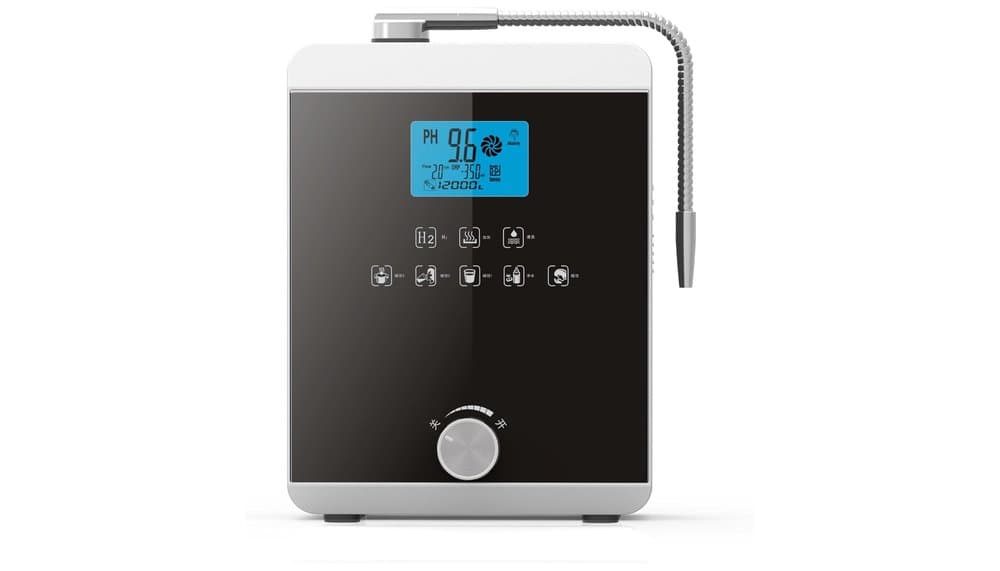
Alkaline Water Ionizer 11-Plate Electrode Test
Analyzes the 11-plate alkaline water ionizer: Does it filter water effectively, alter its properties, and deliver promised health benefits for a family?
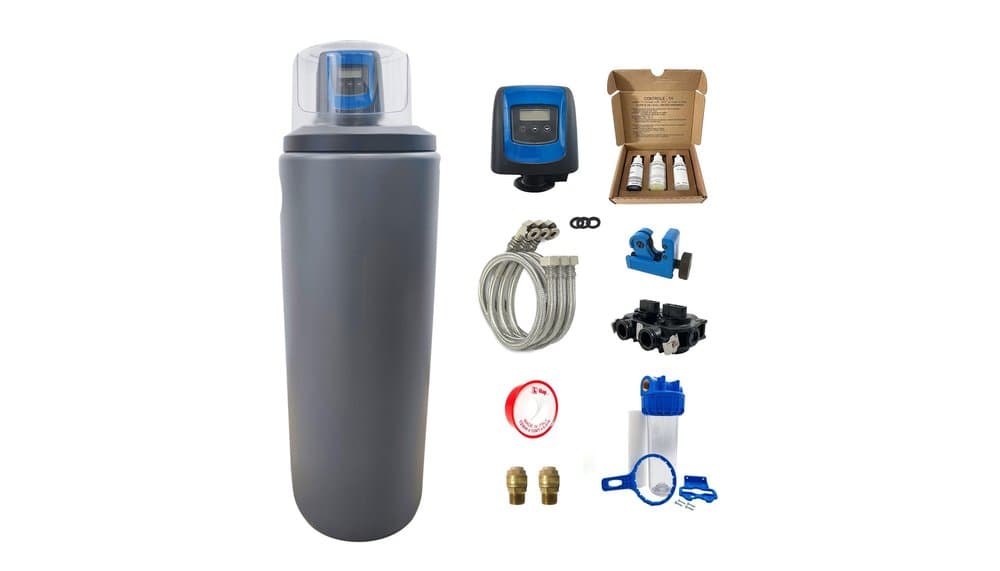
TOODO Fleck 5800 SXT Monobloc Water Softener Review
Volumetric TOODO Fleck 5800 SXT water softener eliminates limescale efficiently for families. A review of features & performance.
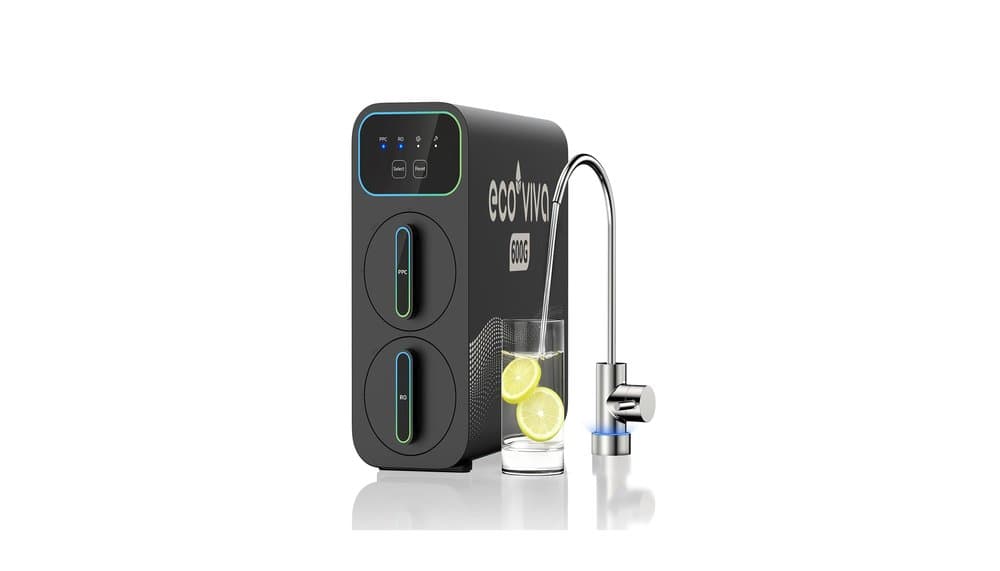
Ecoviva E6 Reverse Osmosis Water Filter Review
Compact, tankless Ecoviva E6 reverse osmosis system analyzed. We test its real-world purification performance, health benefits, and home integration.
Guides you might like
Alkaline Water Ionizer Buying Guide
Discover how alkaline water ionizers work and learn key tips to choose the right one for your home and health. Essential buying guide.
Buying Guide: Best Hydrogen Water Generator
Guide to hydrogen water generators: cutting through the hype to help you make an informed purchase decision for your health and budget.
Choosing Your Home Water Filter
Unlock clean, tasty water at home. Find the right water filter to tackle chlorine, pollutants, and limescale for better health and peace of mind.