AUTOUTLET Salinity Refractometer Review & Test

Introduction: The Measurement Tool, First Pillar of Healthy Water
On our site, we often talk about systems that purify water: those that remove chlorine, heavy metals, or nitrates. But even before purifying, one must know how to measure. For marine aquarium enthusiasts or breeders, water quality absolutely hinges on a fundamental parameter: salinity. An imbalance can be fatal for aquatic life. The AUTOUTLET Salinity Refractometer for Aquariums and Fisheries presents itself as the accessible measurement tool for any saltwater manager. It is not a filter, but an essential diagnostic instrument. We will analyze it from the angle that concerns us: its ability to provide reliable data to ensure a healthy and stable aquatic environment.
Key Strengths
- Measurement Versatility: The device offers two simultaneous reading scales: specific gravity (D 20/20) and salinity in parts per thousand (‰), covering the main needs of marine aquariums and fish farming.
- Complete and Practical Kit: It is generally delivered with all accessories necessary for its use and maintenance: a rigid protective case, a pipette, a calibration screwdriver, and a cleaning cloth. It is a ready-to-use product.
- Automatic Temperature Compensation (ATC): This integrated function adjusts the measurement based on the sample temperature, eliminating a major error factor for more reliable readings without manual calculation.
- Build and Value for Money: The community highlights its aluminum construction, making it lightweight and rust-resistant in a humid environment. Its affordable price makes it an attractive entry point compared to classic hydrometers, which are often less accurate.
Weak Points
- Limited Accuracy for Critical Applications: Web experts note that the algorithms of this type of generic refractometer are often calibrated for a pure sodium chloride solution, not for the complex composition of seawater. A deviation of up to 1.5 ppt is possible, which is problematic for a demanding reef aquarium.
- Delicate Calibration and Maintenance: The manual is often described as unclear. Regular calibration with a dedicated solution (and not RO water) is imperative, and the adjustment screw, sometimes made of plastic, can degrade if handled with too much force.
- Unsuitable for Low Concentrations: As confirmed by user feedback, the measurement scale (0-100‰) is not suitable for checking the salinity of a saltwater pool, where concentrations are much lower (around 3-5‰).
- Variability of Factory Calibration: Several sources indicate that factory calibration can be approximate. Verification and calibration upon first use are therefore necessary to ensure measurement reliability.
Detailed Analysis: A Monitoring Tool, Not Laboratory Precision
Technology and Relevance for Water Quality
Unlike the filtration technologies we usually analyze (reverse osmosis, activated carbon), a refractometer does not act on contaminants. It does not remove chlorine, heavy metals, or nitrates. Its role is purely analytical: it measures the concentration of dissolved salts in water by exploiting the principle of light refraction. It is a tool for monitoring and diagnosis.
In the domestic context we study, its place is crucial for anyone producing their own RO water (via a reverse osmosis system) and remineralizing it for a marine aquarium. It allows checking that the tank's salinity is stable, preventing osmotic stress fatal to fish and corals. It is also useful for checking water conductivity after a reverse osmosis system, although for this specific application, a dedicated conductivity meter is often more suitable.
Ease of Use and Integration into Daily Life
On paper, the AUTOUTLET Salinity Refractometer promises immediate setup. No plumber or complex assembly required: just unpack the kit and calibrate it. Its minimal footprint (20 x 9 x 6 cm) and case make it easy to store near the aquarium or water point.
The ease of daily use is confirmed by feedback: place a drop of water on the prism, look through the eyepiece, and read the value at the boundary between blue and white. The adjustable focus of the eyepiece is an asset for glasses wearers. However, this apparent simplicity masks a requirement: the rigor of calibration and cleaning. A poorly cleaned prism or a device calibrated with tap water will introduce systematic errors.
Value for Money and Cost of Ownership
The main argument of this product is its value for money for beginner or occasional use. There are no consumables to buy regularly like membranes or filter cartridges. The annual cost is therefore zero, aside from the potential purchase of a dedicated calibration solution (around 35 ppt), recommended by experts for optimal accuracy, which remains a low and lasting investment.
Compared to a floating hydrometer, which is often unreliable and hard to read, the refractometer represents a clear improvement. Compared to high-end digital models or those specific to seawater (like those from Red Sea or Hanna Instruments), its price is much lower, but its performance in terms of absolute accuracy and long-term reliability is also lower. It is a tool for learning and general monitoring, not a laboratory instrument.
Technical Specifications
| Feature | Detail |
|---|---|
| Specific Gravity Measurement Range | 1.000 to 1.070 SG (D 20/20) |
| Salinity Measurement Range | 0 to 100 ‰ (parts per thousand) |
| Accuracy (minimum scale) | Specific Gravity: 0.001 / Salinity: 1‰ |
| Temperature Compensation | Integrated ATC (Automatic Temperature Compensation) |
| Power Supply | None (mechanical optical instrument) |
| Main Material | Aluminum body |
| Included Accessories | Rigid case, pipette, calibration screwdriver, cleaning cloth |
| Dimensions | 20 x 9 x 6 cm |
| Weight | 240 grams |
| Manufacturer Warranty | 18 months |
What Users Say
Analyzing hundreds of customer reviews and feedback from specialized communities reveals a clear trend.
The recurring positive points revolve around immediate satisfaction for a modest price. Beginner users or those with non-critical needs (brackish water aquariums, fish farming ponds) find it "accurate," "easy to use," and "solid." The delivery with a case and all accessories is highly appreciated. The eyepiece focus adjustment is often cited as a major asset for comfortable reading.
The negative points and warnings are instructive and highlight the device's limits.
- Crucial and Problematic Calibration: Many users emphasize that meticulous calibration with an appropriate solution (and not tap water or RO water) is key. A "poorly made" manual and a fragile adjustment screw can make this step delicate.
- Unsuitable for Certain Applications: It is explicitly noted that it is not suitable for saltwater pools (concentration too low) and that its accuracy can be insufficient for advanced reef aquariums, where a difference of a few points can impact sensitive corals.
- Quality Variability: Some reports mention units delivered with faulty factory calibration or showing significant measurement differences with other reference devices, requiring a return or exchange.
Experts on aquarium forums summarize the general opinion well: it is a good entry-level and troubleshooting tool, perfect for validating general parameters, but it should not be considered an absolute reference for fragile and expensive marine ecosystems.
Conclusion: For Whom is This a Wise Purchase?
The analysis of the AUTOUTLET Salinity Refractometer is clear: it is not a purification product, but an essential control tool in the water quality management chain. Its evaluation must be based on its reliability in providing usable data.
For a beginner marine aquarist, a brackish water enthusiast, or a user in general fish farming needing to monitor salinity in large volumes, this refractometer represents excellent value for money. Its ease of use, versatility, and relative robustness make it a relevant purchase. It constitutes a significant upgrade from basic methods.
On the other hand, for the demanding reef aquarist who maintains sensitive corals and requires accuracy as close as possible to seawater reality, the technical limitations mentioned by experts are prohibitive. In this case, investing in a high-end refractometer specifically designed for seawater, or in a quality digital conductivity meter/temperature salinity meter, is justified.
In summary, the AUTOUTLET is the reliable and affordable companion for routine measurements and general monitoring. It perfectly fulfills this role provided that calibration and maintenance protocols are scrupulously followed. It embodies the principle that, in water management, an approximate measurement with a good tool is always better than no measurement at all.
100% free and independent — All our articles are written independently, without any sponsorship. We may earn a commission on purchases made through our links, at no extra cost to you.
Articles you might like
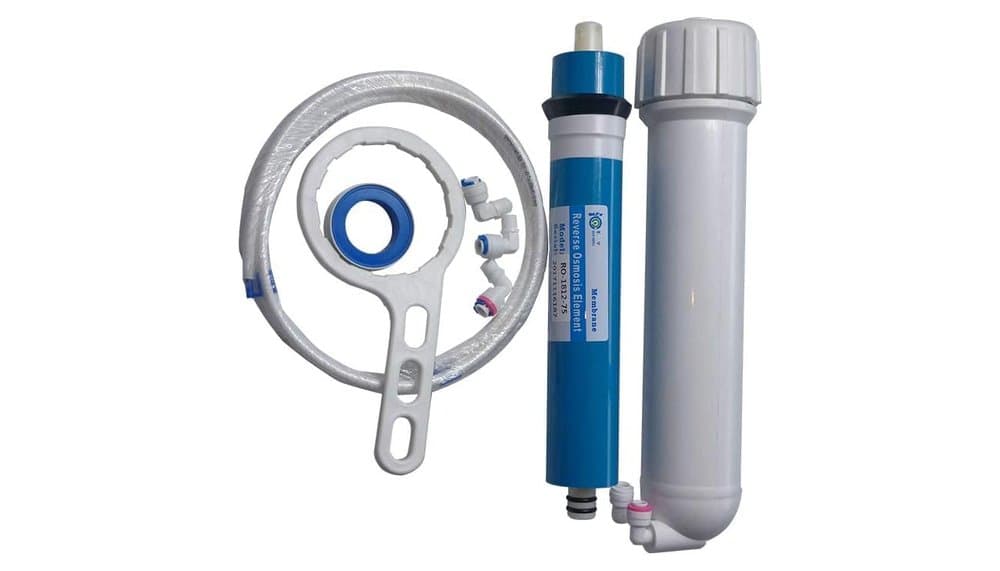
Huining RO Water Filter Cartridge Review & Test
Universal RO filter cartridge replacement. Maintains water purity and extends your system's life.
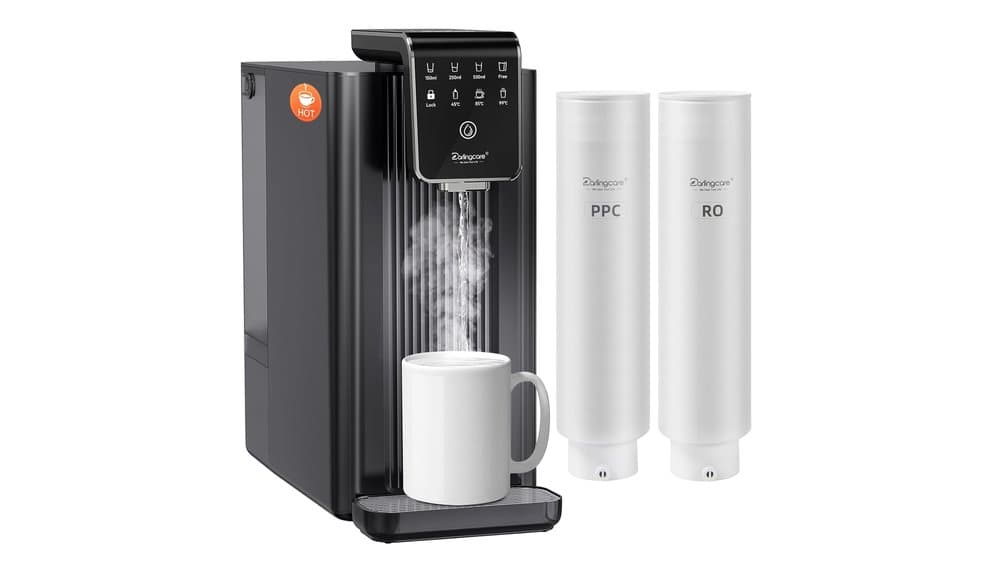
Darlingcare RO Hot Water Dispenser Countertop System Review
A countertop RO filter with instant hot water, analyzed for health, performance & daily use. Comprehensive review of the all-in-one Darlingcare system.
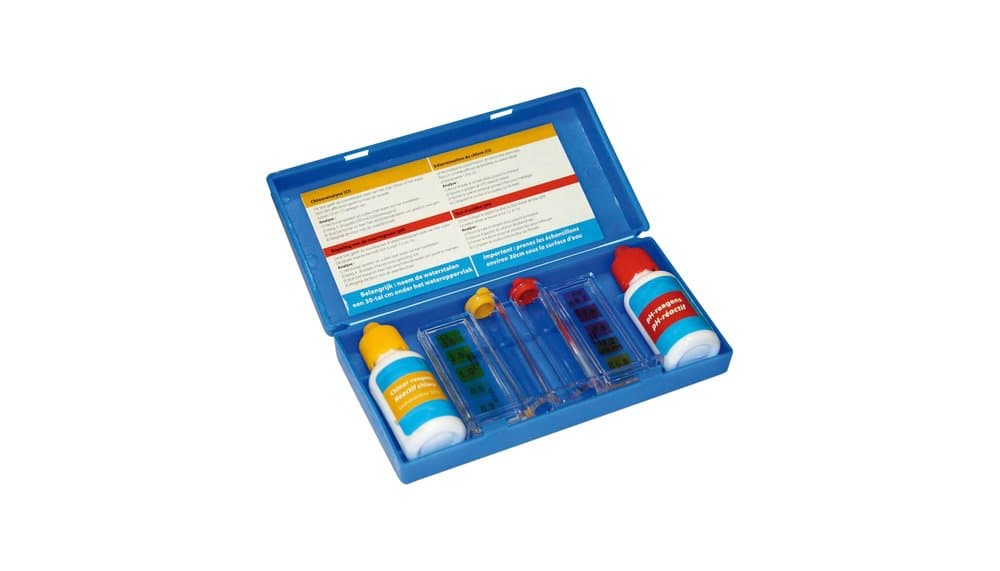
BSI Pool & Spa pH & Chlorine Tester Kit Review
Easy-to-use liquid drop test kit monitors essential pH and chlorine levels for balanced, safe, and clear swimming pool water.
Guides you might like
Alkaline Water Ionizer Buying Guide
Discover how alkaline water ionizers work and learn key tips to choose the right one for your home and health. Essential buying guide.
Buying Guide: Best Hydrogen Water Generator
Guide to hydrogen water generators: cutting through the hype to help you make an informed purchase decision for your health and budget.
Choosing Your Home Water Filter
Unlock clean, tasty water at home. Find the right water filter to tackle chlorine, pollutants, and limescale for better health and peace of mind.