Darlingcare RO Hot Water Dispenser Countertop System Review
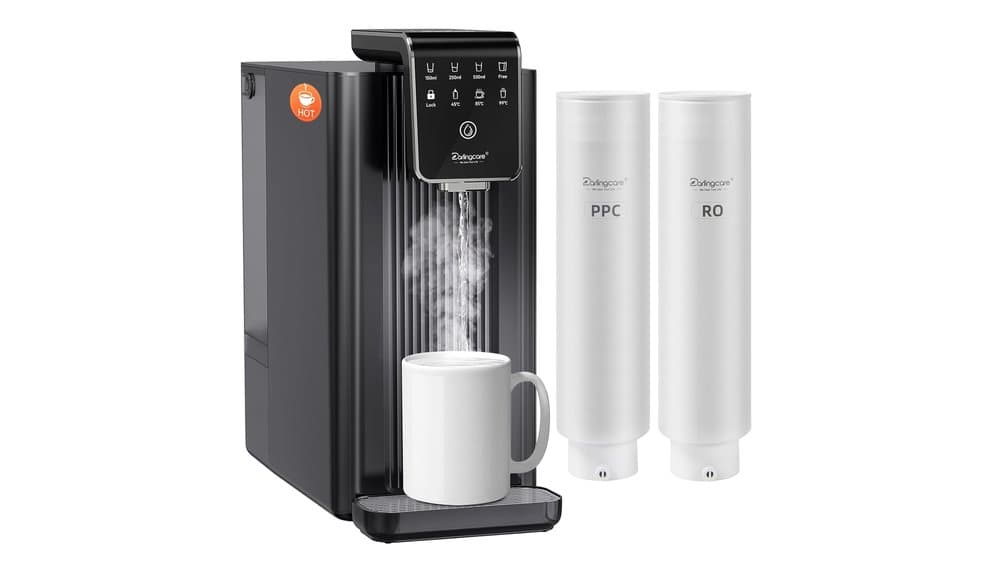
Comprehensive Analysis of the Darlingcare RO Hot Water Dispenser Countertop System
In a crowded market of filtration solutions, the Darlingcare RO Hot Water Dispenser Countertop System stands out with its all-in-one proposition. It combines reverse osmosis (RO) filtration, an instant hot water dispenser, and real-time monitoring, all in a countertop freestanding format. This article analyzes this product from the perspectives of health, technical performance, and daily use, cross-referencing its specifications with concrete feedback from the community and expert observations.
Key Strengths: The Practical All-in-One
This product bets on versatility and convenience, arguments that appeal to a wide range of users.
Comprehensive and Certified Filtration
On paper, the specifications announce a 6-stage filtration including a reverse osmosis membrane, UV treatment, and pre-filters. The manufacturer claims a reduction of over 1000 contaminants by 99.99%, with an accuracy of 0.0001 micron. This theoretically covers fine particles (microplastics), heavy metals, chlorine, nitrates, bacteria, and a large portion of mineral salts (calcium, magnesium) responsible for limescale. The mention of organic and inorganic contaminants suggests broad action, although effectiveness on complex pollutants like PFAS is not explicitly detailed and would require specific certification to be confirmed.
The Comfort of a Hot Water Dispenser
The heating function is a major argument. Users emphasize the significant time saved for preparing tea, coffee, or baby bottles. The setting at 45°C for baby bottles and 85°C or 99°C for hot drinks meets specific needs. According to feedback, this functionality effectively eliminates the need for a kettle and integrates perfectly into a morning or kitchen routine.
Extremely Simplified Installation
This is undoubtedly its clearest advantage: no plumbing is required. The community and testers confirm that installation boils down to placing the unit, filling the 4-liter tank, and plugging in the power cord. The advertised 3-second, tool-free cartridge replacement follows the same logic of user autonomy.
Weak Points: The Compromises of Compactness
Despite its ambitions, the system presents limitations inherent to its format and design.
Limited Flow Rate and Water Management
As a countertop reverse osmosis system, its flow rate is not comparable to an under-sink installation. Here one must rely on a storage tank that needs manual refilling. For a family, this means several refills per day. The advertised waste water ratio of 3:1 (1 liter of pure water for 3 liters of water consumed) is indeed more efficient than some low-end RO systems (which can go up to 5:1), but it remains a water-consuming system by nature. The rejected water (the "concentrate") must be disposed of, adding a minor logistical constraint.
Size and Heating Time
Testers point out that the appliance is bulky and heavy (nearly 9 kg when full). Its dimensions (approximately 44x18x38 cm) can be a burden on an already cluttered countertop. Furthermore, contrary to what the term "instant" might suggest, the community notes a necessary preheating time to reach high temperatures, which has disappointed some users expecting performance equivalent to a classic kettle.
Durability and After-Sales Service
This is the major shadow point that emerges from feedback. While some users are fully satisfied, several reports mention early failures (frozen screen, leaks) and especially an After-Sales Service deemed non-existent or very difficult to reach. This uncertainty weighs heavily on the long-term confidence/price ratio.
Detailed Analysis: Performance and Technologies
Real Filtration Efficiency
Let's compare the embedded technologies with their theoretical effectiveness:
- Reverse Osmosis (RO): This is the core of the system. The RO membrane, with its 0.0001 micron porosity, is very effective at removing almost all dissolved solids, heavy metals, nitrates, fluorides, and bacteria. It produces very low-mineral water.
- Activated Carbon (present in the PPC pre-filters): Excellent complement to RO. It removes chlorine, volatile organic compounds (VOCs), and improves taste and odor. It also protects the RO membrane.
- UV Sterilization: Adds a layer of security to inactivate viruses, bacteria, and other microorganisms that might survive or develop after filtration. This is a real sanitary plus.
- Ion Exchange: Not explicitly mentioned here. This system specifically targets hardness (limescale). In this product, the RO membrane handles this function, which is effective but generates the mentioned water waste.
Conclusion: The RO + Carbon + UV combination is a serious and very comprehensive configuration for domestic purification. It covers the majority of common risks and produces superior quality water.
Annual Cost and Maintenance
The consumables are advertised as having a long lifespan: 24 months for the RO filter (including the RO and UV membrane) and 12 months for the PPC pre-filter (activated carbon). On paper, this promises a relatively contained annual operating cost. However, this duration greatly depends on the quality and quantity of water filtered. It is crucial for the user to check the availability and price of these replacement cartridges (reference "Darlingcare SJ-100R-01 filter") before purchase, to evaluate the total cost over several years.
Target Audience and Usage
This product finds its ideal audience among:
- Tenants or those who cannot/will not drill their countertop for an under-sink installation.
- Small households or families with a moderate need for pure water (necessity to refill the tank).
- Hot beverage enthusiasts (tea, coffee) who value the precise temperature function. It is less suited for large families with high water needs for cooking or for those with very limited counter space.
Key Technical Specifications
| Criterion | Darlingcare Specification |
|---|---|
| Filtration Technology | 6-Stage Reverse Osmosis (Prefilters, 0.0001µ RO Membrane, UV Sterilization) |
| Targeted Contaminants | Heavy Metals, Chlorine, Limescale, Nitrates, Bacteria, Viruses, Microplastics, Organic Matter |
| Waste Water Ratio (Pure/Drain) | 3:1 (More economical than low-end standards) |
| Flow Rate / Capacity | 4L feed tank for manual refilling. Variable dispensing flow. |
| Heating Function | Yes. Adjustable temperatures: 45°C, 85°C, 99°C + Room Temperature. |
| Installation | Freestanding on countertop. No plumbing. Electrical connection only. |
| Monitoring | Touch screen displaying real-time TDS and remaining filter life. |
| Filter Lifespan | RO Filter (RO+UV): 24 months. PPC Pre-filter: 12 months. |
| Dimensions (LxWxH) | Approximately 43.7 x 18.2 x 37.5 cm |
| Safety | Child lock for hot water functions. |
What Users Say: A Mixed Experience
The synthesis of customer reviews and expert feedback paints a mixed picture.
The recurrent praise focuses on:
- Total convenience: Having pure, hot, or cold water at the touch of a button is highly praised. The baby bottle and tea functions are particularly appreciated.
- Installation simplicity: "Plug and Play" is a term that often comes up. No technical skills are required.
- Taste improvement: The majority of satisfied users note water with a "pure, neutral, and pleasant taste", without a chlorine aftertaste.
- Design and flexibility: The 180° rotatable spout and adjustable screen are seen as practical assets for adapting to different kitchen layouts.
The criticisms and reported problems are equally clear:
- Reliability and Faulty SAV: This is the main sore point. Several buyers report failures within a few months (leaks, frozen screen) and a total impossibility to obtain after-sales service or spare parts. This trend significantly increases the perceived risk.
- Initial Quality Issues: Some received units with defects: leaks from first use, faulty TDS sensors prematurely signaling filter replacement, or a persistent plastic taste despite rinse cycles.
- Unmet Heating Expectations: The "instant hot water" mention is sometimes misinterpreted. There is indeed a heating delay, which can be disappointing.
- Water Consumption: The need to empty the waste tank and frequently refill the reservoir is seen as a minor, but real, constraint.
Conclusion: A Practical Solution, but with Durability Uncertainty
The Darlingcare RO Hot Water Dispenser Countertop System is a technically solid proposition. Its complete RO/UV filtration is effective at producing high sanitary quality water, and its all-in-one concept meets a real need for modern convenience. The simple installation and intelligent heating functions make it an appealing product on paper.
However, our analysis must integrate field feedback. The main barrier to purchase is not related to performance, but to reliability and customer service. The frequency of reports of early failures coupled with absent SAV creates a significant risk for the consumer. This places the product in a "lottery" category: you might get a unit that works perfectly for years, or one that leaves you stranded with no recourse.
Our verdict: This system is an excellent secondary or primary solution for a small, tech-savvy, non-DIY household, provided it is purchased with a solid seller's warranty and the initial rinse procedure is carefully followed. For a large family or for those primarily seeking long-term peace of mind and durability, caution is advised, and it may be wise to consider brands with a more established service network and reputation for reliability, even with equivalent technology.
100% free and independent — All our articles are written independently, without any sponsorship. We may earn a commission on purchases made through our links, at no extra cost to you.
Articles you might like
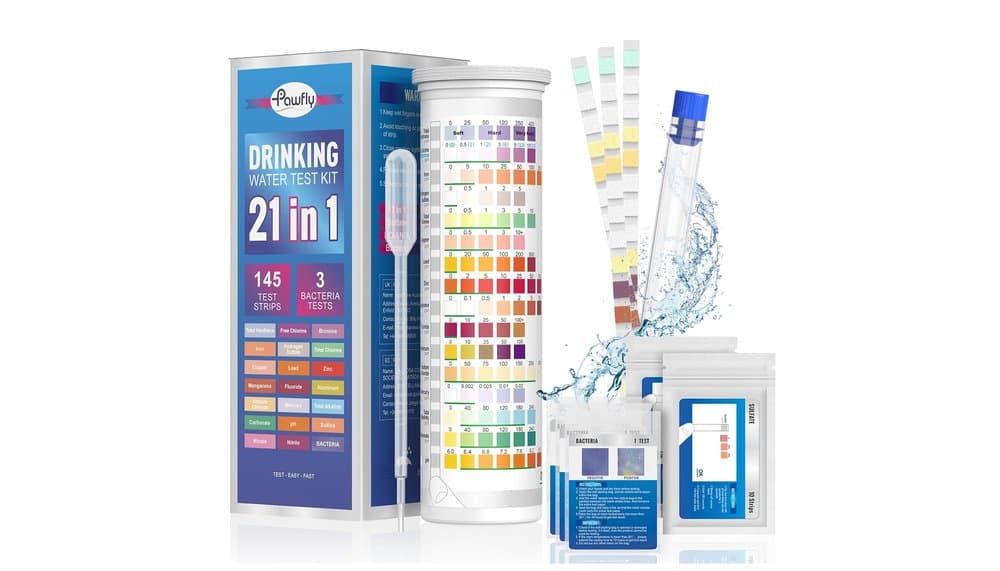
Pawfly 21 in 1 Drinking Water Test Kit Review
Pawfly test kit reviews a 21-in-1 water test strip, analyzing accuracy & value for home tap, well, or aquarium water tests. Get key insights before buying.
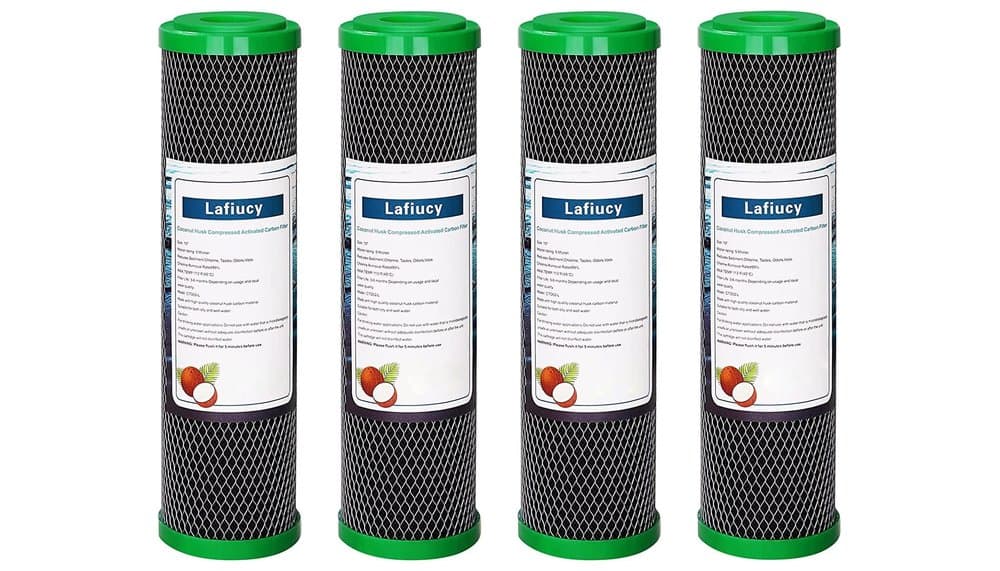
Lafiucy 10 Inch Coconut Carbon Filter Review
Review of the affordable Lafiucy 5 Microns 10-inch activated carbon water filter cartridge, analyzing specs & user feedback for performance.
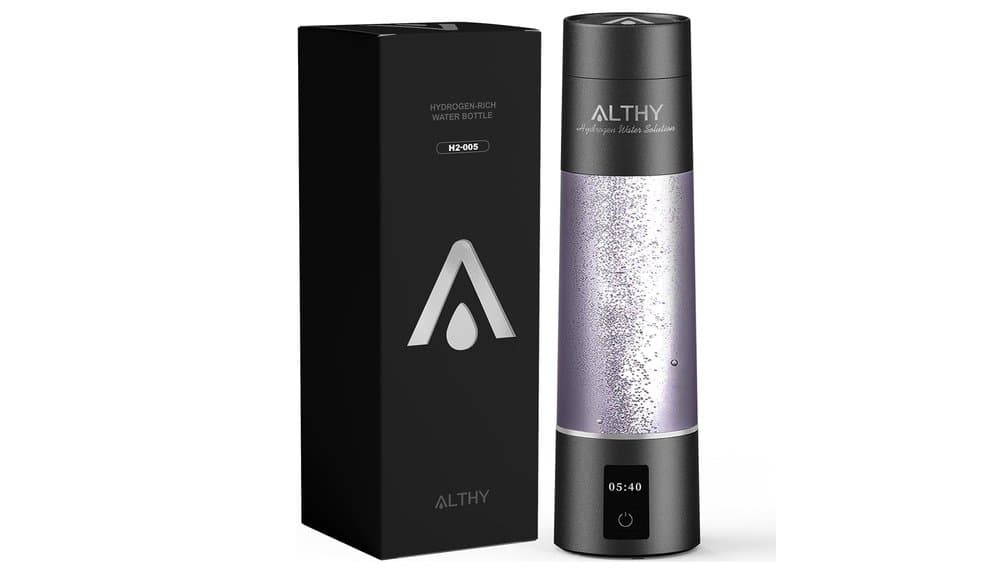
ALTHY Performance Hydrogen Water Bottle Review
Transform water into antioxidant-rich hydrogen water anywhere with the ALTHY portable bottle. A powerful, on-the-go wellness innovation.
Guides you might like
Alkaline Water Ionizer Buying Guide
Discover how alkaline water ionizers work and learn key tips to choose the right one for your home and health. Essential buying guide.
Buying Guide: Best Hydrogen Water Generator
Guide to hydrogen water generators: cutting through the hype to help you make an informed purchase decision for your health and budget.
Choosing Your Home Water Filter
Unlock clean, tasty water at home. Find the right water filter to tackle chlorine, pollutants, and limescale for better health and peace of mind.