BRITA Blue Glass Filter Jug & MAXTRA PRO Review

Introduction
In the world of domestic water filtration, the filter jug remains the most accessible entry-level solution. It targets those seeking an improvement in taste and a reduction of the main inconveniences of tap water, without committing to a complex installation. The BRITA Blue Glass Filter Jug (2.5L) with MAXTRA PRO Water Filters positions itself as a premium version of this concept, replacing the traditional plastic body with glass. But beyond aesthetics, what interests us here is its real effectiveness on water quality for daily health. Does such a jug constitute sufficient protection, and for which contaminants? We analyze this product exhaustively by cross-referencing its technical specifications with community feedback and expert opinions.
Strengths
- Premium and hygienic material: The borosilicate glass jug is appreciated for its chemical inertness. It does not alter the water's taste, unlike some plastics that can, over time, leave an odor or an aftertaste. This material is also perceived as more durable and more aesthetically pleasing.
- Smart filter change indicator (BRITA Smart Light): This is a practical feature that removes the need to count days or liters. The LED indicator triggers when serving and changes color (green, yellow, red) to signal the filter's wear status, helping to maintain optimal filtration efficiency.
- Proven filtration and noticeable taste improvement: The MAXTRA PRO filtration system is recognized for effectively reducing agents affecting taste and odor, primarily chlorine and limescale (hardness). The difference is often immediately noticeable to users.
- Practical and environmentally friendly: The design includes a generous 2.5-liter capacity, a flip-top lid for easy filling, and the glass body is dishwasher safe (up to 60°C). Brita highlights the use of 60% recycled glass and 50% bio-based plastic for the cartridges.
Weaknesses
- Inherent fragility of the material: The main point of attention is the fragility of the glass. Despite its thermal resistance, it remains sensitive to shocks, especially against a ceramic sink. Its handling requires more care than a plastic model.
- Filtration capacities limited by the technology: The technology used (activated carbon and ion exchanger) has clear limits. It does not filter certain contaminants such as nitrates, bacteria, viruses, or PFAS exhaustively (see detailed analysis below).
- Recurring cost of consumables: The initial investment is just the tip of the iceberg. One must plan for the monthly renewal of MAXTRA PRO cartridges (every 4 weeks or 150 liters), which represents an annual cost to be included in the budget.
- Bulkiness and weight: Its round shape and height (27.7 cm) can pose problems for storage in some refrigerators, especially under a shelf. Once full, it is also heavier than a plastic jug of equivalent capacity.
Detailed Analysis: Technology, Health, and Comparisons
Real effectiveness on contaminants: what does the MAXTRA PRO really filter?
It is crucial to understand what this jug can and cannot do for your water. The core technology of the MAXTRA PRO filter combines several media:
- Activated carbon: This is the main element for organoleptic improvement. It effectively adsorbs chlorine, volatile organic compounds, some pesticides and herbicides, as well as medicinal residues that affect taste and odor.
- Ion exchange resin: It is responsible for capturing calcium and magnesium ions responsible for hardness (limescale). This partially softens the water and reduces scale.
- Ultra-fine mesh: It retains suspended particles (≥ 30 µm), such as rust or sediment.
On paper, the specs announce a reduction of heavy metals like lead and copper. This action is generally performed by the activated carbon or specific additives in the resin. However, the performance against PFAS (forever chemicals) needs strong nuance. Manufacturer information mentions a reduction for substances such as PFOS/PFOA, tested according to specific standards. This indicates a targeted action on certain compounds within this vast family, but not a general and guaranteed elimination of all PFAS.
In summary, this jug is very effective for:
- Improving taste and odor (elimination of chlorine).
- Significantly reducing limescale content (partial softening).
- Capturing some organic impurities (pesticides) and particulate matter.
- Reducing some heavy metals like lead.
It is not designed for:
- Eliminating nitrates (ineffective technology).
- Eliminating very small microplastics (its 30 µm mesh is too wide for nanoplastics).
- Destroying bacteria, viruses, or parasites (no sterilization).
- Guaranteeing complete filtration of all PFAS.
- Functioning with water that was not potable to begin with.
Comparison of filtration technologies
To properly situate this product, let's compare its technology to other common domestic systems.
| Technology | Principle | Effectiveness against | Weaknesses | Cost & Complexity |
|---|---|---|---|---|
| Activated Carbon + Resin (BRITA) | Adsorption & ion exchange | Chlorine, Limescale (partial), Tastes/Odors, Lead/Copper, some pesticides | Does not filter nitrates, fluoride, microbes. Limited lifespan. | Low initial cost. Moderate annual cartridge cost. Zero installation. |
| Reverse Osmosis (RO) | Semi-permeable membrane under pressure | Almost all contaminants: metals, nitrates, fluoride, PFAS, bacteria, viruses, salts. | Significant water waste (3-5L for 1L filtered). Slow flow rate. Also removes beneficial minerals. | High initial cost. Under-sink installation often needed. Annual cost for membranes/filters. |
| Ultraviolet (UV) | Germicidal radiation | Bacteria, viruses, parasites only. | Does not improve taste, does not remove chemical contaminants. Must be coupled with a pre-filter. | Moderate cost. Electricity consumption. Simple maintenance (lamp change). |
| Ion Exchange | Ion replacement | Total softening (limescale), nitrates (with specific resins). | Does not eliminate bacteria or chemicals. Saltwater discharge during regeneration. | High cost for whole-house softener. Specific maintenance. |
Our conclusion: The BRITA jug is a comfort and light prevention solution. It is ideal for improving tap water that is already potable and safe, but whose taste (chlorine) or hardness (limescale) are bothersome. It is not a substitute for a reverse osmosis system if your water contains concerning levels of nitrates, fluoride, or if you seek maximum purity.
Ease of use and maintenance
This is where this model excels. Installation is immediate: simply rinse the filter under water, insert it, and fill the jug. No plumber is needed. Changing the filter is simple and guided by the LED indicator. The announced filtration flow rate is about 10 liters per hour, or just under 10 minutes to filter the full capacity. Users confirm that filtration is fast, though slightly slower during the first use of a new filter.
The annual cost of consumables depends on your consumption. With a cartridge lifespan of 4 weeks or 150 liters, a family of 4 people consuming 2 liters of filtered water per person per day (i.e., ~8L/day) will need to change the filter approximately every 3 weeks. This represents 16 to 18 filters per year. It is therefore essential to calculate this recurring cost to assess the true value for money in the long term.
Technical Specifications
| Characteristic | Detail |
|---|---|
| Model | BRITA Blue Glass Filter Jug (2.5L) with MAXTRA PRO |
| Jug material | Borosilicate glass (60% recycled) |
| Total capacity | 2.5 liters (~1.5L of filtered water available immediately) |
| Filtration technology | MAXTRA PRO "All-in-1" cartridge (Activated carbon + Ion exchange resin) |
| Reduced contaminants | Chlorine, limescale (hardness), lead, copper, some pesticides and herbicides, substances affecting taste. Targeted reduction of certain PFAS (PFOS/PFOA). |
| Filtration flow rate | ~10 liters/hour |
| Filter lifespan | 4 weeks or 150 liters (whichever comes first) |
| Replacement indicator | BRITA Smart Light (color-changing LED) |
| Maintenance | Jug dishwasher safe (60°C). Lid and seal to be washed by hand. |
| Installation required | None. Countertop use. |
| Dimensions (L x W x H) | 19.3 x 13.8 x 27.7 cm |
What Users and Experts Say
An analysis of thousands of customer reviews and available expert feedback online reveals very clear trends.
The recurring positive points are:
- Noticeable taste improvement: The vast majority of users note a clear difference: the water is "less hard", "less chlorinated", "softer" and "pleasant to drink". This is the most frequently cited and appreciated benefit.
- Design and material: The aesthetic aspect and the feeling of quality brought by the glass are highly praised. Many mention the pleasure of using an object that "doesn't feel like plastic" in their kitchen.
- Practicality of the indicator: The BRITA Smart Light is consistently praised as a useful innovation that simplifies life and avoids filtering with a worn-out cartridge.
- Overall satisfaction: The average rating of 4.5/5 from thousands of reviews indicates very high user satisfaction for this use (taste improvement and comfort).
The points of caution or negatives raised are:
- Fragility: This is the most cited negative point. Several reports mention cases of breakage at the bottom of the jug following a shock, even a minor one, against the sink. The community notes that this requires more delicate handling.
- Refrigerator storage problem: Its height (almost 28 cm) is a hindrance for high placement in many refrigerators. The height under the shelf needs to be checked.
- Expectations regarding filtration: Some knowledgeable users remind, as we have done in the analysis, that this filtration has its limits and does not address all water quality problems (e.g., nitrates). Some reviewers point out that promises regarding PFAS or heavy metals are difficult to verify without laboratory analysis.
Conclusion
The BRITA Blue Glass Filter Jug (2.5L) with MAXTRA PRO Water Filters is much more than a simple jug. It is an everyday object that successfully combines a refined design and proven effectiveness on the aspects that most concern households: chlorine taste and the presence of limescale. Its smart indicator and glass construction make it a premium product in the category of filter jugs.
Who is it the ideal solution for? For a family or household whose tap water is already compliant with potability standards, but who wishes to significantly improve its taste and softness, while reducing the use of plastic bottles. It is a perfect answer to the need for comfort and "good daily water", without installation.
Its limitations must be understood: It is not a universal water purifier. Faced with specific contaminants like nitrates, a wide variety of PFAS, or bacteriological problems, more advanced technologies (reverse osmosis, UV) are necessary. Its cost of use depends on the frequency of changing the MAXTRA PRO cartridges.
Ultimately, if your priority is to obtain pleasant-tasting water, less hard for your appliances, in a healthy and aesthetic container, this BRITA glass jug is a very relevant and justified choice. It perfectly fulfills its primary mission with a touch of elegance, provided you accept its recurring cost and handle it with the caution due to its material.
100% free and independent — All our articles are written independently, without any sponsorship. We may earn a commission on purchases made through our links, at no extra cost to you.
Articles you might like
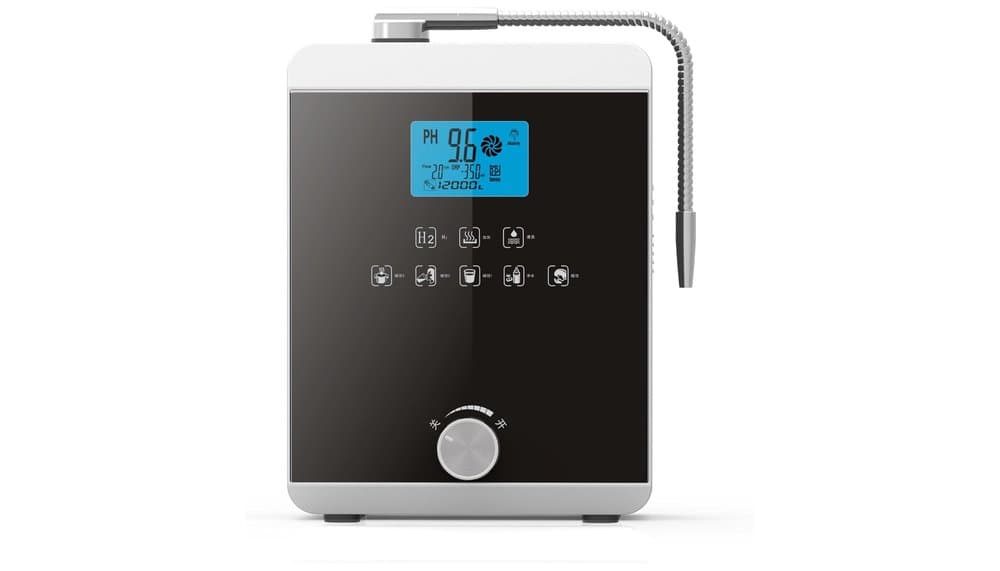
Alkaline Water Ionizer 11-Plate Electrode Test
Analyzes the 11-plate alkaline water ionizer: Does it filter water effectively, alter its properties, and deliver promised health benefits for a family?
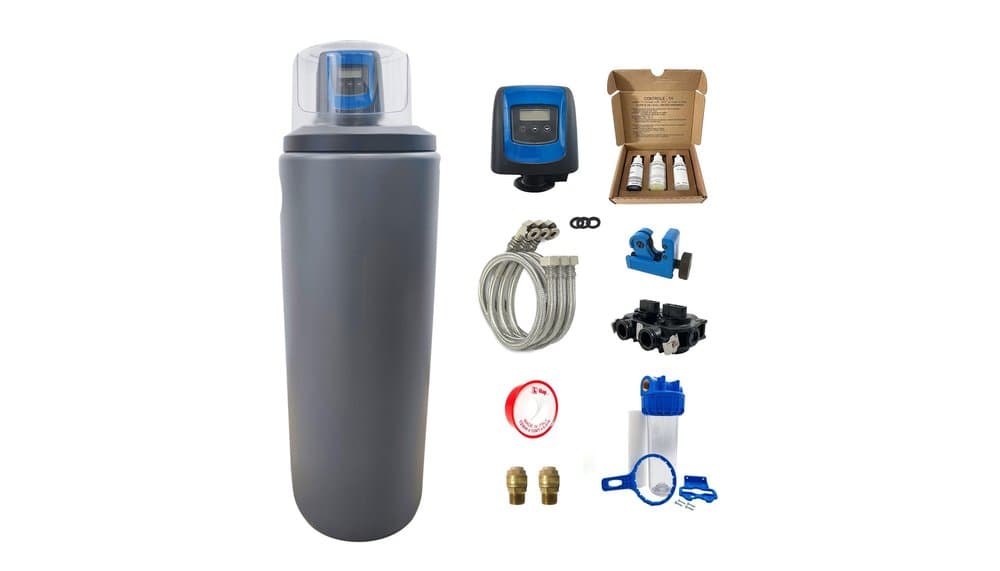
TOODO Fleck 5800 SXT Monobloc Water Softener Review
Volumetric TOODO Fleck 5800 SXT water softener eliminates limescale efficiently for families. A review of features & performance.
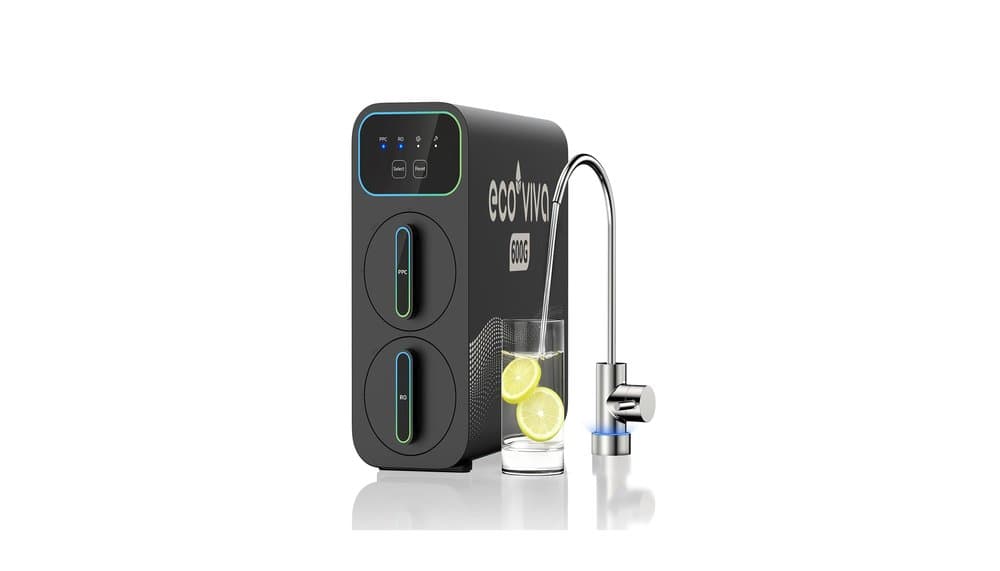
Ecoviva E6 Reverse Osmosis Water Filter Review
Compact, tankless Ecoviva E6 reverse osmosis system analyzed. We test its real-world purification performance, health benefits, and home integration.
Guides you might like
Alkaline Water Ionizer Buying Guide
Discover how alkaline water ionizers work and learn key tips to choose the right one for your home and health. Essential buying guide.
Buying Guide: Best Hydrogen Water Generator
Guide to hydrogen water generators: cutting through the hype to help you make an informed purchase decision for your health and budget.
Choosing Your Home Water Filter
Unlock clean, tasty water at home. Find the right water filter to tackle chlorine, pollutants, and limescale for better health and peace of mind.