BRITA Marella Blue 2.4L Jug Review
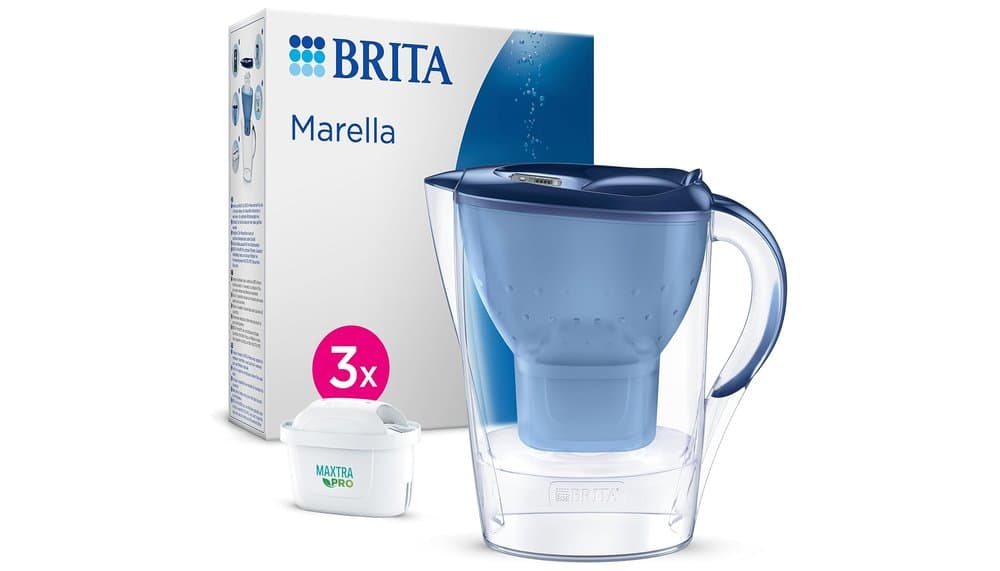
Introduction
In the world of domestic water filtration, the filter jug remains an accessible, entry-level solution that is immediately operational. The BRITA Marella Blue 2.4L Filter Jug embodies this simple approach: no installation, ready in seconds, and the promise of improved-tasting tap water. But in a market where health concerns (PFAS, pesticides, metals) and environmental concerns (reducing plastic bottles) are central, is a simple taste improvement enough?
We will dissect this iconic jug. Based on its technical specifications, feedback from a large community of users, and analyses from industry experts, we will assess its real effectiveness on water quality, its long-term ownership cost, and its relevance compared to other filtration technologies. The objective is clear: to determine if the Marella Blue is a practical accessory or a genuine daily health tool for a family.
Key Strengths
Targeted and Proven Effectiveness on Main Issues
The main argument for the Marella Blue lies in the performance of its MAXTRA PRO All-in-1 filter. According to the manufacturer's specifications and independent tests, this filter acts effectively on three fronts that directly impact daily experience. Firstly, it significantly reduces chlorine and organic compounds responsible for bad tastes and odors. Secondly, it captures some heavy metals like lead and copper. Thirdly, it reduces limescale (calcium carbonate) through ion exchange, thus softening the water and limiting deposits in kettles or coffee makers.
A Design Optimized for Family Life
The user community unanimously highlights a major practical advantage: its slim format. This design allows the jug to slide effortlessly into most refrigerator doors, a detail that changes daily life by keeping water cool without cluttering the main shelves. With a total capacity of 2.4L (including 1.4L of filtered water ready to serve), it is well suited for a family of 2 to 4 people for meals. Its handling is intuitive, with a flip-top lid for easy filling and an ergonomic handle.
The Convenience of the Replacement Indicator
The inclusion of the BRITA Memo, an electronic indicator, is a frequently highlighted feature. This system avoids having to count days or liters: it clearly signals when a filter change is needed (approximately every 4 weeks or 150 liters). This function removes questions about the filter's residual effectiveness and guarantees optimal performance over time.
A Tangible Environmental Commitment
By replacing part of bottled water consumption, the BRITA jug has a favorable environmental footprint. Users motivated by reducing plastic waste see it as a simple and effective alternative. The fact that the jug (excluding the top lid and Memo indicator) is dishwasher-safe also contributes to this daily convenience.
Weak Points
Limited Filtration Against Emerging Contaminants
It is crucial to understand the technology's limits. The MAXTRA PRO filter is based on a combination of activated carbon and an ion exchange resin. While effective on chlorine, taste, limescale, and some metals, this technology does not eliminate a large number of concerning contaminants. It does not filter nitrates, fluoride, bacteria or viruses, nor the majority of dissolved salts. Regarding PFAS ("forever chemicals") mentioned in communications, filtration is partial and only concerns a portion of these thousands of compounds. Microplastics larger than 30 microns can be retained, but not the finer ones. This jug improves already potable tap water, but does not purify it entirely.
The Recurring Cost of Consumables
This is the number one friction point reported by users. The initial investment is modest, but the annual cost of filters accumulates. With a lifespan of about one month, you need approximately a dozen MAXTRA PRO filters per year. This recurring cost, over several years, can represent a significant sum and must be factored into the value-for-money calculation.
A Slow Filtration Flow Rate and Limited Filtered Capacity
Feedback is unanimous: you must wait several minutes for the 1.4L of water in the upper reservoir to pass through the filter and fill the lower part. For a large family or during holiday meals, this may require planning ahead and filling several jugs in advance. The available filtered capacity (1.4L) may seem tight for 4 or more people for a single serving.
Some Minor Design Flaws
Some users report issues with the spout's seal. An improperly controlled tilt while pouring can lead to small streams of water down the side. Although the overall design is appreciated, this detail requires an adapted handling technique.
Detailed Analysis: Technology, Health, and Comparisons
What Does the BRITA Marella Blue Actually Filter?
Let's break down its real effectiveness regarding health concerns:
- Chlorine and tastes/odors: This is its strong point. Activated carbon is highly effective at adsorbing these compounds, noticeably improving taste.
- Limescale (hardness): The ion exchange resin replaces calcium and magnesium ions (responsible for scale) with sodium or potassium ions. The water is softened, which is beneficial for appliances and skin, but this exchange adds a tiny amount of sodium to the water.
- Heavy metals (lead, copper): Filtration is partial. Activated carbon can capture a certain amount, but without a guarantee of total elimination, especially if concentrations are high.
- Pesticides, herbicides, drug residues: The filter reduces some, thanks to activated carbon, but its effectiveness varies greatly depending on the molecule and its concentration.
- PFAS and Nitrates: Crucial point. The technology is not designed to eliminate nitrates. For PFAS, some long-chain compounds may be partially retained by the activated carbon, but it is not a reliable purification solution against this family of pollutants.
- Microplastics: The mention "mesh ≥ 30 µm" means it retains particles visible under a microscope, but not nanoplastics.
Comparison with Other Domestic Technologies
- Versus Reverse Osmosis: There is no comparison. A reverse osmosis system (with its membranes and pre-treatments) eliminates 95-99% of nearly all dissolved contaminants (salts, nitrates, metals, PFAS, viruses, bacteria). But its cost, installation, bulk, and water waste are in no way comparable to a simple jug. The BRITA is a comfort solution, reverse osmosis is a purification solution.
- Versus other jugs (simple activated carbon): The Marella Blue stands out with its MAXTRA PRO filter integrating ion exchange (anti-scale), a functionality absent from basic models. Its electronic indicator is also a plus.
- Versus personal filter bottles: It offers a much larger capacity, suited for a household.
Ease of Installation and Usage Cost
Installation is zero: just rinse the components and install the first filter. No tools, no plumber required. Its footprint is limited to its space on the countertop or in the fridge. The annual cost is entirely carried by replacement filters. Based on the average public price of a filter pack, using the Marella Blue results in a significant annual cost, which must be weighed against the savings made on buying bottled water.
Technical Specifications
| Characteristic | Detail |
|---|---|
| Model | BRITA Marella Blue 2.4L Filter Jug |
| Filtration Technology | MAXTRA PRO Filter (Activated Carbon + Ion Exchange Resin) |
| Targeted Contaminants | Reduction of chlorine, limescale, some metals (lead, copper), some pesticides/herbicides/drug residues, some PFAS. |
| Total / Filtered Capacity | 2.4 liters / 1.4 liter |
| Filter Lifespan | Approximately 4 weeks or 150 liters (indicated by BRITA Memo) |
| Filtration Flow Rate | Approximately 8-10 minutes to filter 1.4L (depends on water hardness) |
| Maintenance | Jug dishwasher-safe (without the top lid and Memo indicator) |
| Installation Required | None |
| Replacement Indicator | Yes (Electronic BRITA Memo) |
What Users Say
The synthesis of hundreds of customer reviews and expert tests paints a clear consensus.
The praise consistently focuses on the noticeable improvement in water taste, the disappearance of chlorine odors, and the visible reduction of limescale in other appliances. The convenience of the fridge-friendly format and the Memo indicator is highly acclaimed. Many praise the fact of no longer having to carry water packs and reducing their plastic waste.
Recurring criticisms revolve around three axes:
- Slowness: Waiting for the water to filter is often cited as the main operational drawback.
- Long-term cost: The price of replacement filters is perceived as high, and the financial commitment over several years is emphasized.
- Filtration limits: More informed users regret the lack of precise data on the reduction rate for each contaminant and are aware that the jug does not solve all water quality problems (nitrates, fluoride).
A cross-cutting point of satisfaction: its long-term reliability. Few malfunctions or failures are reported on the jug itself, reinforcing its image as a robust product.
Conclusion
The BRITA Marella Blue 2.4L Filter Jug is a clear and honest proposition. It excels in its primary mission: transforming potable but unpleasant-tasting tap water into tasty, softened, odor-free table water. Its smart design for the refrigerator and its replacement indicator make it a well-thought-out, easy-to-live-with everyday object for an average-sized family.
However, our analysis confirms that one must not ask the impossible of it. It is not an advanced purification system. Against nitrates, PFAS, or fine microplastics, its performance is limited or even non-existent. It falls more into the realm of comfort and improvement than absolute health security.
For whom is it the right choice? For households whose tap water meets standards but has nuisances (chlorine taste, limescale), and who seek an installation-free, immediate, and ecological solution to drink more pleasant water and protect their household appliances.
Who should consider something else? People whose water has specific contamination issues (nitrates, sulfates, high metal concentrations) or those seeking total purification should look towards more advanced technologies like reverse osmosis, accepting the investment and installation that come with it.
In summary, the Marella Blue perfectly fulfills its contract: it makes daily life more pleasant, provided one accepts its technical limits and its business model based on regular consumables.
100% free and independent — All our articles are written independently, without any sponsorship. We may earn a commission on purchases made through our links, at no extra cost to you.
Articles you might like
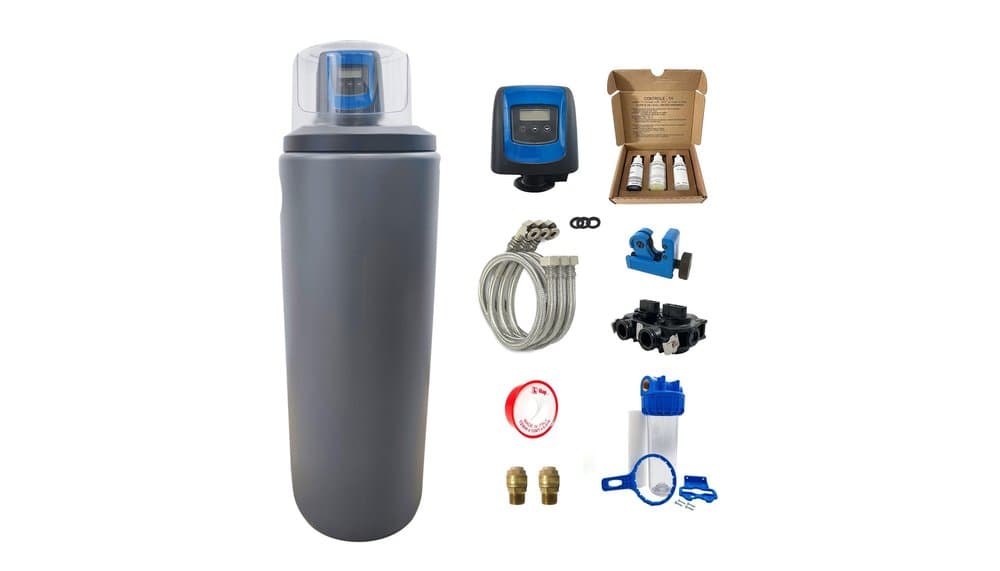
TOODO Fleck 5800 SXT Monobloc Water Softener Review
Volumetric TOODO Fleck 5800 SXT water softener eliminates limescale efficiently for families. A review of features & performance.
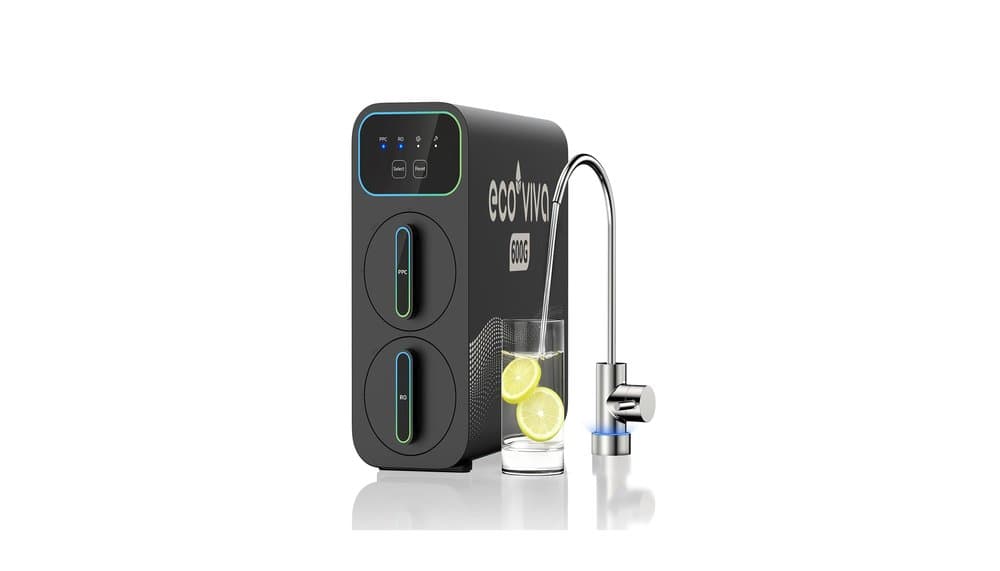
Ecoviva E6 Reverse Osmosis Water Filter Review
Compact, tankless Ecoviva E6 reverse osmosis system analyzed. We test its real-world purification performance, health benefits, and home integration.
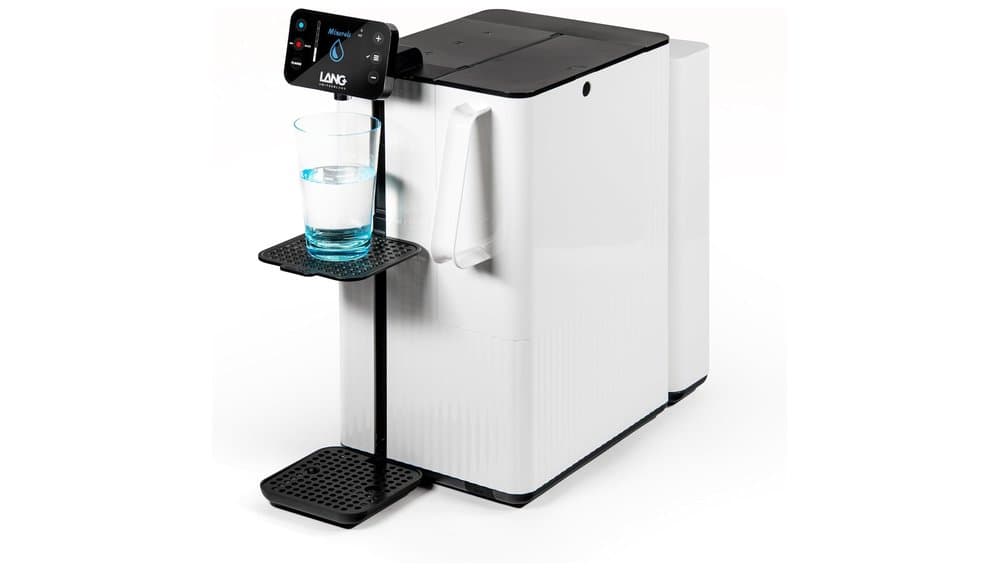
LANG TheWell2 Purifier Review: Mineralized Water Test
A premium water purifier & mineralizer. Does its all-in-one convenience justify the cost? Our analysis examines its promise vs. practicality.
Guides you might like
Alkaline Water Ionizer Buying Guide
Discover how alkaline water ionizers work and learn key tips to choose the right one for your home and health. Essential buying guide.
Buying Guide: Best Hydrogen Water Generator
Guide to hydrogen water generators: cutting through the hype to help you make an informed purchase decision for your health and budget.
Choosing Your Home Water Filter
Unlock clean, tasty water at home. Find the right water filter to tackle chlorine, pollutants, and limescale for better health and peace of mind.