BRITA Flow Water Filter Dispenser Review

Introduction: The BRITA Flow, a Practical Solution for Filtered Water in Daily Life
In the landscape of domestic water filtration systems, filter jugs have democratized access to water with an improved taste. The BRITA Flow filter water dispenser represents an evolution of this concept, targeting families or households with high consumption. It is no longer a simple jug to take out of the refrigerator, but a standalone dispenser to place on a countertop or in a fridge. Its promise is clear: offer a large reserve of filtered water, convenient to serve, while reducing certain contaminants and combating limescale. But what is it really worth from a technical and health standpoint? We analyze this product in detail, breaking down its specifications, its real effectiveness against pollutants, and its integration into daily life.
Strengths of the BRITA Flow
The BRITA Flow stands out due to several major strengths that explain its success with consumers.
An XXL capacity suited for families. With a total reservoir of 8.2 liters (including 5.2 liters of water ready for consumption and 3 liters being filtered), this dispenser significantly reduces the frequency of refills. For a family of four, this often corresponds to a day's worth of autonomy, a point praised by the community.
Unquestionable daily practicality. The integrated tap is a notable change compared to classic jugs. It allows for serving a glass of water or filling a bottle without having to lift the appliance. Its design allows it to fit into most refrigerators, thus providing cold water on demand.
A noticeable improvement in taste and a reduction in limescale. The combined action of the ion exchange resin and activated carbon contained in the MAXTRA PRO All-in-1 filter is effective on two main fronts. It significantly reduces the presence of chlorine (responsible for unpleasant tastes and odors) and limits the formation of limescale (scale). User feedback is unanimous on this point: the water is more pleasant to drink and deposits in kettles or coffee makers are reduced.
An ecological and economical commitment. By substituting for bottled water, the system avoids hundreds of single-use plastic bottles per year. BRITA highlights filters made with 50% bio-sourced materials and a recycling program, strengthening this environmental argument. In the long term, the cost per liter remains lower than that of bottled water.
Weak Points and Limitations to Know
Despite its qualities, the BRITA Flow has important limitations, especially for users seeking advanced filtration.
Targeted, but incomplete filtration. This is the fundamental limit of the technology used. The MAXTRA PRO filter is based on a blend of activated carbon and ion exchange resin. This combination is effective for chlorine, organic compounds (certain pesticides, herbicides) and limescale. However, according to the manufacturer's own specifications, it only reduces "some PFAS" and "some metals". It is absolutely not designed to eliminate nitrates, bacteria/viruses, or a large majority of dissolved salts. Its filtration mesh (≥ 30 µm) stops suspended particles but not microplastics smaller in size.
Slow filtration flow and a rejection rate to consider. Unlike an under-sink system, the water filters here by gravity. There is no instant flow rate in liters per hour strictly speaking; one must wait for the water to pass through the cartridge to fill the lower reservoir. Some users note that this process can take time. Furthermore, the system does not have "reject" water in the reverse osmosis sense, but it generates a recurring and mandatory cost of consumables: the cartridges.
A non-negligible annual cost of consumables. A MAXTRA PRO cartridge has a lifespan of 150 liters or approximately 4 weeks depending on water quality and consumption. For a household consuming 5 liters of filtered water per day (i.e., ~1825 L/year), it will require about 12 cartridges per year. This recurring cost must be included in the profitability calculation.
Reported mechanical reliability issues. The web context and some reviews point to a recurring flaw: leaks at the tap, particularly at the junction with the tank. Although this does not seem to affect the majority of products, it is a point of vigilance reported by several sources. Maintenance and disassembly of the tap for cleaning are also described as non-intuitive.
Detailed Analysis: Technology, Health, and Use
What is the Real Effectiveness Against Contaminants?
It is crucial to understand what the BRITA Flow can and cannot do for your water. Its technology is a multi-stage gravity filtration:
- A mechanical pre-filtration by a fine mesh retains particles and sediments (> 30 µm).
- A chemical filtration via granulated activated carbon, which adsorbs chlorine, certain organic compounds (pesticides, medication residues) and improves taste and odor.
- A partial softening via ion exchange beads (resin) that trap calcium and magnesium ions responsible for hardness (limescale), releasing sodium or potassium ions in return.
Clear Performance: In its area of expertise – chlorine, taste, odor, limescale – effectiveness is proven and verified by users. Major Limitations: This technology is not an absolute barrier. It is ineffective against nitrates, fluorides, sodium, bacteria, viruses, and the majority of dissolved inorganic contaminants. Regarding PFAS (forever chemicals), BRITA indicates a reduction for some types (like PFOA/PFOS), but not for the entire family of thousands of compounds. For these concerning contaminants, only a technology like reverse osmosis coupled with quality activated carbon offers broad and reliable elimination.
Technology Comparison: Where Does the BRITA Flow Stand?
- vs Reverse Osmosis (RO): RO is much more performant (removes ~95-99% of most contaminants, including nitrates, heavy metals, fluorides, PFAS, viruses). But it is more expensive, requires under-sink installation, has a slower flow rate, and produces reject water. The BRITA Flow is a simple, installation-free, less expensive to purchase solution, but with much lower filtration performance.
- vs Simple Activated Carbon: The MAXTRA PRO integrates activated carbon, but combines it with ion exchange to also combat limescale, offering a broader action than carbon-only filters.
- vs UV or Electrolysis: These technologies specifically target microorganisms (UV) or modify the water's pH (electrolysis). They do not treat chemical contaminants or limescale and are often complementary to other systems. The BRITA Flow does not integrate these functions.
Technology Analysis Conclusion: The BRITA Flow is an effective softener and taste enhancer, but not a universal water purifier. Its role is to improve tap water that is already potable, not to make questionable water safe to drink.
Ease of Installation and Use
On this point, the product excels. No installation is required: simply rinse it, insert the filter cartridge, fill it with tap water, and wait a few minutes for the first filtration. It's immediately easy to use. Its dimensions (approximately 30 x 21 x 22 cm) are reasonable for its capacity, but it requires dedicated space on a counter or in the fridge.
Value for Money for a Family
The value for money is good if your expectations match the product's real performance. For a family primarily seeking water without a chlorine taste, less limescale for their appliances and hot drinks, and wanting to stop buying plastic bottles, the BRITA Flow is an excellent practical solution. However, one must budget for the annual cost of replacement cartridges, which constitutes the bulk of the recurring expense.
Summarized Technical Specifications
| Characteristic | Detail for the BRITA Flow |
|---|---|
| Total Capacity | 8.2 liters (including 5.2 L of filtered water available) |
| Filtration Technology | Activated Carbon + Ion Exchange Resin (MAXTRA PRO) |
| Targeted Contaminants (reduction) | Chlorine, limescale (Ca2+/Mg2+ ions), some pesticides/herbicides, some medication residues, some PFAS (e.g., PFOA/PFOS), some particles (≥ 30 µm) |
| NON-targeted Contaminants | Nitrates, Fluoride, Sodium, Bacteria/Viruses, Heavy metals in general, Majority of PFAS, Microplastics < 30µm |
| Filter Lifespan | Approximately 150 liters or 4 weeks (varies with water quality) |
| Flow Rate / Speed | Gravity filtration (no instant flow rate) |
| Water Rejection Rate | None (no-reject system) |
| Installation | None necessary. Can be placed on countertop or in refrigerator. |
| Power Supply | None (non-electric system) |
| Maintenance | Manual cleaning of the reservoir. Regular cartridge replacement. |
| Materials | Plastic (BPA-free for parts in contact with water) |
| Dimensions (L x W x H) | Approximately 30.4 x 21.4 x 22 cm |
What Users Say: Summary of Feedback
Customer reviews, with a very high average rating of 4.7/5, show a strong consensus on the following points:
Recurring Positive Points:
- Taste and Limescale: A clear improvement in the taste and odor of the water is the most frequent feedback. The visible reduction of limescale in appliances (kettles, coffee makers) is also widely praised.
- Practical and Capacity: The large capacity and convenience of the tap are highly appreciated, especially for families. The ability to place it in the refrigerator is a valued plus.
- General Reliability: Many users report use over several years without major problems, attesting to good overall durability of the appliance.
- Ecological Alternative: The satisfaction of reducing plastic bottle consumption is an important reason for recommendation.
Negative or Critical Points:
- Filtration Limits: Some knowledgeable users rightly note that the system does not filter all impurities and remind that it is not a reverse osmosis purifier.
- Filtration Speed: The time required for water to filter from the upper reservoir to the lower one is sometimes cited as a minor flaw, especially during the initial fill.
- Leak Problems: As highlighted in the web context, a significant number of reviews (though a minority) report leaks at the tap. This point seems to be the main manufacturing or design flaw encountered.
- Cost of Consumables: The price of replacement cartridges is mentioned as the main expense to anticipate.
Conclusion: Who is the BRITA Flow For?
The BRITA Flow filter water dispenser is a product that perfectly fulfills its primary mission: providing a large quantity of pleasant-tasting, less calcareous water, in a simple and practical manner, while reducing the household's plastic footprint. Its commercial success and user adoption are largely deserved on these aspects.
However, our technical analysis forces us to nuance its scope of action. It should not be seen as a complete purification system, but as a comfort optimizer for tap water that already meets potability standards. If your priority is to eliminate specific contaminants like nitrates, heavy metals, or a wide range of PFAS, you should look towards reverse osmosis.
Our Verdict: The BRITA Flow is the ideal solution for families whose tap water is safe at its source, but whose chlorine taste or hardness are daily nuisances. Its ease of use, autonomy, and effectiveness against limescale make it an excellent investment for daily comfort. Just keep its technical limits in mind, watch for potential signs of tap leaks, and budget serenely for the annual cost of filters for a peaceful and long-lasting use.
100% free and independent — All our articles are written independently, without any sponsorship. We may earn a commission on purchases made through our links, at no extra cost to you.
Articles you might like
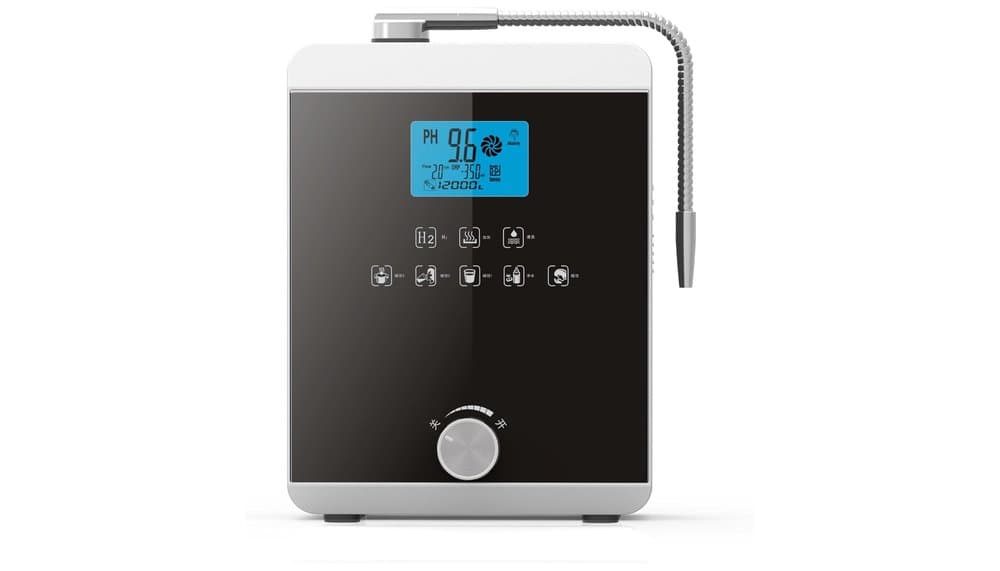
Alkaline Water Ionizer 11-Plate Electrode Test
Analyzes the 11-plate alkaline water ionizer: Does it filter water effectively, alter its properties, and deliver promised health benefits for a family?
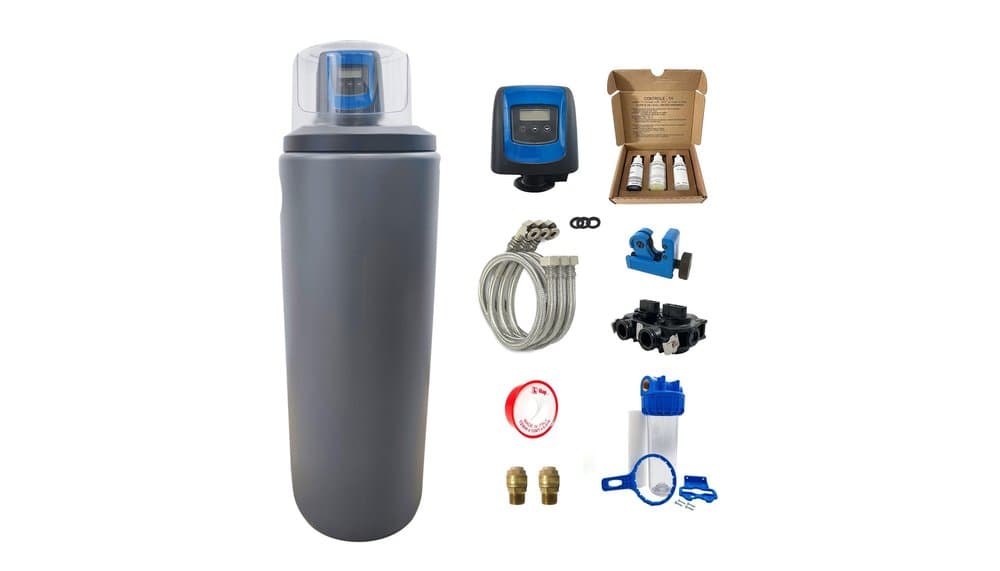
TOODO Fleck 5800 SXT Monobloc Water Softener Review
Volumetric TOODO Fleck 5800 SXT water softener eliminates limescale efficiently for families. A review of features & performance.
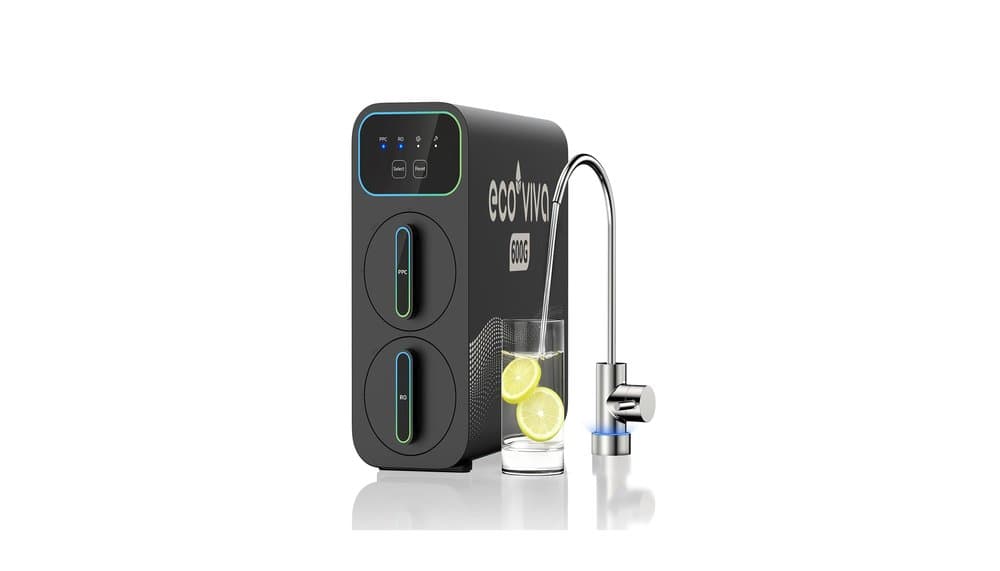
Ecoviva E6 Reverse Osmosis Water Filter Review
Compact, tankless Ecoviva E6 reverse osmosis system analyzed. We test its real-world purification performance, health benefits, and home integration.
Guides you might like
Alkaline Water Ionizer Buying Guide
Discover how alkaline water ionizers work and learn key tips to choose the right one for your home and health. Essential buying guide.
Buying Guide: Best Hydrogen Water Generator
Guide to hydrogen water generators: cutting through the hype to help you make an informed purchase decision for your health and budget.
Choosing Your Home Water Filter
Unlock clean, tasty water at home. Find the right water filter to tackle chlorine, pollutants, and limescale for better health and peace of mind.