CamperFilter SystemSet Water Filter Test & Review
Introduction
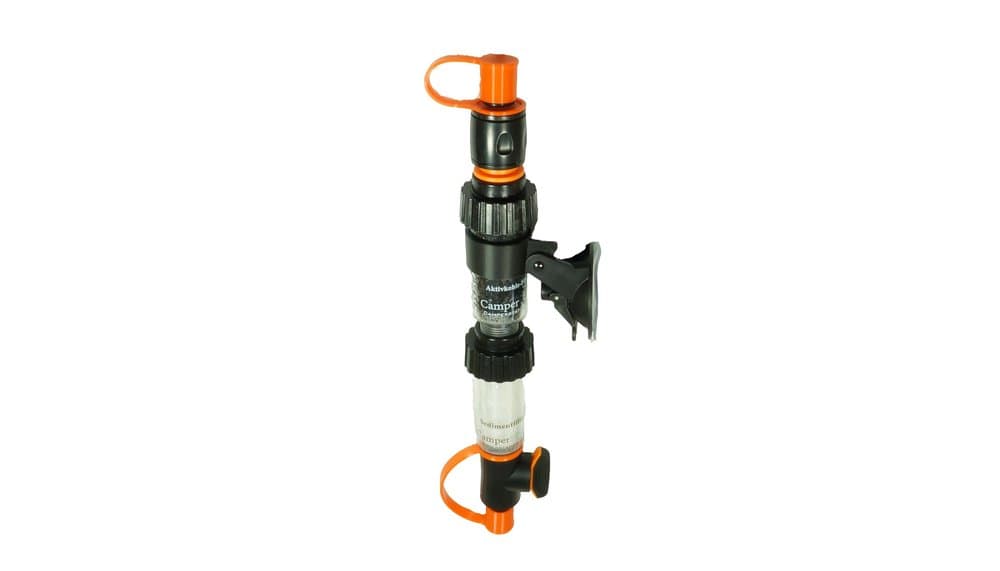
In the world of mobile filtration for motorhomes, vans, or boats, the CamperFilter SystemSet Water Filter presents itself as a turnkey solution to improve the quality of your filling water. On a site dedicated to domestic purification, our goal is to dissect this product strictly from the angle of water quality and health. This dual system combines a sediment filter and an activated carbon filter. We analyze here its real effectiveness against contaminants, its technology, its cost of use, and its suitability for family use while traveling, based on its technical specifications and tangible feedback from the community.
Strengths
- Easy installation and versatility: A standalone and portable system that does not require a plumber, with a suction cup support for temporary mounting.
- Effective dual filtration for the targeted use: The combination sediment + coconut shell activated carbon effectively removes visible particles and significantly improves the taste and odor of water from campground hookups.
- Simple maintenance and available consumables: Washable sediment cartridge (up to 60°C) and easy filter replacement, with availability ensured by the manufacturer.
- Preservation of beneficial minerals: The activated carbon does not remove minerals like calcium and magnesium, thus preserving a certain balance in the water.
Weaknesses
- Limited filtration spectrum: Ineffective against dissolved contaminants like nitrates, salts, or limescale. Reduced or uncertain action on heavy metals, PFAS, and the finest microplastics.
- Unspecified and potentially moderate flow rate: Feedback indicates a flow rate suitable for a relaxed filling, but which may be lower than that of more robust systems for large volumes.
- Variable cartridge lifespan: The 3-4 month lifespan is indicative; in heavily sedimented water, replacement may be more frequent, impacting the annual cost.
- Design for a specific use: Not designed as a survival filter for raw water (river, lake), but for treating water that is already potable.
Detailed Analysis
Effectiveness Against Contaminants: What It Really Removes (and What It Doesn't)
The CamperFilter SystemSet relies on two stages of mechanical and chemical filtration. Let's analyze its action, contaminant by contaminant.
- Sediments, rust, algae, sand: This is its strong point. The plastic mesh filter (100 mesh / 0.15 mm) retains all solid particles of this size and larger. It is essential for protecting the vehicle's plumbing and clarifying the water.
- Chlorine, bad tastes and odors: This is the system's second strength. The coconut shell activated carbon, with an iodine index > 1000 mg/g and a BET surface area of 1050 m²/g, is of excellent quality. It very effectively adsorbs chlorine, volatile organic compounds (VOCs), and substances responsible for unpleasant tastes and odors. The sensory improvement is notable, according to feedback.
- Heavy metals (lead, mercury, copper): The effectiveness here is partial and variable. Activated carbon can adsorb certain heavy metals depending on their chemical form and the water's pH. However, it is not a dedicated technology (like ion exchange or reverse osmosis). Therefore, complete elimination cannot be guaranteed, especially if their concentration is high.
- Limescale (water hardness): No action. The system does not include ion exchange resin or an anti-scale process. It does not alter the concentration of calcium and magnesium and therefore does not protect against scale.
- Nitrates, fluoride, dissolved salts: No action. These contaminants require membrane filtration (reverse osmosis) to be removed. Activated carbon is ineffective against them.
- PFAS (forever chemicals) and pesticides: The action is limited. Granular activated carbon can retain certain PFAS compounds and pesticides, but its effectiveness depends on the type of molecule, concentration, and contact time. For proven protection against these pollutants, a compact activated carbon block or reverse osmosis is recommended.
- Microplastics: The sediment filter (0.15 mm) captures visible microplastics and large fibers. However, nanoplastics and particles smaller than 150 microns will pass through. It therefore offers a partial, but not total, barrier.
Technology and Comparison with Other Methods
The CamperFilter SystemSet bets on the simplicity of a proven duo.
- Mechanical filtration (sediment): An essential preliminary step to protect the second cartridge and equipment. It is a basic but indispensable technology.
- Adsorption by activated carbon: A non-electric, passive, and reliable technology for taste improvement and chlorine removal. It is distinguished by its ability to preserve minerals, unlike reverse osmosis.
- Comparison with other technologies:
- Reverse Osmosis (RO): Much more effective against the full range of dissolved contaminants (nitrates, metals, salts, PFAS). However, it requires water pressure, produces waste water (water wastage), has a slower flow rate, a higher cost, and removes beneficial minerals. The CamperFilter is its simplified, mobile opposite.
- UV Sterilization: Excellent for eliminating bacteria and viruses, but does not remove chemicals or particles. Would be complementary to the CamperFilter, not a competitor.
- Ion Exchange: Specialized in water softening (removing limescale) or denitrification. Absent from this system.
- Electrolysis: Generally used for disinfection (generating chlorine). Not relevant for this product.
Technological Conclusion: The CamperFilter is a polishing and comfort system. It starts from the principle that the inlet water is already potable and aims to make it more pleasant and protect the installations. It does not transform non-potable water into healthy water.
Installation, Size, and Daily Use
On paper, the specs promise a "freestanding" installation. The complete kit with 3/4" fittings for 1/2" hoses, a flow control valve, and shut-off caps is designed to be temporarily connected between the campground tap and the motorhome's filling hose. The community notes that assembly is intuitive and quick, requiring no technical skills.
Its minimal size (22 x 8.5 x 5 cm) and featherweight (185g) make it an accessory easy to store in a compartment. The suction cup support allows it to be fixed to a clean surface during filling, a practical feature highlighted by users.
For daily family use during travels, its flow rate is a point of attention. Although not quantified by the manufacturer, expert feedback indicates that it is suitable for standard filling, but may seem slow if you need to fill a large tank of several hundred liters. It is therefore suitable for stays with regular stops rather than extreme off-grid autonomy.
Annual Cost of Consumables and Value for Money
The manufacturer recommends changing the filter even in case of rare use after 3-4 months. For regular use during a travel season, you should therefore plan for at least 3 sets of cartridges per year. The exact cost depends on the price of replacements, but the cost structure is simple and predictable.
Value for money must be assessed in light of the intended use. For the traveler who simply wants to eliminate the chlorine taste, sediments, and odors from sometimes heavily treated campground water, the system represents a moderate initial investment and an effective solution. For those seeking complete purification against a wide range of chemical pollutants, the value is less interesting, as the technology does not cover these needs.
Technical Specifications
| Characteristic | Detail |
|---|---|
| Product Name | CamperFilter SystemSet Water Filter |
| Filtration Technologies | Mechanical filtration (sediment) + Activated carbon adsorption |
| Sediment Filter Mesh | 0.15 mm / 100 mesh (washable up to 60°C) |
| Activated Carbon Type | Coconut shell carbon, iodine index > 1000 mg/g, BET surface area 1050 m²/g |
| Targeted Contaminants | Sediments (sand, rust, algae), Chlorine, Bad tastes & odors, Suspended particles |
| Contaminants NOT Removed | Limescale, Nitrates, Fluoride, Dissolved salts. Limited effectiveness on heavy metals, PFAS, fine microplastics. |
| Flow Rate | Not specified by the manufacturer |
| Water Waste Rate | None (system without waste, is not a reverse osmosis) |
| Cartridge Lifespan | Approximately 3-4 months (depending on source water quality and volume) |
| Installation | Standalone, tool-free. 3/4" fittings for 1/2" hoses. Suction cup support included. |
| Dimensions (L x W x H) | 22 x 8.5 x 5 cm |
| Weight | 185 grams |
| Included Components | Filter housing, suction cup support, washable sediment cartridge, activated carbon cartridge, flow control valve, caps |
What Users and Testers Say
The synthesis of customer reviews and expert feedback paints a clear consensus on the product's strengths and limitations.
Recurring positive points:
- Immediate effectiveness on taste and clarity: Users consistently note a noticeable improvement in the taste and odor of the water once the filter is installed. "The water no longer has that chlorine or pipe taste," many summarize.
- Simple and practical setup: The ease of installation and the convenience of the suction cup support are highly appreciated. The system is perceived as complete and ready to use.
- Compactness and lightness: Its small size makes it equipment that is easy to transport and store, a major asset for the limited space in a vehicle.
Points of caution or criticism raised:
- Flow rate sometimes considered slow: Several field testers point out that the flow rate is not the fastest. This can lengthen the filling time for a large tank.
- Durability of fittings: A few isolated but recurring comments mention a need for careful handling to avoid leaks at the connections, advising to tighten properly without forcing.
- Targeted use to be respected: Experts and informed users remind that this filter is designed for already treated inlet water (campground hookup, municipal network). It is not suitable for filtering untreated river or lake water, where bacteria and viruses could be present.
Conclusion
The CamperFilter SystemSet Water Filter is a product that excels in its niche: that of the motorhome or camper van traveler who wants, without complication, to significantly improve the drinking comfort of their water. Its dual filter effectively removes sediments, chlorine, and bad flavors, while preserving minerals. Its installation is child's play and its footprint is minimal.
However, our technical analysis confirms that it should be seen as a comfort and polishing system, not a universal purifier. Its limitations against nitrates, limescale, heavy metals in high doses, or micro-pollutants like PFAS are real. Its moderate flow rate and the frequency of cartridge replacement make it an optimal solution for light to moderate use, with family, during stays at equipped campgrounds.
In summary, if you are looking for a simple, portable, and effective solution to drink more pleasant water while traveling and protect your plumbing from particles, the CamperFilter SystemSet is a relevant and well-designed choice. If your health concerns include specific dissolved contaminants or if you draw your water from uncontrolled sources, it should be considered a first step, to be supplemented by more advanced technologies.
100% free and independent — All our articles are written independently, without any sponsorship. We may earn a commission on purchases made through our links, at no extra cost to you.
Articles you might like
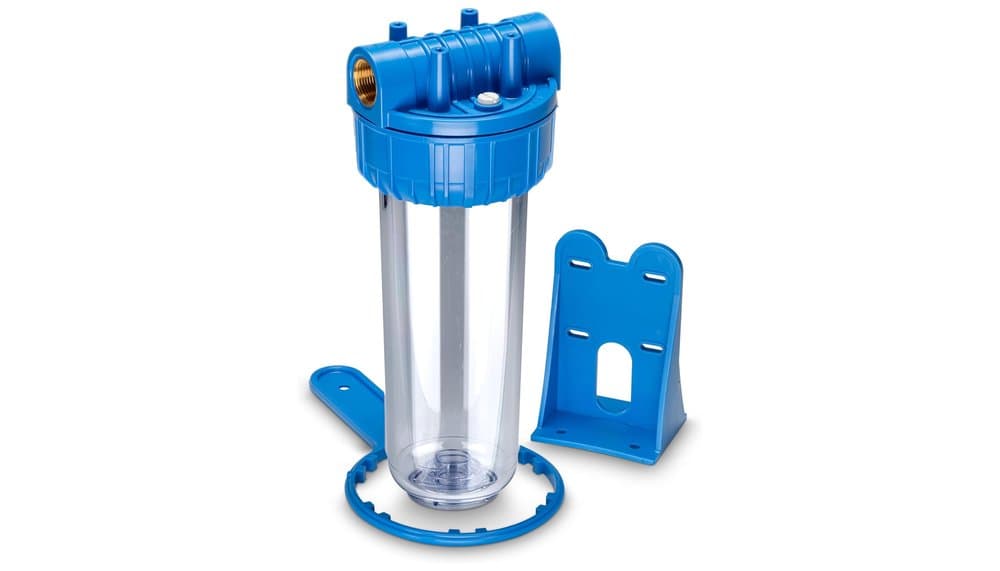
WK wk 34stach10 Empty Filter Housing Kit Review
A housing kit for your filter media. The WK 34stach10 holds replacement cartridges but contains no filter itself.
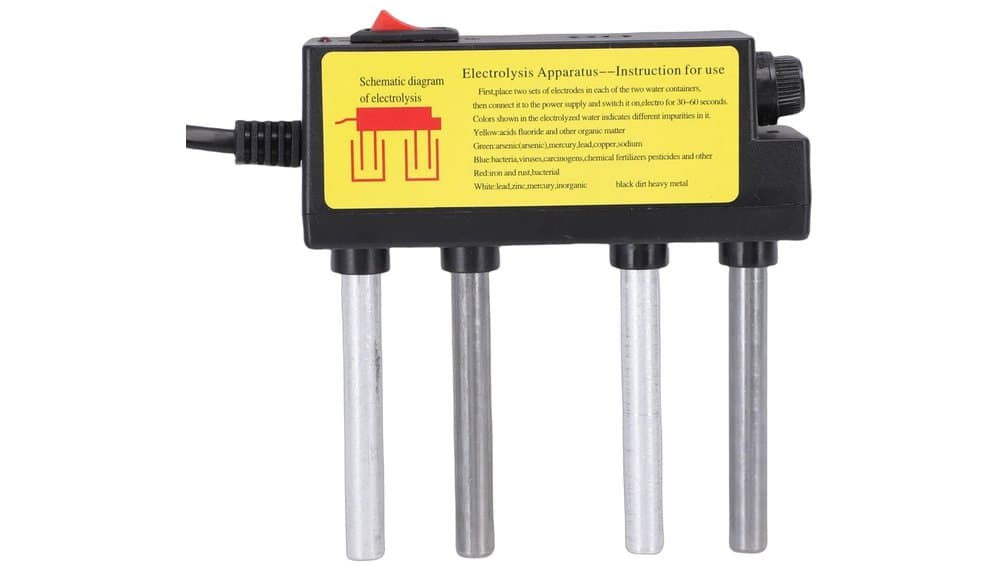
Denash Water Tester Review: TDS, pH & Electrolysis
Test water quality at home: The Denash water tester measures TDS & pH. Is it a reliable tool or just a gadget? Our review reveals its true effectiveness.
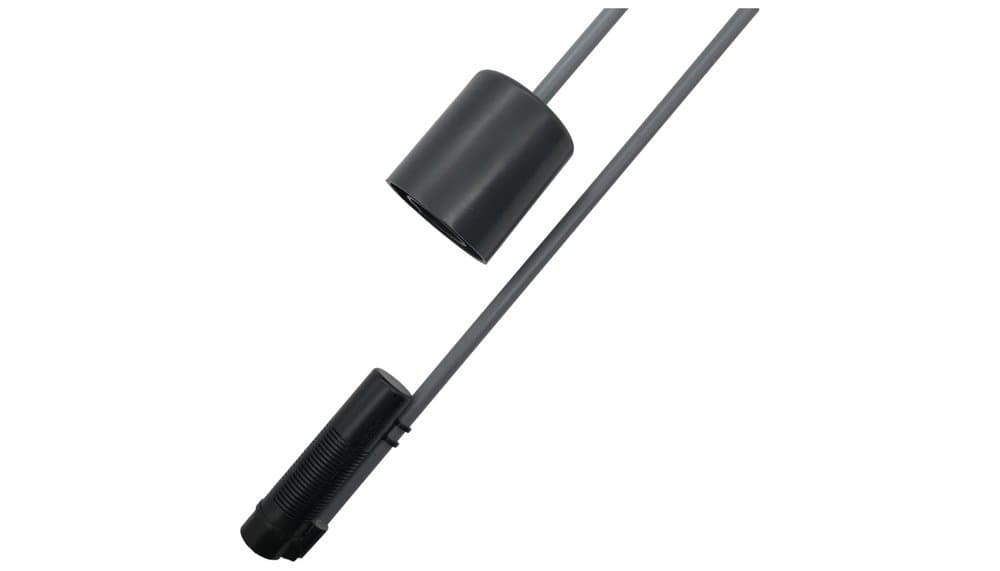
TOODO Double Safety Float Water Softener Kit Review
Safeguard your water softener system from failures. This safety accessory prevents damage, ensuring installation integrity and water quality.
Guides you might like
Alkaline Water Ionizer Buying Guide
Discover how alkaline water ionizers work and learn key tips to choose the right one for your home and health. Essential buying guide.
Buying Guide: Best Hydrogen Water Generator
Guide to hydrogen water generators: cutting through the hype to help you make an informed purchase decision for your health and budget.
Choosing Your Home Water Filter
Unlock clean, tasty water at home. Find the right water filter to tackle chlorine, pollutants, and limescale for better health and peace of mind.