Feelhap Hydrogen Water Bottle Generator Review

Introduction
On a site dedicated to domestic water purification, we scrutinize technologies designed to improve the quality of the water we drink. Today, the Feelhap Hydrogen Water Bottle Portable Generator takes us into a very specific territory: that of hydrogenated water. This product does not present itself as a classic filter for removing contaminants. Its promise is different: it acts as a portable generator that, through electrolysis, enriches water with dissolved molecular hydrogen (H₂). But what is its place in an ecosystem centered on water purity and safety? Can it coexist with a filtration setup, or does it replace it? In this comprehensive analysis, we will dissect this bottle from the angle that interests us: water quality and health, by confronting its technical promises with user feedback and the context of expert tests.
Key Strengths
Based on specifications and feedback, several strengths emerge for the Feelhap Hydrogen Water Bottle.
Advanced SPE/PEM Technology: The product highlights its hydrogen generation core using SPE (Solid Polymer Electrolyte) and PEM (Proton Exchange Membrane) technology. On paper, this system is designed to be more efficient than basic electrolysis methods, as it separates the produced gases (hydrogen and oxygen) and aims to generate water rich in H₂ without significantly increasing the oxygen level or producing ozone, elements sometimes criticized in less sophisticated systems.
Total Portability and Autonomy: This is its main selling point. The device is completely portable, rechargeable via USB-C, and requires no installation. You simply fill it with water (tap, filtered, or bottled) and start a cycle. This minimal footprint and independence make it a companion for the office, travel, or sports.
Food-Grade Materials: The technical sheet specifies the use of borosilicate glass for the main body and stainless steel for the lid. These materials are reassuring as they prevent the migration of undesirable compounds (like BPA from some plastics) into the water, a crucial point for a device in prolonged contact with drinking liquid.
Interface and Ease of Use: The 2025 version with an LED screen is presented as an improvement, allowing visualization of the ongoing cycle. User feedback generally confirms that the device is simple and intuitive to use.
Weaknesses
The analysis also reveals significant limitations, especially when considering it as a purification solution.
Complete Absence of Contaminant Filtration: This is the most critical point to understand. The Feelhap Hydrogen Water Bottle is not a water purifier. It does not remove chlorine, heavy metals, nitrates, PFAS, or microplastics. It does not alter hardness (limescale). Its action is limited to electrolysis to produce hydrogen. If your starting water is contaminated, it will remain so. It is therefore imperative to use it with water that is already potable and preferably pre-filtered.
Limited Capacity and Zero Flow Rate: With a capacity of 450 ml, it is an individual bottle. The "flow rate" is non-existent in the classical sense: it takes about 5 to 6 minutes to generate a glass of hydrogenated water. This bottle cannot in any way meet the daily water needs of a family. It is a personal and sequential device.
Unverified Health Claims: The benefits put forward ("equivalent to 10 glasses of water", "improves metabolism", "relieves muscle pain") fall under marketing and are not supported by robust and consensual scientific evidence. The effects felt by some users are subjective and anecdotal.
Doubts About Announced Concentrations: A customer review measuring the real concentration obtained a result well below the announced 6850 PPB (or 6.85 PPM), highlighting a potentially significant gap between marketing specifications and actual performance. This point is recurrent in the consumer hydrogen water generator field.
Detailed Analysis: Technology and Place in the Purification Ecosystem
Here, we need to clarify the technology and compare it to the standards of our field.
Electrolysis, a Technology of Addition, Not Elimination Unlike reverse osmosis (which removes up to 99% of solutes), activated carbon (excellent against chlorine, tastes, odors, certain chemicals), UV (bacteriological disinfection), or ion exchange (softening), the electrolysis used here has the sole purpose of creating bubbles of molecular hydrogen that dissolve in the water. It does not purify. Its real effectiveness is measured in concentration of dissolved hydrogen (PPB or PPM) and the purity of the gas produced (without undesirable residual oxygen or ozone). The SPE/PEM technology aims for this purity objective.
Annual Cost of Consumables and Maintenance The product has no filters, membranes, or cartridges to replace at regular intervals. Its operating cost is therefore limited to the electricity to recharge its internal battery, which is negligible. Durability depends on the integrated fuel cell (PEM/SPE). No information is given on its estimated lifespan or the possibility of replacing it, which makes the device a consumable in its own right when its technical core reaches end of life.
Value for Money for Family Use For daily family use, this product is unsuitable as is. Its low capacity and treatment time confine it to a strictly personal and occasional use. Its value for money must be evaluated on this basis: a portable device for one person seeking to experiment with hydrogenated water on the go. It cannot replace a central domestic filtration system (filtering pitcher, under-sink RO system, etc.). It could potentially be used as a complement, with water previously filtered by another system.
Technical Specifications
| Characteristic | Detail |
|---|---|
| Product Name | Feelhap Hydrogen Water Bottle Portable Generator |
| Technology | Electrolysis via SPE (Solid Polymer Electrolyte) & PEM (Proton Exchange Membrane) |
| Main Function | Generation of dissolved molecular hydrogen (H₂) |
| Contaminant Purification | None (Does not remove chlorine, heavy metals, limescale, nitrates, PFAS, microplastics) |
| Announced H₂ Concentration | Up to 6850 PPB (6.85 PPM) |
| Cycle Time | Approximately 5-6 minutes |
| Capacity | 450 ml |
| Useful Flow Rate | N/A (batch processing) |
| Rejection Rate | N/A (no reverse osmosis) |
| Power Source | Integrated rechargeable battery (USB-C) |
| Materials in Contact with Water | Borosilicate glass, stainless steel |
| Consumables to Replace | No filters. Fuel cell durability not specified. |
| Installation | None. Portable and ready to use. |
| Dimensions | 7 x 7 x 23.5 cm |
| Weight | 615 g |
What Users and Testers Say
The synthesis of customer reviews and expert web feedback paints a nuanced picture, with notable divergences.
Satisfaction with User Experience and Design: A majority of users giving positive feedback (4 or 5 stars) emphasize that the device is pretty, easy to use, and practical thanks to its portability. They appreciate the glass and the ability to take it anywhere. Phrases like "Daily little plus" or "Very pretty and easy-to-use device" recur. Expert testers confirm this appreciation for the compact and waterproof format of bottles of this type.
Major Divergence on Real Performance: This is the main friction point. While many trust the product's indicators, a detailed and measured review (1 star) casts serious doubt. A user tested the hydrogen concentration with a measuring device and obtained only 1116 PPB after two 5-minute cycles, a result far from the announced 6850 PPB. This potential gap between marketing claims and measurable reality is an important warning signal for consumers attentive to technical performance.
Subjectively Perceived Benefits: As web testers report, some users report positive effects on their well-being, energy, or skin. However, these feedbacks are systematically formulated with reservations ("even if [the level] is lower, it remains a little plus", "subjective effects"). None claim scientific proof.
No Reports of Recurring Technical Defects: The reviews do not mention early failures or battery problems. The finish and durability seem correct for the period covered by the feedback.
Conclusion
The Feelhap Hydrogen Water Bottle Portable Generator is a technological object that serves a very specific niche. Our analysis allows for clear conclusions.
It is by no means a water purification or filtration system. It solves none of the contamination (chemical, biological, physical) problems we usually address. Its use must absolutely be with water that is already healthy and clean.
It is a portable hydrogen generator whose real effectiveness, measured by H₂ concentration, is called into question by at least one serious user report. The promised health benefits belong to the realm of subjective well-being and are not scientifically validated as established facts.
Consequently, we cannot recommend it as equipment to improve the sanitary quality of your water. On the other hand, if you already have perfectly potable water (thanks to a domestic filter or quality bottled water) and wish to experiment, personally and on the go, with consuming hydrogenated water, this device offers a practical and well-finished format. Its main operational drawback will be its low capacity, which requires frequent refills.
In summary, consider it as a personal and portable wellness accessory, complementary to a true filtration solution, and not as an alternative to one. Its purchase should be made with an awareness of the fundamental distinction between enriching water with an element (hydrogen) and ridding it of its pollutants.
100% free and independent — All our articles are written independently, without any sponsorship. We may earn a commission on purchases made through our links, at no extra cost to you.
Articles you might like
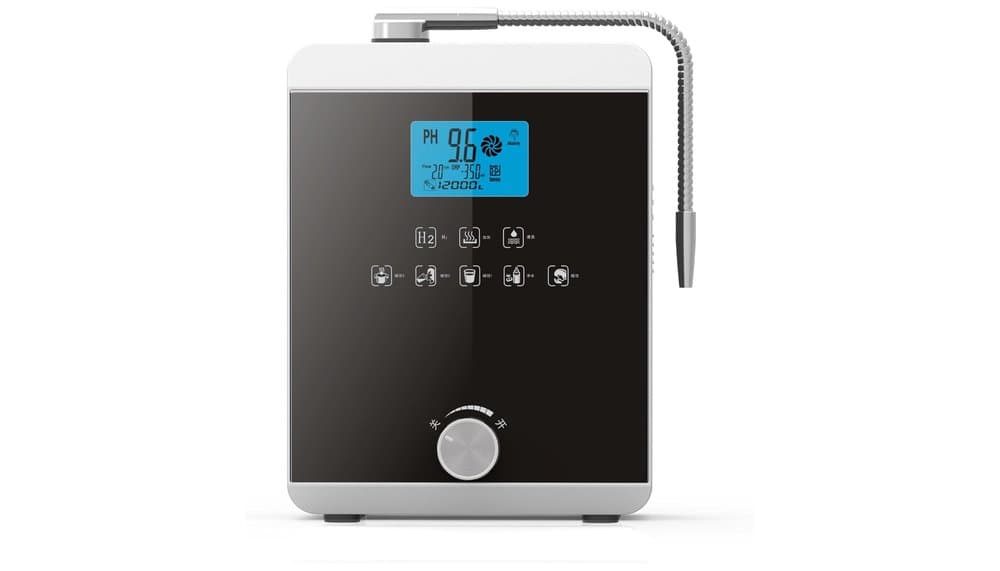
Alkaline Water Ionizer 11-Plate Electrode Test
Analyzes the 11-plate alkaline water ionizer: Does it filter water effectively, alter its properties, and deliver promised health benefits for a family?
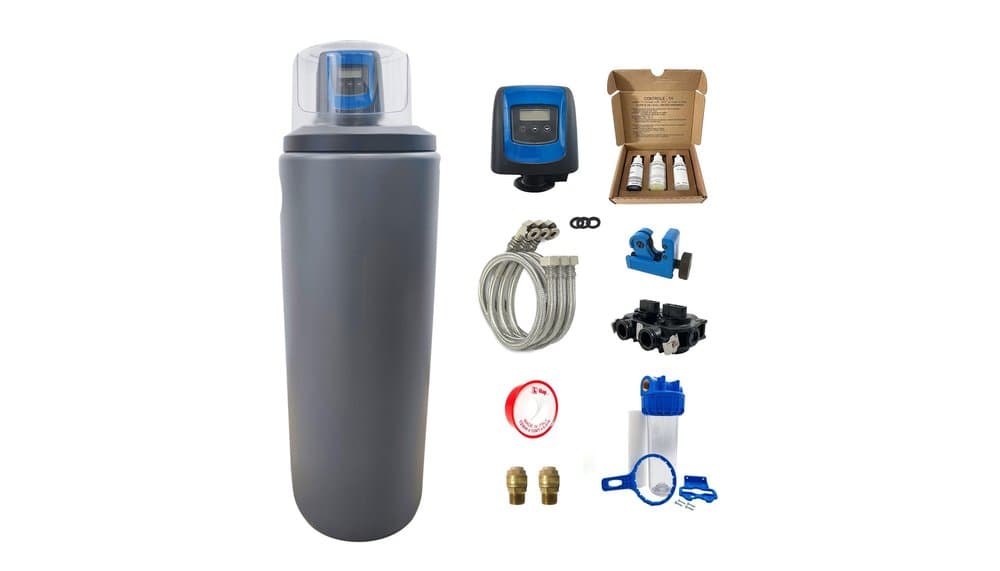
TOODO Fleck 5800 SXT Monobloc Water Softener Review
Volumetric TOODO Fleck 5800 SXT water softener eliminates limescale efficiently for families. A review of features & performance.
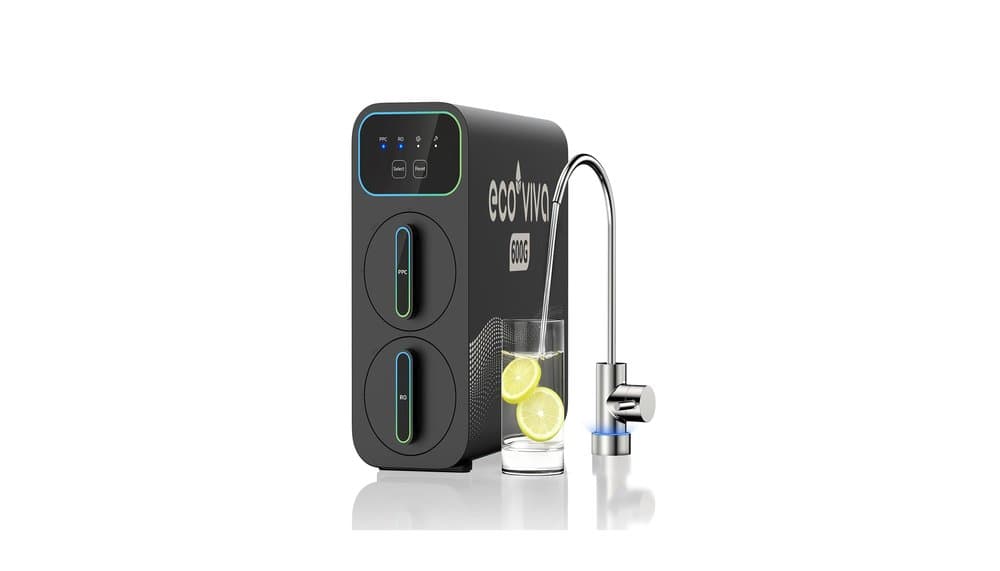
Ecoviva E6 Reverse Osmosis Water Filter Review
Compact, tankless Ecoviva E6 reverse osmosis system analyzed. We test its real-world purification performance, health benefits, and home integration.
Guides you might like
Alkaline Water Ionizer Buying Guide
Discover how alkaline water ionizers work and learn key tips to choose the right one for your home and health. Essential buying guide.
Buying Guide: Best Hydrogen Water Generator
Guide to hydrogen water generators: cutting through the hype to help you make an informed purchase decision for your health and budget.
Choosing Your Home Water Filter
Unlock clean, tasty water at home. Find the right water filter to tackle chlorine, pollutants, and limescale for better health and peace of mind.