Gevvnss Hydrogen Water Bottle Review & Test

Introduction: A Portable Hydrogen Bottle, But Not a Filtration System
On a site dedicated to home filtration, we typically evaluate technologies designed to remove contaminants from water. The Gevvnss Hydrogen Water Bottle, Portable Water Generator takes us into different territory. It is not a water purifier in the traditional sense. Its purpose is not to remove chlorine, heavy metals, or microplastics, but to enrich already clean water with molecular hydrogen (H₂). Here, we are not talking about flow rate in liters per hour, but about concentration in ppm (parts per million). Our analysis will therefore shift its angle: instead of measuring its filtering power, we will assess its real effectiveness at producing hydrogenated water, its technical reliability, its long-term usage cost, and its relevance in a household concerned about its water quality.
What This Product Does (and Does Not Do)
What It DOES NOT DO: Purification
It is crucial to understand this point first and foremost. According to its specifications, the Gevvnss Hydrogen Water Bottle is not a filter. It does not promise or perform any removal of common contaminants:
- No reduction of chlorine, heavy metals (lead, mercury), limescale, nitrates, or PFAS.
- No elimination of microplastics or bacteria.
- No water softening via ion exchange.
Its operation depends on the quality of the water you put into it. The manufacturer recommends using distilled, purified, mineral, or tap water. If your tap water is high in minerals, limescale, or contaminants, the bottle will not remove them. In fact, very hard water could even harm the device's longevity. This product therefore assumes you already have access to quality drinking water, either from a home filter or from bottled water.
What It Is Supposed to Do: Hydrogen Generation
Its unique function is electrolysis. Using a built-in USB-rechargeable battery, the device separates water molecules (H₂O) into oxygen (O₂) and hydrogen (H₂). The goal is to dissolve molecular hydrogen in the water to create so-called "hydrogenated" or "hydrogen-rich" water. The alleged benefits, widely discussed in certain wellness circles, revolve around its potential antioxidant properties: reducing oxidative stress, boosting energy, and supporting the immune system. However, its effectiveness depends entirely on measurable, reliable, and sustainable hydrogen production.
Detailed Analysis: The Devil Is in the Technical Details
SPE/PEM Technology: The (Potential) Heart of the System
Gevvnss announces the use of SPE/PEM technology (Solid Polymer Electrolyte / Proton Exchange Membrane). On paper, this is an important point. According to experts, this membrane is what distinguishes serious generators from gadgets. Its role is twofold:
- Isolate the hydrogen produced at the cathode to prevent it from recombining with oxygen.
- Prevent the migration of minerals and the formation of undesirable by-products like ozone or chlorine (if the source water contains it).
The presence of this technology in the specs is a good indicator. However, without independent testing on this specific model, we cannot guarantee its quality or its real long-term effectiveness.
The Crucial Question of Concentration and Durability
This is the crux of the problem for all bottles of this type. The Gevvnss specifications mention a generation time of 3 minutes, but do not indicate a guaranteed concentration level (e.g., 1.0 ppm, 1.5 ppm). In the web context, testers emphasize that this is the first data point to look for: a concentration that is too low (below 0.5 ppm) makes the benefits anecdotal.
The second critical point is the longevity of the electrodes. Electrolysis is a process that wears down materials. The user community for similar products notes that performance can drop significantly after a few months of daily use, with no visible sign other than a reduction in bubbles. The manufacturer does not communicate about the estimated lifespan of the electrodes or the possibility of replacing them. This potentially turns the device into a consumable with a limited lifespan, with a long-term cost to consider.
Ease of Use and Portability
On this point, the product seems convincing. Its installation is non-existent: you just need to fill it and press a button. Its insulated bottle format in borosilicate glass is practical for the office, gym, or travel. A USB charge allows for about 15 to 20 cycles, which is decent for portable use. Its "eco-friendly" aspect as a replacement for disposable plastic bottles is also a strong marketing argument, provided its own lifespan justifies it.
Synthesized Technical Specifications
| Characteristic | Detail for the Gevvnss Hydrogen Water Bottle |
|---|---|
| Main Technology | Electrolysis with SPE/PEM membrane |
| Advertised Function | Generation of hydrogenated water (not filtration) |
| Contaminants Removed | None. Requires pre-filtered water. |
| Flow Rate / Processing Time | 3-minute cycle for 420 ml |
| Capacity | 420 ml |
| Battery Life | 15-20 cycles per USB charge |
| Reservoir Material | Food-grade borosilicate glass |
| Annual Consumables Cost | Undetermined. Depends on electrode lifespan (replaceable?). No filters to change. |
| Installation | None. Manual filling. |
| Recommended Use | Personal, portable (office, travel, sports) |
What Users and Experts Say About It
By cross-referencing customer feedback on this model and expert analyses of the category, a clear trend emerges.
Recurring Positive Points:
- Ease and Speed of Use: Users appreciate the simplicity. Filling, pressing a button, and waiting three minutes is seen as very convenient.
- Design and Portability: The glass bottle and its format are often described as elegant and robust, suitable for an active life.
- Subjective Sensation: Some users report better hydration, more mental clarity, and an energy boost after consumption. These effects, although subjective, are frequently mentioned.
Expressed Negatives and Doubts:
- Lack of Tangible Proof: The major doubt concerns the actual hydrogen production. Many customers regret the absence of a test certificate or a simple way to verify the concentration. "Does it really produce hydrogen or just bubbles?" is a recurring question.
- Long-Term Durability and Reliability: Several reports mention malfunctions after a few months of regular use. The battery no longer holding a charge, or the device seeming to produce fewer bubbles, are noted complaints. This aligns with expert warnings about possible electrode degradation.
- Maintenance and Filling Instructions: The need to use low or non-mineralized water to preserve the device is a point that is not always well understood initially. Some users, having used hard water, saw their device lose effectiveness or become scaled.
Conclusion: A Niche Product That Requires Realistic Expectations
The Gevvnss Hydrogen Water Bottle, Portable Water Generator is not a home water filtration solution. It is a portable wellness accessory designed to enrich already clean water with molecular hydrogen.
Who Might It Be Relevant For?
- A person already equipped with a good home filtration system (reverse osmosis, quality filter) who wants to experiment with the benefits of hydrogenated water while on the go.
- A portable user, often at the office or traveling, willing to invest in a device whose real lifespan and technical effectiveness are not transparently guaranteed.
Our Main Reservations: The lack of information on the guaranteed H₂ concentration and the longevity of the electrodes is problematic. We are faced with a black box: we must trust the bubble display without metrological proof. In a market saturated with products of variable performance, this opacity is a drawback.
Verdict: If you are looking to purify your tap water, this product is absolutely not the solution. Turn to proven technologies like reverse osmosis or activated carbon. If you are curious about the properties of hydrogenated water and already have a source of pure water, the Gevvnss, with its advertised SPE/PEM technology, presents more promising technical characteristics than many other low-end models. However, buy it with the awareness that its long-term performance and durability remain, according to community feedback, a major unknown. Consider it possibly as an object for experimentation, not as a durable household appliance.
100% free and independent — All our articles are written independently, without any sponsorship. We may earn a commission on purchases made through our links, at no extra cost to you.
Articles you might like
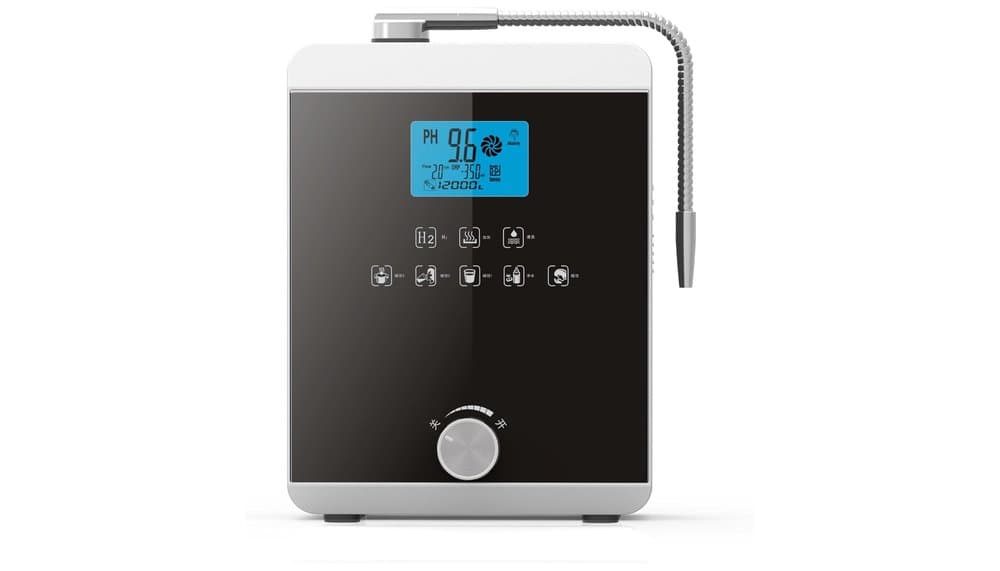
Alkaline Water Ionizer 11-Plate Electrode Test
Analyzes the 11-plate alkaline water ionizer: Does it filter water effectively, alter its properties, and deliver promised health benefits for a family?
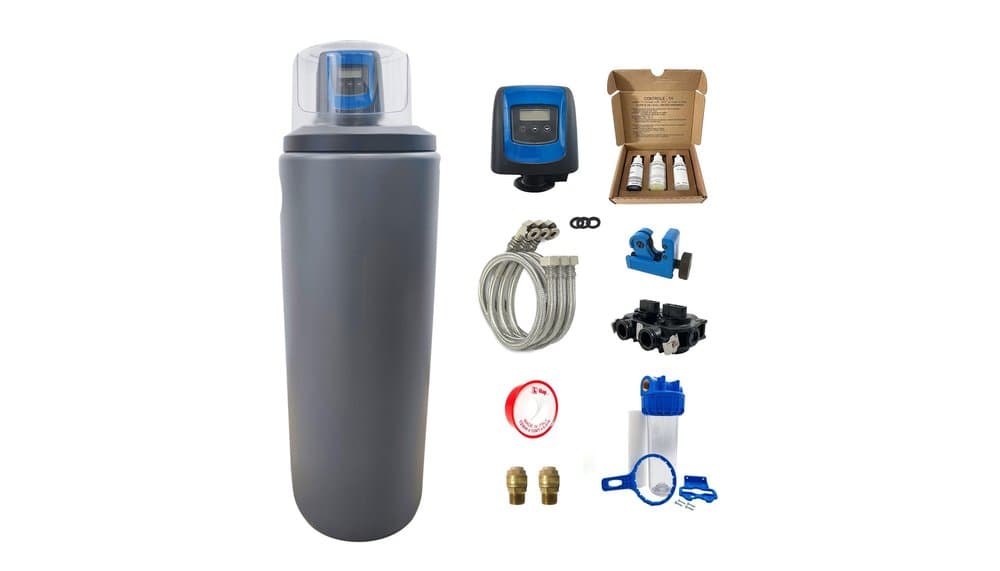
TOODO Fleck 5800 SXT Monobloc Water Softener Review
Volumetric TOODO Fleck 5800 SXT water softener eliminates limescale efficiently for families. A review of features & performance.
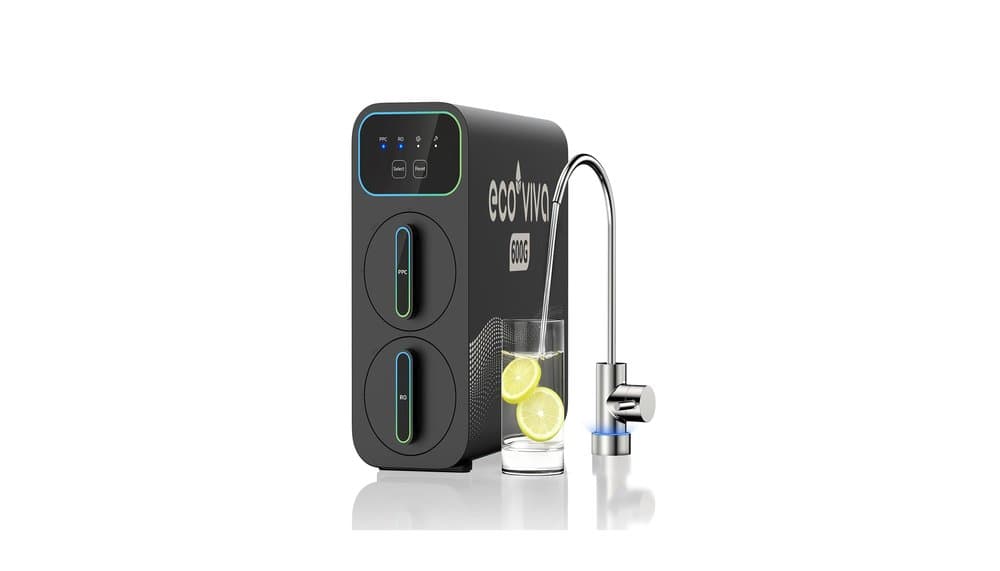
Ecoviva E6 Reverse Osmosis Water Filter Review
Compact, tankless Ecoviva E6 reverse osmosis system analyzed. We test its real-world purification performance, health benefits, and home integration.
Guides you might like
Alkaline Water Ionizer Buying Guide
Discover how alkaline water ionizers work and learn key tips to choose the right one for your home and health. Essential buying guide.
Buying Guide: Best Hydrogen Water Generator
Guide to hydrogen water generators: cutting through the hype to help you make an informed purchase decision for your health and budget.
Choosing Your Home Water Filter
Unlock clean, tasty water at home. Find the right water filter to tackle chlorine, pollutants, and limescale for better health and peace of mind.