GIDIGI GX-7 7-in-1 Multifunctional Water Tester Review
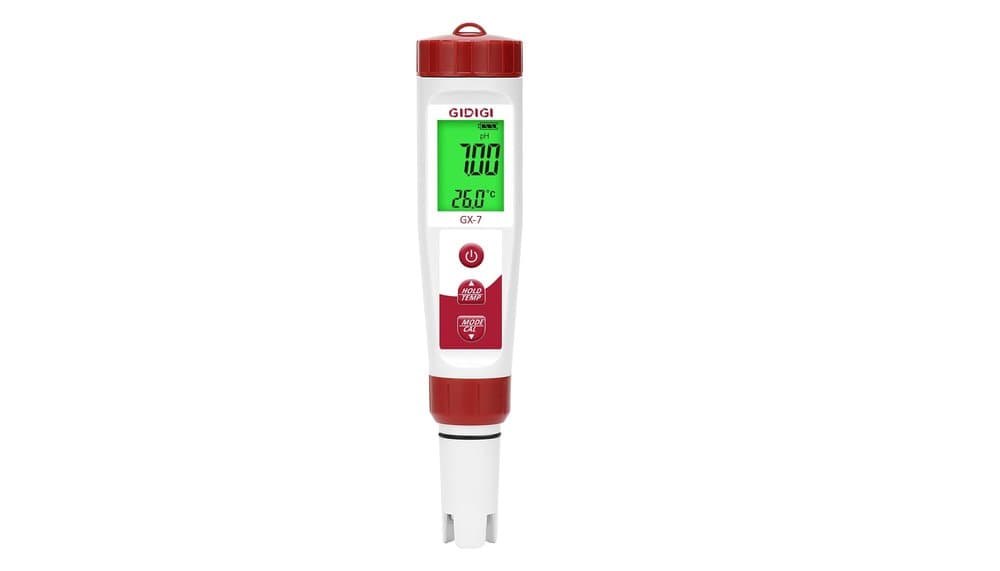
Comprehensive Analysis of the GIDIGI GX-7 7-in-1 Multifunctional Water Tester
In the world of domestic water management, knowing precisely what is in our water is not a luxury, but a necessity. Whether for maintaining a swimming pool, the health of an aquarium, or monitoring drinking water quality, a reliable tester is an indispensable tool. The GIDIGI GX-7 7-in-1 Multifunctional Water Tester presents itself as a Swiss Army knife of analysis, promising to measure seven key parameters. But does this promise of versatility hold up against the real demands of users concerned about their water? Here we analyze its capabilities, its limitations, and its place in a health-focused domestic ecosystem.
Crucial Note: It is fundamental to understand that the GIDIGI GX-7 is a measurement device, not a treatment device. Its role is to inform you about the presence and concentration of certain parameters in the water. It does not eliminate, filter, or purify anything. To evaluate a filtration system, we must therefore see if this tester can validate its effectiveness by measuring the targeted contaminants.
Strong Points: Versatility as the Main Argument
The main strength of the GX-7 is its very broad field of application. In a single device, it combines functions usually spread across several specialized tools.
Simultaneous multi-parameter measurement (pH, free chlorine, ORP, salinity, TDS, EC, and temperature) is a significant time and money saver. This allows for a quick assessment of water quality in various contexts: checking the chemical balance of a saltwater pool, monitoring the parameters of a demanding reef aquarium, or controlling the mineralization of water filtered by reverse osmosis.
According to user feedback, its operation is simple with a readable backlit LCD screen and a basic interface. Automatic Temperature Compensation (ATC) is an important integrated function, as temperature directly influences the reading of parameters like conductivity (EC) and TDS. Testers also highlight that results stabilize quickly, within seconds, allowing for near-instant control.
Weak Points: The Compromises of Versatility
This versatility inevitably comes with compromises, particularly on two central aspects: absolute accuracy and durability.
Firstly, accuracy is suited for amateur and general monitoring use, but does not meet professional or laboratory standards. Expert testers clearly position it as a routine control tool, not for scientific analysis. This limitation is inherent to the technology of the integrated electrodes at this price point.
Secondly, the durability of the probes, especially the one dedicated to chlorine, is a point of caution raised by the community. A chlorine probe has a limited lifespan, often a few months to a year depending on use and maintenance. Its replacement can prove complex or not cost-effective, which penalizes the "chlorine" function in the long term.
Finally, the device requires regular calibration to maintain its reliability. Although often supplied with calibration solutions, this step is crucial and sometimes neglected by novice users, which can lead to erroneous readings.
Detailed Analysis: What Does It Really Measure for Our Health?
Let's now evaluate the concrete usefulness of the GX-7 from the angle that interests us: water quality and domestic health. What can it tell us about contaminants and the effectiveness of our filtration systems?
- Chlorine: This is its most direct function for tap water. It allows you to check for the presence of residual chlorine after treatment at the plant. For users of activated carbon filters, it is an excellent indicator of cartridge exhaustion: if chlorine reappears at the filter outlet, it's time to replace it.
- TDS (Total Dissolved Solids) and EC (Electrical Conductivity): These two parameters are related. They measure the overall load of minerals and ionized salts. This is the key indicator for reverse osmosis (RO) systems. A rejection rate (the percentage of rejected salts) is calculated by comparing the TDS of the input water and the permeate (filtered) water. A rise in TDS at the RO system outlet usually signals a problem: a punctured, worn membrane, or insufficient input pressure. The GX-7 is therefore a valuable diagnostic tool for this type of installation.
- pH: Important for comfort (water that is too acidic or too basic), pipe corrosion, and the effectiveness of certain treatments. Water filtered by a water softener (ion exchange) will have a pH that can change.
- ORP (Oxidation-Reduction Potential): A less known but essential parameter. It indicates the "cleaning" or oxidizing power of the water. Water with a high ORP (like chlorinated pool water) is disinfecting. For drinking water, a very low ORP is sometimes sought (as with some ionizers), but its interpretation is complex and requires advanced understanding.
And other contaminants? This is the fundamental limit of this device, and of most consumer electronic testers. The GIDIGI GX-7 does not specifically detect:
- Heavy metals (lead, mercury, arsenic). Their presence can influence TDS, but without distinction.
- Nitrates.
- PFAS (forever chemicals).
- Microplastics.
- Limescale (water hardness), which is rather measured by the calcium and magnesium content. TDS can include limescale, but without quantifying it separately.
Conclusion of this analysis: The GX-7 is an excellent tool for monitoring filtration performance for certain general parameters (TDS, Chlorine), but it in no way replaces a complete laboratory analysis for specific contaminants and emerging pollutants. It validates the effectiveness of a reverse osmosis system on mineralization, or a carbon filter on chlorine, but cannot certify the absence of nitrates or lead.
Technical Specifications and Associated Costs
| Parameter | Measurement Range | Accuracy | Comment |
|---|---|---|---|
| pH | 0.00 - 14.00 | ±0.01 pH | Basic function, requires calibration with buffer solutions. |
| Free Chlorine (Cl2) | 0 - 10 ppm | Information not detailed | Measurement via specific electrode. Limited probe durability. |
| ORP | -1999 to +1999 mV | ±1 mV | Measures redox potential. Useful for pools, aquariums, or "reduced" water. |
| Salinity | 0 - 9990 ppm / 10.1 - 100.0 ppt | Information not detailed | Crucial for saltwater pools and marine aquariums. |
| TDS | 0 - 9999 ppm | ±2% FS | Derived from EC measurement. Indicator of total mineralization. |
| EC (Conductivity) | 0 - 9999 µS/cm | ±2% FS | Fundamental measurement for hydroponics and purity control. |
| Temperature | 0 - 80°C | ±0.5°C | With Automatic Temperature Compensation (ATC). |
| Power Supply | 3 LR44 button cell batteries (included) | ||
| Consumables & Annual Cost | Calibration solutions (pH, EC, Chlorine), replacement electrode (especially for chlorine). The annual cost is variable. For regular domestic use, one should budget for the repurchase of calibration solutions (a few tens of euros per year) and potentially the replacement of the chlorine electrode after 12-18 months (cost to be checked based on availability). |
What Users Say: A Synthesis of Feedback
The user community provides valuable feedback that corroborates and nuances the technical analysis.
Recurring positive points revolve around convenience and simplicity. Phrases like "gets the job done," "works correctly," "handy," and "good value for money" often come up. Aquarium and hydroponic system users particularly appreciate the TDS/EC measurement. One tester notes the consistency of measurements between the GX-7 and another device of a different brand, which inspires confidence in its basic reliability.
Points of caution or negatives highlighted confirm our analyses:
- Complexity for some: One user finds it "too sophisticated for a pool," indicating that its many functions can be superfluous for a simple need (e.g., just chlorine or pH).
- Relative accuracy: Several reviews, especially from experts, remind that it is a control tool, not a laboratory one. Calibration is essential.
- Versatility vs. Specialization: An expert review notes that for pH, test strips or a dedicated tester can sometimes be just as convenient, and that the device does not replace a complete water analysis (alkalinity, hardness, etc.) for pool management.
- The question of probe longevity and the availability of spare parts is underlying in the comments, though not extensively documented.
Conclusion: Who is This Versatile Tester For?
The GIDIGI GX-7 7-in-1 Multifunctional Water Tester is a surprisingly comprehensive diagnostic tool for its segment. It finds its ideal place with the enlightened amateur or domestic handyman who manages several aquatic environments: a freshwater aquarium, a garden pond, and a swimming pool. It is also very relevant for the owner of a reverse osmosis system who wants to simply and regularly monitor the efficiency of their membrane via TDS measurement.
However, it is not a panacea. Its main flaw is also its strength: by trying to measure everything, it specializes in nothing. For a single, demanding need (like high-end reef aquariums), a dedicated pH or salinity tester will offer superior accuracy. Above all, one must keep in mind that it provides only a partial view of water quality. It is incapable of detecting organic contaminants, specific heavy metals, or modern chemical pollutants.
Our verdict: If you are looking for a first versatile and economical tester to get general indicators about your water (chlorine, mineralization, pH, temperature) and validate the proper functioning of your basic filtration equipment (carbon, RO), the GIDIGI GX-7 is a wise and cost-effective choice. But consider it as a monitoring companion, not as an absolute guarantee of purity for your water. For that, only a certified laboratory analysis can provide a definitive answer.
100% free and independent — All our articles are written independently, without any sponsorship. We may earn a commission on purchases made through our links, at no extra cost to you.
Articles you might like
Lafiucy 10 Inch Coconut Carbon Filter Review
Review of the affordable Lafiucy 5 Microns 10-inch activated carbon water filter cartridge, analyzing specs & user feedback for performance.
ALTHY Performance Hydrogen Water Bottle Review
Transform water into antioxidant-rich hydrogen water anywhere with the ALTHY portable bottle. A powerful, on-the-go wellness innovation.
Swiss Aqua Technologies IPS Kalyxx Water Softener Review
IPS Kalyxx magnetic water conditioner offers scale prevention without salt, electricity, or maintenance, using a permanent magnet.
Guides you might like
Alkaline Water Ionizer Buying Guide
Discover how alkaline water ionizers work and learn key tips to choose the right one for your home and health. Essential buying guide.
Buying Guide: Best Hydrogen Water Generator
Guide to hydrogen water generators: cutting through the hype to help you make an informed purchase decision for your health and budget.
Choosing Your Home Water Filter
Unlock clean, tasty water at home. Find the right water filter to tackle chlorine, pollutants, and limescale for better health and peace of mind.