iSpring FA15 Alkaline Remineralization Filter Review & Test

Comprehensive Analysis of the iSpring FA15 Alkaline Water Filter Cartridge: The End of "Flat" Reverse Osmosis Water
In the world of home filtration, reverse osmosis (RO) is king for its ability to produce water of remarkable purity. However, this perfection comes at a price: "empty" water, slightly acidic and devoid of essential minerals. This is precisely the problem the iSpring FA15 Alkaline Water Filter Cartridge addresses. This post-treatment module is not a purifier per se, but a harmonizer. We will dissect its role, effectiveness, and relevance in your setup here.
Strengths & Weaknesses: The Balance to Achieve
Strengths:
- Notable taste improvement: This is its most cited benefit. It transforms RO water, often described as "flat" or "dead," into water with a rounder, more pleasant taste.
- Remineralization and pH adjustment: It reintroduces alkalizing minerals (calcium, magnesium) and raises the water's pH, meeting the health expectations of users.
- Compatibility and ease of installation: Designed with 1/4" quick-connect fittings, it integrates easily with most existing under-sink RO systems, downstream from the storage tank.
- NSF/ANSI 58 Certification: This certification is a serious guarantee regarding material safety and the validity of the claimed performance.
Weaknesses:
- Variable lifespan: Its 1500-gallon capacity (approximately 5700 liters) is indicative. In practice, its effectiveness decreases with the volume treated and the quality of the inlet water, potentially requiring replacement more frequently than the suggested 6 months.
- Occasional installation issues: A minority of users report difficulties with the quick-connect fittings or a desire for alternative threading, which can lead to leaks if the installation is not perfect.
- Measurable increase in TDS: This is an intended effect (mineral addition), but it can surprise those who closely monitor a low TDS. This does not mean a return of contaminants.
- Mandatory initial rinsing: As with any mineral media filter, an extended rinse is required after installation to flush out fine mineral dust, otherwise you risk finding fine white particles in your glass.
Detailed Analysis: Technology, Health, and Effectiveness
What Technology and For What Results?
The FA15 does not use a membrane or advanced activated carbon. Its core is a three-layer filter media: mineral stones, calcite (calcium carbonate), and Corosex (magnesium oxide). This mixture works through contact and slow dissolution. When the aggressive, acidic RO water passes through this mineral bed, it picks up calcium and magnesium ions, which has the side effect of raising its pH to a more alkaline value, generally between 8 and 9 depending on initial conditions.
Real Performance on Contaminants: A Specific Role
It is crucial to understand what this filter does and does not do.
- Contaminant removal: None. The FA15 does not remove pollutants. It is always placed downstream of a complete filtration chain (pre-filters + RO membrane). Its role is not to purify, but to recondition already purified water.
- Against chlorine, heavy metals, PFAS, nitrates, microplastics: It is completely ineffective against these elements. They must have been removed upstream by the reverse osmosis system. If installed alone without RO, it has no purifying interest.
- Against limescale: This is a paradox. It adds calcium and magnesium, the two main components of limescale (scale). This is usually not a problem for consumption, but it means it should not be expected to protect appliances from scale – it's quite the opposite.
Impact on Water Quality and Health
The health argument rests on two pillars:
- Mineral rebalancing: Completely demineralized water is not ideal for long-term daily consumption. The addition of calcium and magnesium is beneficial. User feedback agrees: the water is perceived as "less aggressive," more refreshing.
- Alkalization (pH): The user community appreciates consuming water with a higher pH, often associated with benefits for the body's acid-base balance, although scientific evidence on this specific point is still debated. The tangible effect is mainly an improved taste, often described as "softer."
Independent testers point out that the rise in TDS (Total Dissolved Solids) is an excellent indicator of the filter's operation. An increase of 10 to 30 ppm is normal and signifies mineral addition.
Integration, Cost, and Value for Money
- Installation: It is within the reach of a competent DIYer. The principle is simple: insert it on the 1/4" line between the storage tank and the faucet. Online guides and reviews show that most installations are done without a plumber. Caution is needed with tightening the quick-connect fittings to avoid leaks.
- Footprint: Standard for a 10-inch cartridge (about 25 cm tall), it simply requires a little extra space in the under-sink cabinet.
- Annual consumable cost: Here, the calculation is simple. The FA15 is a replacement cartridge to be changed generally every 6 to 12 months depending on consumption. Its annual cost therefore depends directly on its unit price and replacement frequency. Compared to other stages of an RO system (sediment and carbon pre-filters, membrane), it is often the most expensive consumable in the chain, but users largely judge that the taste improvement justifies this additional cost.
Technical Specifications
| Characteristic | Detail |
|---|---|
| Product Name | iSpring FA15 Alkaline Water Filter Cartridge |
| Main Function | Remineralization & Alkalization of RO water |
| Technology | 3-layer media (mineral stones, calcite, Corosex) |
| Advertised Capacity | 1500 gallons (approximately 5700 liters) |
| Connections | 1/4" quick-connect (push-fit) fittings |
| Dimensions | Standard 10" x 2.75" format (approximately 25 x 7 cm) |
| Certification | NSF/ANSI 58 (for RO system components) |
| Restored Minerals | Calcium, Magnesium, Potassium |
| Impact on Water | Increases pH (generally between 8 and 9) and TDS |
What Users Say: A Highly Acclaimed Taste Improvement
The synthesis of over 4000 reviews and feedback from forums paints a clear consensus.
The recurring positive points are:
- Taste transformation: This is the key argument. Phrases like "the water becomes excellent," "softer," "finally makes the water perfect" come up constantly. Many note that it encourages the whole family to drink more water.
- Proof of effectiveness: Users equipped with TDS meters confirm the increase in minerals. One user specifies: "this adds about 10 ppm." Another, using the system for a reef aquarium, measures a pH rise to 8.8-9.0.
- Ease of replacement: For the majority, the quick-connect fittings are a plus. "Easy installation," "No leaks" are typical comments.
- Favorable comparison: Some who have tested other brands (like Geekpure) consider the FA15 offers a better result on pH and taste.
The points of caution or criticism focus on:
- Perceived durability: Several reviews suggest the cartridge depletes fairly quickly, possibly requiring a change more frequently than the RO membrane itself.
- Installation quirks: A few isolated negative reports mention leak issues or incompatibility with certain fittings ("the outlets are not threaded"). This highlights the importance of checking your system's configuration before purchasing.
- The price: It is regularly described as "expensive" compared to other cartridges in the system, even if its usefulness is acknowledged.
Conclusion: An Almost Essential Accessory for Reverse Osmosis
The iSpring FA15 Alkaline Water Filter Cartridge is not a gimmick. It is the pragmatic and effective answer to the main flaw of domestic reverse osmosis: water that is too pure, often considered tasteless and with a non-existent mineral profile.
Our analysis concludes that it is a reliable product that delivers on its promise of remineralization and taste improvement, as evidenced by TDS measurements and overwhelmingly positive user feedback on this aspect. Its integration is simple and its NSF/ANSI certification is a serious asset.
However, it must be considered for what it is: the final step for comfort and taste in a complete purification system. It does not replace the main filtration stages in any way. Its cost of ownership must be integrated into the overall budget of your RO system.
Who is it for? Any owner of a reverse osmosis system who finds their water "flat," who is concerned about demineralization, or who simply wants water with a more balanced and pleasant taste for daily use. For a family, the organoleptic improvement can be a real lever for regular hydration. It is an investment that is fully justified to transform technically perfect water into a sensorially and gustatorily successful one.
100% free and independent — All our articles are written independently, without any sponsorship. We may earn a commission on purchases made through our links, at no extra cost to you.
Articles you might like
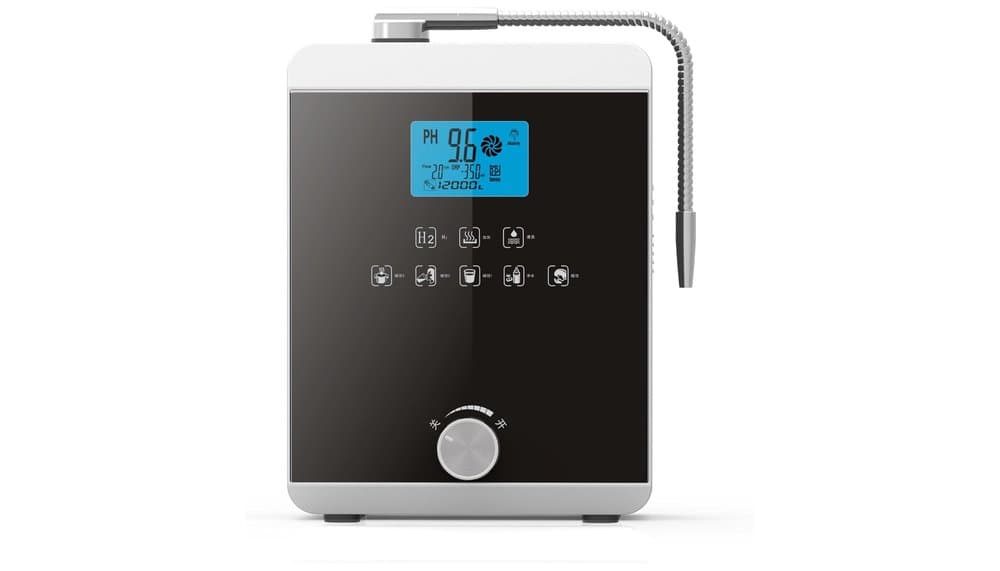
Alkaline Water Ionizer 11-Plate Electrode Test
Analyzes the 11-plate alkaline water ionizer: Does it filter water effectively, alter its properties, and deliver promised health benefits for a family?
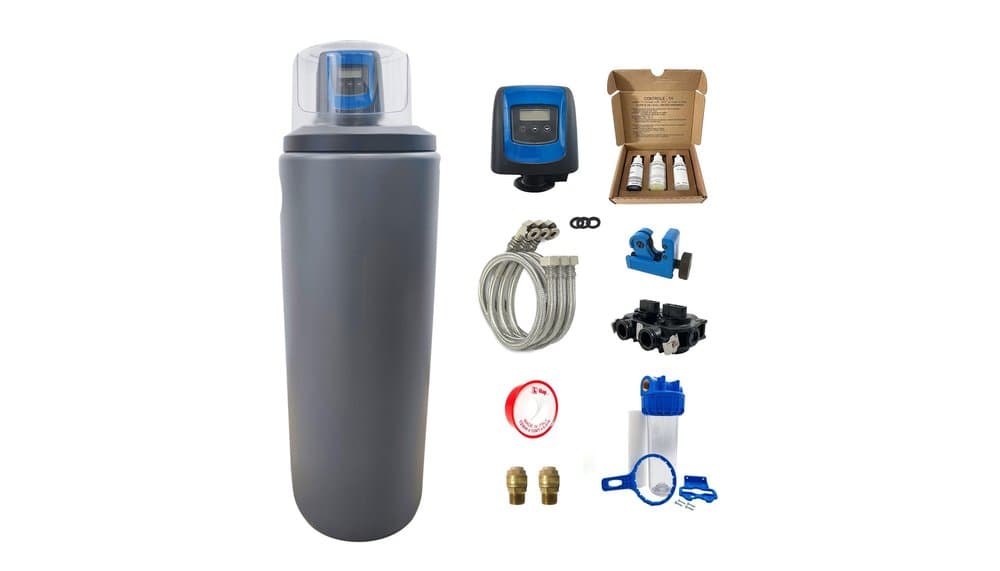
TOODO Fleck 5800 SXT Monobloc Water Softener Review
Volumetric TOODO Fleck 5800 SXT water softener eliminates limescale efficiently for families. A review of features & performance.
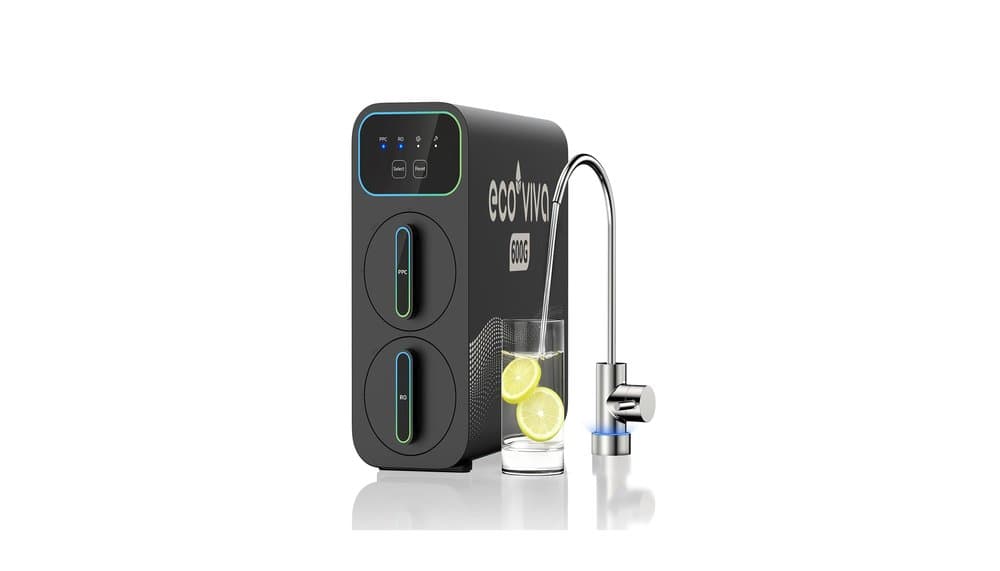
Ecoviva E6 Reverse Osmosis Water Filter Review
Compact, tankless Ecoviva E6 reverse osmosis system analyzed. We test its real-world purification performance, health benefits, and home integration.
Guides you might like
Alkaline Water Ionizer Buying Guide
Discover how alkaline water ionizers work and learn key tips to choose the right one for your home and health. Essential buying guide.
Buying Guide: Best Hydrogen Water Generator
Guide to hydrogen water generators: cutting through the hype to help you make an informed purchase decision for your health and budget.
Choosing Your Home Water Filter
Unlock clean, tasty water at home. Find the right water filter to tackle chlorine, pollutants, and limescale for better health and peace of mind.