Naturewater 6 Stage RO System Test & Review

Introduction
In the world of home water purification, reverse osmosis (RO) represents the gold standard, promising water of near-absolute purity. The Naturewater 6 Stage Reverse Osmosis Water Purification System positions itself in this niche with strong arguments: six-stage filtration, an integrated UV lamp, and a booster pump. But beyond marketing promises, is this system suitable for your kitchen and your family's health? We analyze its real performance, cost of ownership, and ease of use based on its technical specifications, community feedback, and expert observations.
Strong Points
The Naturewater 6 Stage stands out with a comprehensive multi-barrier approach. Its combination of pre-filtration, reverse osmosis, and UV sterilization allows it to target a very wide spectrum of contaminants. The presence of a booster pump is a decisive asset for homes with low water pressure, guaranteeing stable performance. Finally, according to user feedback, the system produces water with a neutral and pleasant taste, a sign of effective removal of organic compounds and chlorine.
Weak Points
The system is not exempt from the inherent constraints of reverse osmosis. Its water rejection rate is notable, generating wastewater. The installation, although feasible for a skilled DIYer, is criticized for its lack of clear documentation. Some users report reliability issues with certain components (leaks, transformer) and a UV lamp that is always on, which raises questions about its lifespan and consumption. Customer support appears, according to some reviews, difficult to reach.
Detailed Analysis: Health, Performance, and Daily Use
Purification and Health: What Does It Really Remove from the Water?
The effectiveness of the Naturewater 6 Stage relies on the sequence of its six stages. Let's analyze each technology and its impact on health.
- Sediment Filters (5 microns): The first line of defense. They remove suspended particles like rust, dust, and visible-sized microplastics, protecting the following stages.
- Granular Activated Carbon (GAC): Targets volatile organic compounds (VOCs), chlorine, pesticides, and herbicides. It radically improves taste and odor.
- Carbon Block Filter (CTO): Refines the filtration from stage 2, capturing fine particles down to 1 micron and persistent chemical residues.
- Reverse Osmosis Membrane: The heart of the system. Its extremely fine porosity (≈0.0001 micron) blocks almost all dissolved contaminants: heavy metals (lead, arsenic, mercury), nitrates, fluoride, dissolved salts (including limescale reduced to trace amounts), and a large majority of PFAS (per- and polyfluoroalkyl substances). Expert tests confirm it is the most effective technology against these emerging pollutants.
- Post Activated Carbon Filter: "Polishes" the water after the storage tank to guarantee perfect taste at the tap.
- UV Sterilizer: The final sanitary barrier. Ultraviolet rays destroy 99.99% of bacteria, viruses, and cysts (like Giardia) that could contaminate the water in the tank. This is an additional safety measure, especially for households with young children or immunocompromised individuals.
Health conclusion: On paper, this system is a fortress. It effectively eliminates most known risks: chemical, microbiological contaminants, and a large part of emerging pollutants like PFAS. It produces soft (low in minerals) and pure water.
Technical Performance: Flow Rate, Waste, and Hidden Costs
Flow Rate and Capacity
The specs announce 180 liters per day, approximately 7.5 liters per hour or 8 L/h as indicated. In practice, users note that filling the storage tank (≈12L) takes between 30 and 45 minutes. This flow rate is sufficient for standard family use (drinking, cooking), provided you plan a little. It is not a system designed to fill a bathtub.
Rejection Rate (Water Waste)
This is the Achilles' heel of reverse osmosis. The manufacturer indicates a ratio of 1:3 (1 liter of pure water for 3 liters of wastewater). This is an average performance in this segment. To produce 10 liters of purified water, the system will consume about 40 liters of water in total. This point is consistently highlighted by the community as an ecological and economic drawback to consider.
Annual Cost of Consumables
This is a crucial element of the long-term price-performance ratio.
- Pre-filters (sediment + 2x carbon): To be replaced every 6 to 12 months, depending on the quality of the inlet water. A user estimates the cost of a kit at about €30.
- RO Membrane: Typical lifespan of 2 to 3 years. Its price is higher than the pre-filters.
- Post Carbon Filter: Generally replaced annually.
- UV Lamp: Has a limited lifespan (about 9000 hours). If it stays on permanently, it will need to be changed approximately every 12 months. This is an additional cost specific to this model.
A basic estimate of the annual cost, by spreading out the membrane replacement, easily falls between €50 and €100, including the UV lamp. This regular maintenance must be budgeted for.
Technology Comparison
Naturewater combines several technologies. Here's how they compare to other market solutions:
- Reverse Osmosis (RO) vs. Activated Carbon alone: Carbon is excellent against chlorine, bad tastes, and some chemicals, but it is ineffective against nitrates, fluorides, or the majority of dissolved heavy metals. RO is far superior on these points.
- Reverse Osmosis (RO) vs. Water Softener (ion exchange): The softener removes calcium and magnesium (limescale) but does not improve microbiological or chemical purity. It treats all the water in the house, whereas RO is a point-of-use system.
- UV Lamp vs. Electrolysis: UV is a physical disinfection without adding chemicals, ideal as a final step. Electrolysis (chlorine generator) is more commonly used as initial treatment for pools or water networks, not for drinking water.
- With Pump vs. Without Pump: The pump is essential if your water pressure is below 3 bars. It also optimizes performance and slightly reduces the rejection rate. Models without a pump are cheaper but often underperform.
Ease of Installation and Size
Opinions are divided. Skilled DIYers estimate the assembly can be done in 2 to 3 hours, but highlight the lack of a detailed manual and the need to refer to online tutorials. The operation requires drilling the sink for the dedicated faucet and connecting the system to the water supply and drain. The size (51 x 38 x 18.5 cm for the main unit + tank) requires a spacious and organized under-sink cabinet. Space must be planned for connections and drainage.
Technical Specifications
| Characteristic | Detail |
|---|---|
| Product Name | Naturewater 6 Stage Reverse Osmosis Water Purification System |
| Technology | 6 Stage Reverse Osmosis with UV Lamp |
| Daily Flow Rate | 180 liters (approx. 7.5 L/h) |
| Rejection Ratio | 1 : 3 (1L purified / 3L wastewater) |
| Filtration Stages | 1. 5µm Sediment Filter <br> 2. Granular Activated Carbon (GAC) <br> 3. Carbon Block Filter (CTO) <br> 4. Reverse Osmosis Membrane <br> 5. Post Carbon Filter <br> 6. UV Sterilization |
| Key Components | Booster Pump, Storage Tank (~12L), Dedicated Faucet |
| Main Unit Dimensions | 51 x 38 x 18.5 cm (filtration unit) |
| Installation | Under sink |
| Power Supply | Mains (for pump and UV lamp) |
| Targeted Contaminants | Sediments, Chlorine, Pesticides, Heavy Metals, Nitrates, Limescale (reduced), Bacteria/Viruses, PFAS* |
| Maintenance | Annual replacement of pre/post-filters, membrane every 2-3 years, annual UV lamp. |
*Effectiveness on PFAS depends on their type and the membrane used, but RO is recognized as one of the best available technologies.
What Users and Experts Say
The synthesis of hundreds of reviews and expert analyses reveals clear trends.
The praise mainly concerns:
- The quality of the produced water: Users are unanimous on the spectacular improvement in taste, odor, and clarity. Some testify to its usefulness after work on the water network that degraded tap water quality.
- The effectiveness of the filtration: The speed at which the first sediment filter discolors is often cited as tangible proof of its action.
- The responsiveness of some sellers: In case of a problem upon receipt (broken part), several customers praised fast and cooperative customer service.
The recurring criticisms highlight:
- Quality control issues: Leaks at plastic fittings, a UV lamp that burns out quickly, or an undersized pump transformer that overheats excessively are reported by several buyers.
- Insufficient installation manual: The need to use YouTube videos is often described as a necessity.
- Pump noise: Described as bothersome by some, especially in open-plan kitchens.
- The permanently on UV lamp: This raises concerns about lamp longevity and power consumption. Ingenious users have added a timer to activate it only when useful.
- Sometimes inaccessible customer support: Some complain of only encountering chat bots and not being able to solve their problems.
Conclusion
The Naturewater 6 Stage Reverse Osmosis Water Purification System is an ambitious system that, on paper, meets almost all sanitary requirements for pure drinking water. Its six-stage architecture, reinforced by UV, makes it a complete and powerful purifier, capable of treating a wide variety of pollutants, from the most classic to the most concerning like bacteria or some PFAS.
However, its main flaw is not technical, but related to quality and user experience. Field feedback reveals uneven reliability of components (fittings, electronics) and inconsistent after-sales service. It is a product that can offer immense satisfaction to a DIYer capable of troubleshooting a potential leak or adapting the installation (timer for the UV, more robust transformer), but which could frustrate a user looking for a hassle-free "turnkey" solution.
Its price-performance ratio is therefore conditional. If you get a unit without manufacturing defects and you accept the inherent constraints of reverse osmosis (water waste, regular maintenance), you have a very high-performance domestic purification station. Otherwise, the experience can turn into an ordeal. For a health-conscious family willing to invest some time in installation and maintenance, this system represents a serious solution, provided you buy with an awareness of these potential durability limits.
100% free and independent — All our articles are written independently, without any sponsorship. We may earn a commission on purchases made through our links, at no extra cost to you.
Articles you might like
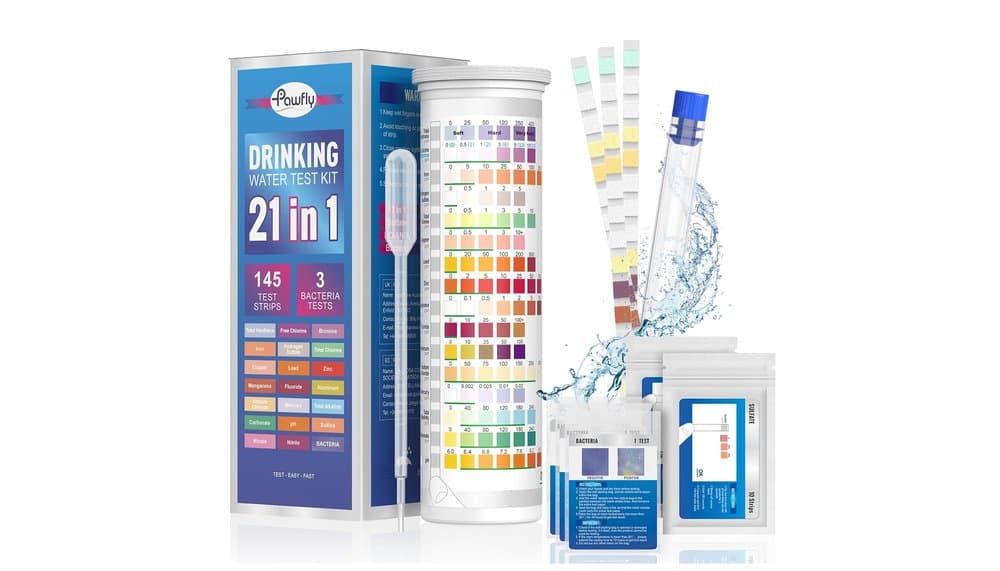
Pawfly 21 in 1 Drinking Water Test Kit Review
Pawfly test kit reviews a 21-in-1 water test strip, analyzing accuracy & value for home tap, well, or aquarium water tests. Get key insights before buying.
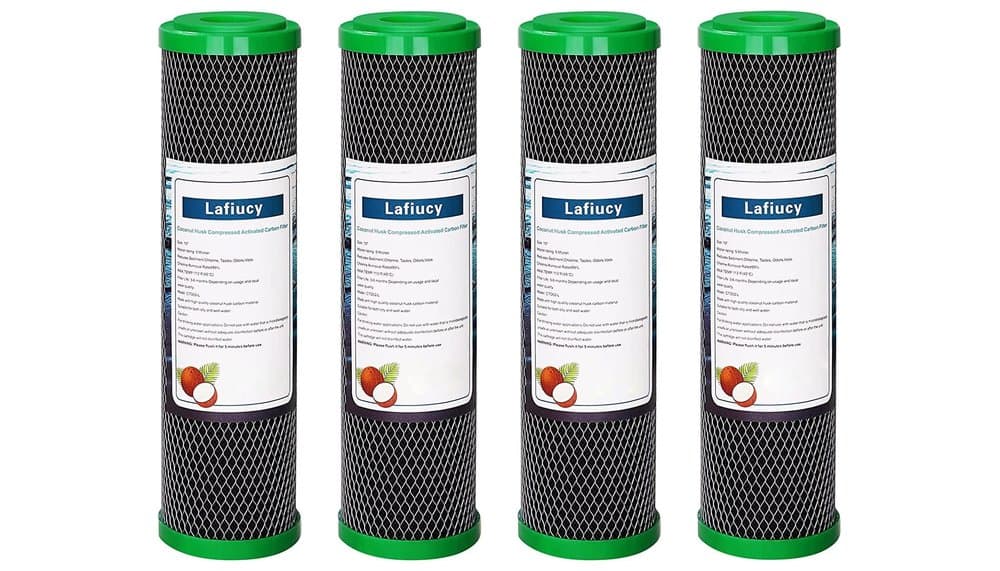
Lafiucy 10 Inch Coconut Carbon Filter Review
Review of the affordable Lafiucy 5 Microns 10-inch activated carbon water filter cartridge, analyzing specs & user feedback for performance.
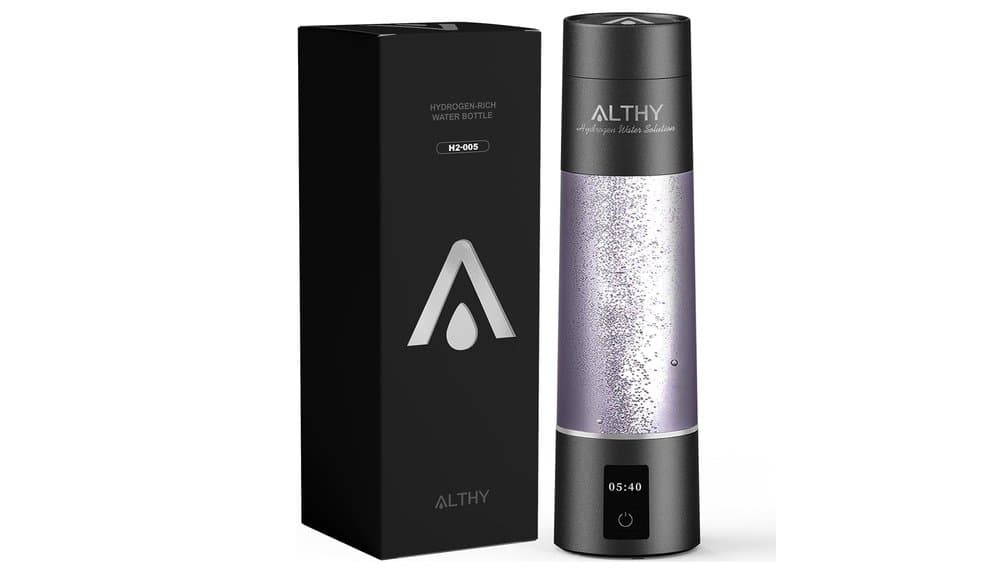
ALTHY Performance Hydrogen Water Bottle Review
Transform water into antioxidant-rich hydrogen water anywhere with the ALTHY portable bottle. A powerful, on-the-go wellness innovation.
Guides you might like
Alkaline Water Ionizer Buying Guide
Discover how alkaline water ionizers work and learn key tips to choose the right one for your home and health. Essential buying guide.
Buying Guide: Best Hydrogen Water Generator
Guide to hydrogen water generators: cutting through the hype to help you make an informed purchase decision for your health and budget.
Choosing Your Home Water Filter
Unlock clean, tasty water at home. Find the right water filter to tackle chlorine, pollutants, and limescale for better health and peace of mind.