Pawfly 4 Pack Water Lead Test Kit Review
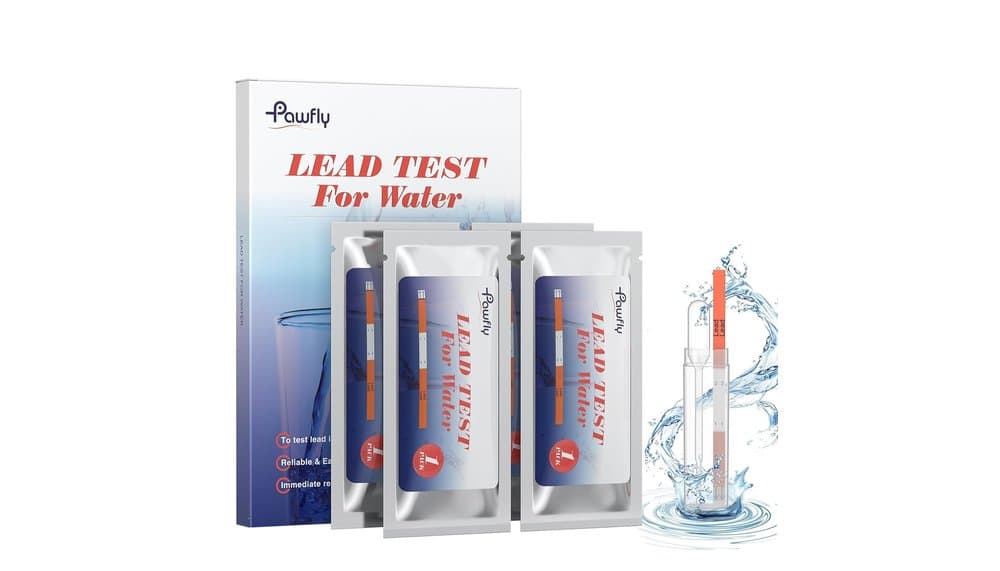
Pawfly 4 Pack Water Lead Test Kit
Introduction: A Home Lead Test, Tool for Vigilance or False Security?
In our quest for pure and healthy domestic water, the question of heavy metals, and particularly lead, regularly resurfaces. This contaminant, often originating from old pipes, soldering, or certain fixtures, poses a major health risk, especially for children and pregnant women, with potential effects on neurological development. Faced with this invisible threat, at-home testing solutions like the Pawfly 4 Pack Lead Test Kit for Lead in Water promise a quick and accessible diagnosis. But what is the real value of this tool for a household concerned about its water quality? This is what we will analyze in depth, by dissecting its promises, its performance, and its place in the water purification ecosystem. Here, we are not filtering the water, we are trying to reveal a possible contamination.
Key Strengths of the Pawfly Kit
Analysis of the specifications and user feedback reveals several clear advantages of this product.
Remarkable Simplicity of Use. This is the most praised argument. The four-step process (sampling, agitation, immersion, reading) is described as intuitive and quick, requiring no technical skills. Within about ten minutes, the user gets a result. This accessibility makes it a very democratic first-line tool.
A Practical Multi-Test Pack. The inclusion of four individual kits in blister packs is a logistical asset. It allows testing different water points in the house (kitchen, bathroom), checking at different times (morning stagnant water vs. running water), or simply confirming a first result. This offers some flexibility for basic monitoring.
Announced Low Detection Threshold. On paper, the manufacturer announces detection down to 5 parts per billion (ppb). This threshold is relevant because it is below or around regulatory limits in many regions (for example, 5 ppb is the standard for fixtures in the United States, with the goal being "zero lead"). The promise is therefore to detect significant contamination.
Clear Visual Interpretation. The reading system based on comparing two colored lines (if line 2 is darker than line 1, the test is positive) avoids the ambiguities of comparison with complex color charts. According to feedback, this method is judged "foolproof" by many users.
Weaknesses and Important Limitations
The kit's strengths come with critical limits that must be understood before placing blind trust in the results.
Uncertified Reliability and Accuracy. This is the most emphasized weakness by knowledgeable testers. The kit has no recognized independent certification (like a CE mark or validation by a reference laboratory). As one user notes, this raises the fundamental question: how can one be sure the test reacts correctly and accurately? Test strips are known in the industry to be less reliable than laboratory analyses, especially at low concentrations.
Binary, Not Quantitative Result. The kit only indicates whether the lead content exceeds (or not) a threshold estimated at 5 ppb. It provides no information on the actual concentration. A positive result signals a problem, but does not indicate its magnitude. A negative result may simply mean lead is present at 4 ppb, without the water being "safe" in the sense of total absence.
Risk of False Negatives and False Security. This is the main risk identified by experts. If the kit's actual sensitivity is lower than the announced 5 ppb, or if the protocol is not followed to the letter (water stagnation time, reaction time), the test can show a false negative. The user then mistakenly believes their water is safe, which can delay the implementation of appropriate filtration solutions. One French customer review fortunately demonstrates that the kit can give a positive result under real conditions (stagnant water in old pipes).
Limited Usefulness in a Complete Diagnosis. This kit tests ONLY lead. It is completely ineffective and silent on all other contaminants of concern: chlorine, limescale, nitrates, PFAS, microplastics, other heavy metals like mercury or arsenic. It is a very targeted tool, not a complete water quality analysis.
See today's priceDetailed Analysis: What is This Test Really Worth?
Placed in the broader context of managing water quality at home, the Pawfly 4 Pack Lead Test Kit finds a precise niche, but its role must be strictly defined.
A Tool for Initial Screening, Not a Definitive Diagnosis. The community of experts and testers agree on this point: this type of kit is useful for a first indicative check, a quick "alert". If the test is clearly positive, it confirms a problem and justifies immediate action (stopping consumption, lab analysis). On the other hand, a negative result must not be considered a guarantee of the absence of lead. It should rather be seen as an incentive, in case of doubt about old pipes or for sensitive populations, to proceed with a certified laboratory analysis, which will provide a quantitative and reliable result.
The Technology Behind the Test: Test Strip ("Dipstick"). This is neither reverse osmosis nor activated carbon. It is a strip impregnated with chemical reagents that change color in the presence of lead ions. This method is fast and inexpensive, but it is also more subject to interference with other elements in the water and less accurate than the spectrometry methods used in labs. Its real limit of detection (LOD) is rarely as low and stable as that of professional analyses.
Relationship with Filtration Systems. This kit is an information supplement, not a treatment solution. Its interest for us, consumers concerned with filtration, is twofold: 1) Assess the need to invest in a lead-specific filter (like an NSF 53 certified activated carbon filter for lead reduction, or a reverse osmosis system); 2) Test the effectiveness of an existing filter by comparing water before and after filtration. In this second case, the multiple tests in the pack are a real plus.
Target Audience and Usage Recommendation. This kit is perfect for:
- Occupants of old houses (pre-1950s) where the risk of lead pipes is high.
- Renters who want a preliminary check without heavy investment.
- Families wanting a quick verification after plumbing work.
- Anyone wanting to check the effectiveness of their water filter against lead.
It is insufficient and potentially misleading for:
- A regulatory or legal analysis (for a real estate sale, for example).
- A reliable public health diagnosis.
- Assessing the overall safety of drinking water, as it ignores all other contaminants.
Technical Specifications and Key Data
For a synthetic view, here are the essential characteristics of the product:
| Characteristic | Detail for the Pawfly 4 Pack Lead Test Kit |
|---|---|
| Targeted Contaminant | Lead (Pb) exclusively. |
| Test Technology | Test strip (colorimetric chemical test). |
| Announced Detection Threshold | 5 parts per billion (ppb). Binary result (above/below this threshold). |
| Time to Result | Approximately 10 minutes. |
| Number of Tests | 4 individually sealed kits. |
| Ease of Installation/Use | Very easy. No tools, no skills required. 4-step procedure. |
| Accuracy / Certification | No clearly indicated independent certification (e.g., CE, NSF). Reliability based on manufacturer's claims. |
| Other Contaminants Detected | None. Does not detect chlorine, heavy metals other than lead, nitrates, PFAS, microplastics, limescale. |
| Annual Cost of Consumables | Not applicable. Single-use product (4 tests). |
| Role in Filtration | Diagnostic and control tool, not a treatment system. |
What Users Say: Between Reassurance and Skepticism
The synthesis of available customer reviews and expert feedback paints a nuanced consensus, confirming our technical analysis.
Recurring Positive Points revolve around the user experience. The words "easy," "simple," "quick," and "clear" come up constantly. Users appreciate the straightforward procedure and unambiguous reading. Getting a negative result (no lead detected) is experienced as a great reassurance, a tangible "peace of mind," especially for those living in old buildings. One French user confirms that the kit is capable of giving a positive result under real conditions (morning stagnant water test), which dismisses the idea that it is systematically negative.
Major Criticisms and Doubts are equally clear. The main concern is the lack of certification and unknown reliability. Several testers express reservations about the real accuracy, wondering how to validate that the test really works as advertised. The binary and non-quantitative nature of the result is also perceived as a limitation, with some wishing to know the exact concentration. Finally, experts relayed in the web context emphasize the risk of false negatives, a known characteristic of test strips, and recommend seeing this kit only as a first step before a laboratory analysis in case of serious suspicion.
The trend is clear: the Pawfly 4 Pack Lead Test Kit is perceived as a practical and reassuring tool for an initial check-up, but its verdict should not close the file on water quality. It opens a door, it does not close it.
Conclusion: A Useful First Step, Provided Its Limits Are Understood
The Pawfly 4 Pack Lead Test Kit for Lead in Water is, ultimately, exactly what it claims to be: a simple and fast home test kit for lead. Its strengths are undeniable: accessibility, simplicity, and a result in ten minutes. For a family wondering about the potential presence of lead in their water, it represents a minimal first investment and an easy act of vigilance to perform.
However, our analysis forces us to state crucial reservations. This product is not a portable laboratory analyzer. Its negative result is not a certificate of purity, and its absolute reliability is not guaranteed by external certifications. In the water quality ecosystem, it plays the role of a smoke detector: it can alert you to the start of a fire (an obvious contamination), but it won't tell you the exact room temperature, and it may sometimes fail to detect a glowing ember.
Our recommendation is therefore as follows: use this kit as an awareness and preliminary investigation tool. A positive result is a serious alert that should lead to immediate action (lab analysis, installation of a certified filter). A negative result, especially if you have reasons to doubt (old house, young children), should prompt caution and may justify a confirmation analysis by an accredited laboratory for a quantitative and reliable assessment.
To permanently eliminate lead from your water, this test is not enough. It guides you towards the real solution: a filtration system certified for lead reduction, like a high-performance activated carbon filter (check for NSF/ANSI 53 certification) or a reverse osmosis system, particularly effective against heavy metals. The Pawfly kit then becomes a good way to validate, upstream and downstream, the effectiveness of your investment in your family's health.
100% free and independent — All our articles are written independently, without any sponsorship. We may earn a commission on purchases made through our links, at no extra cost to you.
Articles you might like
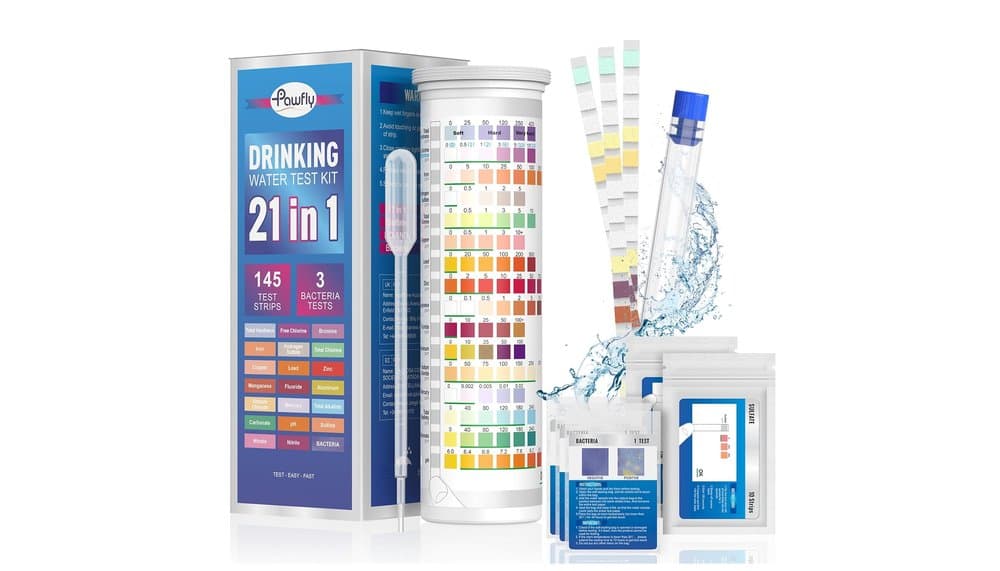
Pawfly 21 in 1 Drinking Water Test Kit Review
Pawfly test kit reviews a 21-in-1 water test strip, analyzing accuracy & value for home tap, well, or aquarium water tests. Get key insights before buying.
TOODO Double Safety Float Water Softener Kit Review
Safeguard your water softener system from failures. This safety accessory prevents damage, ensuring installation integrity and water quality.
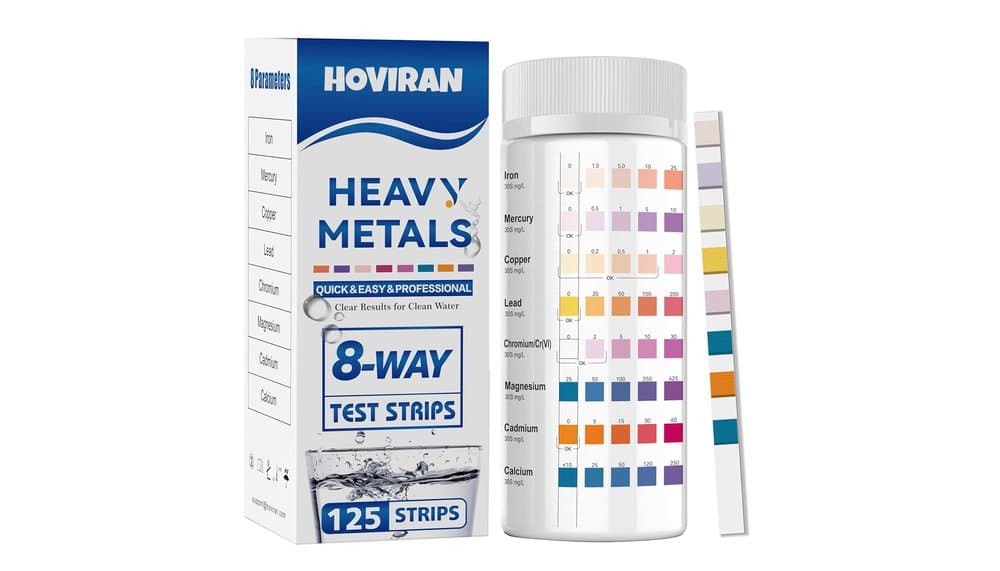
Hoviran Heavy Metal Test Strips Review | 8-in-1 Water Kit
Test your water for lead & 7 other heavy metals quickly with Hoviran test strips. A simple, first-step home kit before choosing a filter.
Guides you might like
Choosing Your Home Water Filter
Unlock clean, tasty water at home. Find the right water filter to tackle chlorine, pollutants, and limescale for better health and peace of mind.
Alkaline Water Ionizer Buying Guide
Discover how alkaline water ionizers work and learn key tips to choose the right one for your home and health. Essential buying guide.
Buying Guide: Best Hydrogen Water Generator
Guide to hydrogen water generators: cutting through the hype to help you make an informed purchase decision for your health and budget.