Snizzl PoolLAB 2.0 Review: Smart Pool Water Tester Test

Introduction: A Pool Photometer in the World of Domestic Filtration
On our site, we spend our time analyzing systems that purify water for drinking. But what about the water we swim in? Precise water analysis is the foundation of effective maintenance, whether for a glass of water or a family pool. Today, we are looking at a diagnostic tool, not a treatment one: the Snizzl PoolLAB 2.0 Electronic Photometer Water Tester. This device does not filter water, it decodes it. For pool or spa owners concerned about their water quality, understanding what it measures and how it works is crucial. Our analysis goes beyond the simple spec sheet to assess its real-world utility, its reliability based on field feedback, and its place in the water maintenance ecosystem.
Key Strengths
The Snizzl PoolLAB 2.0 presents itself as a portable analysis lab. Its main technical assets, confirmed by testers, make it a serious device.
Professional-grade accuracy, far from approximations. The community agrees that this device's major strength is its superior accuracy compared to test strips or manual colorimetric comparators. By using an electronic photometer, it eliminates the error of visual interpretation, a source of many chemical imbalances in pools.
Impressive versatility for domestic use. With the claimed ability to measure up to 27 different parameters (pH, free/total/shock chlorine, cyanuric acid, alkalinity, calcium hardness, but also copper, iron, nitrates, urea, MPS), it covers all needs, including those related to specific contaminations or alternative treatments. This versatility is a major selling point for demanding users.
Modern and useful connectivity. The integration of Bluetooth and WiFi for synchronization with the LabCom app and cloud is a real plus. This functionality not only allows for maintaining a precise history of analyses but also for benefiting from personalized dosage recommendations and advanced calculations like the Langelier Saturation Index (LSI), essential for protecting equipment from scale or corrosion.
Practical and robust design. Its IP68 waterproof rating allows for direct sampling in the pool, an appreciated simplicity. The interchangeable triple cuvette facilitates and speeds up test sequences. Testers highlight its ergonomic handling and construction that seems suited for outdoor use.
Weaknesses
Despite its strengths, the PoolLAB 2.0 has some drawbacks, mainly related to user experience and longevity, highlighted by feedback.
A non-negligible learning curve. Several user reviews point to a certain initial complexity. Unlike a test strip that you dip and read immediately, the protocol with this device requires rigor: meticulous rinsing of the cuvette, respecting reaction times, calibration (ZERO function). A lack of concentration can skew results.
The recurring question of durability and customer support. Some customer feedback reports early hardware issues, such as unreliable buttons (the "T1" button cited as defective) or a missing advertised feature (the CYA option missing on some units). An expert Italian review also mentions a defect after a few uses and customer service that is difficult to reach, which is a critical point for an electronic device.
The recurring cost of consumables. This is the systemic weakness of any photometer. The device is an initial investment, but you must anticipate the annual cost of reagents (tablets, powders, liquids). Although the tablets are known for their long shelf life and precise dosing, repurchasing them constitutes a budget to plan for, varying based on test frequency and monitored parameters.
A sometimes inadequate manual. A few users note that the supplied manual can be insufficient or unclear ("User manual is useless" according to one review), making the initial learning more difficult. Fortunately, the device is considered intuitive once the protocol is mastered.
Detailed Analysis: What Does It Really Measure for Your Health?
Here, our expertise in filtration finds its full meaning. The PoolLAB 2.0 does not purify, but it identifies. Let's see which contaminants or parameters it is capable of detecting and why it's important, even for a pool.
Disinfectants and their effectiveness: The precise measurement of free, total, and combined (shock) chlorine is fundamental. An incorrect free chlorine level leaves the door open to bacteria and algae. A too-high level of combined chlorine (chloramines) is responsible for eye and mucous membrane irritation, as well as the unpleasant smell often wrongly associated with "pure" chlorine.
Organic and mineral pollutants: The detection of nitrates (from the decomposition of organic matter or runoff) and urea (introduced mainly by swimmers) is an undeniable health asset. These compounds consume chlorine and degrade water quality. Measuring iron and copper is crucial to avoid stains on walls and liners, as well as undesirable water discoloration. A too-high copper level, often due to a too-low pH attacking heat exchangers, can also raise long-term health questions.
Water balance, the guarantee of comfort and durability: This is where the device excels. pH, alkalinity, and calcium hardness are the three pillars of water balance. An unbalanced pH reduces chlorine effectiveness, irritates skin and eyes, and damages equipment (pump, heater). Cyanuric acid (stabilizer) must be monitored because an excess "locks" chlorine's action. Finally, the calculation of the LSI index via the app (based on these parameters and temperature) indicates whether the water is scaling (scale-forming) or aggressive (corrosive), thus protecting the hydraulic system.
Detection limits: It is essential to understand what the PoolLAB 2.0 does not measure. It is not designed to detect PFAS, microplastics, or heavy metals like lead or arsenic at levels relevant for drinking water. Its domain is recreational water. Its photometry technology (measuring the light absorbance of a sample treated with a specific reagent) is extremely precise for targeted chemical parameters, but does not replace a laboratory analysis for emerging contaminants.
Summary Technical Sheet
| Aspect | Snizzl PoolLAB 2.0 Specifics |
|---|---|
| Device Type | Portable electronic photometer |
| Primary Use | Swimming pool and spa water analysis |
| Number of Parameters | Up to 27 (chlorine, pH, alkalinity, hardness, CYA, metals, nitrates, urea, MPS, etc.) |
| Measurement Technology | Photometry with reagents (tablets, powders, liquids) |
| Connectivity | Bluetooth & WiFi for sync with LabCom app/cloud |
| Robustness | IP68 waterproof housing (can be immersed) |
| Sampling | Integrated and interchangeable triple cuvette |
| Power Supply | 3 AA batteries (included) |
| Consumables | Reagents (tablets, etc.) to be replaced regularly |
| Software Functions | History, reports, LSI calculation, dosage recommendations |
What Users Say: Between Enthusiasm and Frustrations
The synthesis of customer reviews and expert feedback online paints a nuanced but very instructive picture.
The satisfied (4/5 and 5/5 ratings) form the majority. They highlight the reliability of results, the speed of testing once the protocol is mastered, and the reduced cost per test compared to quality test strips. The connectivity and the ability to track history in the cloud are praised for precise long-term monitoring. Many call it "indispensable" for a well-maintained chlorine pool, praising its "professional" accuracy at an accessible price.
The disappointed (1/5 and 2/5 ratings) mainly report issues with complexity ("Much too complicated", "Complex for an approximate result") and hardware reliability. The defective "T1" button and the missing CYA function on some units are recurring grievances that raise questions about quality control. The customer service is singled out in several international reviews, with some users feeling neglected after a malfunction.
The clear trend that emerges is this: the PoolLAB 2.0 is an excellent tool for motivated and rigorous users, willing to invest time in learning to achieve perfectly balanced water. On the other hand, it can frustrate novices or those seeking absolute simplicity, and its purchase carries a risk related to perceived durability and customer support.
Conclusion: A Smart Investment, But For Whom?
The Snizzl PoolLAB 2.0 Electronic Photometer Water Tester is not a gadget. It is a powerful diagnostic tool that elevates pool maintenance from an empirical to a scientific level. Its accuracy, versatility, and connected features make it a solid choice for demanding owners, savvy DIYers, or those with large pools or specific water treatments.
However, our analysis leads us to state clear reservations. This product is not universal. Its value for money is excellent if you exploit its potential and if your unit is free of defects. Otherwise, the experience can quickly turn into a nightmare. It requires user commitment to master the protocol and acceptance of a recurring reagent cost.
Our verdict: If you seek absolute accuracy, are willing to dedicate a few minutes to a rigorous test, and value historical data tracking, the PoolLAB 2.0 is likely the best choice in its category. On the other hand, if your priority is simplicity and speed at all costs, or if the prospect of a potential customer service issue worries you, more basic solutions (high-end test strips or electronic testers dedicated to 2-3 parameters) might be more suitable. In the realm of water, whether for drinking or swimming, knowledge is the first step towards mastery. The PoolLAB 2.0 gives you that knowledge, with a rigor that few mainstream alternatives can match.
100% free and independent — All our articles are written independently, without any sponsorship. We may earn a commission on purchases made through our links, at no extra cost to you.
Articles you might like
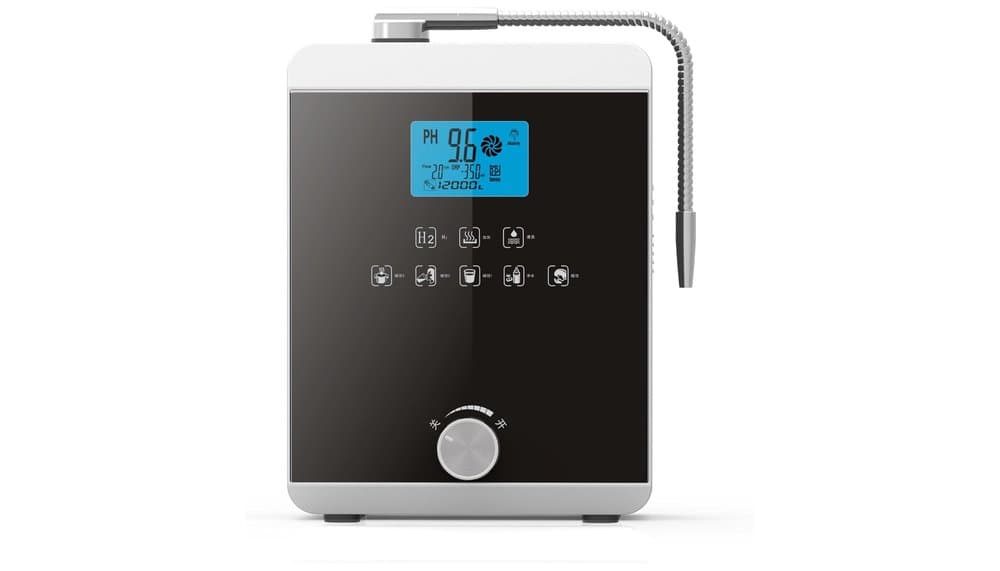
Alkaline Water Ionizer 11-Plate Electrode Test
Analyzes the 11-plate alkaline water ionizer: Does it filter water effectively, alter its properties, and deliver promised health benefits for a family?
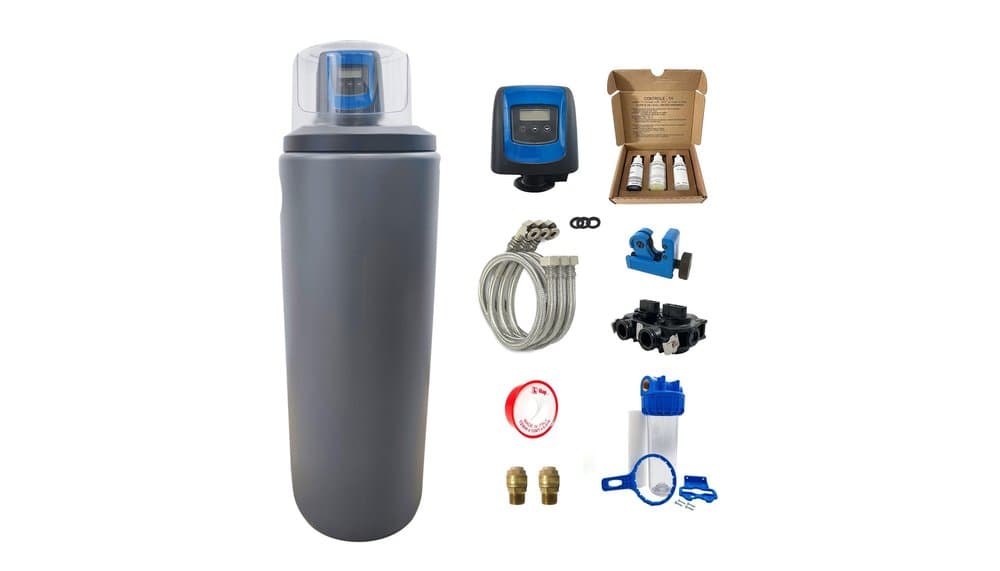
TOODO Fleck 5800 SXT Monobloc Water Softener Review
Volumetric TOODO Fleck 5800 SXT water softener eliminates limescale efficiently for families. A review of features & performance.
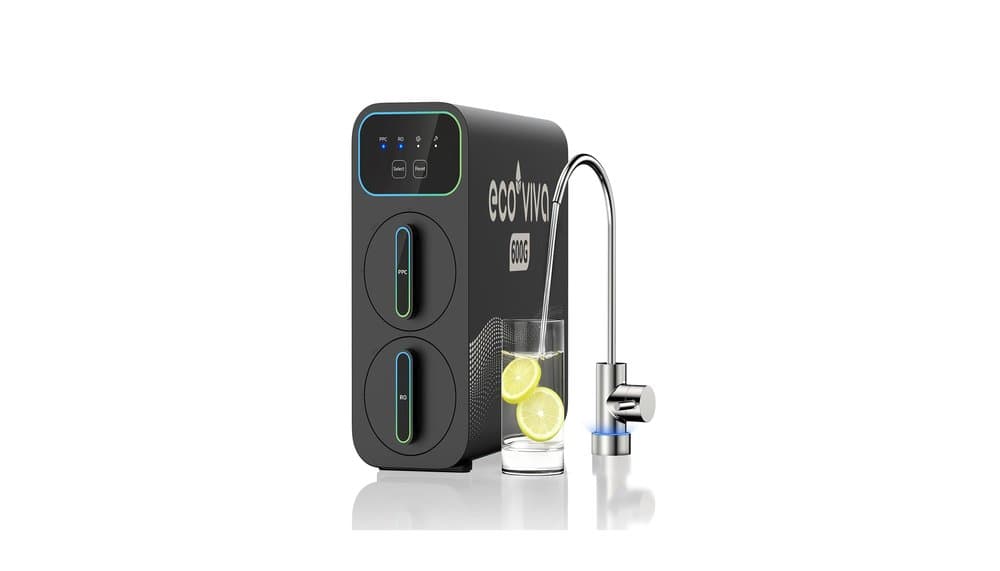
Ecoviva E6 Reverse Osmosis Water Filter Review
Compact, tankless Ecoviva E6 reverse osmosis system analyzed. We test its real-world purification performance, health benefits, and home integration.
Guides you might like
Alkaline Water Ionizer Buying Guide
Discover how alkaline water ionizers work and learn key tips to choose the right one for your home and health. Essential buying guide.
Buying Guide: Best Hydrogen Water Generator
Guide to hydrogen water generators: cutting through the hype to help you make an informed purchase decision for your health and budget.
Choosing Your Home Water Filter
Unlock clean, tasty water at home. Find the right water filter to tackle chlorine, pollutants, and limescale for better health and peace of mind.