UofZc otm-985540 Water Ionizer and Purifier Review
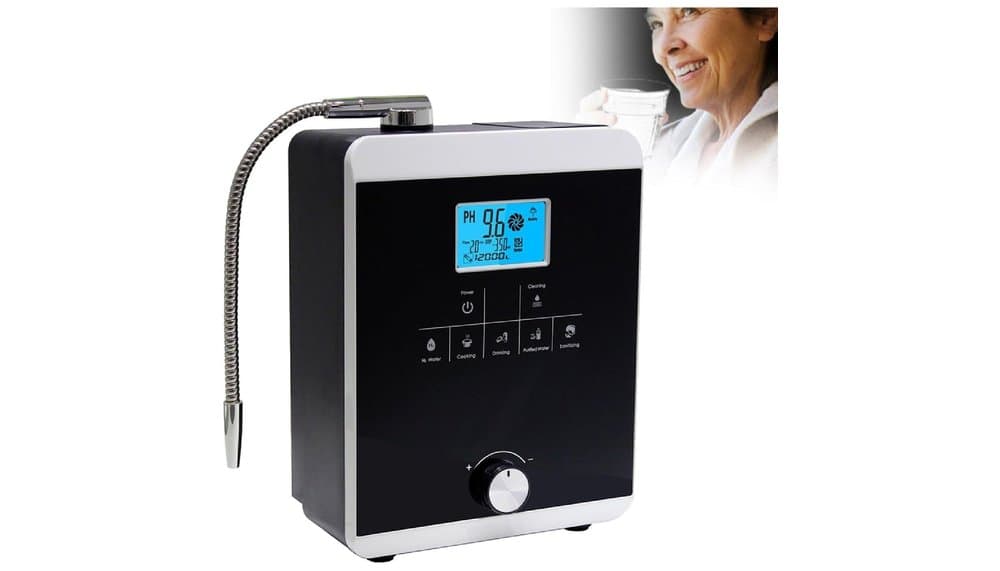
Comprehensive Analysis of the UofZc otm-985540 Water Ionizer and Purifier
In a market saturated with solutions to improve tap water, the UofZc otm-985540 positions itself as a hybrid device. It promises not only to purify but also to transform water into a product with specific properties. Our analysis goes beyond marketing to assess what it truly brings to your water quality and daily health. It is an electrolytic ionizer with an integrated filtration stage, a technology very different from reverse osmosis systems or simple activated carbon filters. Let's break down its performance, limitations, and suitability for a family's needs together.
Strengths and Weaknesses
Strengths
- Practical 2-in-1 Function: Combines a filtration stage (via a presumed activated carbon filter) and electrolytic ionization in a single under-sink device.
- Versatility of Water Types: Produces 7 different water types, from acidic water for external use (low pH) to alkaline water for drinking (pH up to 11).
- Self-Cleaning Function: A major asset for longevity. The device automatically reverses the polarity of the plates after use to limit scaling, a common issue with ionizers.
- Advanced User Interface: The color touch LCD screen and intelligent voice control make it a modern and easy-to-use device for daily life.
- No Water Waste: Unlike an RO system which wastes several liters to produce one purified liter, electrolysis does not generate waste water. This is an ecological and economic advantage.
- Potentially Low Operating Cost After Purchase: The main filter has an advertised lifespan of 8000 liters. Apart from minimal electricity, the annual cost in consumables is limited to replacing this filter.
Weaknesses
- Limited Purification: This is the critical point. Electrolysis technology does not purify water in the way understood by filtration specialists. It does not effectively remove chemical and physical contaminants such as nitrates, PFAS, heavy metals, drug residues, or microplastics. Its "purification" function relies primarily on the pre-filter.
- Dependence on Input Water Quality: The device only transforms tap water after a basic filtration. If your water is high in nitrates or lead, the ionized output water will still contain them. It therefore requires input water that is already potable and of good quality.
- Non-Consensual Health Benefits of Alkaline Water: Claims of "better absorption," "antioxidant properties" (measured by ORP), or "detoxification" are not unanimous within the scientific community. Health authorities remind us that the body regulates its own pH extremely efficiently.
- No Flow Rate Data: The specifications are silent on the flow rate in liters per minute/hour. User feedback suggests it is suitable for filling carafes or glasses, but not for use requiring a large immediate volume.
- Countertop Clutter: Like any under-sink ionizer with a dedicated faucet, it requires space in the cabinet and drilling or installation on the countertop.
Detailed Analysis: Technology, Health, and Usage
The Technology Behind the UofZc otm-985540: Electrolysis, Not Total Purification
It is crucial to understand that this device is first and foremost an electrolytic ionizer. Its core is a chamber equipped with 11 electrode plates (usually platinum-coated titanium). When the filtered water passes through this chamber under the effect of an electric current, it separates into two streams: one negatively charged (so-called "alkaline" water, rich in minerals like calcium and magnesium), the other positively charged (so-called "acidic" water).
The integrated 8000L filter plays a pre-filtration role. Based on the description, it is most likely a standard activated carbon filter. Its role is to protect the electrode plates from chlorine and sediments and to improve taste. However, its effectiveness against heavy contaminants is limited compared to a reverse osmosis membrane.
Comparison with Other Technologies:
- Vs. Reverse Osmosis (RO): RO is a pure purifier. Its membrane removes 95-99% of almost all contaminants (heavy metals, nitrates, PFAS, viruses, bacteria, limescale). The water produced is "pure water," but demineralized. The UofZc ionizer, on the other hand, preserves and reorganizes minerals but does not remove dissolved pollutants. These are two opposite objectives.
- Vs. Simple Activated Carbon: The UofZc filter is at the level of a high-performance filter jug. It is less effective than a compact, pressurized activated carbon block for chemical contaminants.
- Vs. Water Softener: It does not soften water (it does not remove limescale). Electrolysis may even precipitate certain minerals in a different form.
- Vs. UV Lamp: It does not disinfect bacteriologically. If your water is contaminated, the ionizer will not solve the problem.
Water Quality and Health: What Does It Really Remove?
This analysis is the most important. What improvement can you expect for your health?
- Chlorine and Bad Taste: Yes, effective. The activated carbon filter significantly reduces chlorine, odors, and will improve taste.
- Heavy Metals (Lead, Mercury): Limited effectiveness. A quality activated carbon can retain some, but not with the efficiency of an RO membrane or a specific KDF filter. This is not the primary function of the device.
- Limescale (Calcium, Magnesium): Not removed. On the contrary, these minerals are essential for the ionization process. The alkaline water will even be enriched with them.
- Nitrates and Fluoride: Likely ineffective. These contaminants are very difficult to capture with simple activated carbon.
- PFAS ("Forever Chemicals"): Ineffective. Their removal requires advanced technologies like RO or specific high-density activated carbon.
- Microplastics and Bacteria: Partially effective for larger particles (>5 microns) if the filter has a sediment layer. Ineffective against viruses and most bacteria.
Health Conclusion: The UofZc otm-985540 is a water property modifier (pH, ORP), not a high-performance purifier. It is suitable if your tap water is already of good sanitary quality (meets standards) and you are seeking the subjective benefits of alkaline water (taste, sensation). It should not be considered a solution for treating questionable network water or water contaminated by agricultural or industrial pollutants.
Installation, Use, and Value for Money
Installation: It is similar to that of a standard under-sink RO system. The device must be connected to the cold water supply, to a drain (for rinse water), and to electricity. A provided faucet must be installed on the sink. Some DIY skill is required, or a plumber must be called. This is not a "plug & play" device.
Size: Allow for the space of a small suitcase in your under-sink cabinet. The presence of a storage tank (unspecified but likely) also increases the occupied volume.
Value for Money for a Family: The analysis is in two parts. If you are primarily looking for pure and safe water regardless of its starting quality, a reverse osmosis system will be a more relevant investment and often less expensive to purchase. If, on the other hand, you are already convinced of the virtues of ionized alkaline water and your base water is compliant, the UofZc otm-985540 offers an integrated solution with good filter longevity (8000L corresponds to about 2-3 years for a family of 4). Its cost is then justified by the electrolysis technology and the high-tech interface, not by its purification performance.
Technical Specifications
| Feature | Detail |
|---|---|
| Product Name | UofZc otm-985540 Water Ionizer and Purifier |
| Main Technology | Electrolytic Ionization (11 plates) + Activated Carbon Filtration |
| Filter Capacity | 8000 liters (advertised lifespan) |
| pH Ranges | 5 options: from 2.8 (strong acid) to 11 (strong alkaline) |
| Water Types Produced | 7 options: 4 alkaline (pH 7.5-10.5), 1 purified (pH 7.0), 2 acidic (pH 3.5-6.5) |
| Self-Cleaning Function | Yes, automatic polarity reversal after use and cleaning every 30L |
| Interface | 3.8" color touch LCD screen, light indicators, voice control |
| Power Consumption | Low (advertised high-efficiency power supply) |
| Installation | Under sink, requires water/drain/electricity connections |
| Water Waste | None (unlike reverse osmosis) |
| Flow Rate | Not specified by the manufacturer |
What Users and Testers Say
Synthesis of available community feedback and expert analyses.
Recurrent Positive Points:
- Design and Interface: Users unanimously praise the modern look, responsive touch screen, and voice control perceived as a practical gadget. The device is considered elegant.
- Daily Ease of Use: Once installed, selecting the water type is simple and quick. Water production is immediate.
- Water Taste: The majority note a clear improvement in water taste, making it "softer" and more pleasant to drink, which encourages greater consumption.
- Self-Cleaning Function: This is a reassuring argument for buyers, who see it as a guarantee of durability and simplified maintenance.
Raised Negative Points or Reservations:
- Expectations About Purification: Several users, influenced by the term "purifier," expressed disappointment upon realizing the device does not filter like an RO system. It is important to understand that this is an ionizer with a pre-filter.
- Installation: The process is described as technical and long (1 to 2 hours). The manual is sometimes considered unclear. Many recommend calling a professional if you are not comfortable.
- Included Faucet: The quality of the faucet is sometimes criticized as being light or less aesthetic than the body of the device.
- Noise: Some note a slight electrical hum during electrolysis and an audible activation of the pump or valves.
- Lack of Objective Data: Expert testers regret the absence of precise independent measurements on the actual reduction of contaminants (beyond taste) and on the stability of the advertised pH/ORP over time.
Conclusion
The UofZc otm-985540 Water Ionizer and Purifier is a sophisticated device that excels in its primary function: ionizing water by electrolysis to produce a range of water with varying pH. Its touch and voice interface, coupled with its self-cleaning function, make it a modern and easy-to-live-with product for daily use.
However, it is imperative to correct a potential expectation: this is not a high-end water purifier. Its filtration, likely based on activated carbon, improves taste and removes some sediment and chlorine, but it will not protect you from the most problematic contaminants like nitrates, heavy metals, or PFAS. Its effectiveness relies on the quality of the tap water that feeds it.
Who is it for? For those already convinced of the benefits of ionized alkaline water, who have tap water that is already of good sanitary quality, and who are looking for an all-in-one, high-tech, zero-waste water device. For them, the cost of consumables (one filter every 2-3 years) is low.
Who should avoid it? Those who are primarily looking for robust and complete purification of their water, especially to deal with hard, nitrate-rich, or uncertain quality water. In this case, a reverse osmosis system, possibly followed by a remineralizer, will be a technologically more suitable and often more effective choice to ensure the purity of drinking water.
100% free and independent — All our articles are written independently, without any sponsorship. We may earn a commission on purchases made through our links, at no extra cost to you.
Articles you might like
Pawfly 21 in 1 Drinking Water Test Kit Review
Pawfly test kit reviews a 21-in-1 water test strip, analyzing accuracy & value for home tap, well, or aquarium water tests. Get key insights before buying.
Lafiucy 10 Inch Coconut Carbon Filter Review
Review of the affordable Lafiucy 5 Microns 10-inch activated carbon water filter cartridge, analyzing specs & user feedback for performance.
ALTHY Performance Hydrogen Water Bottle Review
Transform water into antioxidant-rich hydrogen water anywhere with the ALTHY portable bottle. A powerful, on-the-go wellness innovation.
Guides you might like
Alkaline Water Ionizer Buying Guide
Discover how alkaline water ionizers work and learn key tips to choose the right one for your home and health. Essential buying guide.
Buying Guide: Best Hydrogen Water Generator
Guide to hydrogen water generators: cutting through the hype to help you make an informed purchase decision for your health and budget.
Choosing Your Home Water Filter
Unlock clean, tasty water at home. Find the right water filter to tackle chlorine, pollutants, and limescale for better health and peace of mind.