VEVOR 1054 Water Softener and Descaling System Review

Introduction: Physical Descaling, an Alternative to Salt-Based Water Softeners?
In the landscape of domestic water treatment systems, the fight against limescale holds a central place. The VEVOR 1054 Water Softener and Descaling System presents itself as a unique solution, as it claims effective action against scale without using salt, electricity, or water waste. Here, we will deeply analyze this product to understand what it actually does, who it is designed for, and how it positions itself against more traditional technologies like ion exchange or reverse osmosis. Our goal is to evaluate its effectiveness from the angle of water quality and health, clarifying its capabilities and its limitations.
Strengths
The main advantages of the VEVOR 1054, widely emphasized by the manufacturer and feedback, are as follows:
- Absolutely no routine maintenance: This is the key selling point. The system requires no salt addition, no regeneration, no replacement of filters or cartridges for an advertised duration of 6 to 7 years. This eliminates the cost and logistics of consumables.
- Simple and non-invasive installation: The device connects directly to the main water line, upstream of the entire installation. According to user feedback and experts, installation is within reach of a competent DIYer, without requiring advanced plumbing skills or an electrical connection.
- Preservation of minerals and no change in pH: Unlike a salt-based softener which replaces calcium and magnesium ions with sodium, the VEVOR 1054 does not alter the chemical composition of the water. Minerals (calcium, magnesium) are preserved.
- High flow rate and whole-house compatibility: With an advertised flow rate of 15 GPM (approx. 3.4 m³/h), the system can supply multiple water points simultaneously without significant pressure loss, thus suitable for households of 5 to 8 people.
- Zero operating cost: Once purchased and installed, there are no recurring costs until the device's replacement (after 6-7 years according to the manufacturer).
Weaknesses and Limits to Understand
First and foremost, it is crucial to understand what the VEVOR 1054 is not:
- It is NOT a softener in the chemical sense: It does not remove the calcium and magnesium ions responsible for hardness (TH). The water therefore remains "hard" to the touch (less lather) and retains its taste.
- It is NOT a multi-purpose water purifier: Its main action is targeted at limescale. It does not eliminate contaminants of health concern such as nitrates, PFAS, heavy metals (lead, arsenic), pesticides, or microplastics.
- Variable effectiveness depending on conditions: Optimal performance seems to depend on installation quality (positioning, flow direction) and the initial water hardness. For extremely hard water, the technology may show its limits.
- Physical "conditioning" effect: The intended effect is to modify the structure of limescale crystals so they do not deposit. This effect is sometimes debated and may be less immediately perceptible than with a salt-based softener.
Detailed Analysis: Technology, Health, and Performance
The Technology Decrypted: Physical Conditioning and Basic Filtration
The VEVOR 1054 combines two approaches:
- Physical conditioning of limescale (Descaling): The heart of the system relies on a polyphosphate cartridge and an alloy core (often based on SAAS - Silico Antimonico Argento Solfato). The mechanism is not chemical but physical. The goal is to modify the crystalline structure of the calcium present in the water. Instead of forming hard deposits (calcite), the crystals remain suspended in a different form (aragonite) and are flushed away by the water flow. This explains the advertised scale reduction rate of over 90%, not through elimination, but through inhibition of deposition.
- Light mechanical filtration: The system also integrates a layer of quartz sand and an ion exchange resin. However, according to the specifications, this resin seems to play a secondary role and is not presented as the main media for classic softening. It may help retain some suspended particles and certain metals, but its effectiveness is limited without regeneration. It is more of a sediment filtration than advanced purification.
Health Evaluation: Which Contaminants Are Actually Treated?
This analysis is crucial for understanding the product's real utility.
- Limescale (Scale): This is its primary target. The system is designed to protect installations and household appliances (water heater, washing machine, faucets) from scale deposits, increasing their lifespan and energy efficiency.
- Chlorine: Not removed. No mention of activated carbon in the filter media, a technology essential for effectively capturing chlorine, its by-products (THMs), and improving taste and odor.
- Heavy metals, Nitrates, PFAS, Pesticides: Not removed. These contaminants require specific technologies like reverse osmosis, specific activated carbon adsorption, or dedicated ion exchange.
- Microplastics and sediments: The presence of quartz sand suggests a capacity to retain suspended particles of relatively large size (sediment filtration), which may include some of the larger microplastics. But for reliable removal, a dedicated sediment pre-filter or a reverse osmosis membrane are far more effective.
- Bacteria and viruses: No action. The system does not integrate a UV lamp, the only effective domestic technology for microbiological disinfection without adding chemicals.
Health conclusion: The VEVOR 1054 is a protection system for pipes and appliances. It is not intended to significantly improve the potability of water regarding chemical or biological contaminants. Its health interest is indirect: by reducing scale, it limits bacterial proliferation in pipes and deposits. The water remains mineralized, which is a positive point.
Comparison with Other Technologies
- VS Salt-Based Softener (ion exchange): The salt-based softener eliminates calcium and magnesium chemically. The water is truly "soft." But it requires maintenance (salt, regeneration), discharges brine, adds sodium to the water, and can promote corrosion. The VEVOR is a maintenance-free, water-waste-free solution, but it leaves the water hard.
- VS Reverse Osmosis: Reverse osmosis is a high-performance purifier that removes 95-99% of nearly all contaminants (metals, nitrates, pesticides, salts, etc.). However, it has a low flow rate, significant water waste (3 to 5 L for 1 L purified), a cost for consumables (membranes, pre-filters), and demineralizes water. The two products do not meet the same need at all.
- VS Activated Carbon Filter: Activated carbon is excellent for taste, chlorine, and certain organic compounds. It has virtually no action on limescale. The technologies are complementary.
Technical Specifications
| Characteristic | Detail |
|---|---|
| Main Technology | Physical Conditioning (Polyphosphate + SAAS Alloy Core) + Mechanical Filtration (quartz sand, resin) |
| Primary Action | Inhibition of scale formation / Descaling |
| Maximum Flow Rate | 15 GPM (approx. 3.4 m³/h) |
| Capacity / Lifespan | 2,300 to 4,200 tons (approx. 600,000 to 1,100,000 gallons) or 6-7 years |
| Consumables / Maintenance | None for the advertised lifespan. No cartridge replacement. |
| Water Waste | None |
| Power Supply | None (no electricity) |
| Compatibility | Municipal water, for the whole house (general point of entry) |
| Treatment Target | Limescale (scale), suspended particles |
| Not Treated | Chlorine, heavy metals, nitrates, PFAS, pesticides, bacteria. Does not reduce Total Hardness (TH). |
| Installation | On main supply line, by a competent DIYer (plumber not generally necessary) |
What Users and the Community Say
The synthesis of customer reviews and expert feedback online reveals a consensus around several points.
Recurring positive points:
- Satisfaction after salt-based softeners: One user, like Giuseppe Ferrari, testifies to having replaced a salt-based softener "always problematic and expensive to maintain" with the VEVOR 1054, expressing great satisfaction. This is a typical profile: people tired of the complexity of salt-based systems.
- Visible anti-scale effectiveness: Feedback reports a noticeable reduction of white deposits on shower walls, appliance heating elements, and in glasses after drying. The protective effect on installations is confirmed by experience.
- Appreciated simplicity: The "30-minute" installation and the total absence of future maintenance are highly praised. No longer having to think about salt, settings, or maintenance contracts is a relief for many.
- Preservation of water taste: Users note that the water retains its usual taste, which is perceived as an advantage compared to the sometimes "flat" water produced by salt-based softeners.
Points of caution or negatives:
- Misaligned expectations: Some buyers expected "soft" water (less hardness to the touch) and are disappointed not to see this change. This underscores the importance of understanding that the product is a conditioner/descaler, not a traditional softener.
- Optimal effectiveness under conditions: Effectiveness seems maximal when the water is not "extremely hard." For very high French degrees (>35°F), results may be less convincing.
- Lack of independent long-term data: While the promise of 6-7 years without maintenance is attractive, the community lacks perspective on the real durability of the filter media over such a long period.
Conclusion
The VEVOR 1054 Water Softener and Descaling System is a product that finds its place in a very specific niche. It is neither a water purifier nor a classic softener. It is a physical water conditioner designed to fight scale in a passive and maintenance-free manner.
For whom is it the right solution?
- Households suffering from scale problems in pipes and on appliances, but who do not wish to invest in the complexity and constraints (maintenance, waste, salt) of an ion exchange softener.
- DIYers looking for a simple, effective, and permanent installation to protect their plumbing system.
- People attached to the natural mineralization of their water and who are not seeking water "softened" in the tactile sense.
For whom is it NOT suitable?
- Households whose priority is to improve the sanitary quality of drinking water (removal of chemical pollutants, chlorine, nitrates...). In this case, an activated carbon system or an under-sink reverse osmosis unit is essential.
- People whose water is extremely hard and who seek a complete disappearance of the hardness sensation.
- Households who want an action on the taste and odor of chlorine.
In summary, the VEVOR 1054 fulfills its mission as a whole-house anti-scale shield very well, with an unbeatable long-term economic and practical argument (zero usage cost). However, one must be perfectly aware of its limitations regarding purification. It is often the missing piece of a more comprehensive setup: it can be installed at the network entry to protect pipes and appliances, and a specific filter (activated carbon, reverse osmosis) can be added at the point of use for drinking water.
100% free and independent — All our articles are written independently, without any sponsorship. We may earn a commission on purchases made through our links, at no extra cost to you.
Articles you might like
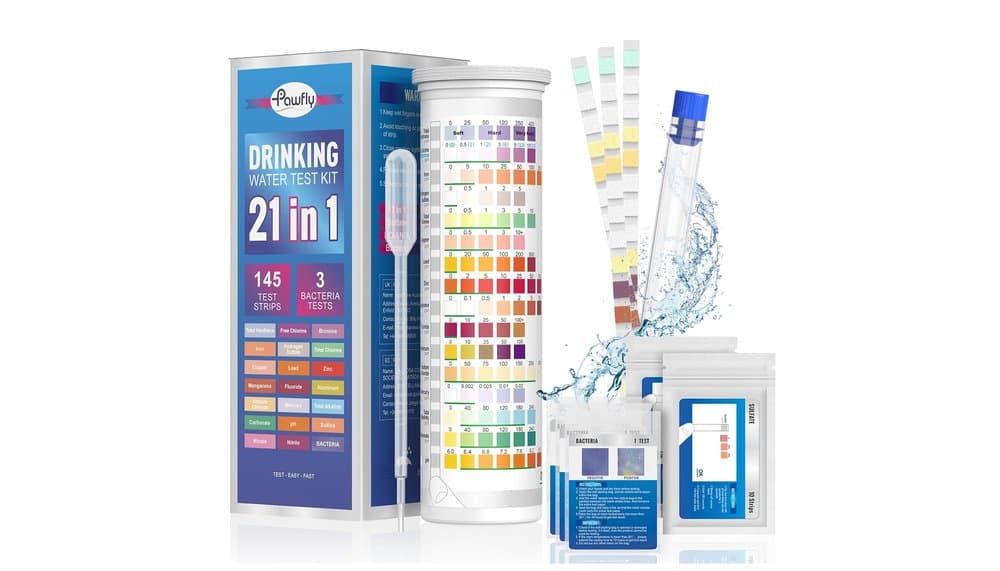
Pawfly 21 in 1 Drinking Water Test Kit Review
Pawfly test kit reviews a 21-in-1 water test strip, analyzing accuracy & value for home tap, well, or aquarium water tests. Get key insights before buying.
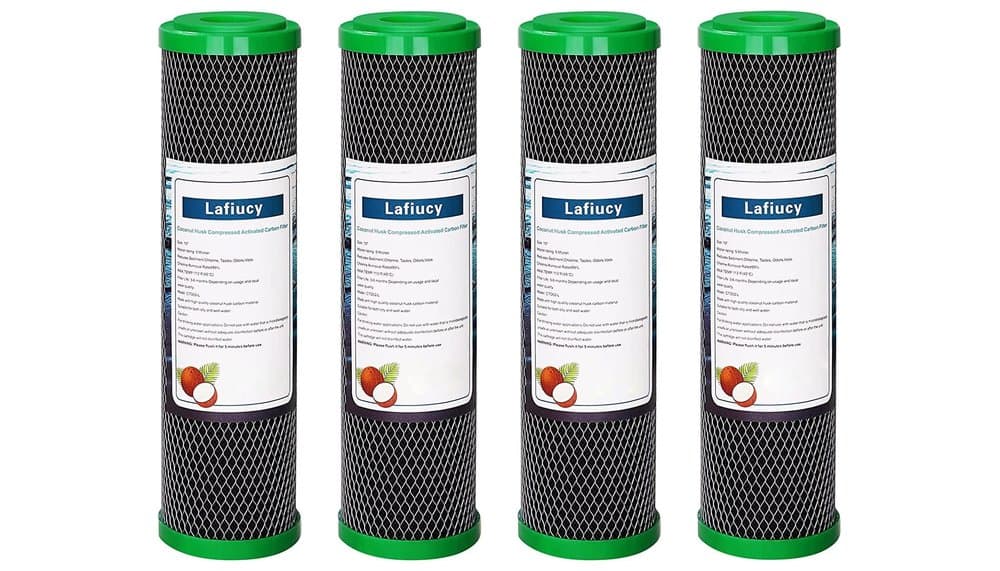
Lafiucy 10 Inch Coconut Carbon Filter Review
Review of the affordable Lafiucy 5 Microns 10-inch activated carbon water filter cartridge, analyzing specs & user feedback for performance.
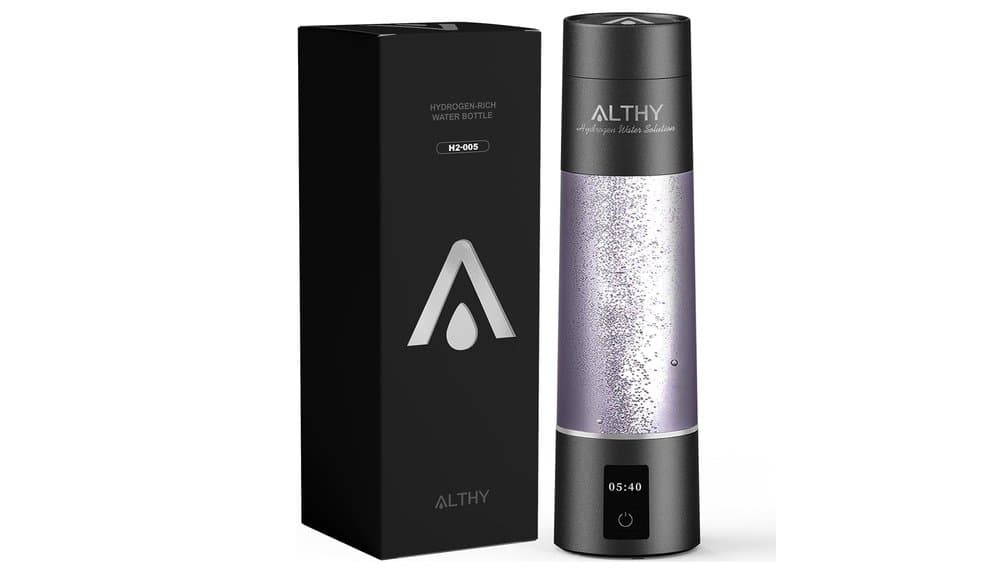
ALTHY Performance Hydrogen Water Bottle Review
Transform water into antioxidant-rich hydrogen water anywhere with the ALTHY portable bottle. A powerful, on-the-go wellness innovation.
Guides you might like
Alkaline Water Ionizer Buying Guide
Discover how alkaline water ionizers work and learn key tips to choose the right one for your home and health. Essential buying guide.
Buying Guide: Best Hydrogen Water Generator
Guide to hydrogen water generators: cutting through the hype to help you make an informed purchase decision for your health and budget.
Choosing Your Home Water Filter
Unlock clean, tasty water at home. Find the right water filter to tackle chlorine, pollutants, and limescale for better health and peace of mind.