Waterdrop 10UA Under Sink Water Filter System Review
Introduction
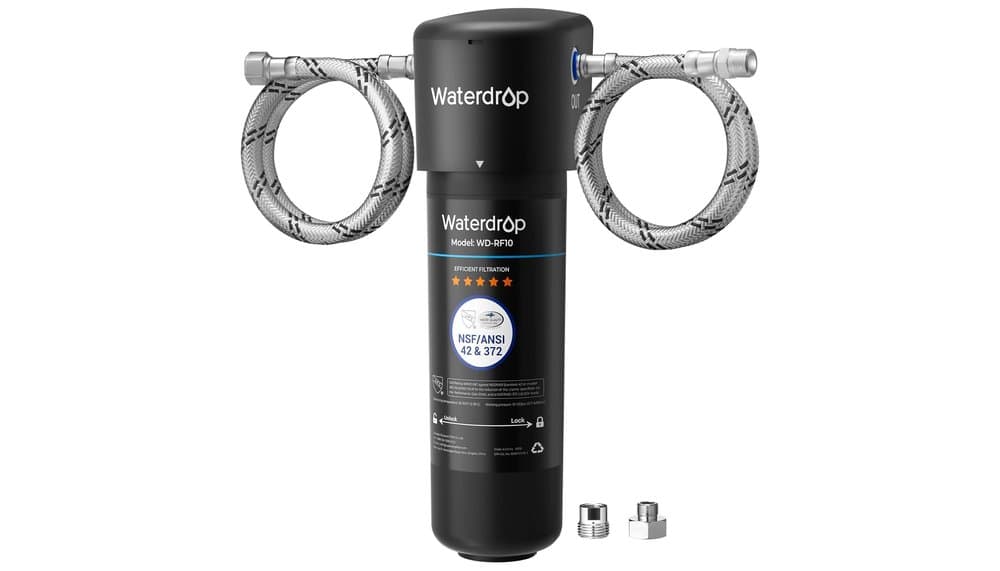
When it comes to improving the quality of tap water, the simplicity of installation and maintenance becomes a decisive criterion for many households. The Waterdrop 10UA Under Sink Water Filter System presents itself as an answer to this demand, promising purified-tasting water without the complications of a traditional under-sink installation. What interests us here is determining if this system, which relies on a "direct connect" concept, keeps its promises regarding health, daily performance, and value for money for a family. Our analysis is based on examining its technical specifications, its certifications, and synthesizing feedback from a wide community of users and testers.
Strengths and Weaknesses
Before diving into the details, here is a quick summary of the main advantages and disadvantages identified.
Strengths
- Simplified Installation: The direct connect system typically does not require drilling the sink or a plumber.
- Preserved Flow and Pressure: Offers a high flow rate (0.75 GPM/60 PSI) that doesn't hinder daily use.
- Capacity and Economy: A cartridge rated for 30,000 liters or 12 months, with a reduced annual cost for consumables.
- Certification and Materials: Certified to NSF/ANSI 42 standard (taste/odor, chlorine) and built with BPA-free and lead-free materials (NSF 372).
- Minimal Footprint: Compact design that fits under most sinks, ideal for rentals.
Weaknesses
- Limited Filtration Technology: Uses only mechanical filtration and activated carbon. Ineffective against nitrates, fluoride, or a large portion of dissolved PFAS and heavy metals.
- Not Suitable for Highly Contaminated Water: Does not treat hardness (only very slightly softens by filtering particles) and is not suitable for untreated well water.
- Installation Dependent: Poor tightening of fittings can lead to leaks, and initial flushing is imperative.
- No End-of-Life Indicator: The user must manage replacement based on time or volume, with no automatic alert.
Detailed Analysis: Performance, Health, and Usage
Water Quality and Effectiveness Against Contaminants
The core of the analysis for a site like ours lies in the system's ability to remove contaminants to protect health. The Waterdrop 10UA relies on multi-stage filtration combining a sediment pre-filter and high-density activated carbon block.
According to its specifications and NSF/ANSI 42 certification, its proven effectiveness is for:
- Chlorine, bad tastes and odors: This is its area of excellence. The user community overwhelmingly confirms a radical improvement in water taste and smell.
- Sediment, rust, and suspended particles (> 0.5 micron).
- Lead and some heavy metals: The technical sheet announces a 99.99% reduction of lead. It is crucial to understand that this reduction mainly concerns particulate lead. As experts point out, a system with only activated carbon has limited and variable effectiveness against dissolved heavy metals (like mercury, cadmium).
On the other hand, on paper, this system is not designed to remove:
- Nitrates and nitrites.
- Fluoride.
- PFAS (per- and polyfluoroalkyl substances): Activated carbon can adsorb some, but incompletely and uncertified here. A technology like reverse osmosis is much more effective.
- Limescale (calcium and magnesium): It is not a water softener. It can filter some particles causing turbidity, but does not alter water hardness.
- Bacteria and viruses: Without a UV sterilization step or optional ultrafiltration (UF) membrane, it offers no microbiological barrier.
Health Conclusion: The Waterdrop 10UA is an excellent solution for "finishing the treatment" of already safe municipal water whose main flaw is a pronounced chlorine taste or odor. For standard public network water, it provides undeniable comfort and organoleptic purity. However, for well water or specific contamination (agricultural nitrates, PFAS...), its technologies are insufficient. Adding the optional UF filter (WD-RF10-UF) provides a barrier against bacteria but does not change the chemical filtration spectrum.
Flow Rate, Installation, and Daily Maintenance
Hydraulic Performance
Testers highlight that the advertised flow rate of 0.75 gallons per minute (approx. 2.8 L/min) is realistic. The pressure drop is minimal, allowing for quickly filling a pot or pitcher, a crucial point for family acceptance of the system. There is no wastewater, as it is not a reverse osmosis system, a technology that produces wastewater. Here, all water that enters is filtered and usable.
Ease of Installation
This is the main selling point, and user feedback validates it. The direct connect system typically connects between the faucet and the cold water supply line, often without needing to drill the sink. The kit includes adapters for most standard configurations. The "3-minute installation" promise is ambitious, but the community notes that with a bit of method, installation takes 15 to 30 minutes without special skills. Caution is required when tightening fittings to avoid any risk of leaks, a pitfall reported by a minority of users.
Annual Cost and Maintenance
The single replacement cartridge (reference WD-RF10) has a rated lifespan of 30,000 liters or 12 months. In practice, this duration heavily depends on the quality of the inlet water. The annual cost is therefore limited to the price of this cartridge, which, according to the data, represents significant savings compared to bottled water and many more complex systems. The replacement operation is indeed very simple thanks to the bayonet system ("3 seconds").
Technology Comparison
Placing the Waterdrop 10UA in the landscape of home filtration technologies is instructive:
- Vs. Classic Activated Carbon (pitcher/faucet mount): It offers much greater capacity and flow rate, with generally finer filtration thanks to the carbon block.
- Vs. Reverse Osmosis (RO): Reverse osmosis is technically superior, removing a much wider spectrum of contaminants (nitrates, fluoride, dissolved heavy metals, the majority of PFAS). However, it is more expensive to purchase and maintain (multiple filters, membrane), bulkier, produces a lower flow rate, and generates wastewater. The 10UA is an alternative for those who don't need that level of purification.
- Vs. Water Softener (ion exchange): It does not fulfill the same function at all. The softener removes calcium/magnesium ions to combat limescale throughout the house but does not purify water for drinking.
- Vs. UV Sterilization: Complementary technologies. UV disinfects but does not filter chemicals. The 10UA improves taste but does not kill microbes (without the UF option).
Technical Specifications
| Characteristic | Detail |
|---|---|
| Product Name | Waterdrop 10UA Under Sink Water Filter System |
| Technology | Multi-stage filtration (sediment + activated carbon block) |
| Certifications | NSF/ANSI 42 (Taste/Odor, Chlorine), NSF 372 (Lead Free) |
| Targeted Contaminants | Chlorine, bad taste/odor, sediment (>0.5 µm), lead (particulate) |
| Cartridge Capacity | Up to 30,000 liters or 12 months |
| Flow Rate | 0.75 GPM (at 60 PSI) - ~2.8 L/min |
| Wastewater Rate | None (100% efficiency system) |
| Installation Type | Direct Connect under sink (direct connection to faucet) |
| Included Adapters | 3/8" to 1/2" for faucet and plumbing |
| Materials | Stainless steel and BPA-free plastic |
| Dimensions (L x W x H) | 9.1 x 9.9 x 31.2 cm |
What Users and Testers Say
Synthesizing hundreds of reviews and expert feedback reveals very clear trends.
Recurrent praise focuses on:
- Spectacular improvement in taste: "Water that tastes like bottled water, without a chlorine aftertaste" is a recurring theme.
- Simplicity of installation: Non-handymen are unanimous in praising the clear procedure and absence of major work.
- Compactness: Its small size is a major asset for cluttered sinks or rented apartments.
- Maintained water pressure: Unlike other systems, the flow rate remains strong, which is appreciated.
- Customer support: Judged as responsive and effective in case of problems (leak, missing part).
Frequent criticisms and warnings highlight:
- The importance of the initial flush: Not strictly following the 5-minute flush instructions can lead to having carbon particles in the water for the first few days.
- Risk of leaks: Several reports mention small leaks at the fittings, often resolved by tighter tightening or using the supplied Teflon tape.
- Misaligned expectations: Some users, thinking they were buying a reverse osmosis system, are disappointed by its ineffectiveness against specific contaminants like nitrates. This confirms the need to understand the purchased technology well.
- Lack of a replacement indicator: Managing filter changes relies on the user's memory or manual consumption tracking.
Conclusion
The Waterdrop 10UA Under Sink Water Filter System is not a universal filtration system, and that is precisely its strength for a targeted use. It excels in its primary mission: providing pleasant-tasting water purified of chlorine directly from the tap, with remarkable ease of use.
For a family with acceptable quality municipal water but with a taste altered by treatments, it represents an economical, compact, and extremely practical solution. Its "plug-and-play" installation, generous flow rate, and low annual maintenance cost make it a convincing consumer product.
However, our analysis confirms that one should not ask the impossible of it. Faced with health issues related to specific contaminants (nitrates, fluoride, PFAS, bacteria) or very hard water, its activated carbon and mechanical filtration technologies show their limits. In these cases, a reverse osmosis system or a combined system with UV would be more appropriate choices, at the cost of more complex installation and maintenance.
Final Verdict: The Waterdrop 10UA is the archetype of a well-designed product for a specific need. It offers excellent value for money for anyone wanting to eliminate chlorine taste and plastic bottles, without undertaking renovations or dealing with the constraints of a reverse osmosis system. For this usage scenario, which corresponds to a majority of urban and suburban households, it positions itself as a reference in the category of simplified-installation under-sink filters.
100% free and independent — All our articles are written independently, without any sponsorship. We may earn a commission on purchases made through our links, at no extra cost to you.
Articles you might like
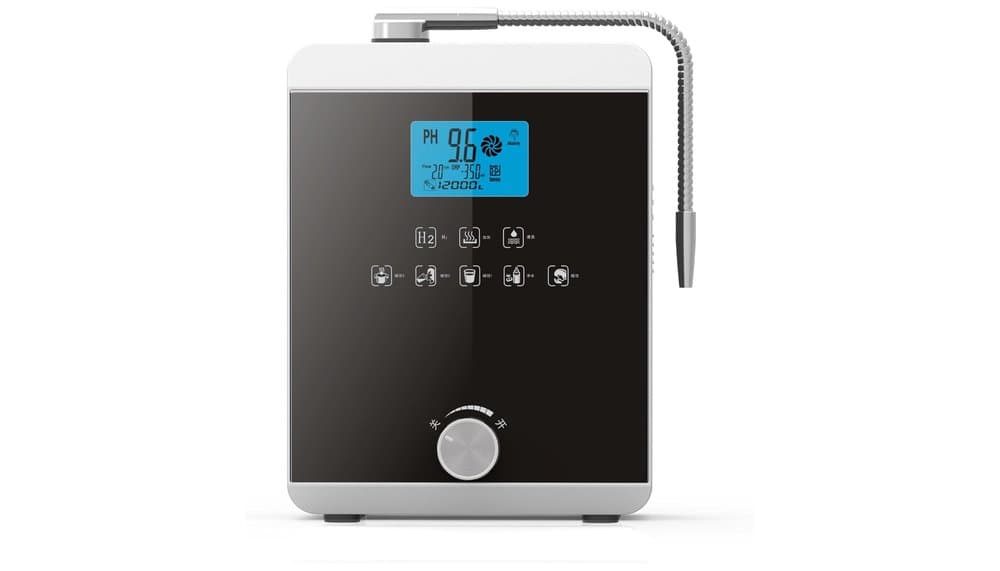
Alkaline Water Ionizer 11-Plate Electrode Test
Analyzes the 11-plate alkaline water ionizer: Does it filter water effectively, alter its properties, and deliver promised health benefits for a family?
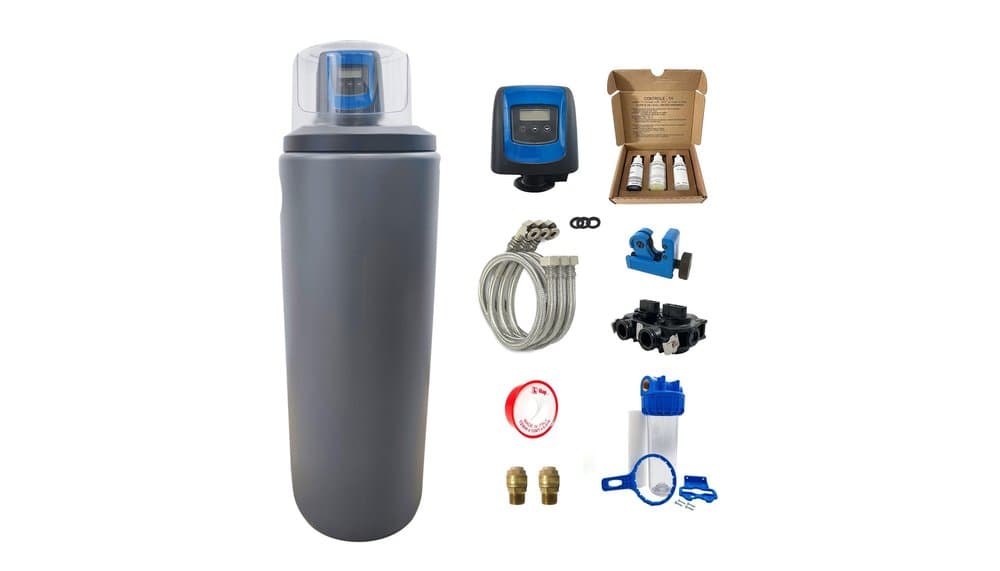
TOODO Fleck 5800 SXT Monobloc Water Softener Review
Volumetric TOODO Fleck 5800 SXT water softener eliminates limescale efficiently for families. A review of features & performance.
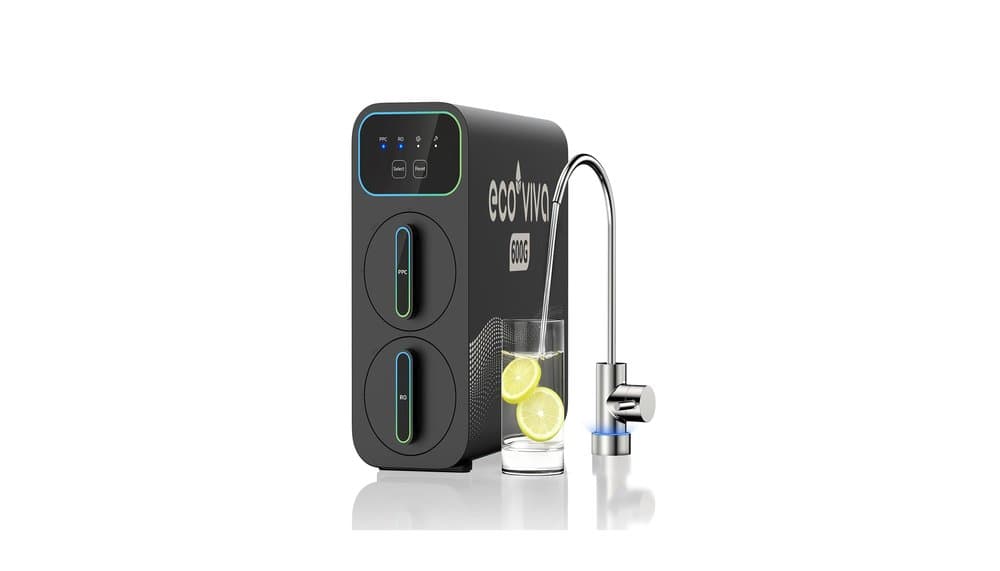
Ecoviva E6 Reverse Osmosis Water Filter Review
Compact, tankless Ecoviva E6 reverse osmosis system analyzed. We test its real-world purification performance, health benefits, and home integration.
Guides you might like
Alkaline Water Ionizer Buying Guide
Discover how alkaline water ionizers work and learn key tips to choose the right one for your home and health. Essential buying guide.
Buying Guide: Best Hydrogen Water Generator
Guide to hydrogen water generators: cutting through the hype to help you make an informed purchase decision for your health and budget.
Choosing Your Home Water Filter
Unlock clean, tasty water at home. Find the right water filter to tackle chlorine, pollutants, and limescale for better health and peace of mind.