BYZOMU Freestanding Hot & Cold Water Dispenser Review

Introduction
In our daily quest for quality water that is both safe and convenient, plumbed-in water dispensers are taking on a growing role. The BYZOMU Freestanding Hot and Cold Water Dispenser embodies this trend: a freestanding dispenser promising hot, cold, or room-temperature water on demand, without a water bottle. For a site dedicated to water purification, the central question is not just temperature, but the quality of the water dispensed. Is this device merely a water heater-cooler, or does it integrate technologies to treat tap water? We analyze this product from a health and performance angle, dissecting its specifications, user feedback, and its positioning against traditional filtration solutions.
Analysis of Technical Specifications
According to manufacturer data, the BYZOMU presents itself as a versatile station. Its technical specifications reveal a machine focused on convenience and service.
| Characteristic | BYZOMU Specification (as advertised) |
|---|---|
| Supply Type | Direct supply from mains (plumbing) |
| Hot Temperature | ≥ 95°C |
| Cold Temperature | ≤ 15°C |
| Room Temperature | Available (by disabling refrigeration) |
| Heating | Instantaneous (~3 seconds) via flow-through technology |
| Water Flow Rate | 24 Liters / Hour (LPH) |
| Dimensions (W x D x H) | 31 x 31 x 105 cm |
| Capacity (integrated tank) | Not specified (continuous flow design) |
| Style | Top load (for optional tank models) |
| Installation | Requires connection to plumbing |
Crucial analysis point: The provided datasheet mentions no integrated filtration or purification system. This means that on paper, the BYZOMU is a water thermal conditioning appliance, not a treatment device. It heats and cools the water supplied to it. If this water comes directly from the tap, the dispenser will not remove any contaminants: neither chlorine, heavy metals, limescale, nitrates, PFAS, nor microplastics. Its sanitary performance is entirely dependent on the quality of the input water.
Strengths
Feedback from the community and expert analyses converge on several distinct advantages for this type of appliance.
Immediate thermal versatility. This is the most praised strong point. The quasi-instantaneous heating function (advertised at 3 seconds) eliminates waiting for the kettle and the risk of repeatedly overheating a reservoir. The ability to get water at 95°C for tea, below 15°C for refreshment, and water at room temperature, meets almost all daily needs in a single machine. Testers highlight that this versatility reduces the use of multiple appliances (kettle, fridge pitcher).
Space saving and aesthetic integration. With its compact dimensions (approx. 31x31 cm footprint), the appliance can be easily installed in a kitchen corner, office, or break room. Its freestanding design makes it independent and allows it to integrate into modern interiors without the visual clutter of a water bottle.
Convenience and plastic reduction. By being connected to the mains, it eliminates the chore of handling and storing heavy, bulky plastic water bottles. The community notes that this represents a significant ecological and practical advancement for families or offices that consume a lot of water.
Weaknesses
These strengths come with significant limitations, particularly from our water quality perspective.
The absence of purification, a major flaw. For a site like ours, this is the primary limitation. The BYZOMU, in its standard described configuration, does not filter water. This makes it unsuitable for households where tap water has a pronounced chlorine taste, excessive hardness (limescale), or concerns about emerging contaminants. It does not protect users' health from pollutants. The user must therefore either have very good quality tap water or plan for an upstream filtration system.
Questions about long-term durability. Field reports on similar models indicate that this product category can suffer from reliability issues after several months or years of moderate use. Reported failures sometimes concern the heating module, cooling system, or control electronics. This raises the question of long-term value for money.
The need for professional installation. Unlike a filter jug or an under-sink softener for DIY installation (with provided kits), this dispenser requires a connection to the plumbing. This generally implies the intervention of a plumber, adding cost and complexity to the initial installation.
Detailed Analysis: Technology, Health, and Costs
Technology and Real Efficiency
The BYZOMU relies on two thermal technologies:
- In-line heating: A powerful heating element heats the water on the fly as it passes through. This is efficient and avoids storing stagnant hot water.
- Cooling by compressor or thermoelectric module (Peltier): To reach ≤15°C, a cooling system is necessary. Models using a compressor are generally more efficient and faster than those using the Peltier effect.
Comparison with purification technologies:
- Reverse Osmosis (RO): Reference technology for eliminating a wide range of contaminants (>99% of dissolved salts, heavy metals, nitrates, PFAS, microplastics). The BYZOMU is not equipped with it. An RO system would have a limited flow rate (often 8-12 LPH) and a reject rate (wasted water) to consider.
- Activated Carbon: Excellent for chlorine, bad tastes/odors, and certain organic chemicals. Ineffective against nitrates, hard minerals, or bacteria. Not present here.
- UV: Pure bacteriological disinfection. Without a pre-filter, ineffective against chemical contaminants. Not present.
- Ion Exchange: Specific to limescale (softening) or nitrates. Not present.
- Electrolysis: Creates ionized water, a concept distinct from purification. Not present.
Conclusion: The BYZOMU is not a purifier. It is a thermal service terminal. Its effectiveness for health is zero if the input water is contaminated.
Annual Cost of Consumables and Maintenance
This is a point where the BYZOMU potentially stands out. Without a filter, its annual operating cost is limited to the electricity consumption for heating and cooling the water. There are no membranes, cartridges, or replacement filters to buy each year, unlike a complete RO system whose annual cost can range from €80 to €200.
However, this absence of a filter is a double-edged sword. Without pre-filtration, limescale and sediment present in the mains water can eventually clog and damage internal components (water heater, small valve), reducing the appliance's lifespan. Internal maintenance (descaling) may prove necessary.
Ease of Daily Use for Families
For a family, the convenience argument is strong: no more running between the kettle and the fridge. Immediate access to hot water for preparing bottles (to be tempered later) or soups is a real plus. The advertised flow rate of 24 LPH is more than sufficient for family use, allowing several glasses or a bottle to be filled quickly.
The reduced footprint is also an asset in the kitchen. However, the need for a dedicated power outlet and a nearby water point limits installation possibilities. The optional tank (top load mode) can offer flexibility if a mains connection is not possible, but then it must be filled manually, losing the appliance's main advantage.
What Users Say
The synthesis of customer feedback and available expert analyses paints a mixed picture, confirming our technical analysis.
The recurring positive points revolve around extreme practicality. Users are unanimous in praising the time saved by instant hot water and the satisfaction of having cold water available without cluttering the refrigerator. The aesthetic and discreet design is also very often praised, as is the reduction in plastic bottle consumption.
The criticisms and points of attention are equally clear:
- The lack of filtration is the primary regret expressed by users concerned about water quality. Many have to add an under-sink filter upstream, complicating the installation.
- Reliability problems appear in medium-term comments: failure of the cold compressor, reduced heating efficiency, leaks. This fuels doubts about the product's durability.
- The noise from the cooling module (especially if it's a compressor) is sometimes reported as bothersome in a quiet space like an office or bedroom.
- Some note that the "cold" water temperature (≈15°C) is not as icy as that from a refrigerator (4°C), which can be disappointing in very hot weather.
Conclusion
The BYZOMU Freestanding Hot and Cold Water Dispenser is a remarkable thermal convenience appliance, but it does not meet the criteria of a water purification system. Its analysis reveals a machine perfectly suited for users who already have good quality tap water in terms of taste and health, and who are primarily seeking temperature versatility and the end of plastic bottles. Its economic advantage lies in the absence of filter consumables to replace.
However, for the majority of households concerned about water quality – whether to eliminate chlorine taste, protect against limescale, or reduce exposure to various contaminants – this appliance, in its standard form, is incomplete. It should be considered as the "endpoint" of a system, to be placed downstream of a real filtration system (reverse osmosis, carbon block) if one wishes to combine health and convenience.
Its main challenge remains its perceived long-term reliability. User experiences suggest considering this purchase as an investment in daily comfort, while being aware that it may require maintenance or replacement sooner than a traditional bottle-based dispenser, which is mechanically simpler. For intensive family use, one must weigh this immediate practicality against the longevity and guarantee of truly pure water.
100% free and independent — All our articles are written independently, without any sponsorship. We may earn a commission on purchases made through our links, at no extra cost to you.
Articles you might like
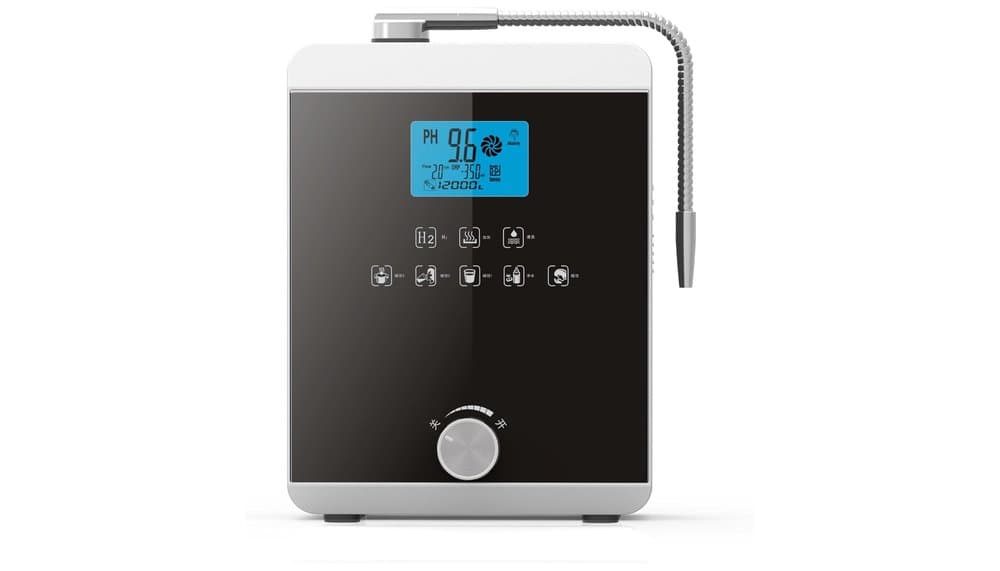
Alkaline Water Ionizer 11-Plate Electrode Test
Analyzes the 11-plate alkaline water ionizer: Does it filter water effectively, alter its properties, and deliver promised health benefits for a family?
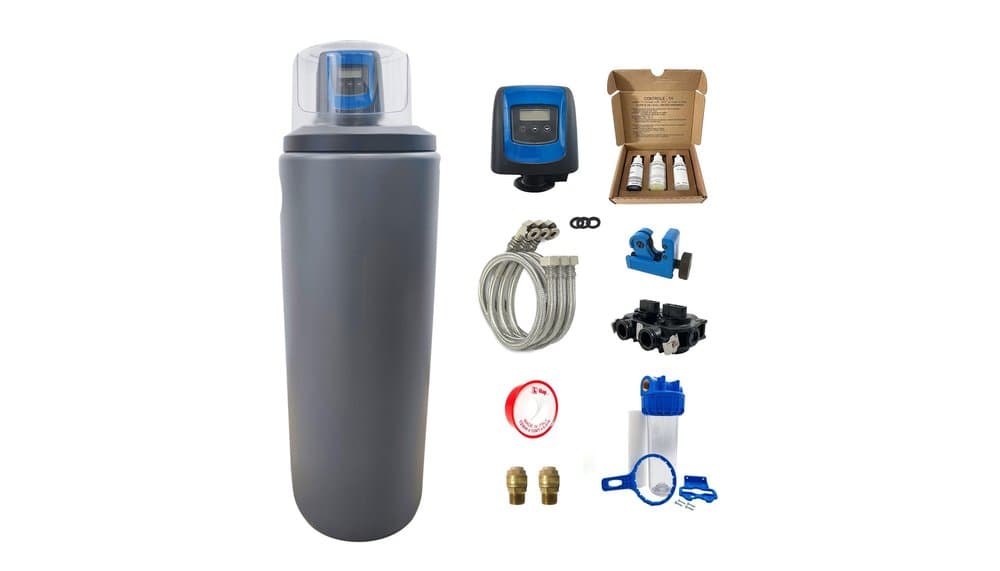
TOODO Fleck 5800 SXT Monobloc Water Softener Review
Volumetric TOODO Fleck 5800 SXT water softener eliminates limescale efficiently for families. A review of features & performance.
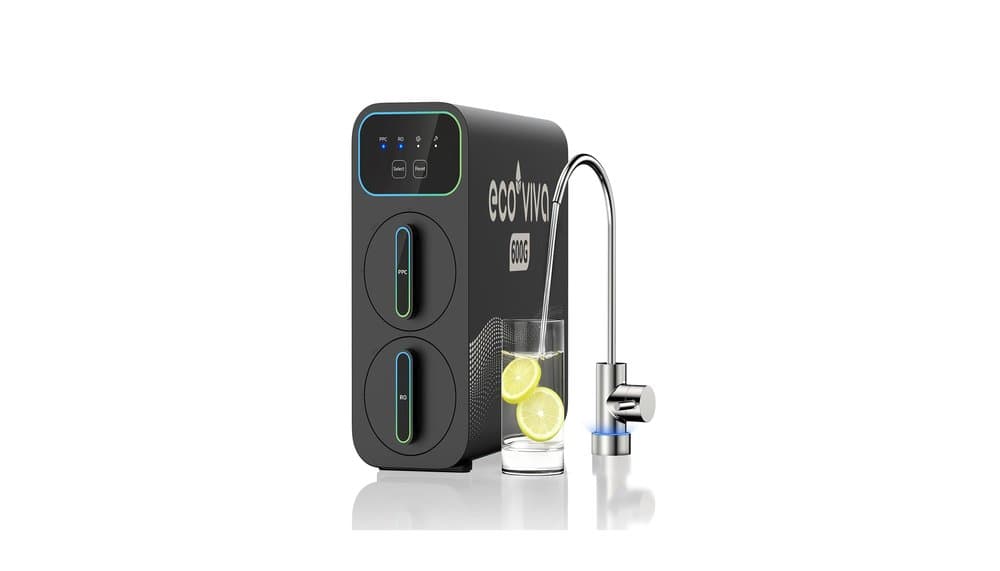
Ecoviva E6 Reverse Osmosis Water Filter Review
Compact, tankless Ecoviva E6 reverse osmosis system analyzed. We test its real-world purification performance, health benefits, and home integration.
Guides you might like
Alkaline Water Ionizer Buying Guide
Discover how alkaline water ionizers work and learn key tips to choose the right one for your home and health. Essential buying guide.
Buying Guide: Best Hydrogen Water Generator
Guide to hydrogen water generators: cutting through the hype to help you make an informed purchase decision for your health and budget.
Choosing Your Home Water Filter
Unlock clean, tasty water at home. Find the right water filter to tackle chlorine, pollutants, and limescale for better health and peace of mind.