Plastic DN15 Cold Water Meter Single Wet Test Review
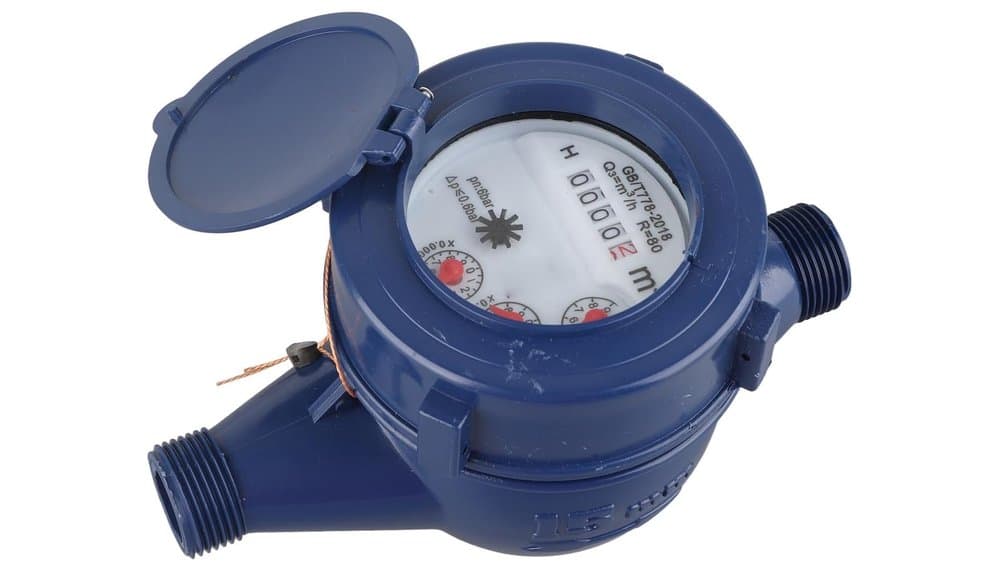
Plastic DN15 Cold Water Meter Single Wet Test
Introduction: A Water Meter, Not a Filtration System
In the realm of domestic water purification, every piece of equipment has a role. Here, the Plastic Cold Water Meter DN15 Single Wet Table Measuring Tool enters the scene not as a purifier, but as a diagnostic and measurement instrument. While our site focuses on systems that remove contaminants, precisely understanding what an appliance or a water point consumes is crucial data. This simple mechanical meter is presented as an accessible tool for quantifying cold water consumption. Our analysis will dissect its specifications, its real utility in a domestic water management context, and above all, what it can — and cannot — offer to a household concerned about its water quality.
Key Strengths
This meter shows several advantages that explain its interest for reasoned domestic or gardening use.
Simple installation and mounting versatility. This is one of its major assets. According to technical specifications and feedback, its standard DN15 connection (corresponding to a diameter of 15 mm or ½ inch) makes it compatible with most garden hoses and secondary installations. The possibility of installing it horizontally or vertically offers great flexibility for integrating it into an existing system, often without requiring a plumber's intervention.
Material robustness for basic use. The housing is made of reinforced nylon, a material chosen for its resistance to abrasion and corrosion. This makes it a theoretically durable product for a domestic environment, safe from direct impacts. Unlike electronic models, its purely mechanical mechanism requires neither a battery nor a power supply, eliminating a common source of failure.
Clear readout and practical design. Data visibility is a positive point. The display combines a digit wheel for total volume (up to 99999 units) and a dial with a pointer for precise fractions (minimum reading of 0.0001 m³, i.e., 0.1 liter). The fact that the dial is adjustable to 360° allows it to be oriented for easy reading, regardless of the installation angle.
Weak Points
The limitations of this product are directly related to its simple design and economic positioning.
Limited precision and long-term reliability. The expert web tester context is clear: as a "wet type" meter, its mechanism is in direct contact with water. This makes it vulnerable to impurities (sand, micro-debris) and limescale deposits, which can affect its accuracy and lifespan. Its accuracy class B is a standard class, but lower in performance, especially at very low flow rates, compared to class C models or electronic meters.
Restricted field of application. The "Cold Water" mention is an imperative limit. This meter is absolutely not designed for hot water, which prohibits its use on a hot water supply line or any system involving water at elevated temperatures. Its utility is therefore limited to cold water only.
Lack of advanced features. It is a simple totalizer. There is no electronic output for remote reading, instant flow measurement, or consumption alert. It is a passive tool that requires manual and regular reading to be useful for precise tracking.
See today's priceDetailed Analysis: What Real Use for Domestic Water Management?
Here, we must distinguish two things: purification and measurement. The Plastic Cold Water Meter DN15 has no effect on water quality. It does not remove chlorine, heavy metals, nitrates, PFAS, or microplastics. Its role is purely quantitative.
However, its interest for a household equipped with filtration systems can be real, albeit indirect.
First, it allows for accurately measuring the water consumption of a specific appliance. For example, installing it upstream of a reverse osmosis system lets you know exactly the volume of incoming water. By knowing the system's reject ratio (generally between 1:1 and 1:4 depending on models), you can then precisely estimate the volume of wastewater and its associated cost. This provides a concrete view of the economic and ecological impact of your installation.
Second, it is useful for economical gardening. Installed on a garden hose, it allows for precisely dosing the water supply for each garden zone, avoiding waste. It is in this "watering" context that manufacturers primarily position it.
However, its maximum flow rate of 2.5 m³/h (i.e., 2500 liters/hour) is more than sufficient for domestic applications but must be considered if you want to measure the flow of a main water supply under standard pressure. Its maximum rated pressure of 1.6 MPa (approximately 16 bars) makes it compatible with most domestic networks.
Finally, the advertised ease of installation must be nuanced. While the connection is simple, a permanent and watertight installation on a fixed pipe still requires tools and a minimum of plumbing know-how (wrenches, thread seal tape). For temporary use on a garden hose, however, it is within everyone's reach.
Technical Specifications
| Characteristic | Detail |
|---|---|
| Product Name | Plastic Cold Water Meter DN15 Single Wet Table Measuring Tool |
| Meter Type | Mechanical turbine ("wet" type) |
| Accuracy Class | B |
| Connection Diameter (DN) | 15 (15 mm, or ½ inch) |
| Max. Rated Pressure | 1.6 MPa (~16 bars) |
| Maximum Flow Rate (Q3) | 2.5 m³/h (2500 L/h) |
| Permitted Water Temperature | 5°C to 30°C (Cold water only) |
| Body Material | Nylon (reinforced plastic) |
| Display | Mechanical totalizer (digit wheel) + analog dial with pointer |
| Minimum Reading | 0.0001 m³ (i.e., 0.1 liter) |
| Maximum Reading | 99999 m³ |
| Installation Orientation | Horizontal or vertical |
| Dial Rotation | Adjustable to 360° |
| Weight | Approximately 412 g |
What Users and Experts Say
The synthesis of customer reviews and the web context from experts reveals a mixed picture, explaining the average rating of 3.3 out of 5.
Recurring positive points confirm the identified strengths. Satisfied users highlight its ease of installation and simple operation for tasks like tracking watering. They appreciate the readability of the display and the fact that it does the job expected for a modest investment. The phrase "it does what it says" is common among good feedback.
However, the negative points are significant and touch on the fundamental reliability of the device. Several buyers report problems with unacceptable accuracy right out of the box. One review in particular, included in the data, is unequivocal: the user indicates that the meter "made a rattling noise out of the box" and recorded 10 liters for an actual consumption of 300 liters, making it completely unusable for reliable measurement. This feedback aligns with expert reservations about the vulnerability of low-end wet mechanisms to calibration defects and sensitivity to water conditions.
The community also notes that, while the plastic is corrosion-resistant, the perception of solidity is not the same as with a metal housing. Finally, the cold water restriction is a necessary reminder for some, who might be tempted to use it on hot water lines.
Conclusion: A Basic Measuring Tool, to be Used with Discernment
The Plastic Cold Water Meter DN15 Single Wet Table Measuring Tool is what it claims to be: a simple, economical mechanical cold water meter. Do not ask the impossible of it. It does not purify your water at all, and its ability to help you manage your water is conditional on a reliability that, according to reviews, is not guaranteed from one unit to the next.
Its usefulness lies in occasional, diagnostic, or gardening applications, where high-level metrological precision is not critical. For an approximate tracking of a hose's consumption or to measure an appliance's consumption over a short period, it may be sufficient. However, for reliable, durable, and precise measurement – for example, to calculate exactly the efficiency and operating cost of a reverse osmosis system over the long term – it is preferable to turn to meters with a higher accuracy class (C) or ultrasonic technology, which are more expensive but infinitely more reliable.
In summary, this product is a supplementary solution with variable utility. For serious family use focused on water quality and optimization, it can only serve as a rough initial indicator. Your investment in a filtration system deserves to be monitored by a measuring instrument whose reliability is not in doubt from the first liter.
100% free and independent — All our articles are written independently, without any sponsorship. We may earn a commission on purchases made through our links, at no extra cost to you.
Articles you might like

Pancellent TES-PH-BLUE Water Tester: 4-in-1 Meter Review
Test water quality with the pancellent TES-PH-BLUE 4-in-1 meter. Instantly measure key parameters like pH for home filtration system effectiveness.

BYZOMU Freestanding Hot & Cold Water Dispenser Review
Plumbed-in BYZOMU water dispenser review. Is it just a heater-cooler, or does it truly purify water? Discover the reality beyond hot & cold taps.
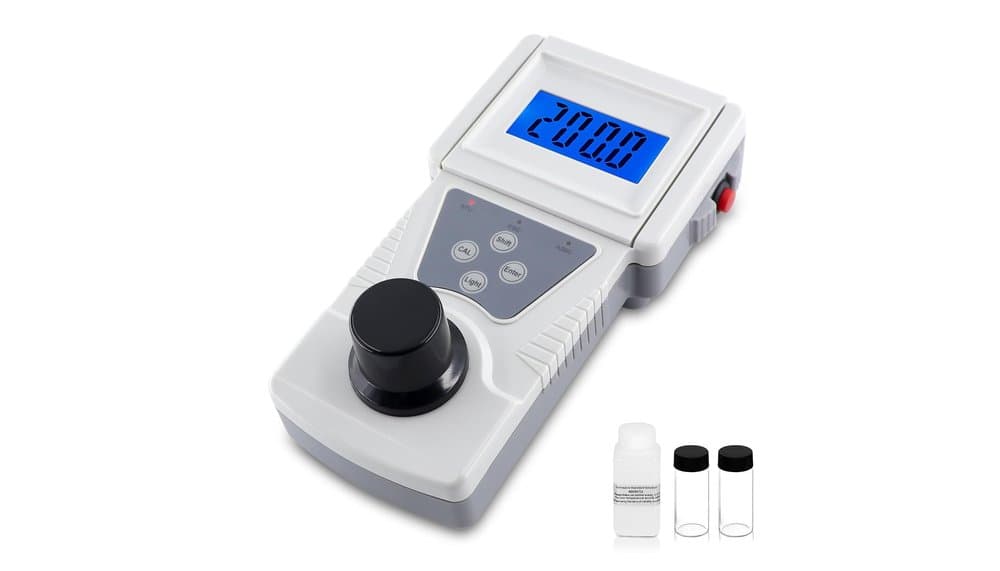
Portable Turbidity Meter Water Tester Review
Measures water clarity & quality instantly. A handheld diagnostic tool for home use to get objective data on your water's condition.
Guides you might like
Choosing Your Home Water Filter
Unlock clean, tasty water at home. Find the right water filter to tackle chlorine, pollutants, and limescale for better health and peace of mind.
Alkaline Water Ionizer Buying Guide
Discover how alkaline water ionizers work and learn key tips to choose the right one for your home and health. Essential buying guide.
Buying Guide: Best Hydrogen Water Generator
Guide to hydrogen water generators: cutting through the hype to help you make an informed purchase decision for your health and budget.