VEVOR 8.5L Gravity Water Filter Review
Introduction: Gravity Filtration, a Simple and Autonomous Solution
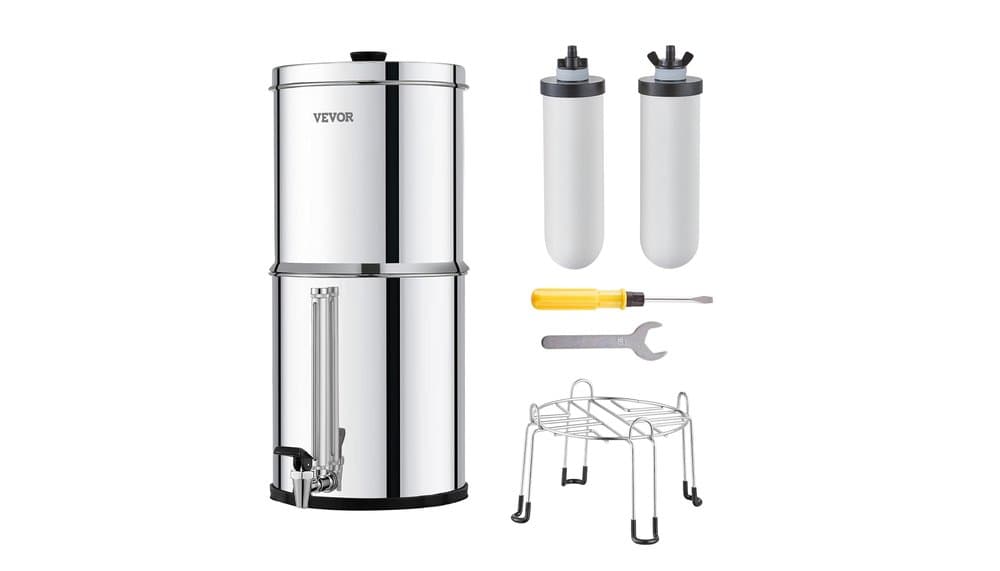
In the often complex world of domestic water filtration systems, gravity-fed devices are coming back to the forefront for their simplicity and energy independence. The VEVOR 8.5L Gravity Water Filtration System embodies this approach: a mechanical purifier, without electricity or complicated connections, promising healthier water through the force of gravity alone. In a market dominated by reverse osmosis and under-sink systems, this product positions itself as an accessible and mobile alternative.
What interests us here is to separate fact from fiction. Between the marketing promises of "pure and healthy" water and the reality of performance, where does this appliance stand? We analyze this system from the angle that matters: its real effectiveness on water quality, its long-term cost, its practicality for daily use, and, most importantly, its suitability for the needs of a health-conscious family. We rely on its technical specifications, feedback from a growing community of users, and observations shared by testers to provide you with a complete and honest overview.
Strengths and Weaknesses: an Impartial Summary
Before diving into the details, here is what emerges from the aggregated analysis of specifications and field feedback.
Strengths
- Total Independence: No need for electricity, water pressure, or connection to the water supply. Installation is simple and the system can be used indoors or outdoors.
- Robust Construction: The main tank is made of food-grade SUS304 stainless steel, renowned for its durability and inertness (no transfer of taste or chemicals).
- Perceived Excellent Value for Money: This is the point unanimously highlighted by the community. Users believe the finish and performance are comparable to well-established brands, at a much lower entry cost.
- Effective Basic Filtration: The activated carbon + ceramic duo effectively removes sediment, chlorine (notable improvement in taste and odor) and reduces the presence of certain heavy metals and bacteria.
- Long Filter Life: Each set of filters is rated for 22,700 liters (6,000 gallons), representing a long lifespan before replacement.
Weaknesses
- Slow, Even Very Slow Flow Rate: This is the main operational criticism. Pure gravity filtration is slow. Users report filtration times of several hours to fill the lower tank, requiring anticipation of needs.
- Limited Capacity for a Family: The 8.5 liters (2.25 gallons) can be used up quickly by a family of 4 in a day, requiring regular refilling of the upper tank and waiting for filtration.
- Limited Effectiveness Against Certain Contaminants: The technology used does not remove dissolved contaminants like nitrates, fluorides, PFAS, or salts. It does not alter water hardness (limescale).
- Unreliable Water Level Indicator: Several testers point out that the water level indicator tube is inaccurate and only works over part of the tank's height.
- Bulk and Weight: Once filled, the system is heavy and takes up counter space. Its portability, while real, is nuanced.
Detailed Analysis: Health, Cost, and Technologies
Water Quality and Health: What Does It Actually Remove?
It is crucial to understand what this filter can and cannot do for your water. The VEVOR 8.5L uses a combination of mechanical filtration (the ceramic cartridge at 0.5 or 0.2 micron depending on the model) and chemical adsorption (activated carbon).
-
Contaminants Removed or Reduced:
- Chlorine & Organic Compounds: This is its strong point. Activated carbon adsorbs up to 99% of chlorine (according to specs), radically improving taste and odor. It also captures certain pesticides, herbicides, and volatile organic compounds.
- Sediment, Rust, Particles: The ceramic layer effectively blocks suspended impurities, mud, sand, and microplastics larger than its pore size threshold.
- Certain Heavy Metals & Bacteria: Activated carbon can reduce the presence of lead, mercury, or copper through adsorption. The ceramic physically blocks cysts (Giardia, Cryptosporidium) and most bacteria. Note, it is not 100% sterilizing against all viruses.
-
Contaminants NOT Treated:
- Limescale (Calcium, Magnesium): No action. The system does not soften water. You will still have scale.
- Nitrates, Fluorides, Dissolved Salts: Ineffective. These ions require ion exchange or reverse osmosis technology.
- Emerging Contaminants (PFAS, medication residues): The effectiveness of standard activated carbon is limited and variable against these complex molecules. You cannot rely on this system to remove them reliably.
- Viruses (small size): Can pass through the pores of the standard ceramic.
Health Conclusion: This system is excellent for improving municipal tap water that is already generally potable, by removing the chlorine taste, particles, and reducing certain microbiological and metallic risks. It is suitable for clarifying cloudy rainwater or spring water. However, it does not constitute a complete purification solution for water of uncertain origin or heavily contaminated by dissolved chemicals or viruses.
Annual Cost and Maintenance: Real Savings?
The initial cost is attractive, but the analysis would not be complete without the recurring cost of consumables.
- Filter Lifespan: Specifications state 22,700 liters per set of two filters (carbon + ceramic). For a family of 4 consuming 8 liters of filtered water per day (approx. 3000 liters/year), this theorizes a lifespan of over 7 years. In practice, longevity depends on the dirtiness of the input water. The ceramic must be cleaned regularly by brushing.
- Replacement Filter Cost: This is the key variable. Manufacturer VEVOR offers its own replacement filters. However, the community notes an interesting point: the system appears compatible with standard cartridges from other brands (as mentioned in a review concerning "Coldstream" filters). It is imperative to verify the compatibility of sizes and connections. Using an average estimate for quality gravity filters, the annual cost can range between 15 and 40 euros, which is extremely low compared to other technologies.
- No Water Waste: Unlike reverse osmosis which wastes several liters for one liter produced, here, 100% of the water poured into the top is recovered at the bottom, after filtration. This is a major ecological and economic advantage.
Technology Comparison: Where Does Gravity Filtration Stand?
Let's put the VEVOR system in perspective with other major purification families.
- Vs. Simple Activated Carbon (pitcher or under-sink): The VEVOR offers a much larger capacity than a pitcher and much longer filter life. The presence of the ceramic barrier adds a microbiological safety that carbon alone does not offer.
- Vs. Reverse Osmosis (RO): This is the complete opposite. Reverse osmosis is much more effective against almost all dissolved contaminants (salts, nitrates, metals, PFAS), but it is expensive to purchase and maintain, requires under-sink installation, water pressure, electricity for some models, and wastes a lot of water (3 to 5 liters wasted for 1 liter produced). The VEVOR is simple, waste-free, and much cheaper, but much less performant on final purity.
- Vs. Water Softener (ion exchange): Not comparable. A softener does not purify, it only removes calcium and magnesium (limescale) to replace them with sodium. The VEVOR does not treat limescale.
- Vs. UV Sterilization: Complementary technologies. UV kills viruses and bacteria but does not remove chemicals or particles. One could theoretically place a UV lamp after the VEVOR filter for total microbiological purification, excluding viruses.
The VEVOR 8.5L therefore sits in the niche of autonomous mechanical-chemical filters. It is more robust and potentially more effective than a pitcher, but less performant than a multi-stage under-sink treatment station. Its major asset is its autonomy and simplicity.
Ease of Installation and Daily Use
On this point, feedback is unanimous.
- Installation: It boils down to assembling the tanks, screwing in the filters (pre-fitted with their seals) and putting them in place. No tools, no plumber required. This is an absolute strong point.
- Bulk: The dimensions (approx. 31x31x64 cm) make it a large object on a countertop. You need to allocate a fixed spot for it. Its design allows it to "nest" partially for storage (upper tank inside the lower one), but once in service, it remains bulky.
- Family Use: For a family of 4, the 8.5L capacity is a double-edged sword. It allows covering drinking and cooking water needs for a day, but requires active management: filling the upper tank as soon as it is empty, anticipating the slow filtration time. It is not an "on-demand" system like a filtering tap.
Technical Specifications
| Characteristic | Detail |
|---|---|
| Product Name | VEVOR 8.5L Gravity Water Filtration System |
| Total Capacity | 8.5 liters (2.25 gallons) |
| Filtration Technology | Activated Carbon + Ceramic |
| Tank Material | SUS304 Stainless Steel (food grade) |
| Flow Rate | Depends on gravity and filter clogging. Slow (several hours to filter 8.5L) |
| Filter Lifespan | Advertised: 22,700 liters (6,000 gallons) per set of 2 filters |
| Targeted Contaminants | Chlorine (up to 99%), sediment, rust, tastes/odors, reduction of heavy metals (lead) and bacteria |
| Contaminants NOT Treated | Limescale, nitrates, fluorides, dissolved salts, PFAS (limited effectiveness), viruses |
| Installation | Standalone, no tools, no electricity, no connection |
| Empty Weight | Approximately 3.5 kg |
| Water Savings | 0% Waste Rate (all incoming water is filtered and recovered) |
What Users Say: Summary of Feedback
The community of buyers and independent testers paint a coherent picture of the product, with frank praise and precise criticism.
The recurring positive points are unequivocal on the perceived quality for the price. Phrases like "excellent value for money," "no need to spend more," "unbeatable price" come back as a leitmotiv. Users are pleasantly surprised by the solidity of the stainless steel and the finish. Effectiveness on chlorine taste and odor is confirmed: "it's a real pleasure to drink odorless water," "the water tastes excellent." Many use it to stop buying bottled water. The simplicity of installation is also praised.
The frequently cited negative points converge on two operational problems:
- Slowness: "The system is extremely slow," "you have to adapt and fill it regularly to have a constant supply." This is not a system for the impatient.
- The Water Level Indicator: Deemed "useless" or "barely accurate" by several, it seems more like a gimmick than a reliable feature.
- A few isolated comments, worth noting, concern the need to properly check the seal of the filter gaskets during assembly to avoid tiny leaks.
The overall opinion is very favorable (average rating of 4.4/5), driven by the satisfaction of obtaining good-tasting water with a modest investment. The drawbacks (slowness, capacity) are perceived as acceptable compromises given the system's simplicity and cost.
Conclusion: Who is the VEVOR 8.5L For?
The VEVOR 8.5L Gravity Water Filtration System is not a miracle product, but it perfectly fulfills a well-defined mission. It is a basic, robust, and economical water purifier, ideal for households supplied with potable city water who mainly want to eliminate chlorine taste, sediment, and improve the clarity of their drinking water.
We recommend it if: your priority is unbeatable value for money, you want a zero-hassle installation, you are ready to manage the slow flow rate and limited capacity, and your main enemies are chlorine and particles.
Look elsewhere if: you need water pure at 99.9% (against nitrates, fluorides, pharmaceutical residues), if you have very hard water (limescale) and want to soften it, or if you require a fast flow rate and a large reserve of filtered water available instantly.
In summary, this gravity system stands out for its mechanical reliability, absence of waste, and extreme simplicity. It represents a serene and effective entry point into the world of domestic filtration for those who want tangible results without complications or excessive investment. For advanced purification needs, however, one will need to turn to more complex and expensive technologies like reverse osmosis.
100% free and independent — All our articles are written independently, without any sponsorship. We may earn a commission on purchases made through our links, at no extra cost to you.
Articles you might like
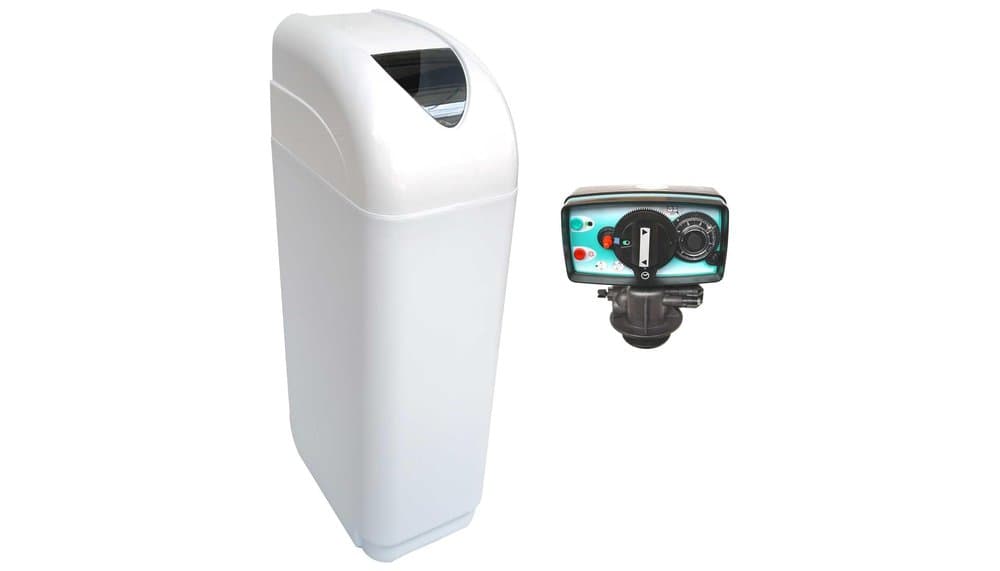
Fleck 5600 MV Mechanical Volumetric Water Softener Test
The Fleck 5600 MV French-made water softener uses ion exchange to fight limescale and protect your plumbing installations. Simple & robust.
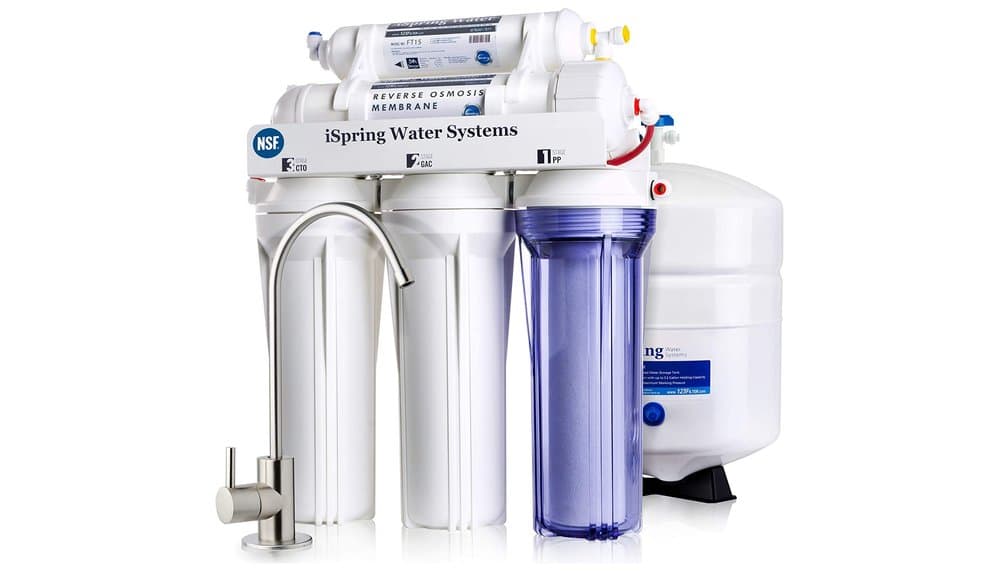
iSpring RCC7 Reverse Osmosis Water Filter Review
Popular 5-stage RO system for healthy water. Balanced performance & value. We review iSpring RCC7's filtration, daily output, and true cost for your home.
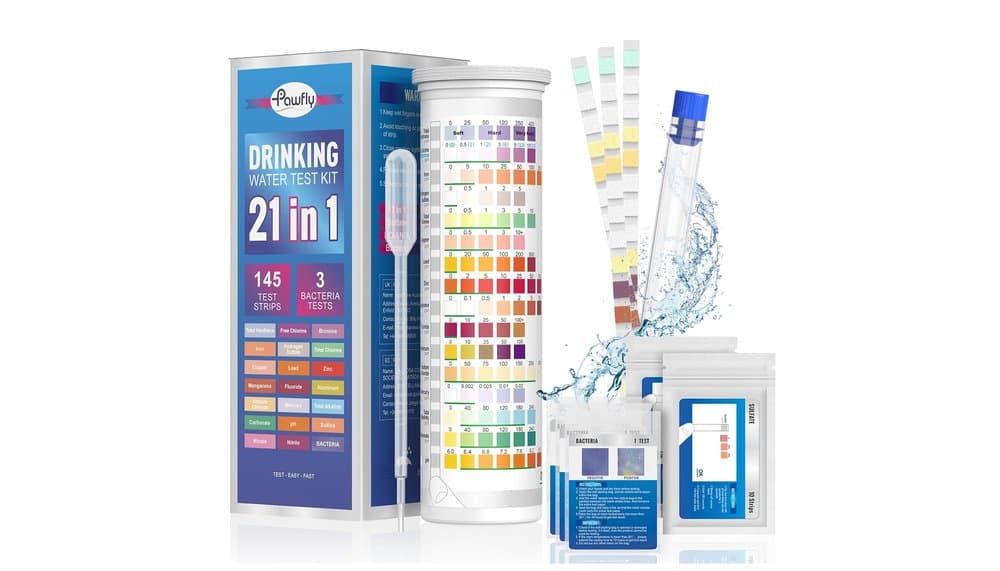
Pawfly 21 in 1 Drinking Water Test Kit Review
Pawfly test kit reviews a 21-in-1 water test strip, analyzing accuracy & value for home tap, well, or aquarium water tests. Get key insights before buying.
Guides you might like
Alkaline Water Ionizer Buying Guide
Discover how alkaline water ionizers work and learn key tips to choose the right one for your home and health. Essential buying guide.
Buying Guide: Best Hydrogen Water Generator
Guide to hydrogen water generators: cutting through the hype to help you make an informed purchase decision for your health and budget.
Choosing Your Home Water Filter
Unlock clean, tasty water at home. Find the right water filter to tackle chlorine, pollutants, and limescale for better health and peace of mind.