Portable Turbidity Meter Water Tester Review
Introduction: What is a Portable Turbidimeter Really For?
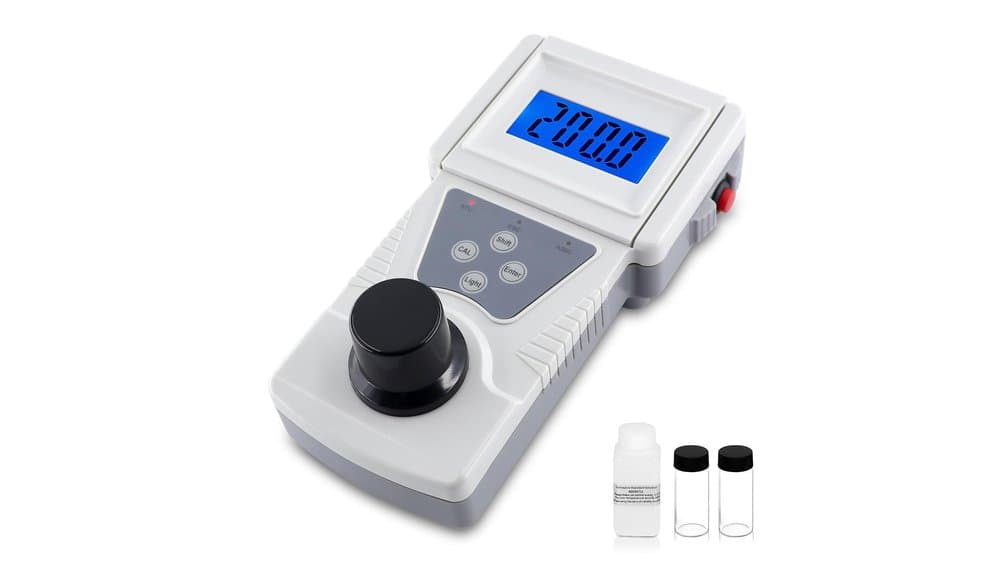
When we consider water quality at home, we often focus on what we cannot see: invisible contaminants. But the appearance of water, its clarity, is the first indicator of its condition. This is where the Portable Turbidity Meter Water Quality Tester comes in. This instrument is not a filtration system, but a diagnostic tool. Its role is to quantitatively measure what our eyes evaluate subjectively: the clarity of water. For households equipped with filtration systems, or simply concerned about the quality of their tap, well, or pool water, it offers a concrete window into treatment effectiveness and quality trends.
In this analysis, we will demystify this device. We will evaluate its real utility in a domestic context, its technical operation, and what it can—or cannot—tell you about your water. We will rely on the manufacturer's specifications and, most importantly, on concrete feedback from the user community and expert observations.
Key Strengths
Analysis of specifications and field feedback highlights several distinctive advantages for the family user or the informed hobbyist.
Portability and Power Autonomy. As its name suggests, its portable design is a major asset. It can be used at the kitchen faucet, by a well, in a pool, or to check rainwater in a tank. The dual power supply, by battery or AC adapter, reinforces this versatility of use, making it usable anywhere.
Ease of Use and Direct Readout. Unlike chemical test strip kits which require color interpretation, the turbidimeter provides a direct digital readout in NTU (Nephelometric Turbidity Unit) on a backlit LCD screen. According to user feedback, this immediacy of result is highly appreciated. You dip the probe, press a button, and the value is displayed.
Optical Precision for Non-Professional Use. The measurement principle, based on nephelometry (90° light scattering by suspended particles) using an infrared light source, is a recognized standard method. On paper, this gives it much better accuracy and consistency than a naked-eye assessment or low-end visual tests.
Versatility of Application. Although centered on domestic water, its declared application range (brewing, aquariums, wastewater treatment) suggests a robustness and measurement range suitable for various common scenarios, well beyond simply checking drinking water.
Weak Points
No tool is perfect, and the Portable Turbidity Meter reveals some limitations when confronted with the practical expectations of consumers.
A Very Partial Diagnosis of Water Quality. This is the most crucial limit to understand. This device does not detect any dissolved chemical contaminants. It measures exclusively turbidity, meaning the presence of suspended particles (silt, clay, microorganisms, rust). It is completely ineffective for assessing the presence of chlorine, heavy metals, nitrates, PFAS, limescale (which is dissolved), or salts. Its reading would be 0 NTU for crystal clear water contaminated with lead. It in no way replaces a complete chemical analysis.
Lack of User Calibration and Quality Control. Testers and the online community emphasize a critical point: the need for regular calibration with standard solutions to ensure accuracy over time. However, these solutions are often not included and purchasing them separately represents additional cost and complexity. Without calibration, the reliability of absolute measurements is questionable.
Perceived Fragility and Sensitivity to Bubbles. Several customer reviews point to a construction sometimes perceived as "plastic" or lightweight. Furthermore, the measurement is very sensitive to air bubbles on the optical cell, which can skew the result and requires careful handling and sometimes several attempts.
Result Interpretation Required. Knowing that your water is at 5 NTU or 50 NTU is one thing. Understanding whether that value is acceptable is another. The user must refer to standards (e.g., less than 1 NTU for ideal drinking water, less than 5 NTU according to some regulations) and contextualize the measurement, which adds a research step.
Detailed Analysis: What Does It Measure and What Does It Tell Us About Our Filters?
The Role of Turbidity in the Filtration Ecosystem
To fully grasp the usefulness of this tester, we must place turbidity within the water treatment chain. Turbid water is not just unsightly. Suspended particles often harbor bacteria and parasites (like Cryptosporidium or Giardia) and can protect these pathogens from disinfectants like chlorine or UV. Moreover, high turbidity quickly damages and clogs reverse osmosis membranes or fine filters, reducing their lifespan and efficiency.
Thus, using the turbidimeter upstream and downstream of a filtration system gives us valuable information:
- Effectiveness of Mechanical Pre-Filters: A strong reduction in turbidity after a 5 or 1-micron sediment filter proves it is working well.
- Health of a Reverse Osmosis (RO) Membrane: A new or well-maintained RO membrane should produce water with extremely low turbidity, often close to 0 NTU. A gradual increase in the permeate water turbidity can indicate a tear, severe fouling, or a faulty seal.
- Monitoring Well or Rainwater: Tracking turbidity changes after rain can alert to surface contamination or a problem with the well screen.
Comparison with Other Analysis Technologies
The Portable Turbidity Meter occupies a very specific niche. It does not compete with:
- Multiparameter test strips (which test pH, hardness, nitrates, chlorine... but in a qualitative/semi-quantitative way).
- Chemical drop test kits (more precise for certain parameters like heavy metals).
- TDS meters (which measure total dissolved solids, like salts and limescale, but not suspended particles).
It is a quantitative, objective, and specific tool for a single physical parameter. Its advantage is the reproducibility and numerical precision on this parameter, where turbidity test strips are very approximate.
Technical Specifications
To have a clear view of the device's capabilities, here is a summary of its main characteristics:
| Characteristic | Detail |
|---|---|
| Product Name | Portable Turbidity Meter Water Quality Tester |
| Measured Parameter | Turbidity |
| Unit of Measure | NTU (Nephelometric Turbidity Unit) |
| Measurement Range | 0 to 200 NTU |
| Measurement Principle | 90° Nephelometry with infrared light source |
| Display | Digital LCD screen with backlight |
| Power Supply | 4 standard batteries (AA type) or 6V DC adapter |
| Declared Applications | Drinking water, pool, aquarium, brewing, laboratory, water treatment, environmental monitoring |
| Main Strengths | Portability, direct digital readout, standard optical method |
What Users and Testers Say
Synthesizing customer reviews and online expert comments paints a nuanced consensus about the tool.
Recurring Positive Points confirm the technical strengths:
- Ease of Use: "You get the result in a few seconds, it's very simple." is a typical phrase.
- Usefulness for Comparisons: Users appreciate it for comparing water before/after a filter, checking pool water, or tracking the evolution of homemade wine or beer. The numerical value allows for objective monitoring.
- Good Value for Occasional Use: For a moderate price, it provides a measurement function previously reserved for expensive laboratory equipment.
Frequent Criticisms and Warnings highlight practical limitations:
- Mandatory Calibration: This is the point most often raised by informed users. "Without a calibration solution, you cannot trust the absolute value, only the variations." Many regret that these solutions are not provided as standard.
- Fragility and Sensitivity: Several mentions of "cheap construction" or "need to be very gentle" appear. The sensitivity to air bubbles is also a source of frustration, requiring shaking the sample well and immersing the cell carefully.
- Interpretation Necessary: Some buyers, poorly informed, expected a general "purity" tester and are disappointed not to be able to test for chemicals. This underscores the importance of understanding what turbidity is.
- Relative Accuracy: For rigorous scientific use, its accuracy is deemed insufficient without professional calibration. However, for domestic use and tracking trends (is it improving or getting worse?), it is considered largely sufficient.
Conclusion: A Complementary Tool for the Informed Hobbyist, Not a Miracle Solution
The Portable Turbidity Meter Water Quality Tester is an instrument that fits perfectly into the toolbox of the hobbyist concerned about their water quality, but only if its role is clearly understood.
It is not and never will be a substitute for a laboratory analysis for chemical or biological contaminants. It will tell you nothing about the presence of lead, pesticides, or bacteria. Its utility is targeted and operational: to objectively quantify water clarity.
For a family equipped with a filtration system, it becomes a valuable control and maintenance tool. It allows for a visual check, with numbers, of the effectiveness of a sediment pre-filter or the integrity of a reverse osmosis membrane. For a well owner, it is a simple indicator of potentially concerning changes.
Our recommendation is therefore as follows: buy it with full awareness of its limits. Consider it the thermometer for your water's clarity. And if you want truly reliable measurements over time, budget for the parallel purchase of a suitable calibration solution. This way, you will transform an interesting gadget into a reliable and durable diagnostic tool for better understanding and managing your water on a daily basis.
100% free and independent — All our articles are written independently, without any sponsorship. We may earn a commission on purchases made through our links, at no extra cost to you.
Articles you might like
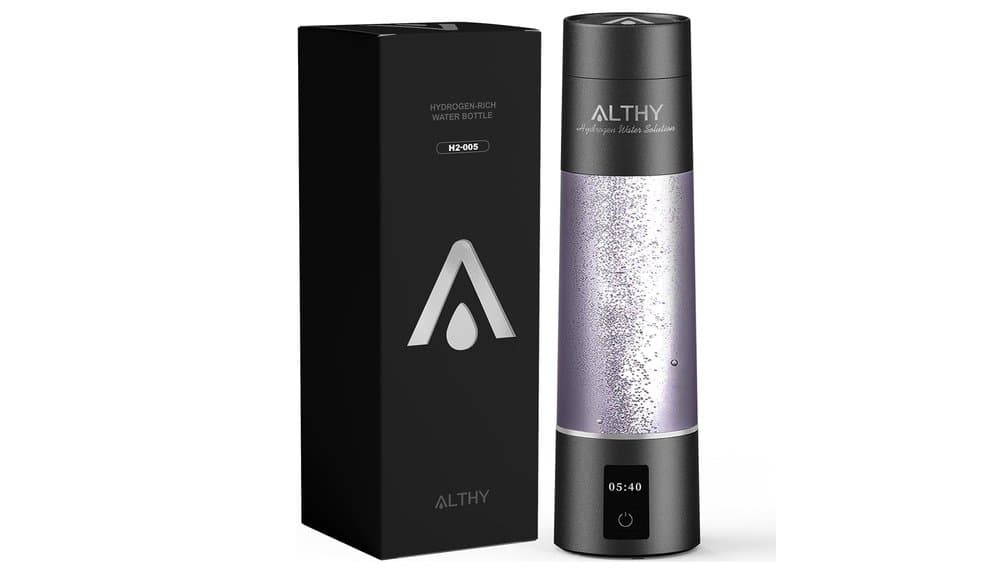
ALTHY Performance Hydrogen Water Bottle Review
Transform water into antioxidant-rich hydrogen water anywhere with the ALTHY portable bottle. A powerful, on-the-go wellness innovation.
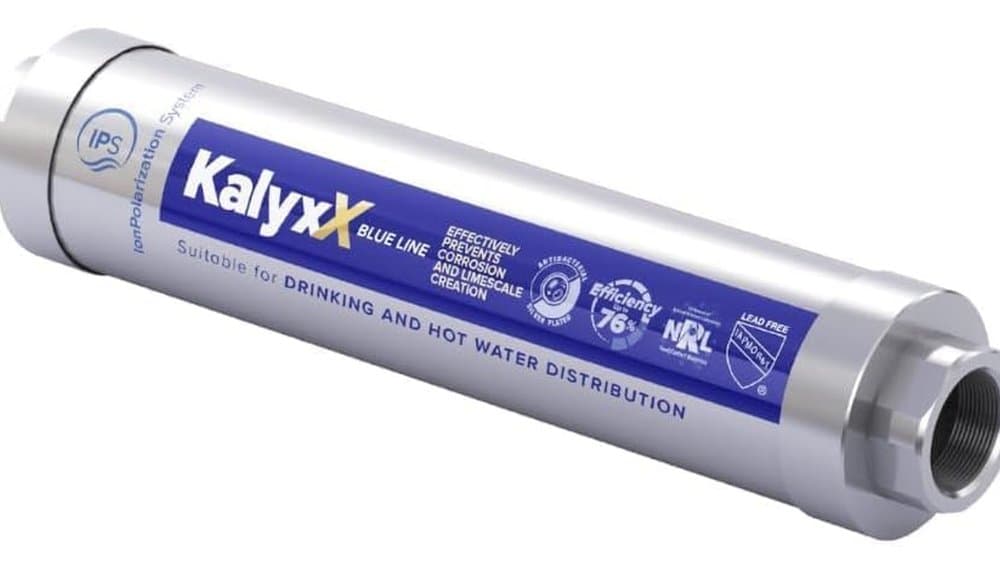
Swiss Aqua Technologies IPS Kalyxx Water Softener Review
IPS Kalyxx magnetic water conditioner offers scale prevention without salt, electricity, or maintenance, using a permanent magnet.
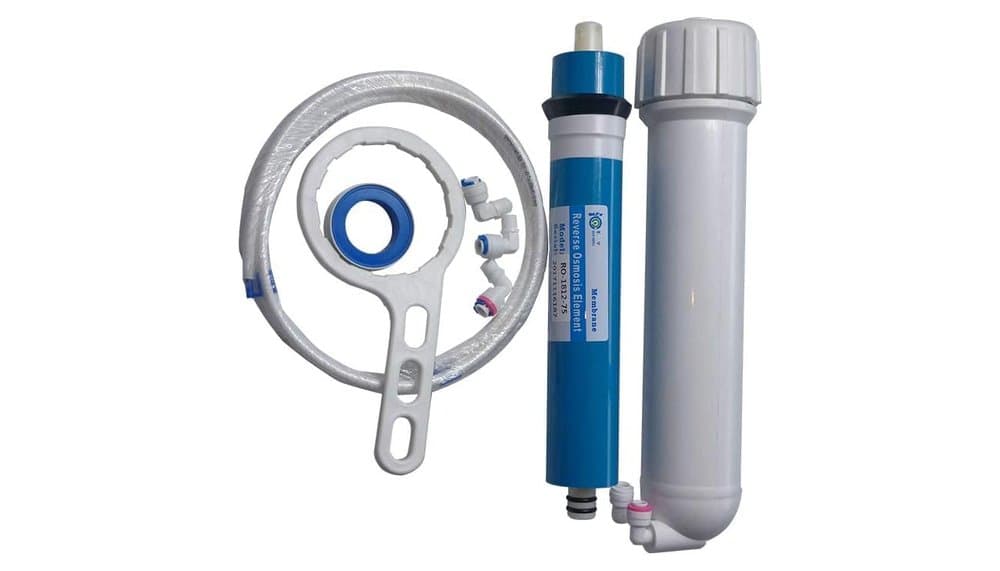
Huining RO Water Filter Cartridge Review & Test
Universal RO filter cartridge replacement. Maintains water purity and extends your system's life.
Guides you might like
Alkaline Water Ionizer Buying Guide
Discover how alkaline water ionizers work and learn key tips to choose the right one for your home and health. Essential buying guide.
Buying Guide: Best Hydrogen Water Generator
Guide to hydrogen water generators: cutting through the hype to help you make an informed purchase decision for your health and budget.
Choosing Your Home Water Filter
Unlock clean, tasty water at home. Find the right water filter to tackle chlorine, pollutants, and limescale for better health and peace of mind.